
How Different Cultures Shape the Way We Think
Article Summary: Culture does not only influence what people eat, wear, celebrate, or believe. It also shapes how people notice the world, make decisions, express emotions, understand time, define success, build relationships, and communicate disagreement. This article explores how culture becomes an invisible mental framework — not a prison, but a lens — and why understanding cultural thinking can make us more patient, curious, and human in a connected world.
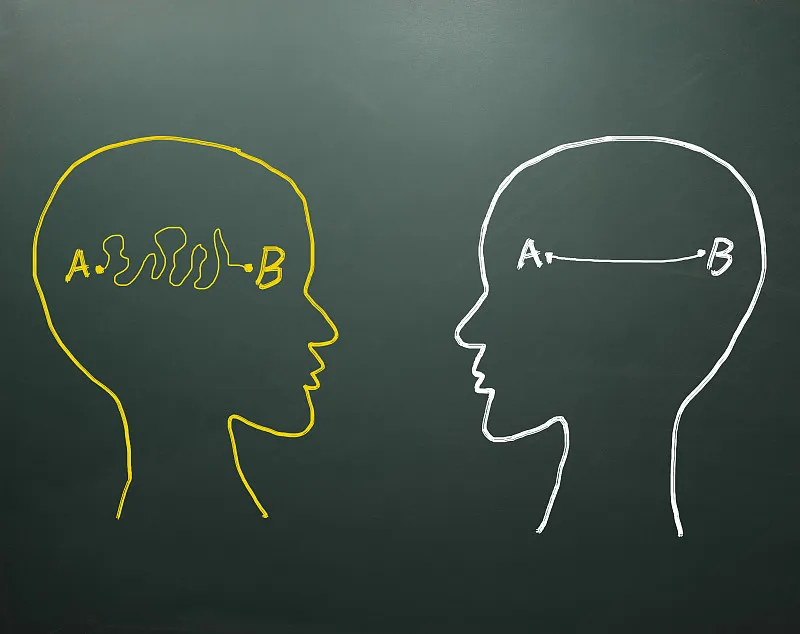
Two people can stand in the same room and notice completely different things. One may focus on the speaker’s words. Another may notice the silence after the words. One may ask, “What do I think?” Another may ask, “How will this affect everyone?” One may see time as a straight road toward goals. Another may see it as a rhythm shaped by seasons, relationships, and shared obligations.
This is the quiet power of culture. It does not simply tell us how to behave at weddings, what food to serve during festivals, or which language to speak at home. Culture also trains attention. It teaches people what to value, what to avoid, what to say directly, what to leave unspoken, when to be independent, when to be loyal, when to hurry, and when to wait.
Most of the time, we do not feel culture working inside us. We simply call it “common sense.” But what feels obvious in one culture may feel strange, rude, cold, emotional, indirect, respectful, or inefficient in another. The world becomes easier to misunderstand when we forget that our way of thinking is not the only possible way.
The Core Idea
Culture shapes thinking by teaching people where to place attention: on the self, the group, the context, the rule, the relationship, the future, the past, the spoken word, or the silence around it.
Culture Is an Invisible Lens
Culture is often described as tradition, but it may be more useful to think of it as a lens. A lens does not create the world, but it changes how the world appears. Through culture, people learn what matters, what feels natural, and what deserves attention.
In some cultures, children are encouraged to speak up, express preferences, and develop a strong personal identity. In others, children may be taught to listen first, respect elders, and understand how their actions affect the family or community. Neither approach is simply right or wrong. Each creates a different mental habit.
Over time, these habits become automatic. A person may not realize they are thinking culturally. They may simply feel that their way is normal. This is why cross-cultural encounters can be both beautiful and uncomfortable: they reveal the invisible assumptions we carry.
Culture feels invisible until someone thinks differently from us.
That moment of confusion is often the first doorway into deeper understanding.
Individual Thinking and Relational Thinking
One of the most discussed cultural differences is the balance between individual identity and relational identity. In many individual-oriented cultures, people are encouraged to define themselves through personal choices, opinions, achievements, and goals. The self is often imagined as independent: “Who am I?” “What do I want?” “What is my path?”
In many relationship-oriented cultures, identity is more strongly connected to family, community, role, and responsibility. The self is not separate from others. A decision may not be evaluated only by whether it benefits one person, but by whether it protects harmony, honors parents, supports the group, or avoids bringing shame.
This difference can affect everything from career choices to marriage, friendship, leadership, parenting, and conflict. One person may see independence as maturity. Another may see loyalty as maturity. One may admire bold self-expression. Another may admire quiet responsibility.
Two Different Questions Cultures May Teach
Individual-Oriented Thinking
“What do I believe, choose, want, and become as an individual?”
Relational Thinking
“How does my choice affect my family, group, relationship, and social responsibilities?”
Some Cultures Listen to Words. Others Listen to Context.
Communication is one of the clearest places where cultural thinking appears. In more direct communication cultures, people may value clarity, honesty, and explicit expression. Saying what one means is considered respectful because it avoids confusion.
In more indirect communication cultures, meaning often depends on context. Tone, silence, facial expression, social position, timing, and relationship history all matter. A direct refusal may feel harsh. A softer phrase such as “That may be difficult” may already carry a clear “no” for those who understand the context.
Misunderstandings happen when people judge another culture through their own communication rules. A direct person may think an indirect person is unclear. An indirect person may think a direct person is rude. In reality, both may be trying to show respect in different ways.
Communication Insight
In some cultures, respect means saying things clearly. In others, respect means saying things gently. The words may differ, but the intention may be equally sincere.
Culture Changes How People Understand Time
Time may seem universal, but cultures experience it differently. In some places, punctuality is closely tied to professionalism, discipline, and respect. A meeting that starts late may feel careless. A delayed reply may feel irresponsible.
In other cultural settings, time may be more flexible because relationships, circumstances, or human needs are valued over strict scheduling. A family matter, a conversation, a guest, or a community obligation may take priority over the clock.
These differences can create frustration in global work, travel, and friendship. But they also reveal deeper values. A culture’s relationship with time often reflects what it considers sacred: efficiency, harmony, hospitality, productivity, patience, or presence.
Time is not only measured. It is valued.
Different cultures teach people whether time should be controlled, shared, protected, stretched, or softened by human relationships.
Language Shapes the Boundaries of Thought
Language does not completely determine thought, but it can guide attention. The words available in a language can make certain distinctions feel natural. Some languages place strong emphasis on hierarchy and politeness. Some mark gender constantly. Some contain rich vocabulary for family relationships, emotions, landscapes, or spiritual concepts.
For example, a language with many honorific forms may train speakers to notice social rank, age, relationship, and context before speaking. A language with specific kinship terms may make family roles feel more detailed and socially important. A language with words for emotional states that are difficult to translate may allow people to name feelings another culture leaves vague.
This is why translation is never only technical. To translate well is not simply to exchange words. It is to move between ways of organizing experience.
Language Reflection
Every language carries a map of attention. It teaches speakers what distinctions are worth naming, what emotions can be spoken, and what relationships must be honored.
The Meaning of Success Is Not the Same Everywhere
Culture also shapes ambition. In some societies, success may be closely connected to personal achievement, innovation, visibility, and self-made identity. People are encouraged to stand out, build their own path, and prove their uniqueness.
In other societies, success may be tied more strongly to stability, family honor, educational credentials, social contribution, or the ability to support loved ones. A person may not define success only by individual passion, but by whether their choices bring security and respect to the family.
These differences affect career decisions, risk-taking, entrepreneurship, education, marriage, and lifestyle. A path that looks brave in one culture may look reckless in another. A path that looks responsible in one culture may look limiting in another.
Different Cultural Definitions of Success
Personal Achievement
Success means becoming independent, visible, original, and personally fulfilled.
Family Responsibility
Success means creating stability, honoring family expectations, and supporting loved ones.
Social Contribution
Success means serving the community, preserving values, and being respected for one’s role.
Emotion Is Expressed Through Cultural Rules
People everywhere feel sadness, love, anger, shame, pride, fear, and joy. But culture teaches how those emotions should be shown. In some cultures, open emotional expression is seen as honest and healthy. In others, emotional restraint is seen as mature, dignified, or respectful.
This does not mean restrained people feel less. It means their culture may teach them to protect emotion from public display. Likewise, expressive people are not necessarily less controlled; their culture may teach that emotion builds connection when shared openly.
Understanding this matters in friendships, relationships, workplaces, and families. A quiet person may care deeply. A passionate person may not be unstable. A person who avoids public conflict may not be dishonest. A person who speaks openly may not intend disrespect.
Emotional Insight
Culture does not decide whether people feel. It often decides when, where, and how feelings are allowed to appear.
Cultural Thinking Is Not a Box
It is important to speak carefully about cultural differences. Culture influences people, but it does not make everyone the same. No country, religion, language, or region contains only one way of thinking. Within every culture, there are differences of class, gender, generation, education, personality, city and rural life, migration, and personal experience.
A young person in Tokyo may think differently from their grandparents. A first-generation immigrant may carry two cultural logics at once. A person raised in a traditional family may work in a global company and shift between communication styles daily. Culture is not a cage; it is a starting point.
This is why cultural understanding should never become stereotyping. The goal is not to say, “People from this culture always think this way.” The goal is to ask, “What values may be shaping this person’s way of seeing the situation?”
Culture explains patterns, not people completely.
A wise observer uses culture to become more curious, not more certain.
Living Between Cultures Can Expand the Mind
People who live between cultures often develop a special kind of awareness. They learn that there is more than one way to be polite, more than one way to love family, more than one way to show intelligence, and more than one way to build a meaningful life.
This can be difficult. Living between cultures may create confusion, pressure, or the feeling of never fully belonging anywhere. But it can also create flexibility. A bicultural or multicultural person may learn to switch perspectives, understand silence, translate emotional meanings, and question assumptions that others never notice.
In a global world, this ability is increasingly valuable. The future belongs not only to people who know more information, but to people who can understand why others interpret the same information differently.
Multicultural Thinking
To live between cultures is to learn that the mind can have more than one home. This can be uncomfortable, but it can also become a profound source of empathy.
Why Cultural Awareness Matters More Than Ever
Today, people work across time zones, date across languages, study abroad, migrate, travel, consume global media, and build friendships online with people they may never meet in person. Cultural differences are no longer distant academic topics. They appear in emails, meetings, classrooms, marriages, social media comments, customer service, and everyday misunderstandings.
Without cultural awareness, difference easily becomes judgment. We may call someone cold when they are being respectful. We may call someone rude when they are being honest. We may call someone passive when they are protecting harmony. We may call someone selfish when they are practicing independence.
Cultural awareness does not mean agreeing with everything. It means pausing before judgment. It means asking what values, fears, histories, and expectations may be shaping another person’s response.
A More Human Question
Instead of asking, “Why are they being like that?” cultural awareness asks, “What meaning might this behavior have in their world?”
Final Thoughts
Different cultures shape human thinking in quiet but powerful ways. They teach us how to understand the self, how to relate to others, how to communicate, how to handle time, how to express emotion, how to define success, and how to interpret silence.
These differences can create confusion, but they can also make the world richer. They remind us that the human mind is not one fixed design. It is shaped by language, history, family, faith, geography, economy, memory, and daily practice.
The point is not to decide which culture thinks better. The point is to realize that every culture has wisdom and blind spots. Individual freedom can become loneliness if it forgets community. Group harmony can become silence if it suppresses truth. Efficiency can become coldness if it ignores relationships. Tradition can become strength or limitation, depending on how it is lived.
To understand culture is to become less trapped inside one version of normal. It helps us listen better, travel more respectfully, work more intelligently, love more patiently, and disagree with more humility.
In the end, culture does not only shape how people think. It shapes how people make meaning. And when we learn to see through more than one cultural lens, the world does not become simpler — but it becomes much more human.
Final Reflection: Culture is not just something people inherit. It is something they think through, speak through, love through, and sometimes struggle through. Understanding cultural thinking does not remove difference; it teaches us to meet difference with more patience, curiosity, and respect.