The origins of Indians
South Asia — the Indian subcontinent, or “India” in the older, pre-nation-state sense — has never been a simple or uniform civilisational space. It contains a dense plurality of peoples, languages, religions, cultures and social hierarchies. For more than two centuries, scholars, colonial officials, linguists, historians, archaeologists, social reformers and political thinkers have all tried to explain where the people of this region came from. The question of Indian origins has therefore never been merely academic. It has always touched identity, power, caste, nationalism and the authority to interpret the past.
In the past decade or so, genetic research, especially work involving ancient DNA, has supplied new evidence about early migrations into South Asia and about population mixing within the subcontinent. These studies have drawn intense attention from academics and the public alike, while also provoking fierce debate. Yet it would be misleading to imagine genetics as a sudden arrival into an empty field. Long before geneticists entered the conversation, the origins of Indians had already been discussed through language, scripture, colonial scholarship, nationalist history, archaeology and social criticism.
The American geneticist David Reich once described geneticists, half playfully, as “barbarians” arriving late to the study of the human past, while warning that it is unwise to ignore such barbarians. The remark is striking because genetics did not begin speaking in silence. It entered a space already filled with arguments, theories, ideological commitments and competing historical imaginations.
To understand what genetic research has added to the history of India’s peopling, we must therefore first understand the intellectual traditions that preceded it. Before genes, there were languages, texts, archaeological ruins and political struggles over memory.
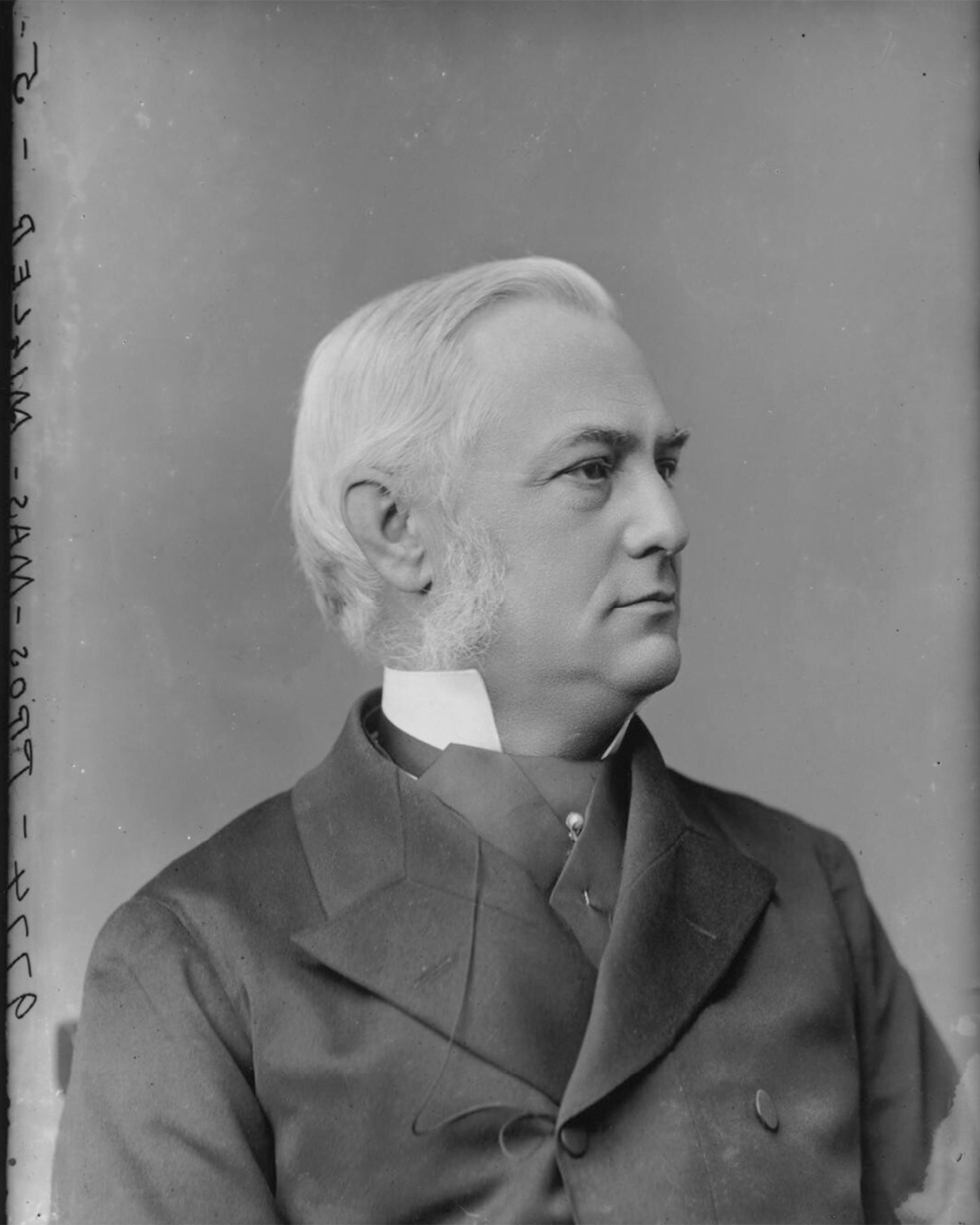
One important figure in this longer history was Jotirao Phule, the 19th-century social reformer from Pune. In 1873, he published Gulamgiri, or Slavery, in Marathi. In that work, he attacked the oppressive dominance of Brahmans and offered a historical interpretation of caste. Phule himself came from a low-caste community, and he understood caste not as an abstract religious classification, but as a social order that shaped everyday life, dignity and opportunity.
For Phule, the subordination of Shudras and Ati-Shudras — low-caste and Dalit communities — was not the result of any natural hierarchy. It was the product of a system of power maintained through religion, ritual and historical myth. He described Brahmanical domination as a kind of binding coil, wrapped tightly around the oppressed. Liberation, in his view, required not only moral reform but also the recovery of historical agency.
Phule’s political insight lay in his use of history as a weapon. He drew on the then-current idea that Aryans had entered India from outside, and he connected it to the lived reality of caste oppression. In his account, the ancestors of Brahmans were not the original inhabitants of India, but outsiders who had conquered and subordinated the indigenous peoples. The descendants of those indigenous peoples, he argued, were many of the low-caste and Dalit communities of his own time.
In Phule’s writing, the arrival of Aryans in India was compared to the European conquest of Indigenous peoples in the Americas. The comparison was deliberately charged. It borrowed from European scholarship on Aryans and linguistic kinship, but transformed that scholarship into a critique of social power within India.
In the Indian context, the word “Aryan” is closely tied to Vedic society. The Rgveda, the oldest of the Vedas, was composed in an early form of Sanskrit, and its poets used the term arya to describe members of their own community. A related term also appeared in the ancient Iranian Avestan tradition, and the very name “Iran” derives from the same linguistic root. When Phule spoke of Aryan ancestors, he was therefore referring to these early Vedic-associated peoples.
He claimed that ‘the same blood was running’ in the veins of an English soldier ‘as in the veins of the dark Bengalese’
Phule’s interpretation was made possible by a larger intellectual development that began in the late 18th century, when European scholars and East India Company officials noticed systematic similarities between Sanskrit, Greek, Latin and many European languages. This discovery generated a wave of enthusiasm for India among European intellectuals. It also helped establish comparative philology and historical linguistics, and brought concepts such as “Indo-European” and “Aryan” into modern academic and political discourse.
Friedrich Max Müller was one of the most influential figures in this tradition. Though he lived in Britain and never visited India, his writings profoundly shaped how both Europeans and Indians thought about ancient India. In his lectures on the “science of language” in the 1860s, he compared Sanskrit, Avestan and various European languages, pointing to similarities in grammar, vocabulary and sound change. From this, he argued that Indians, Iranians and Europeans shared a remote linguistic ancestry.
One of Müller’s most controversial claims was that Indians and Europeans were not unrelated peoples, but belonged to an ancient family of language and culture. He even argued that the same old blood ran in the veins of an English soldier and a Bengali. Such claims unsettled many European racial thinkers, because they challenged the fantasy that Europeans were naturally and wholly separate from, and superior to, Indians.
Yet the same linguistic material could produce very different political meanings depending on who used it. Müller emphasised an ancient kinship between Europeans and Indians. Phule emphasised the foreignness and conquering role of Brahmans. For Müller, the Aryan idea suggested a broad Eurasian relationship. For Phule, it became a tool for exposing hierarchy within India.
These early theories depended heavily on language and textual interpretation. The claim that Aryans entered India and clashed with earlier inhabitants drew much of its force from the Rgveda. In its hymns, Vedic poets refer to groups called Dasas or Dasyus, often presenting them as enemies, outsiders or rivals for cattle, land and resources. Many 19th-century historians read these passages as evidence of large-scale conflict between Aryans and indigenous Indians.
But such readings were methodologically fragile. The Rgveda is not a modern historical chronicle. It is a body of religious poetry, full of ritual language, metaphor and divine address. Its language is archaic and often difficult to interpret. Moreover, the text does not describe conflict only between Aryans and non-Aryans; it also records rivalry among Aryan groups themselves. Later historians often magnified one kind of conflict into a sweeping story of Aryan conquest.
By the late 19th and early 20th centuries, a broad historical framework had taken shape. Many writers accepted that Aryans had entered northwestern India from outside, encountered local populations, and contributed to the formation of Vedic culture. Some emphasised warfare and conquest; others preferred the language of gradual penetration and cultural accommodation. In either case, early Indian history was still largely organised around the central place of Aryans and the Vedic world.
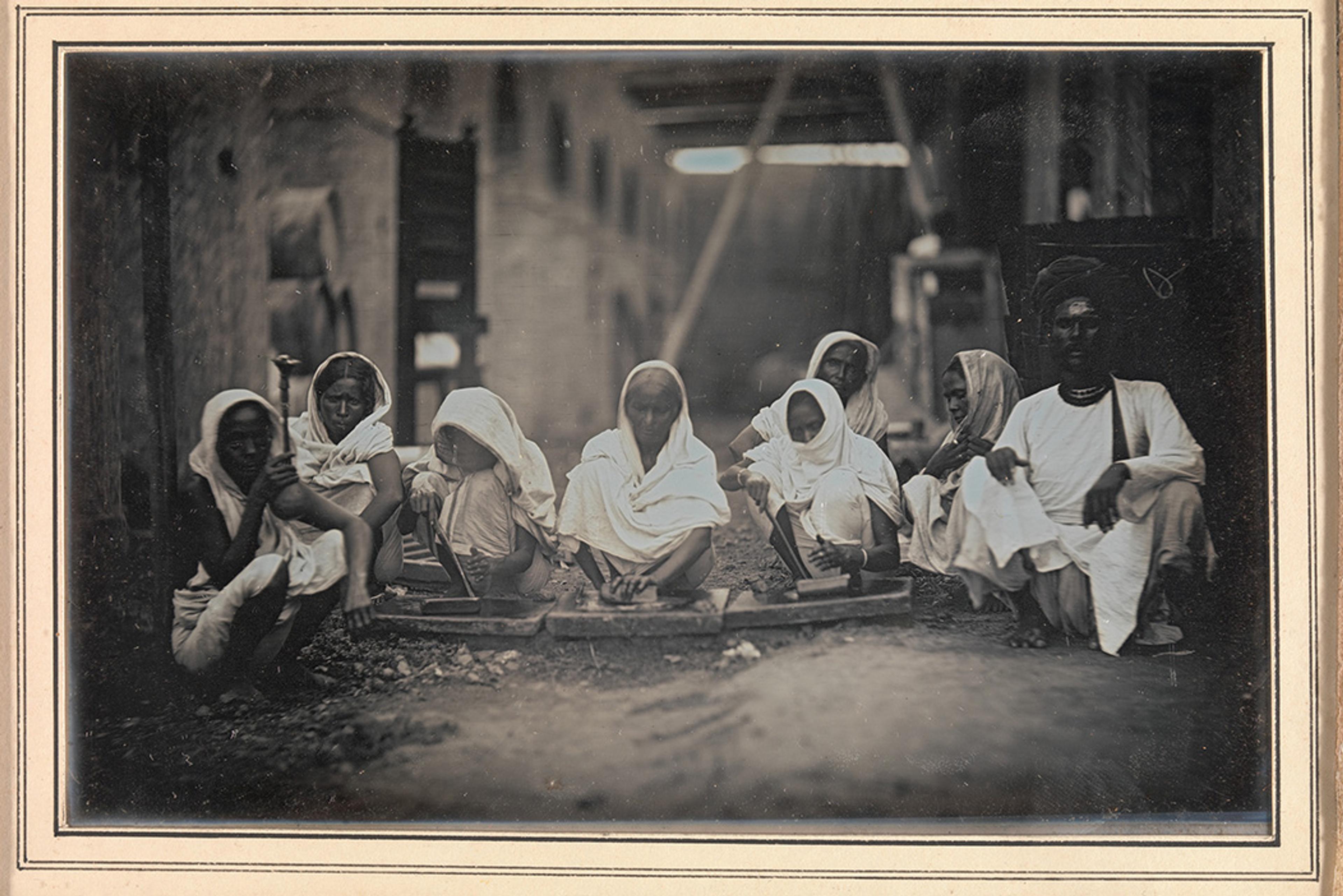
The Vedic communities left behind few physical items and permanent structures for us to study
By the beginning of the 20th century, the dominant picture of ancient Indian population history had become relatively familiar. Many assumed that Indian history became truly visible with the Vedic age of the second millennium BCE. Aryans stood at the centre of this story, while the many communities that had lived across the subcontinent before them were often pushed into the vague category of “prehistoric peoples”.
At the same time, scholars increasingly recognised important differences between northern and southern India. Indo-European languages dominated much of northern, western and eastern India, while southern India was largely home to Dravidian languages such as Tamil and Telugu. Some early writers therefore suggested that the indigenous peoples first encountered by Aryans in the northwest may have gradually moved south and become the ancestors of later Dravidian-speaking communities.
The difficulty was that these claims rested on limited evidence. Much of the 19th-century narrative about Indian origins was built on linguistic comparison and Vedic interpretation. Language can provide clues about contact, migration and cultural exchange, but it cannot be equated directly with race, bloodline or political conquest. The Vedic texts are indispensable, but they do not give us a full social history of their world.
The material record of early Vedic communities is also thin. Unlike later urban civilisations, which left behind cities, inscriptions, monuments and large quantities of objects, early Vedic society did not produce an equally visible archaeological footprint. This made scholars especially dependent on textual sources, and increased the risk of mistaking ritual poetry for straightforward historical description.
For this reason, many early claims about Indian origins were too grand for the evidence available. They were not always wholly wrong, but they were often built on uncertain foundations. Scholars tried to derive large arguments about migration, conquest, ethnicity and civilisation from a narrow set of linguistic and religious materials. In the 20th century, this situation changed dramatically with the arrival of a new body of evidence: archaeology.
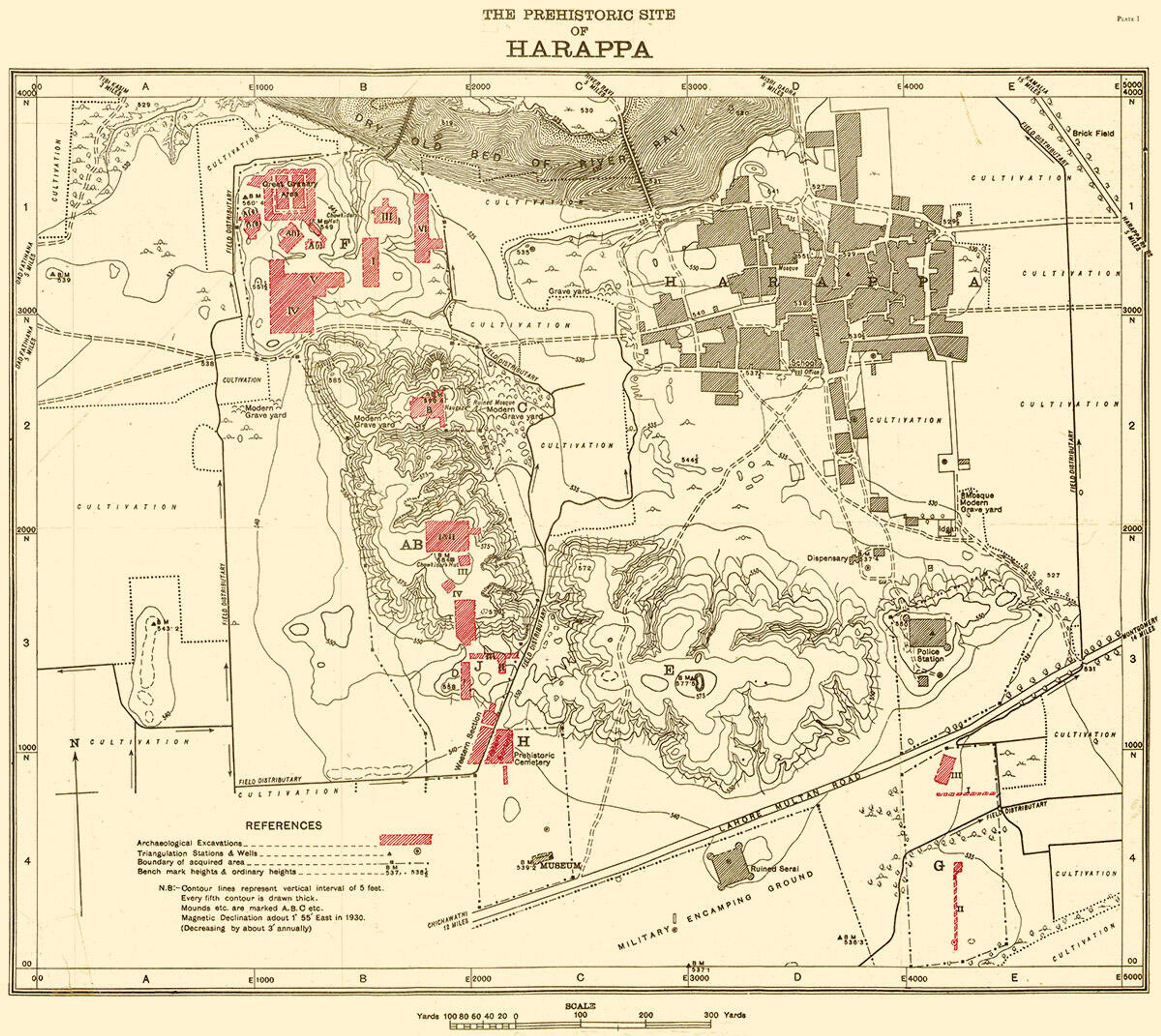
In 1931, while imprisoned by the British colonial government, Jawaharlal Nehru wrote to his daughter about an astonishing discovery in northwestern India. Long before the Aryans, he explained, there had existed an ancient urban civilisation around places such as Mohenjo-daro. This was the civilisation now known as the Indus Valley Civilisation, or the Harappan Civilisation.
The discovery of Harappa, Mohenjo-daro and related sites transformed the time scale of ancient Indian history. Before the 1920s, many believed that the clearly visible material history of Indian civilisation began around the 3rd century BCE. Archaeological work soon showed, however, that by the third millennium BCE, parts of northwestern South Asia already possessed well-planned cities, advanced craft production, long-distance exchange and complex forms of social organisation.
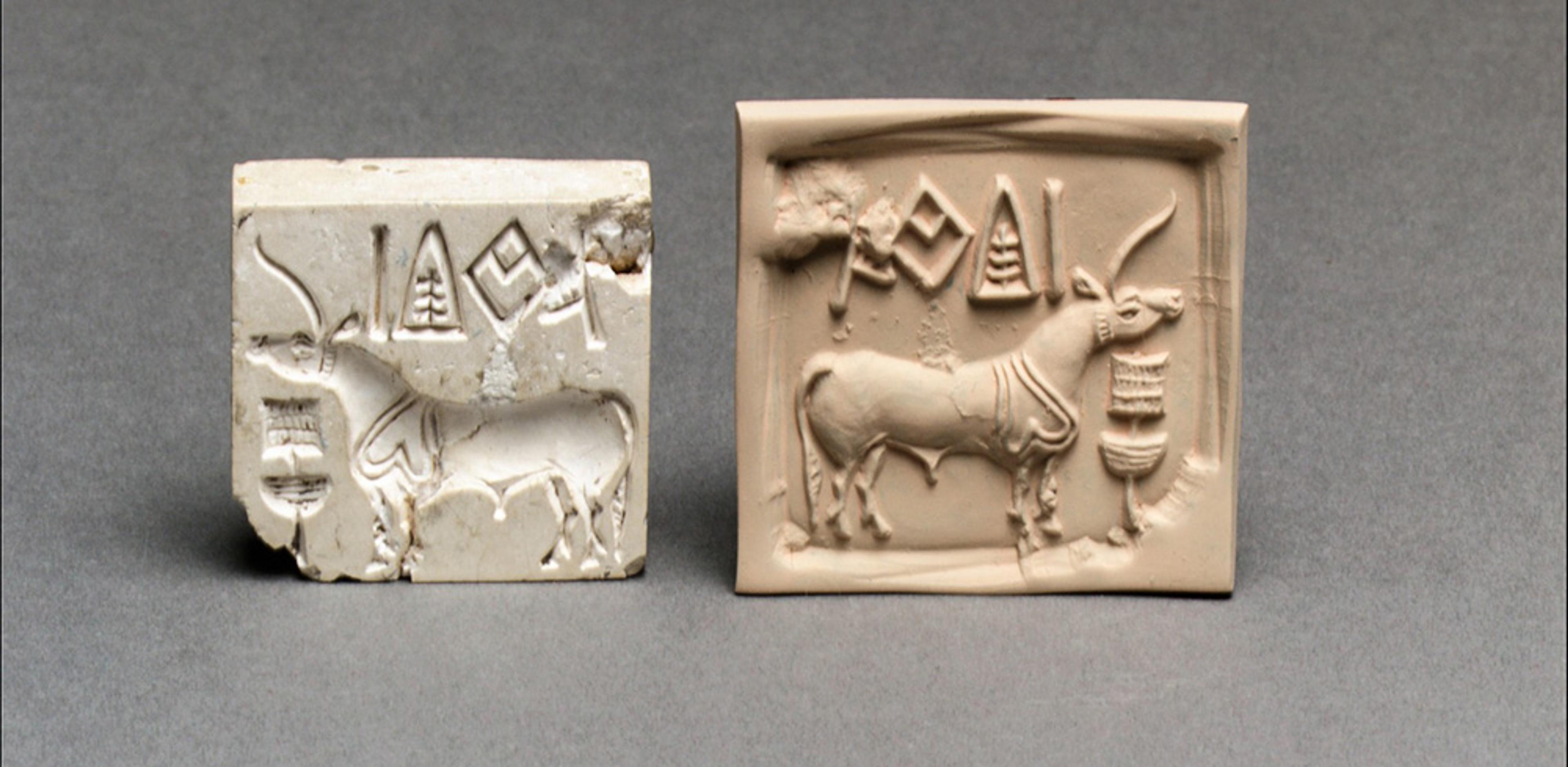
As more sites were uncovered, it became clear that the Indus Valley Civilisation was not a local curiosity but a vast and sophisticated network. Brick buildings, drainage systems, standardised weights, seals, beads, toys and everyday objects revealed a highly organised social world. This discovery gave South Asians another major branch of ancestry, and it profoundly disrupted older historical narratives.
Yet new evidence did not automatically create agreement. Instead, it generated new questions. What was the relationship between Harappans and Vedic people? Were they the same people? What language did the Harappans speak? Were they connected to later Dravidian cultures? Did the arrival of Indo-European-speaking groups have anything to do with the decline of the Indus cities? These questions remain among the most contested in the study of early South Asia.
The discovery of the Indus Valley civilisation upended an earlier sense of certainty and complacency
In 1944, while again in prison, Nehru was writing The Discovery of India. In that book, he imagined India as an ancient palimpsest: layer upon layer of thought, culture and memory written over one another, yet never fully erasing what came before. The discovery of the Indus Valley Civilisation suited this image perfectly.
Nehru was inclined to see the relationship between Harappans and incoming Aryans not as a simple matter of destruction and replacement, but as one of encounter, interaction and synthesis. He wanted to imagine Indian civilisation as the result of mixture rather than purity, of accumulated layers rather than a single origin.
This interpretation had clear political significance. As an anti-colonial leader, Nehru was concerned not only with the remote past but also with the future of a modern Indian nation made up of many religions, languages and social groups. His emphasis on synthesis served a larger project: the construction of an inclusive national identity.
For professional historians, however, the matter remained far more difficult. Some early scholars had argued that Aryan invaders destroyed the Indus cities and massacred their inhabitants. Such dramatic claims were later challenged. But rejecting a simple invasion story did not solve the deeper problem. The relationship between Harappan and Vedic cultures remained uncertain, especially because the Indus script has still not been deciphered.
Some writers tried to identify the Harappans directly with the Vedic people, thereby placing the Indus Civilisation inside a purely Vedic framework. But by the mid-20th century, more cautious historians recognised that Vedic civilisation could no longer be treated as the single foundation of all later Indian culture. The Indus Civilisation forced scholars to accept a more complicated beginning.
This complexity created political discomfort. For Nehru and other secular nationalists, a multi-layered and composite past helped support a plural idea of India. For Hindu nationalists, however, such a past was troubling. They preferred to imagine Indian civilisation as ancient, continuous, indigenous and essentially Vedic-Hindu in character. In that vision, Muslims and Christians were often treated as outsiders, even when their communities had lived in the subcontinent for centuries.
This was never only a debate about antiquity. It was a debate about belonging in the present. Hindu nationalist history often seeks to present Hindus as the rightful heirs of the land, while depicting other religious communities as less authentically Indian. To preserve that narrative, evidence of migration, mixture and cultural plurality must be minimised, reinterpreted or denied.
The discovery of the Indus Valley Civilisation was therefore not simply an archaeological event. It was also an event in the history of political thought. It undermined the idea that Vedic civilisation alone could explain India’s past, and it challenged every ideology that sought to monopolise Indian antiquity. When genetic research entered the discussion in the 21st century, it did so in an already politicised field.
Many early genetic studies of South Asia focused on tribal communities, often called Adivasis. There is a sharp irony here: Adivasis have long been marginalised in political life and historical writing, yet genetic research made them central to questions about India’s earliest populations. In 1946, the Adivasi leader Jaipal Singh Munda told India’s Constituent Assembly that many of those who claimed authority over the country were, from his people’s perspective, newcomers who had pushed Adivasis from richer lands into forests and margins.
From the late 20th century onward, genetic studies began asking when modern humans first reached South Asia, and which contemporary populations preserved larger proportions of ancient ancestry. Some research suggested that Homo sapiens arrived in the subcontinent roughly 65,000 to 50,000 years ago, and that some tribal groups retained relatively high levels of ancestry from those early settlers. These findings were debated, but they expanded the history of Indians far beyond the Vedic or Harappan worlds.
Today, almost all people in South Asia carry this ‘First South Asians’ ancestry in their genomes
Over the past three decades, DNA has become an important source for reconstructing the human past. It can be taken from living people, but also from ancient remains. Ancient DNA has been especially significant because it allows researchers to study past populations directly rather than only inferring them from modern groups.
Still, DNA does not interpret itself. Like texts, artefacts and inscriptions, it must be read through methods, models and assumptions. Different research teams may work with different samples and statistical approaches, and may therefore arrive at different conclusions. Genetics cannot replace history, archaeology or linguistics. It must be read alongside them.
According to influential current research, South Asia was not empty when anatomically modern humans arrived. Other human species had already lived there. Over time, modern humans became dominant and developed varied hunter-gatherer cultures across the region. Archaeological evidence such as ostrich eggshell beads, rock art and stone tools suggests technical skill, symbolic behaviour and aesthetic expression among these early populations.
These earliest modern human inhabitants of the region have sometimes been called the “First Indians”. In a broader regional sense, they may be called the “First South Asians”. Today, almost all South Asians carry ancestry from these ancient populations, though in different proportions. Many tribal communities tend to retain more of this ancestry, while other groups reflect more complex later layers of migration and mixture.
The genetic studies that attracted the widest public attention were those concerning caste and Aryan migration. A 2001 study argued that upper-caste Indians showed greater genetic affinity with Europeans than lower-caste and tribal groups did. Such findings immediately entered public debate, because they touched on old and sensitive questions about Brahmans, Aryans and the origins of caste.
But early genetic research did not speak with one voice. Some studies stressed the connection between upper castes and West Eurasian ancestry; others argued that South Asian genetic diversity was older than any possible Aryan migration and could not be mapped neatly onto caste hierarchy. These competing findings were quickly taken up by activists and political groups seeking support for their own views of caste, identity and history.
A major turning point came in 2009, when David Reich and his collaborators published an influential genome-wide study. Using broader samples and more advanced methods, the study proposed that the ancestry of present-day South Asians could be modelled through two abstract components: Ancestral South Indians, or ASI, and Ancestral North Indians, or ANI. These were not historical peoples with fixed names and borders, but analytical categories created for genetic modelling.
Later research clarified how these ancestral components may have formed. Around 7500 BCE, people connected to the Zagros region of present-day Iran began moving into northwestern South Asia. They may have brought agricultural knowledge, or their farming practices may have merged with local developments already under way. In either case, these Iran-related groups mixed with descendants of the First South Asians and helped form the population base from which the Indus Valley Civilisation emerged.
By around 3500 BCE, the Indus Valley Civilisation was taking shape. It was not the creation of a single isolated people, but the outcome of long processes of migration, mixture, adaptation and technological development. The Harappans themselves were already a composite population, carrying deep South Asian hunter-gatherer ancestry alongside ancestry related to ancient Iranian agricultural populations.
The migrants from the northwest were descendants of pastoralists from the Eurasian Steppe region
After around 1900 BCE, the urban system of the Indus Valley Civilisation entered a period of decline. Climate shifts, changing river systems, transformations in trade and internal social changes may all have contributed. As cities lost their former centrality, many Harappans moved eastward and southward, mixing further with descendants of the First South Asians across the subcontinent.
This process is thought to have contributed to the formation of the ASI-related ancestry. Some studies have found a strong association between ASI ancestry and present-day Dravidian-speaking populations. This has led some scholars to suggest that early ASI-related people may have spoken a Dravidian language. Such proposals must be treated carefully, because genes and languages are not the same thing, but the association remains historically suggestive.
The period between 2000 and 1000 BCE appears, from today’s perspective, to have been extraordinarily dynamic. Harappan populations were moving. Local descendants of early South Asians were mixing with agricultural communities. New migrants were entering from both the east and the northwest. From the east came groups associated with the spread of Austroasiatic languages, who mixed with local populations and contributed to the ancestry of many communities now living in eastern and central India, including Munda groups.
From the northwest came people linked to the spread of Indo-European languages. These migrants carried ancestry associated with pastoralists of the Eurasian Steppe, related to Bronze Age populations of eastern Europe and Central Asia. Genetic research suggests that this Steppe ancestry entered South Asia during the second millennium BCE and mixed with local populations descended in part from the Harappans.
In traditional historical language, these northwestern migrants are often identified with the Aryans. Unlike some 19th-century narratives, however, present-day scholarship tends to avoid a simple story of conquest and replacement. It speaks instead of migration, contact, language spread, social reorganisation and mixture. Steppe-derived groups did not simply replace earlier inhabitants; they became part of a new social and genetic landscape.
Research also suggests that the entry of Steppe ancestry into South Asia was male-biased. In other words, this ancestry appears to have entered later South Asian populations more through men than women, and it is found in higher proportions among some upper-caste groups. This finding has been connected to discussions of patriarchy, priestly lineages, language transmission and caste formation. But it must be interpreted cautiously, without reducing complex social identities to genetic percentages.
Over time, ASI- and ANI-related populations mixed widely across the subcontinent. Geneticists suggest that this extensive mixing began to decline roughly 1,900 years ago. That timing corresponds broadly with the period in which historians believe caste endogamy became more firmly established. South Asia, in other words, experienced long periods of intermixture before stricter marriage boundaries hardened.
It is important to remember that ASI and ANI are modelling terms, not ancient ethnic names. South Asian population history is far more complex than two labels can capture. A more accurate description would speak of repeated migrations, mixtures, conflicts, alliances, language shifts and social reorganisations. There is no single pure origin, only layers upon layers of historical formation.
From this perspective, modern South Asians are the products of many histories. Greeks, Persians, Steppe pastoralists, Iran-related agriculturalists, the earliest South Asian hunter-gatherers, Turks, Arabs, Mughals, Europeans and countless smaller movements and local mixtures have all shaped the demographic and cultural landscape in different ways.
The value of genetics is that it gives more precise evidence for some long-standing scholarly arguments. The movement of Steppe-related groups into South Asia in the second millennium BCE, for example, is now supported by multiple lines of genetic research. The strengthening of caste endogamy also finds support in patterns of declining mixture.
But genetics has limits. It can tell us about ancestry, migration and mixture, but it cannot by itself explain culture, power, religion, language choice or social oppression. Human beings are not merely bundles of DNA. To biologise identities such as caste, nation or religion is dangerous. Historical research needs genetic evidence, but it must not surrender to genetic determinism.
That reality will continue to be vehemently opposed by powerful Hindutva groups and political parties
Without the accumulated knowledge of history, linguistics, archaeology, anthropology and the social sciences, genetic data would be much harder to interpret meaningfully. Genes become historically useful only when placed within broader frameworks of language, culture, material evidence and social organisation. Geneticists have not replaced historians. They have joined an ongoing interdisciplinary conversation.
To call geneticists “late-arriving barbarians” may be witty, but it is not quite accurate. They are better understood as newer participants in an old debate: scholars who stand on the shoulders of earlier researchers while also contributing new forms of evidence. The most convincing history of South Asia will not come from one discipline alone, but from the careful correction and combination of many.
Across more than two centuries, evidence from linguistics, archaeology and genetics has increasingly pointed toward a basic reality: Indian civilisation did not arise from a single pure source, and South Asian populations were never sealed off from movement and exchange. In particular, the entry of Steppe-related groups into South Asia during the second millennium BCE is now supported by several kinds of evidence.
Yet this reality will continue to be strongly resisted by powerful Hindutva groups and political parties. The reason is not difficult to see. If Indian history is acknowledged as a story of multiple origins, migration, mixture and mutual influence, then the claim that India has always belonged purely to one religion, one people or one tradition becomes much harder to sustain.
In a country marked by crushing inequality and deep social suffering, the intensity of arguments over remote antiquity can seem strange. Hundreds of millions of ordinary Indians, especially those from low-caste and tribal communities, continue to face poverty, hunger, exclusion and lack of opportunity. For many of them, the question of who moved where thousands of years ago may matter less than access to food, land, dignity and education today.
Yet history matters because it is often used to justify present power. If some groups claim to be the only authentic heirs of the land, others can be excluded, diminished or treated as outsiders. For that reason, debates about Indian origins are never entirely remote. They remain tied to the politics of belonging.
The wealth of India’s richest people stands in brutal contrast to the lives of those who depend on government food support to avoid hunger. Imagine a person with $100 billion spending $1,000 every day on food. Counting backward through time, he would still have immense wealth left when we reached the age of the Harappans.
He would still have vast sums remaining when we moved further back to the hunter-gatherers who made ostrich eggshell beads, and even further back to the first Homo sapiens who entered South Asia around 65,000 years ago. Only by travelling back to the much older Middle Stone Age world of hominins, to sites such as Attirampakkam around 275,000 years ago, would that fortune finally be exhausted.
This exaggerated calculation reminds us that debates about ancient origins should not obscure the inequalities of the present. The history of Indians is a history of migration, mixture and shared formation. But the present of India is also a history of unequal wealth, unequal power and unequal dignity. The most urgent question may not only be where Indians came from, but who today is allowed to belong fully to the land, and who is still denied an equal place within it.