Why Latin Music Captivates the World
Article Summary: Latin music fascinates the world because it speaks to the body before it asks to be translated. Its rhythms invite movement, its melodies carry emotion, and its cultural roots connect love, migration, celebration, memory, pain, and pride. From salsa and bachata to reggaeton, cumbia, bossa nova, Latin pop, and regional sounds, Latin music has become a global language of energy and feeling — one that turns private emotion into shared rhythm.
Some music reaches the mind first. Latin music often reaches the body first. Before a listener understands every lyric, before they know the history of a rhythm or the name of an instrument, something physical happens. A shoulder loosens. A foot taps. The room feels warmer. The beat seems to ask for movement rather than permission.
This is one of the reasons Latin music has traveled so powerfully across the world. It does not wait for perfect understanding. It begins with pulse. It creates an emotional invitation that people can feel immediately, even when the song comes from a language, country, or tradition far from their own.
But Latin music is not only party music, and it is not only dance music. That is the mistake people sometimes make when they hear its brightness from a distance. Beneath the rhythm is history. Beneath the celebration is memory. Beneath the sensuality is longing. Latin music carries migration, colonial history, African rhythms, Indigenous influences, European instruments, Caribbean heat, urban neighborhoods, rural traditions, family gatherings, heartbreak, resistance, and joy.
Its global appeal comes from this combination: it is deeply rooted, yet widely accessible. It can make people dance in a club, cry in a car, sing at a wedding, remember home, or feel alive on an ordinary afternoon.
The Heart of Latin Music
Latin music captivates the world because it turns rhythm into emotion. It does not only entertain listeners; it gives them a way to move through feeling.
Rhythm Comes Before Translation
One of the most powerful qualities of Latin music is that it can cross language barriers without losing its emotional force. A listener may not understand Spanish, Portuguese, or the regional expressions inside a song, yet the rhythm still communicates something direct.
Salsa, reggaeton, bachata, cumbia, merengue, samba, bossa nova, tango, and many other Latin-rooted styles carry rhythm patterns that are instantly recognizable once the body feels them. Some rhythms are playful. Some are romantic. Some feel festive. Some feel smooth and intimate. Some carry a street energy that feels raw and immediate.
This is why Latin music often succeeds globally even before listeners know the full meaning of the lyrics. The rhythm becomes the first translation. It says, “Come closer. Move with this. Feel this first.”
Latin music does not need every word to be understood before it is felt.
Its first language is pulse — the kind that reaches the feet, hips, hands, and heart before the mind catches up.
A Sound Built From Many Worlds
Latin music is not one single sound. It is a vast cultural family shaped by centuries of movement, mixture, struggle, and creativity. Its roots often include Indigenous traditions, African percussion, European harmonic structures, Caribbean rhythms, and local storytelling. That blend is part of its richness.
In many Latin music traditions, rhythm is not decoration. It is the foundation. Drums, claves, congas, bongos, guitars, brass, accordions, piano patterns, handclaps, and vocal responses create a layered sound that feels communal. The music often seems less like one voice speaking alone and more like a room answering itself.
This layered history gives Latin music emotional depth. It can sound joyful without being shallow. It can feel seductive without being empty. It can celebrate life while carrying the memory of hardship, migration, and survival.
The Cultural Layers Behind the Sound
African Rhythmic Influence
Percussion, syncopation, call-and-response patterns, and body-centered rhythm give many Latin styles their irresistible movement.
European Melodic and Harmonic Influence
Guitars, strings, piano, brass, and formal song structures helped shape romantic and dramatic expression.
Local and Indigenous Memory
Regional instruments, stories, languages, landscapes, and community traditions give each style its local soul.
Dance Makes the Music Social
Latin music is often inseparable from dance. This is not a small detail. Dance changes the meaning of music because it turns listening into participation. The audience is not only watching or hearing; it becomes part of the rhythm.
Salsa invites conversation between partners. Bachata carries closeness and longing. Reggaeton brings urban confidence and physical intensity. Samba radiates collective celebration. Tango dramatizes tension, elegance, and desire. Cumbia can feel both nostalgic and communal, depending on where and how it is played.
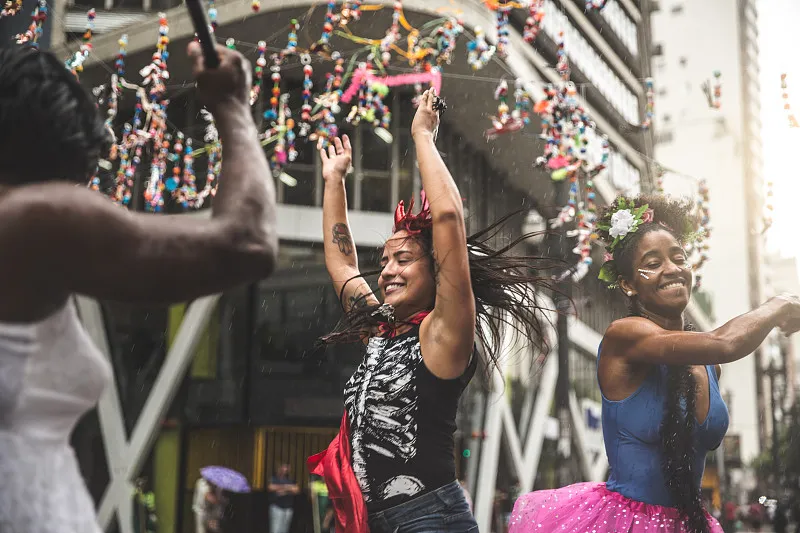
The dance floor is one of the reasons Latin music has become global. People do not only consume it through headphones. They meet through it. They learn steps. They touch hands. They follow and respond. They find confidence in movement. They experience music as a shared social space.
Dance Floor Insight
Latin music becomes unforgettable because it often gives listeners something to do with their emotions. They do not only feel the song; they move through it.
Joy and Melancholy Often Live Together
From the outside, Latin music is sometimes reduced to celebration. It is true that many Latin songs feel bright, energetic, sensual, and festive. But the emotional power of the music often comes from a more complex mixture. Joy and sadness frequently live side by side.
A song may make people dance while telling a story of heartbreak. A rhythm may feel playful while the lyrics speak of longing. A melody may sound sweet while carrying nostalgia for home, youth, or someone who left. This emotional contrast is one of Latin music’s greatest strengths.
Life itself is rarely one emotion at a time. Latin music understands this. It can celebrate without denying pain. It can make sadness move. It can turn heartbreak into something people sing together instead of carrying alone.
Latin music often smiles with tears in its eyes.
That emotional duality is why it feels human: joy does not erase sorrow, and sorrow does not stop the rhythm.
The Voice of Migration and Home
Latin music has traveled with people. It has moved through migration, diaspora, family memory, border crossings, and neighborhoods where people carry one country in their heart while building a life in another. For many listeners, Latin music is not just entertainment. It is home in sound form.
A song can bring back a kitchen, a street, a grandmother’s voice, a summer night, a childhood party, or the feeling of a country left behind. This is why Latin music often has such strong emotional value for communities living far from their roots.
At the same time, migration has helped Latin music evolve. Sounds mix in new cities. Genres blend with hip-hop, pop, electronic music, R&B, and global club culture. The music carries memory, but it does not remain frozen. It keeps adapting because the people who carry it keep adapting too.
What Latin Music Carries Across Borders
Memory
Songs preserve places, family histories, childhood moments, and emotional connections to home.
Identity
Music helps people remain connected to language, heritage, and cultural pride across generations.
Reinvention
New cities and new audiences reshape the sound, making Latin music both rooted and modern.
Reggaeton and the Global Urban Pulse
One of the clearest examples of Latin music’s global power is reggaeton. Its beat is instantly recognizable, and its rise shows how Latin sounds can move from local and regional scenes into worldwide nightlife, streaming platforms, fashion, and pop culture.
Reggaeton’s appeal lies in its directness. It is rhythmic, urban, confident, and built for movement. It can be romantic, provocative, playful, or aggressive. It carries the energy of streets, clubs, youth culture, and digital life. It does not ask to be delicate. It asks to be felt loudly.
Its global success also reveals something important about modern music: the center of pop culture is no longer limited to English-language industries. A Spanish-language song can dominate global playlists. A Latin artist can set trends across continents. A beat born in one cultural context can become part of the world’s shared nightlife.
Modern Music Shift
Latin music’s global rise shows that pop culture is no longer moving in one direction. The world is not only listening to English-language music; it is dancing across languages.
Romance Feels More Physical in Latin Music
Latin love songs often feel intensely embodied. Romance is not treated only as thought or poetry. It is breath, distance, touch, jealousy, waiting, dancing, desire, and memory. The voice often carries urgency, while the rhythm gives the emotion somewhere to go.
Bachata is a perfect example of this emotional closeness. Its guitar lines can sound tender and wounded, while its rhythm invites intimate movement. Salsa can turn flirtation into conversation. Bolero can slow desire into confession. Latin pop can make heartbreak feel cinematic and immediate.
This physical quality of romance is part of the global fascination. The music makes love feel not only heard, but lived in the body.
In Latin music, love often has rhythm.
It is not only something people say. It is something they dance, remember, resist, lose, and return to.
Celebration Is Treated as Necessary, Not Extra
Another reason Latin music captivates the world is that it treats celebration seriously. In many Latin cultures, music is central to birthdays, weddings, street parties, family gatherings, religious celebrations, neighborhood events, and ordinary weekends. Music is not only background sound. It structures social life.
This gives the music a lived quality. It is made for rooms full of people, not only for private listening. It knows how to gather bodies. It knows how to move across generations. A song can belong to young people in a club and also to families at a party. A rhythm can carry both nostalgia and new energy.
In a world where many people feel isolated, this communal energy is deeply attractive. Latin music reminds listeners that joy can be shared out loud.
Cultural Reflection
Latin music often feels alive because it was never meant to stay still. It belongs to kitchens, streets, dance floors, family parties, festivals, cars, radios, and crowded nights.
The Digital Era Made Latin Music Travel Faster
Streaming platforms, short videos, global collaborations, and social media have changed how Latin music reaches listeners. A song no longer needs to pass through traditional gatekeepers in the same way. A rhythm can go viral through a dance challenge, a clip, a remix, or a collaboration that connects artists across countries.
This digital movement has allowed Latin music to reach people who may never have grown up around it. A listener in Asia, Europe, Africa, or the Middle East can discover a reggaeton track, a bachata remix, a Brazilian groove, or a salsa classic through an algorithm, then follow the sound into a wider world.
But digital popularity is only part of the story. The music travels fast because the feeling travels fast. The beat is memorable. The hooks are strong. The mood is immediate. The songs are built for repetition, movement, and emotional recognition.
Digital Culture Insight
Social media did not create Latin music’s appeal. It simply gave its rhythms a faster road around the world.
The World Is Not Just Listening — It Is Collaborating
Latin music’s global influence is also visible in collaboration. Artists from different genres increasingly borrow Latin rhythms, work with Latin producers, feature Spanish-language verses, or create songs designed to move between markets and languages.
This can create exciting new music, but it also raises important questions. When does cultural exchange become appreciation? When does it become commercial borrowing without respect? As Latin sounds become more global, the roots behind those sounds should not disappear.
The best collaborations do not treat Latin music as a trendy flavor. They respect the artists, languages, communities, and histories that made the sound powerful in the first place.
What Respectful Global Influence Looks Like
Credit the Roots
Acknowledge the communities and musical traditions behind the sound.
Collaborate, Do Not Just Borrow
Work with Latin artists, producers, writers, dancers, and creative teams in meaningful ways.
Respect the Language
Let Spanish, Portuguese, and local expressions remain central, not decorative.
Why Latin Music Feels So Alive
At its deepest level, Latin music feels alive because it refuses to separate emotion from movement. It does not treat the body as separate from the heart. A beat can carry grief. A dance can carry flirtation. A chorus can carry national pride. A party song can carry the memory of people who survived hard times and still chose to sing.
This is why the music can feel both intimate and collective. A listener may hear their own heartbreak in a song, but they may also dance to it with a crowd. Private feeling becomes public rhythm. Individual emotion becomes shared release.
In a world full of stress, speed, and digital distance, Latin music offers something direct and human: the permission to feel with the whole body.
Latin music makes emotion social.
It gives people a way to gather around joy, longing, memory, desire, and release — without needing to explain everything first.
Final Thoughts
Latin music captivates the world because it is generous with feeling. It welcomes movement. It carries history without becoming trapped by it. It turns love, loss, pride, flirtation, memory, and celebration into rhythm that people can share.
Its global rise is not only a story of catchy songs or viral beats. It is a story of cultures that have long known how to make music part of daily life — part of family, identity, romance, dance, neighborhood, migration, and survival.
That is why Latin music feels so powerful even to listeners far from its origins. It reminds people that music can still be physical, communal, emotional, and alive. It does not ask the world to sit still and analyze from a distance. It invites the world to stand up, feel the rhythm, and join.
Perhaps that is its greatest gift: Latin music does not only make people hear something beautiful. It makes them remember that they have a body, a heart, and a need to move through life with others.
Final Reflection: Latin music enchants the world because it turns rhythm into connection. It proves that a song can travel across language, geography, and culture when it carries enough pulse, memory, and human warmth.