Why Balinese Culture Captivates Travelers Around the World
Article Summary: Bali attracts travelers not only because of its beaches, resorts, rice terraces, and sunsets, but because the island carries a cultural rhythm that feels deeply alive. From daily offerings and temple ceremonies to traditional dance, village life, craftsmanship, hospitality, and spiritual balance, Balinese culture turns travel into something more meaningful than sightseeing. This article explores why Bali continues to move people emotionally — and why its greatest beauty often lies not in one famous landmark, but in the way life itself is treated as a ritual.
Bali is often introduced through images: turquoise water, infinity pools, jungle villas, dramatic cliffs, flower baths, and glowing sunsets over the ocean. These images are beautiful, and they are part of why so many travelers dream of visiting the island. But anyone who spends more than a few days in Bali usually discovers something deeper.
The island does not feel special only because of what it looks like. It feels special because of how it lives.
In Bali, culture is not hidden inside museums or saved only for festivals. It is woven into the morning. It appears in small offerings placed near doorways, in temple music drifting through the air, in women carrying baskets on their heads, in the scent of incense, in the careful gestures of prayer, and in the way beauty is added to ordinary life without needing to announce itself.
That is why Bali continues to attract global travelers. It offers pleasure, yes, but also atmosphere. It offers comfort, but also meaning. It invites people to rest, but also to notice. For many visitors, Bali becomes less like a destination and more like a feeling they want to return to.
The Heart of Bali’s Appeal
Bali captivates travelers because its culture makes beauty feel daily, spiritual, and shared. The island does not only show visitors beautiful places; it shows them a different way of moving through life.
Culture Is Visible in Everyday Life
In many travel destinations, culture is something tourists are invited to watch at certain times: a performance, a festival, a historic site, or a guided tour. In Bali, culture often feels much closer. It appears in everyday gestures, repeated quietly and faithfully.
One of the most memorable examples is the daily offering, known as canang sari. These small woven palm-leaf trays may contain flowers, rice, incense, and other symbolic elements. They are placed in homes, shops, temples, sidewalks, and even near vehicles. To an outsider, they may seem like decoration at first. But they are much more than that.
They represent gratitude, balance, and connection between the human world and the spiritual world. Their beauty lies partly in their impermanence. They are made, offered, stepped around, weathered, and remade again. The ritual does not need to last forever to matter. It matters because it is repeated with care.
Bali teaches visitors that beauty does not always need permanence.
Sometimes beauty is a small morning offering, created with care, given to the day, and replaced tomorrow.
The Island Moves Between the Sacred and the Ordinary
One of the reasons Bali feels so different is that sacred life and ordinary life are not sharply separated. A shop may close for a ceremony. Traffic may pause for a procession. A family compound may include a shrine. A beach may be both a place for tourists and a place of ritual. A village road may become a ceremonial route filled with music, offerings, and traditional dress.
This can surprise visitors who arrive expecting the island to function only as a vacation paradise. Bali is indeed beautiful and relaxing, but it is also deeply ceremonial. Its cultural life has its own rhythm, and travelers are often guests inside that rhythm rather than the center of it.
That is part of its emotional power. Bali does not reduce itself entirely to tourism. Even in areas shaped heavily by global travel, the island still carries traditions that remind visitors: this place belongs first to its people, their ancestors, their temples, their villages, and their gods.
Travel Insight
The most meaningful way to experience Bali is not to treat its culture as a performance, but to recognize it as a living system that continues with or without visitors.
Temples Are Not Just Attractions
Bali is often called the Island of the Gods, and its temples are among the first cultural sites travelers seek out. Tanah Lot, Uluwatu, Besakih, Tirta Empul, and many smaller village temples draw visitors with their dramatic settings and spiritual atmosphere.
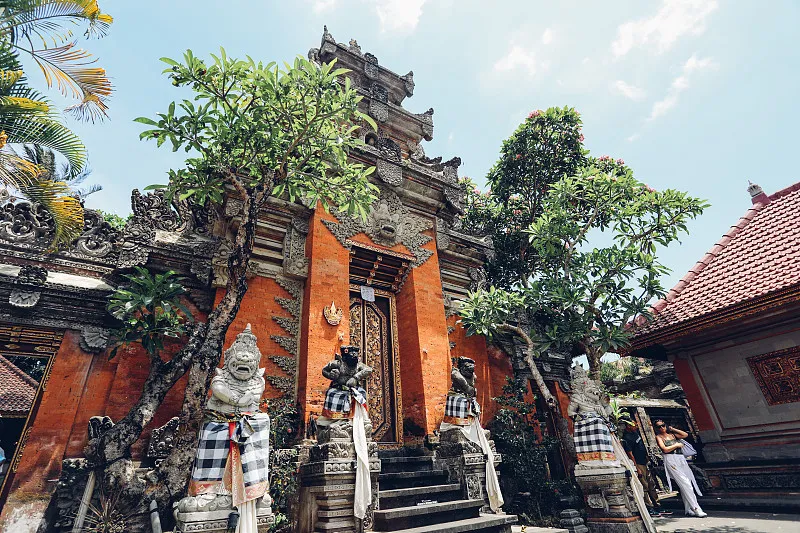
But temples in Bali are not only scenic landmarks. They are active spiritual spaces. They are places of worship, purification, community gathering, and ancestral connection. The beauty of a Balinese temple is not only in stone gates, carved walls, or ocean cliffs. It is in how the space is used.
A temple feels different when you remember that prayers have been offered there long before tourists arrived with cameras. The incense, bells, flowers, clothing, music, and gestures all form a language of devotion. To visit respectfully is to understand that beauty here is not separate from belief.
How to Read a Balinese Temple Experience
Architecture
Gates, courtyards, shrines, carvings, and stone forms create a visual sense of sacred order.
Ritual
Offerings, prayers, water purification, incense, and ceremonial dress give the temple its living meaning.
Respect
Sarongs, quiet behavior, and awareness of worshippers help visitors enter the space with humility.
Dance Turns Myth Into Movement
Balinese dance is one of the most striking ways the island expresses its culture. The movements are precise, intense, and full of symbolic detail. Eyes widen. Fingers curve sharply. Shoulders shift. Feet step in rhythm with gamelan music. Every gesture seems to carry meaning.
For travelers, performances such as the Kecak dance at Uluwatu can feel unforgettable. The setting, the chanting, the sunset, the fire, and the mythological story combine into something both theatrical and spiritual. But Balinese dance is not only entertainment. It is also connected to ritual, storytelling, education, and cultural continuity.
Through dance, old stories remain visible. Gods, demons, kings, animals, heroes, and cosmic forces return to the present. The body becomes a book that the community already knows how to read.
Balinese dance does not simply tell a story.
It keeps memory moving — through hands, eyes, rhythm, costume, music, and devotion.
Village Life Gives Bali Its Deepest Roots
While many visitors know Bali through beach clubs, yoga studios, villas, and cafés, the island’s cultural foundation is deeply tied to village life. Community organization, ceremonies, temple responsibilities, family compounds, local customs, and shared obligations all shape how people live.
In Balinese society, individual life is often connected to collective life. Families prepare offerings. Villagers join ceremonies. Communities maintain temples. Important life events are marked publicly. This gives the culture a strong sense of belonging, but it also requires time, labor, and responsibility.
For travelers, this can be humbling. The visible beauty of Bali is supported by countless invisible acts of care. A ceremony may look effortless from outside, but behind it are hours of preparation, coordination, craft, and devotion.
Cultural Depth
Bali’s charm is not created only by scenery. It is sustained by communities that continue to practice, prepare, gather, and care for traditions together.
Art and Craft Are Part of Daily Identity
Bali has long been known for craftsmanship: wood carving, stone sculpture, painting, textiles, silverwork, masks, baskets, and ceremonial objects. In places like Ubud and surrounding villages, art is not simply a commercial product for tourists. It is part of cultural inheritance.
Many objects in Bali sit between function, beauty, and ritual. A carved door protects a home but also expresses artistry. A mask may be beautiful but also connected to performance and sacred meaning. A textile may be worn, gifted, or used in ceremony. Craft is not separate from life; it supports life’s important moments.
This is why shopping for handmade work in Bali can feel different when done thoughtfully. The best pieces are not just souvenirs. They are traces of skill, patience, and a culture that still gives handmade beauty a place in daily life.
Where Balinese Beauty Often Lives
In the Handmade
Carving, weaving, painting, and metalwork carry patience and inherited skill.
In the Ceremonial
Offerings, fabrics, masks, flowers, and music turn devotion into sensory experience.
In the Everyday
Doorways, shrines, gardens, clothing, and meals often carry a quiet sense of design.
Nature and Spirituality Feel Intertwined
Bali’s landscapes are not only scenic backdrops. Mountains, rivers, rice terraces, forests, beaches, and springs often carry cultural and spiritual meaning. Water temples, purification rituals, agricultural systems, and sacred geography all show how closely nature and belief are connected.
The rice terraces, for example, are not only beautiful for photographs. They reflect a long relationship between agriculture, community, water management, and religious philosophy. The flowing green fields around Ubud and beyond show how human labor and natural rhythm can be organized into something both practical and visually graceful.
This connection between land and spirit is one reason travelers often describe Bali as calming or healing. The island’s beauty is not only external. It seems to suggest a way of living where nature is not merely used, but honored.
Bali’s landscapes feel alive because culture has taught people how to see them.
A spring can be sacred, a mountain can be protective, a rice field can be both food and philosophy.
Hospitality Feels Warm Without Feeling Forced
Many travelers remember Balinese hospitality long after they leave. It may appear in a smile, a greeting, a careful explanation, a flower placed on a bed, a driver waiting patiently, a host sharing local advice, or a family-run guesthouse treating visitors with quiet generosity.
Of course, tourism is also an industry, and not every interaction is purely cultural or personal. But the warmth many visitors feel is still connected to a broader social atmosphere where politeness, patience, and graciousness matter.
Bali’s hospitality is powerful because it often feels soft. It does not need to overwhelm the visitor. It simply creates a sense of being received. For travelers far from home, that feeling can be surprisingly emotional.
Why Hospitality Matters
A beautiful island may attract visitors once. But warmth, kindness, and human connection are often what make people want to return.
The Global Dream of Bali Is Also Complicated
Bali’s global popularity has brought opportunity, but it has also brought pressure. Tourism supports many livelihoods, yet it can also raise prices, strain infrastructure, create traffic, increase waste, and sometimes turn sacred or local spaces into photo backdrops.
This is the complicated side of Bali’s attraction. The same beauty that draws travelers can become vulnerable when too many people consume it without understanding it. A temple is not just a setting. A ceremony is not just content. A village is not just an aesthetic. A culture is not a prop.
Loving Bali responsibly means asking better questions. Am I respecting local customs? Am I supporting local people fairly? Am I dressing appropriately in sacred spaces? Am I treating ceremonies with dignity? Am I leaving more than I take?
A More Respectful Way to Travel in Bali
Dress With Awareness
Use proper temple attire, cover shoulders or legs where required, and follow local guidance.
Observe Before Photographing
Ask when appropriate, avoid disturbing ceremonies, and remember that sacred moments are not staged for cameras.
Support Local Culture Thoughtfully
Choose local guides, family-run businesses, responsible tours, and crafts made with genuine skill.
Why Bali Feels Like a Place of Return
Many travelers leave Bali with a feeling that is difficult to explain. It is not only nostalgia for a beach or hotel. It is the memory of a rhythm: morning offerings, scooter sounds, temple bells, rice fields after rain, the smell of incense, the warmth of strangers, the slow arrival of sunset, and the feeling that beauty was waiting in small places.
Bali can feel like a place of return because it touches something people often miss in modern life. A sense of ritual. A connection to nature. A softer pace. A visible relationship with the sacred. A way of making daily life feel less empty and more intentional.
This does not mean Bali is perfect. No place is. But its cultural atmosphere can remind visitors of a question they may not ask often enough: what would life feel like if beauty, gratitude, and community were not saved for special occasions, but practiced every day?
Bali’s deepest gift may be the way it makes daily life feel ceremonial.
The island’s culture reminds travelers that beauty can be repeated, shared, offered, and lived.
Final Thoughts
Bali attracts global travelers because it offers more than tropical escape. It offers a culture where beauty, spirituality, nature, and community are closely connected. The beaches may bring people to the island, but the rituals, kindness, temples, dances, offerings, landscapes, and quiet details are often what stay in memory.
To visit Bali well is to see beyond the postcard. It is to understand that the island is not simply a background for personal pleasure, but a living cultural world with its own responsibilities, beliefs, and rhythms. The more respectfully a traveler enters that world, the more meaningful the journey becomes.
Perhaps Bali’s greatest charm is that it makes people feel both far away and strangely connected — far from ordinary routine, yet closer to something essential: gratitude, beauty, ritual, and the quiet human need to belong to a world that feels alive.
That is why Bali continues to call people back. Not only because it is beautiful, but because it teaches visitors to notice beauty differently.
Final Reflection: Bali’s culture reminds us that travel is not only about where we go, but how deeply we learn to see. The island’s lasting magic lies in its ability to turn ordinary gestures into ritual, landscapes into meaning, and a journey into a more attentive way of living.