When Machines Begin to Create, Will Human Culture Become Richer or More Uniform?
Estimated Reading Time: 10 minutes
When Machines Begin to Create, Will Human Culture Become Richer or More Uniform?
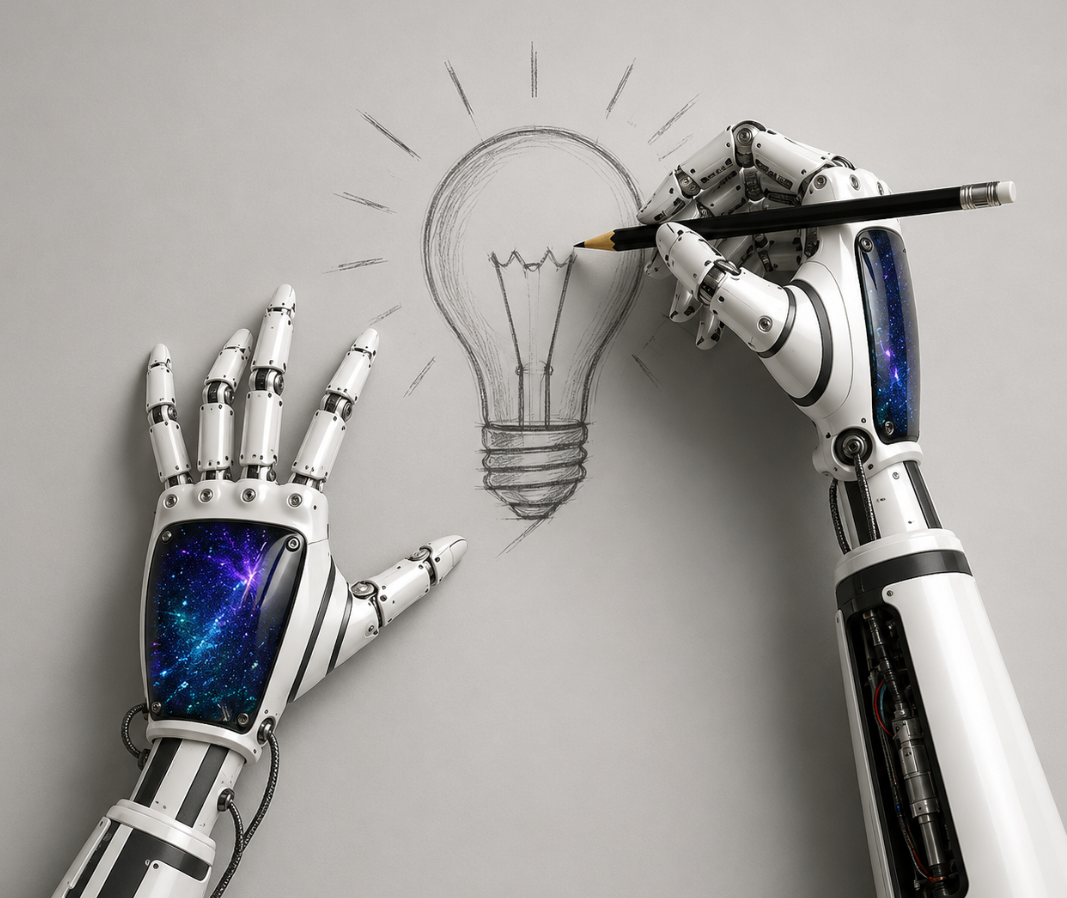
Artificial intelligence can now write, draw, compose, edit, imitate, remix, and generate ideas at a speed that would have seemed impossible not long ago. This raises a question that is bigger than technology: when machines join the creative process, will human culture become more diverse, expressive, and open — or will it slowly become flatter, more repetitive, and more predictable?
Article Summary: AI-generated creation may make culture richer by giving more people access to creative tools, helping small creators produce better work, and allowing ideas to travel across formats faster. But it may also make culture more uniform if platforms reward the same styles, creators overuse the same prompts, and audiences become surrounded by polished but emotionally thin content. The future is not decided by AI alone. It depends on whether humans use these tools to expand imagination or simply automate sameness.
Every generation meets a new creative technology with mixed feelings. Photography once challenged painting. Film changed theater. Recorded music changed live performance. The internet changed publishing. Each time, people asked a familiar question: does this technology weaken culture, or does it create new forms of expression?
AI feels different because it does not only distribute human creativity. It participates in the making. It can produce a logo, a poem, a product image, a song idea, a video script, a game character, or an article draft in seconds. For some people, this is exciting. For others, it feels like the beginning of cultural mass production at a scale we have never seen before.
The truth is not simple. AI can widen the creative world, but it can also make it more predictable. It can help people find a voice, but it can also tempt them to borrow a voice that already works. It can lower barriers, but it can also flood the internet with content that looks complete while saying very little.
The Cultural Question Is Not “Can AI Create?”
Easy Question
Can machines generate creative-looking work?
Better Question
What kind of culture do we create when machines help everyone create?
AI Can Make Culture More Open
One of the strongest arguments for AI creativity is access. Not everyone has years of design training, music production knowledge, expensive software, or a professional team. AI tools can help people turn rough ideas into visible forms. A small business owner can create draft visuals. A student can explore storytelling. A musician can test arrangements. A writer can brainstorm structure before facing a blank page.
This does not mean everyone instantly becomes a great artist. Tools do not replace taste, patience, judgment, or lived experience. But they can reduce the distance between imagination and first draft. For people who were previously excluded from creative production because of cost, skill barriers, or lack of confidence, that matters.
In this sense, AI may make culture richer by increasing participation. More people can make things, test ideas, and share stories. Cultural production no longer belongs only to studios, agencies, publishers, or people with technical skills. The first door becomes easier to open.
Key Point
AI becomes culturally valuable when it helps more people express something real, not merely when it helps more people produce something fast.
But More Content Does Not Always Mean More Culture
The internet already has more content than any person can absorb. AI will increase that volume dramatically. More images, more articles, more videos, more songs, more captions, more “inspiration,” more endless scroll. The problem is that cultural richness is not measured only by quantity.
A world filled with millions of similar images is not necessarily a more imaginative world. A feed full of perfectly polished but emotionally empty writing is not necessarily a more literary world. If AI makes production easy but reflection rare, culture may become louder while feeling thinner.
This is the danger of confusing output with meaning. Culture is not just content. Culture includes memory, argument, humor, pain, local detail, personal risk, shared rituals, and human interpretation. A machine can generate patterns, but humans decide which patterns become meaningful.
Why AI Often Produces Sameness
AI systems learn from existing patterns. That is their strength, but also their limitation. They are good at recognizing what usually goes together: what a professional product photo looks like, what a motivational caption sounds like, what a fantasy character often wears, what a blog introduction tends to include, what a cinematic poster is expected to feel like.
Because of this, AI can easily drift toward the average. It may produce work that looks familiar, smooth, and acceptable, but not surprising. It may imitate the surface of culture without carrying the tension, contradiction, or personal strangeness that often makes human work memorable.
Sameness also comes from users. If millions of people ask for “cinematic,” “premium,” “viral,” “minimalist,” “luxury,” or “highly engaging” outputs, the results begin to resemble one another. The tool is not the only source of uniformity. Our prompts, platforms, and taste shortcuts also shape the outcome.
The Sameness Loop
Popular Patterns
AI learns from existing cultural material and common styles.
Safe Outputs
The generated work often feels polished, familiar, and low-risk.
Platform Rewards
Algorithms often reward what is quickly understandable and already familiar.
More Imitation
Creators see what works, repeat it, and the cultural surface becomes flatter.
The Human Ingredient Is Not Just Skill
When people compare humans and machines, they often focus on technical skill. Can AI draw well? Can it write clearly? Can it compose music? Can it edit video? These questions matter, but they miss something deeper. Human creativity is not only technique. It is also experience.
A human creator brings memory, embarrassment, grief, desire, cultural background, local language, family history, social pressure, private contradiction, and personal risk. A story written after failure feels different from a story assembled from patterns about failure. A painting made from memory of a specific street carries a different weight from a generic “urban nostalgic scene.”
This does not mean AI-assisted work cannot be meaningful. It can be, especially when a person uses the tool to shape something rooted in real observation or feeling. But the meaning comes from the human act of choosing, editing, remembering, and caring.
The machine can generate form. The human gives it stakes.
Culture becomes meaningful when someone has something to notice, something to question, something to remember, or something to risk saying.
AI May Change the Role of the Artist
The artist of the future may not always begin with a blank canvas or an empty document. They may begin with generated variations, fragments, references, simulations, and drafts. Their work may involve directing, selecting, rejecting, combining, and refining. In this new environment, taste becomes as important as production.
Some people worry that this makes artists less important. But another view is possible: when machines can produce endless options, the artist’s judgment becomes more visible. What do they keep? What do they remove? What do they refuse? What do they make stranger, slower, rougher, more personal, or more honest?
Creativity may shift from making every piece by hand to designing a process, shaping a voice, and protecting meaning from becoming generic. This is not a small change. It may redefine what creative skill looks like.
Local Culture May Face Both Opportunity and Pressure
AI can help local culture become more visible. Small communities can translate stories, create visual archives, design educational materials, and share regional traditions with wider audiences. A local musician, craftsperson, teacher, or storyteller may use AI to package and distribute work that previously had little support.
But local culture can also be flattened by AI. If tools are trained mostly on dominant languages, mainstream aesthetics, and globally popular formats, smaller cultural details may be misunderstood or simplified. A regional festival may become a generic “colorful traditional event.” A local food culture may become a decorative image without history. A dialect may be translated into standard language and lose its flavor.
The future of cultural diversity depends partly on whether people use AI to preserve specificity or erase it. The more carefully creators bring local knowledge into the process, the richer AI-assisted culture can become.
Local Culture Under AI: Two Possible Directions
Richer Direction
AI helps preserve and share local details.
Creators use it to document dialects, stories, recipes, crafts, memories, landscapes, and community histories.
Flatter Direction
AI turns culture into generic style.
Specific traditions become visual decoration, stripped of context, history, people, and meaning.
The Audience Will Need New Eyes
When content becomes easier to generate, audiences also need to change. We may need to become more careful viewers, readers, and listeners. Instead of asking only, “Does this look good?” we may ask, “Does this have a point? Does it feel observed? Does it carry a perspective? Does it respect the culture it borrows from? Does it say anything I could not get from a thousand similar outputs?”
This does not mean every piece of culture must be serious. People need entertainment, beauty, comfort, jokes, and quick pleasure. But if audiences reward only polished sameness, creators will produce more of it. Culture follows attention. What we click, share, buy, praise, and remember shapes what gets made next.
In the AI era, taste is not only a creator’s responsibility. It is also an audience responsibility. We help decide whether culture becomes richer or more uniform by what we choose to value.
Audience Reminder
If we reward only speed, polish, and familiarity, AI culture will become predictable. If we reward depth, specificity, risk, and honest voice, AI can support a more interesting creative world.
Authenticity Will Mean Something Different
Before AI, people often judged authenticity by whether something was made directly by a human hand. In the future, that may no longer be enough. A human may use AI heavily and still make something deeply personal. Another person may avoid AI but produce something completely derivative. The question becomes more subtle.
Authenticity may come to mean transparency, intention, and responsibility. Did the creator use AI honestly? Did they shape the result with care? Did they bring personal experience or real research into it? Did they edit beyond the first easy answer? Did they respect sources, communities, and audiences?
A culture that uses AI well will not pretend machines are not involved. It will develop better ways to talk about process. People may care not only about the final image, song, or article, but about how it was made and why.
The Most Valuable Human Skill May Be Cultural Judgment
As AI becomes better at generating things, humans may need to become better at judging things. Not only judging whether something is technically good, but whether it matters. Is it fresh? Is it respectful? Is it empty? Is it honest? Is it too easy? Does it add to the conversation, or does it merely imitate the shape of a conversation?
This kind of judgment is hard to automate because it depends on values, context, memory, and human experience. A machine can suggest what is likely to work. A person must decide what is worth making.
The future creator may be less like a factory worker and more like a curator, editor, director, and witness. They will need to know when to use AI, when to ignore it, when to slow down, when to add imperfection, and when to choose the less obvious path.
Questions That Keep AI-Assisted Culture Human
What am I trying to say?
A tool cannot replace the need for intention.
What is too generic here?
The first generated answer is often the most predictable one.
Where is the human detail?
Specific memory, local observation, and lived emotion prevent cultural flattening.
Would this still matter without the novelty of AI?
Good work should offer more than the excitement of how it was made.
So, Richer or More Uniform?
The honest answer is both are possible. AI can make culture richer when it is used to lower barriers, support experimentation, preserve local voices, help people express personal experience, and create new combinations that would not have existed otherwise.
AI can make culture more uniform when it is used to mass-produce content optimized for platforms, imitate popular styles, avoid risk, and replace human observation with generic patterns. The tool itself does not guarantee either future. The cultural environment around the tool matters.
If creators use AI as a shortcut to avoid thinking, culture will become flatter. If they use it as a companion for exploration, culture may become more varied. If platforms reward sameness, sameness will grow. If audiences seek specificity, originality, and human presence, those qualities will survive.
Final Thoughts
When machines begin to create, human culture does not automatically become richer or poorer. It becomes more sensitive to our choices. AI increases creative speed, but speed is not the same as depth. It increases access, but access is not the same as originality. It increases output, but output is not the same as meaning.
The future of culture will depend on whether humans continue to bring memory, place, emotion, judgment, and risk into the creative process. The most interesting AI-assisted work will not be the work that hides the human. It will be the work where the human presence becomes sharper because the machine has removed some technical barriers.
Culture becomes rich when people care enough to make things specific. It becomes uniform when people settle for whatever looks familiar and performs well. AI can push in either direction. The responsibility belongs not only to engineers, but to creators, platforms, audiences, teachers, brands, and communities.
Final Reminder: AI can help humans create more, but only humans can decide what is worth creating. If we use machines to deepen expression, culture may become richer. If we use them only to repeat what already works, culture may become smoother, faster, and far more uniform.