
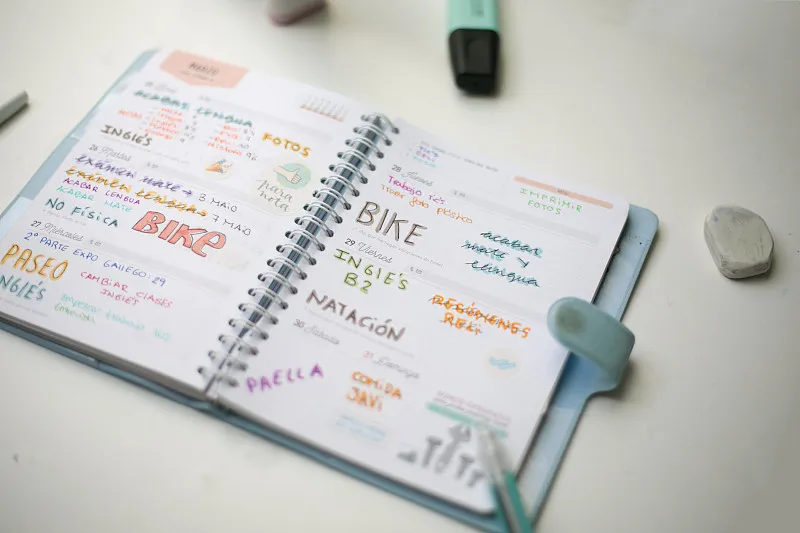
How Journaling Helps You Understand Your Emotions and Find Direction in Life
Article Summary: Journaling is not just a habit from school days, and it is not about recording every detail of your daily routine. At its best, journaling becomes a quiet space where you can place confusing emotions, untangle pressure, notice repeated patterns, and slowly recognize what truly matters in your life. When the world feels too loud, journaling helps you hear your own voice again. It may not solve everything immediately, but it gives you enough distance to see what you are feeling, what you are afraid of, what you want, and where your next step might be.
Some emotions become heavier when they stay inside for too long.
During the day, you may look completely fine. You work, answer messages, attend meetings, eat meals, and talk to people as usual. But at night, your mind begins replaying everything. Did I say the wrong thing? Did I make the wrong choice? What if the future becomes worse? Why do I keep getting stuck in the same place?
Many times, we do not lack answers. Our inner world is simply too noisy to hear them.
Journaling gives you a quiet table in the middle of that noise. You do not need beautiful language. You do not need perfect thoughts. You only need to take the tangled things in your mind and place them on paper, sentence by sentence.
The Core Idea
Journaling does not interrupt, judge, rush, or compare you. It quietly receives what you have not yet been able to say clearly.
Why Writing Things Down Matters
We often assume that we understand ourselves. But many times, we only know our surface reactions, not the deeper reasons behind them.
You know you feel irritated, but you may not know what is really irritating you. You know you feel anxious, but you may not know whether the anxiety comes from fear of failure, fear of losing control, or fear of not being accepted. You know you are unhappy, but you may not know whether you dislike your job, your rhythm, your relationships, or the way you are treating yourself.
Emotions inside the mind can feel like fog. Once you write them down, they begin to take shape.
“I feel annoyed today” may slowly become “I am not actually annoyed by the work itself. I am annoyed because my time keeps being interrupted by last-minute demands.” Keep writing, and you may discover something deeper: “What I really fear is that my time is no longer mine.”
Journaling turns vague feelings into something visible.
Many emotions feel most frightening when we cannot name where they come from. Writing helps bring them into focus.
A Journal Is an Outlet, Not a Courtroom
Some people avoid journaling because the moment they begin writing, they start judging themselves.
Why am I overthinking again? Am I too sensitive? Why can’t I handle this better? Other people seem fine, so why am I struggling?
If your journal becomes a place of self-punishment, it loses its healing value. A useful journal is not where you scold yourself into clarity. It is where you become more honest and a little kinder toward yourself.
You can write messy thoughts. You can contradict yourself. You can feel one way today and another way tomorrow. You can admit jealousy, fear, disappointment, anger, confusion, and longing. Your journal is not a public performance. It is a private space where your inner life can appear without needing to be polished.
Gentle Reminder
Some forms of inner chaos must be allowed to appear before they can be organized.
Journaling Helps You Step Back From Emotion
When we are deep inside an emotion, we often merge with it.
Instead of “I feel anxious right now,” it becomes “Everything is falling apart.” Instead of “I feel hurt by this situation,” it becomes “Maybe I am not worthy of being treated well.” Instead of “Today was difficult,” it becomes “My whole life is always like this.”
Emotion can turn a specific event into a judgment about your entire life.
Journaling creates a little distance. When you write, “I feel anxious because of what happened today,” you have already separated yourself from the anxiety. You begin to see that anxiety is something you are experiencing, not everything you are.
Questions That Create Distance
Reality
Is this situation truly as serious as my fear is telling me?
Need
Do I need to solve the problem right now, or do I first need rest?
Pattern
Has this emotion appeared before, and what usually triggers it?
Your Journal Reveals Repeated Life Themes
If you journal for a while, you may notice something interesting: daily problems seem different, but certain emotions keep repeating.
You may keep feeling hurt in similar kinds of relationships. You may always fear disappointing people at work. You may feel guilty whenever you rest. You may compare yourself whenever someone else appears successful. You may feel lonely in the same quiet hours of the night.
A journal is a long-term mirror. It does not only record what happened today. It slowly reveals the patterns that have been shaping your life.
This matters because confusion about life direction often comes from not seeing what keeps holding us back. When the same theme appears again and again, it may be trying to tell you something.
Pattern Insight
A repeated emotion is not always a weakness. Sometimes it is a message that has not yet been fully heard.
Journaling Separates What You Want From What Others Expect
Life direction can feel difficult not because there are no choices, but because there are too many voices.
Family has expectations. Society has standards. Friends have advice. Social media has templates. You are told you should be stable, successful, attractive, disciplined, productive, financially secure, emotionally mature, and always improving.
After hearing enough “shoulds,” it becomes easy to mistake outside expectations for personal desire.
You may think you want a certain job, when you are actually afraid of being seen as unsuccessful. You may think you want a certain lifestyle, when what you really want is approval. You may think you want faster success, when what you truly fear is falling behind.
Journaling helps you hear your own voice again.
It gives you space to ask whether a goal brings you closer to yourself, or only closer to being approved by others.
Journaling Shows You What Truly Matters
We handle many things every day, but not all of them are truly important.
Some things are urgent but not meaningful. Some things are loud but not worth your emotional energy. Some things feel stressful only because they are close. Some quiet things, however, may deeply affect your quality of life.
Journaling helps you tell the difference.
You may write about being upset by someone’s attitude and realize it does not deserve your whole evening. You may write about completing a small task and notice how much steadiness it gave you. You may write about a sincere conversation with a friend and remember how much real connection matters. You may write about a thirty-minute walk and realize your body and nature are not optional extras.
What Journaling Reveals
Direction is built from repeated discoveries: what drains you, what restores you, what moves you away from yourself, and what brings you back.
A Journal Is Not for Perfect Life. It Is for Real Life.
Some people feel that a journal should be meaningful. They think they should write about progress, books they read, lessons they learned, goals they completed, and deep insights they gained.
But the most valuable entries are not always the most impressive ones.
A journal can hold the day you were tired but still survived. The plan you failed to complete because you needed rest. The person you suddenly missed. The light you saw through a train window. The sentence that hurt more than you expected. The small but correct decision you made in the middle of confusion.
A journal is not proof that your life is perfect. It is evidence that your life has been honestly lived.
Real is stronger than perfect.
Years later, the most moving pages may be the ordinary, awkward, honest ones that remind you how you made it through.
Journaling Can Help You Make Decisions
When you face a difficult decision, the mind can become circular.
Should I leave this job? Should I end this relationship? Should I move? Should I begin something new? Should I keep going, or is it time to stop?
If these questions only stay in your head, they may grow louder but not clearer. Writing them down helps you break them into smaller parts.
Decision Journaling Prompts
Clarify the Fear
What result am I most afraid of?
Compare the Paths
If I choose A, what may I gain and lose? If I choose B, what may I gain and lose?
Ask the Future Self
One year from now, which choice might I thank myself for making?
Journaling cannot guarantee a perfect decision. Life rarely offers perfect decisions. But it can help you make a clearer and more honest one — one that is less driven by panic, pressure, or someone else’s opinion.
A Journal Is a Letter to Your Future Self
One of the most beautiful things about journaling is that you write for the present, but your future self may one day read it.
Today, you write confusion. Later, you may see the answer. Today, you write pain. Later, you may see that you survived. Today, you write a small wish. Later, you may realize it quietly shaped your direction. Today, you write, “I do not know what to do.” Later, you may look back with tenderness and understand how hard you were trying.
A journal gives life continuity. It shows you that growth often happens quietly, before you can fully feel it.
Future Self Reflection
Looking back at old entries can show you that you were changing long before you noticed it.
When You Do Not Know What to Write, Start With Three Questions
Many people want to journal, but the blank page feels intimidating. You do not need a complex method. Start with three simple questions.
Three Gentle Journaling Questions
Name the Emotion
What emotion did I truly feel today?
Listen to the Message
What might this emotion be trying to tell me?
Choose One Small Action
What is one small thing I can do next to care for myself or move forward?
You Do Not Have to Journal Every Day
Many people feel they have failed if they cannot journal every day. But journaling should not become another pressure point.
You can write daily, or a few times a week. You can write in the morning to set direction, or at night to release emotion. You can write three pages, or only three sentences. You can use paper, a notes app, or any private place that feels natural.
The key is not perfect frequency. The key is knowing that when you need a place to return to yourself, you have one.
The best journaling habit is not the prettiest one.
It is the one that feels easy enough to return to when you actually need it.
Do Not Rush Into Positivity
Many people feel pressure to end journal entries on a positive note.
Today was hard, but tomorrow will be better. I should be grateful. I must keep going. I will become stronger.
These sentences may be true, but if you use them too quickly, they can become a way of avoiding what you really feel. Some sadness does not need to be immediately turned into a lesson. Some anger does not need to become forgiveness right away. Some exhaustion does not need to be dressed up as resilience.
In a journal, you can first allow truth to exist.
Emotional Honesty
True positivity is not forcing away difficult emotions. It is fully admitting them, then choosing to care for yourself anyway.
How Journaling Makes Life Direction Clearer
Life direction sounds like a large and dramatic thing. But it does not always arrive all at once. Often, direction appears slowly through repeated writing.
You begin to know what matters to you. You notice which relationships make you feel safe and which leave you drained. You see what kind of work gives you energy and what kind only consumes you. You recognize when you feel most alive, when you feel most fragile, and what kind of freedom, stability, creativity, or love you keep longing for.
These discoveries slowly become direction.
You may not suddenly know exactly what you want to do with your whole life. But you may begin to know: I do not want to continue this way. This matters to me. I need to give more time to this. I need to leave that source of exhaustion. I want to become more honest, stable, free, and fully myself.
Direction is not always a destination.
Sometimes it is the growing ability to know what brings you closer to yourself and what pulls you away.
Final Thoughts
Journaling helps you organize emotions and life direction not because it solves every problem for you, and not because life becomes simple the moment you write it down.
It helps because it gives you a rare chance to step back from the noise and see yourself more clearly.
You begin to see what your emotions are trying to say. You notice repeated patterns. You recognize the people, values, and habits that truly matter. You separate your own desires from expectations placed on you. You see what you have been carrying, and you also see how far you have already come.
A journal will not make decisions for you, but it can make you clearer when you decide. It will not erase pain, but it can keep pain from staying trapped inside. It may not hand you a complete life direction, but it can help you hear where that direction is beginning to appear.
In a world full of speed, information, and constant expression, journaling is a quiet form of resistance. For a moment, you do not have to respond to the world. You do not have to perform. You do not have to be impressive. You do not have to have the answer.
You only need to sit down and write one honest sentence. Then another. Slowly, what appears on the page is not only emotion. It is the self that has been covered by noise, finally beginning to speak again.
Final Reflection: Journaling is not about writing a perfect life. It is about creating enough quiet to understand the life you are actually living — and enough honesty to choose where you want to go next.