Digital Minimalism: How to Reduce Your Phone’s Control Over Your Life
Article Summary: Digital minimalism is not about hating phones or leaving the internet completely. It is about taking back your attention from notifications, short videos, social media, shopping apps, and endless information feeds. A phone controls life not by force, but by appearing at every moment of boredom, stress, fatigue, loneliness, and avoidance. Reducing that control is not only about willpower. It requires better boundaries, less digital noise, and more real-life alternatives that help you recover focus, rest, and genuine connection.
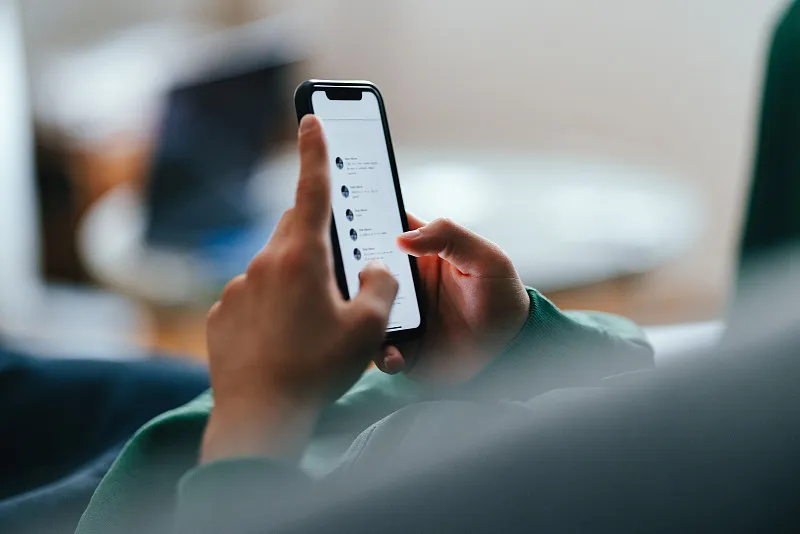
Sometimes, we do not even feel like we are choosing to pick up the phone.
You are waiting for the elevator, and your hand naturally reaches into your pocket. You feel stuck at work and decide to “relax for one minute.” You sit down to eat and open a video without thinking. You are not sleepy yet, so you scroll before bed — and suddenly it is far later than you planned.
The power of the phone is not that it locks us in chains. It is more like a tiny door that is always open. Whenever you feel bored, anxious, tired, awkward, lonely, or unwilling to face something, the phone is there. It offers stimulation, noise, distraction, and a kind of temporary comfort.
Many of us think we are using our phones. Slowly, however, our phones begin using us. They decide when we get distracted, when we compare ourselves, when we feel anxious, when we shop, when we respond, when we sleep, and sometimes even when we feel inadequate.
The Core Question
Digital minimalism begins with one honest question: is your phone still a tool, or has it quietly become the owner of your attention?
Your Phone Does Not Take Over All at Once
A phone rarely takes control of life in one dramatic moment. It usually happens slowly.
At first, it is convenient. You use it to contact friends, check directions, take photos, pay for things, search information, and handle work. Then it begins to take on more roles: entertainment, shopping, social validation, news, learning, emotional comfort, and time-filling.
Eventually, you may notice that it has become difficult to simply be alone. Waiting cannot just be waiting. Eating cannot just be eating. Resting cannot just be resting. Even boredom starts to feel unnatural, as if every empty space must immediately be filled with content.
The problem is not only that phones have many functions. The deeper problem is that phones have entered almost every quiet gap in life.
We are not always short on time.
Often, our time has been cut into fragments, and our attention has been covered by a constant flow of information.
Digital Minimalism Is Not Simply “Using Your Phone Less”
When people hear “digital minimalism,” they often think it means deleting apps, quitting social media, or forcing themselves to spend fewer hours on screens. These steps can help, but they are not the whole idea.
The real question is not only how much you use your phone. The deeper question is whether your digital tools genuinely support your life or quietly consume your attention.
Some phone use is valuable. You may use maps to find your way, messages to reach family, notes to save ideas, a camera to record memories, learning apps to study, and work tools to stay organized. These are not the problem.
The problem begins when apps that appear to be tools train you to stay longer, click more, refresh more, compare more, consume more, and leave less easily.
Digital Minimalism Test
After using this app, do I feel clearer, freer, and more capable — or more scattered, anxious, impulsive, and tired?
Notifications Are Small Interruptions With a Big Cost
Many people underestimate the power of notifications.
A sound, a vibration, a red badge, or a small pop-up may seem harmless. But each one tells the brain: something new is here, look now. Even if you do not open it immediately, your attention has already been touched.
You are writing, and the phone lights up. You are talking to a friend, and your watch vibrates. You are eating, and an alert appears. You are resting, and a work group begins moving. You are preparing to sleep, and an app tells you that someone has posted something new.
Notifications keep you in a permanent state of standby. You no longer fully belong to what you are doing. Part of your attention is always being held hostage by the possibility of the next message.
A Simple Notification Reset
Keep Only Essentials
Calls, close family, urgent work channels, and important reminders may deserve access.
Remove App Badges
Red dots are designed to create unfinished pressure.
Use Do Not Disturb
Focus, meals, conversations, and sleep deserve protected space.
Your Home Screen Is the Entrance to Your Attention
Many people never seriously look at their phone’s home screen. But it matters more than we think.
The home screen is the first place you see after unlocking your phone. It decides whether you enter a useful tool or an easy trap.
If the first screen is filled with short video apps, social media, shopping platforms, games, and news apps, then every time you open your phone, you are being guided toward the most addictive doors.
A cleaner home screen lowers the chance of sliding automatically into distraction. Keep real tools visible: phone, calendar, notes, maps, camera, weather, reading, or learning apps. Move the most tempting apps into folders, onto later pages, or remove them for a while.
Environment Over Willpower
Digital minimalism is not only about being stronger. It is about designing your digital environment so the wrong choice is less automatic.
Short Videos Are Exhausting Because They Are Too Easy to Continue
Short videos are difficult to resist not because they are boring, but because they are extremely good at holding attention.
A few seconds bring a new stimulus. A few more seconds bring a new emotion. Humor, surprise, anger, beauty, shopping desire, gossip, knowledge, emotional recognition, and controversy are compressed into tiny bursts. You do not have to choose much. The next clip arrives automatically.
This is why many people do not feel truly happy after scrolling. They feel empty, tired, and scattered. The brain has received many emotions without actually processing any of them.
Reducing the control of short videos does not always require deleting them immediately. But they need boundaries. Avoid them first thing in the morning. Avoid them before sleep. Avoid using them during meals. And before opening the app, ask: do I truly want to watch this, or am I avoiding how I feel right now?
Endless content is not the same as rest.
Sometimes scrolling feels like relaxation, but leaves the mind more shaken than restored.
Social Media Often Controls Through Comparison
Social media is not only an information platform. It is also a comparison machine.
You see other people’s travel, bodies, income, relationships, homes, careers, outfits, families, pets, meals, and success moments. You may know intellectually that these are curated fragments, but emotion does not always behave so rationally.
Slowly, you may start asking painful questions. Why does everyone else seem to be living better? Why am I not further ahead? Why is my life so ordinary? Why does everyone seem to be improving while I feel stuck?
The most subtle control of social media is not only the time it takes. It teaches you to judge your life through other people’s displays.
Social Media Reminder
Sharing life is not the problem. The problem begins when the desire to display life replaces the experience of actually living it.
Phones Are Stealing Our Ability to Be Bored
Modern people are increasingly uncomfortable with boredom. The moment there is empty space, we look for something to watch, hear, scroll, or check.
But boredom is not always bad. Boredom gives the mind time to organize itself. It lets emotions rise to the surface. It gives creativity room. It allows you to be with yourself without needing constant stimulation.
When the phone fills every boring moment, we lose an important inner ability. We become more dependent on outside stimulation, less comfortable with silence, and less able to read deeply, work deeply, or have long conversations without reaching for something.
Where Good Thoughts Often Appear
Walking
A phone-free walk gives the mind space to connect ideas.
Doing Chores
Simple physical tasks can help emotions and thoughts settle.
Waiting
Not every empty moment needs to be filled. Some empty moments help you return to yourself.
Reducing Phone Control Cannot Depend on Willpower Alone
Many people fail to reduce phone use because they rely only on restraint.
Today I will stop scrolling. Today I will be disciplined. Tonight I will not touch my phone before bed. Then two days later, the old pattern returns.
This does not mean you are weak. Many digital products are intentionally designed to be hard to leave. Infinite scroll, red badges, autoplay, personalized recommendations, and variable rewards all make the next tap feel effortless.
To reduce phone control, you need friction. Put the phone farther away. Charge it outside the bedroom. Log out of social media. Set app limits. Delete the most addictive app for a trial period. Use grayscale mode. Place the phone in a drawer while working. Replace bedtime scrolling with a physical book.
Behavior Design
Change often happens when the wrong choice becomes less convenient and the better choice becomes easier to begin.
Replace the Phone With Real-Life Alternatives
If you only take the phone away without adding anything else, it is easy to relapse. This is because the phone is not only a device. It often serves emotional functions.
When you are bored, it gives stimulation. When you are lonely, it gives the feeling of company. When you are anxious, it gives escape. When you are tired, it gives cheap entertainment. When you do not want to face a problem, it gives a small place to hide.
This is why reducing phone use must include real alternatives. Prepare an easy book. Make walking a habit. Cook, clean, journal, stretch, draw, listen to a full album, meet a friend offline, or build a hobby that does not depend on a screen.
The best replacement leaves you feeling more whole.
Real rest should not leave you emptier, more scattered, and more tired than before.
Digital Minimalism Improves Relationships Too
Phones do not only affect personal attention. They also affect relationships.
We can sit with someone and still not really be with them. We eat together while looking at separate screens. We talk while half-checking messages. We meet friends but spend the moment taking photos, posting updates, and glancing at notifications.
Phones help us stay connected, but they can also make us absent in the same room. Real companionship requires attention that is not constantly interrupted.
Relationship Reminder
Not all companionship needs to last for hours. But real companionship requires the feeling that the person in front of you matters more than the screen beside you.
Work on the Phone Makes It Hard to Truly Clock Out
For many people, work now lives inside the phone. Work groups, email, project apps, customer messages, platform notifications, data dashboards, and scheduling tools can enter life at any moment.
The phone makes work easier, but it also makes work harder to end. In the past, leaving the office often meant leaving work behind. Now the office fits in a pocket.
You check messages during dinner. You scan work groups before sleep. You worry on weekends that you may have missed something. Even if no one directly asks you to reply, you may feel that you should always be online.
Digital minimalism at work is not about becoming irresponsible. It is about creating boundaries so the mind can recover.
Work Boundary Ideas
Check at Set Times
Instead of reacting constantly, create windows for email and work messages.
Separate Work and Personal Apps
Reduce the feeling that work is mixed into every private moment.
Define Urgency
Clarify what truly needs immediate response and what can wait until tomorrow.
Give Your Phone a Parking Place
One practical strategy is to give your phone a fixed place to rest.
Many people lose control because the phone is always within reach: beside the pillow, on the dining table, next to the laptop, on the sofa, even in the bathroom. It is so close that the hand reaches for it before the mind has made a decision.
Create a phone parking place. Put it on a tray near the entrance when you come home. Keep it away from the table during meals. Charge it outside the bedroom. Put it in a drawer while working. Keep it inside your bag when meeting friends instead of placing it on the table.
Distance creates quiet.
A phone in sight keeps reminding the brain that another world is waiting. Moving it away gives your mind more room to stay where you are.
Create Small “Phone-Free Islands” in the Day
Completely avoiding the phone is unrealistic for many people. But you can create small phone-free islands throughout the day.
These do not need to be long. They are simply moments that are clearly not occupied by the screen: the first fifteen minutes after waking, breakfast, the first ten minutes of a commute, part of lunch, an evening walk, thirty minutes before sleep, family conversation, or twenty minutes of reading.
At first, you may feel uncomfortable. You may reach for your phone automatically. That discomfort is useful information. It shows how deeply the habit has entered the body.
Phone-Free Island
A phone-free moment is not a loss. It is a small space where life can breathe without being covered by a screen.
Do Not Turn Digital Minimalism Into New Self-Blame
Digital minimalism should not become another source of anxiety.
If you scroll too much today, it does not mean you failed. If you watched short videos for longer than planned, it does not mean you have no self-control. If you feel attached to your phone, it does not mean something is wrong with you.
Phone use often hides real needs. You may be tired, lonely, stressed, avoidant, bored, or in need of comfort. The point is not only to criticize the habit, but to understand what the habit is trying to cover.
Sometimes what you need is not more scrolling, but sleep. Not shopping, but security. Not short videos, but rest. Not social media, but genuine connection. Not news and hot topics, but quiet.
A Kinder Way to Change
Ask not only “How do I stop using my phone?” but also “What am I looking for when I reach for it?”
A Realistic Seven-Day Digital Minimalism Plan
If you want to begin, start with observation rather than punishment. Try a simple seven-day reset.
Seven Days to Reclaim Attention
Day 1: Observe
Identify your three most-used apps without judging yourself.
Day 2: Silence
Turn off every non-essential notification.
Day 3: Clean the Home Screen
Keep only useful tools visible and move addictive apps away.
Day 4: Create One Phone-Free Window
Try thirty minutes before sleep or one screen-free meal.
Day 5: Add Friction
Log out, set limits, move apps into folders, or delete one app temporarily.
Day 6: Replace
Choose one real-life activity: walking, reading, cooking, cleaning, journaling, or meeting someone offline.
Day 7: Review
Ask which phone use made life better and which use made you feel more tired.
The Goal Is Not Less Phone. It Is More Life.
The final goal of digital minimalism is not to achieve a beautiful screen-time number.
If you reduce your phone use by two hours but spend those two hours feeling anxious, empty, or self-critical, the change has not gone deep enough. The real goal is not only less screen. The real goal is more life.
More focus. More sleep. More real conversations. More movement. More quiet. More deep reading. More creativity. More connection with the physical world.
When the phone takes less space, what opens up is not only time. What opens up is you.
Digital minimalism is not a strict emptiness.
It is a richer life with fewer things stealing your attention before you choose to give it.
Final Thoughts
Digital minimalism is not anti-phone and not anti-technology. A phone can help us contact loved ones, complete work, record life, learn, navigate, and solve problems. The problem begins when the phone stops being only a tool and starts shaping our attention, emotions, spending, sleep, relationships, and self-image.
Reducing your phone’s control does not need to begin with an extreme decision. You can start by turning off unnecessary notifications, cleaning your home screen, putting the phone farther away, protecting the hour before sleep, eating without videos, reducing comparison, and adding more real-life alternatives.
These changes may look small, but each one says something important: your attention is valuable, and it should not be taken casually.
True digital minimalism does not make life blank. It gives life space again. When you stop handing every empty moment to your phone, you may slowly recover quiet, focus, sleep, real relationships, clear thinking, and the version of yourself that does not need constant stimulation to feel alive.
Final Reflection: Digital minimalism is not about disappearing from the digital world. It is about returning to your own life with enough attention left to actually live it.