A Realistic Travel Guide to Malaysia
Malaysia is the kind of country that looks simple on a map but feels much bigger once you arrive.
Many travelers imagine it as a quick stop between Thailand and Singapore. Some think of Kuala Lumpur’s skyline, some think of islands, and others only know Malaysia for food. But the country is more layered than that.
It has modern cities, old colonial streets, rainforest, islands, tea plantations, mosques, temples, night markets, shopping malls, mountain towns, and some of the best everyday food in Southeast Asia. It is multicultural without turning culture into a performance. It is developed enough to be comfortable, but still full of small surprises. It can be easy to travel, but not always perfectly smooth.
That is what makes Malaysia interesting.
It is not the most dramatic destination in Southeast Asia, and it does not always shout for attention. Instead, it grows on you slowly. You remember the meal you had at a plastic table more than the landmark you photographed. You remember a rainy afternoon in George Town, the sound of traffic in Kuala Lumpur, the smell of satay smoke at a night market, or the quiet feeling of looking at the sea in Langkawi.
Malaysia is not a country you should rush through just to check off attractions. It is better when you give yourself time to eat, walk, observe, and let the place unfold.
This guide is not written to make Malaysia sound perfect. No destination is perfect. Malaysia can be hot, humid, rainy, spread out, and occasionally confusing for first-time visitors. Some beaches are better than others. Some cities are not very walkable. Some tourist areas feel more commercial than expected.
But if you plan with realistic expectations, Malaysia can be one of the most rewarding and balanced trips in Southeast Asia.
Who Is Malaysia Best For?
Malaysia is a good destination for travelers who want variety without extreme difficulty.
If you want food, culture, cities, nature, and islands in one trip, Malaysia works well. If you are new to Southeast Asia and want a place that feels lively but still manageable, Malaysia is a strong choice. If you like street food but also appreciate air-conditioned trains, shopping malls, reliable airports, and decent hotels, you may enjoy the balance.
Malaysia is especially good for:
- First-time travelers to Southeast Asia
- Food-focused travelers
- Couples looking for a mix of city and beach
- Families who want easier logistics
- Digital nomads who want comfort and affordability
- Travelers interested in multicultural cities
- Nature lovers who want rainforest, islands, or wildlife
- People who prefer a slower and less chaotic trip than some neighboring countries
It may not be ideal if you want everything to feel wild, remote, or deeply adventurous every day. Malaysia has adventure, especially in Borneo, but Peninsular Malaysia can feel quite developed in many places.
It also may not satisfy travelers who expect every beach to look like a postcard. Some islands are beautiful, but Malaysia’s strongest appeal is not only beaches. It is the combination of food, culture, comfort, and landscape.
Understanding Malaysia Before You Plan
Malaysia is divided into two main regions: Peninsular Malaysia and East Malaysia.
Peninsular Malaysia is where most first-time travelers go. It includes Kuala Lumpur, Penang, Malacca, Cameron Highlands, Ipoh, Langkawi, and many popular west coast destinations.
East Malaysia is on the island of Borneo and includes Sabah and Sarawak. This region feels different. It is more associated with rainforest, wildlife, mountains, caves, diving, indigenous cultures, and nature-based travel.
A common mistake is trying to see both regions too quickly.
Malaysia looks manageable, but moving between places still takes time. Kuala Lumpur to Penang is easy. Kuala Lumpur to Langkawi is easy by flight. But adding Sabah or Sarawak usually means another flight and a different style of travel.
If you only have one week, stay mostly in Peninsular Malaysia. If you have ten to fourteen days, you can build a stronger route. If you have two weeks or more, you can consider adding Borneo without making the trip feel rushed.
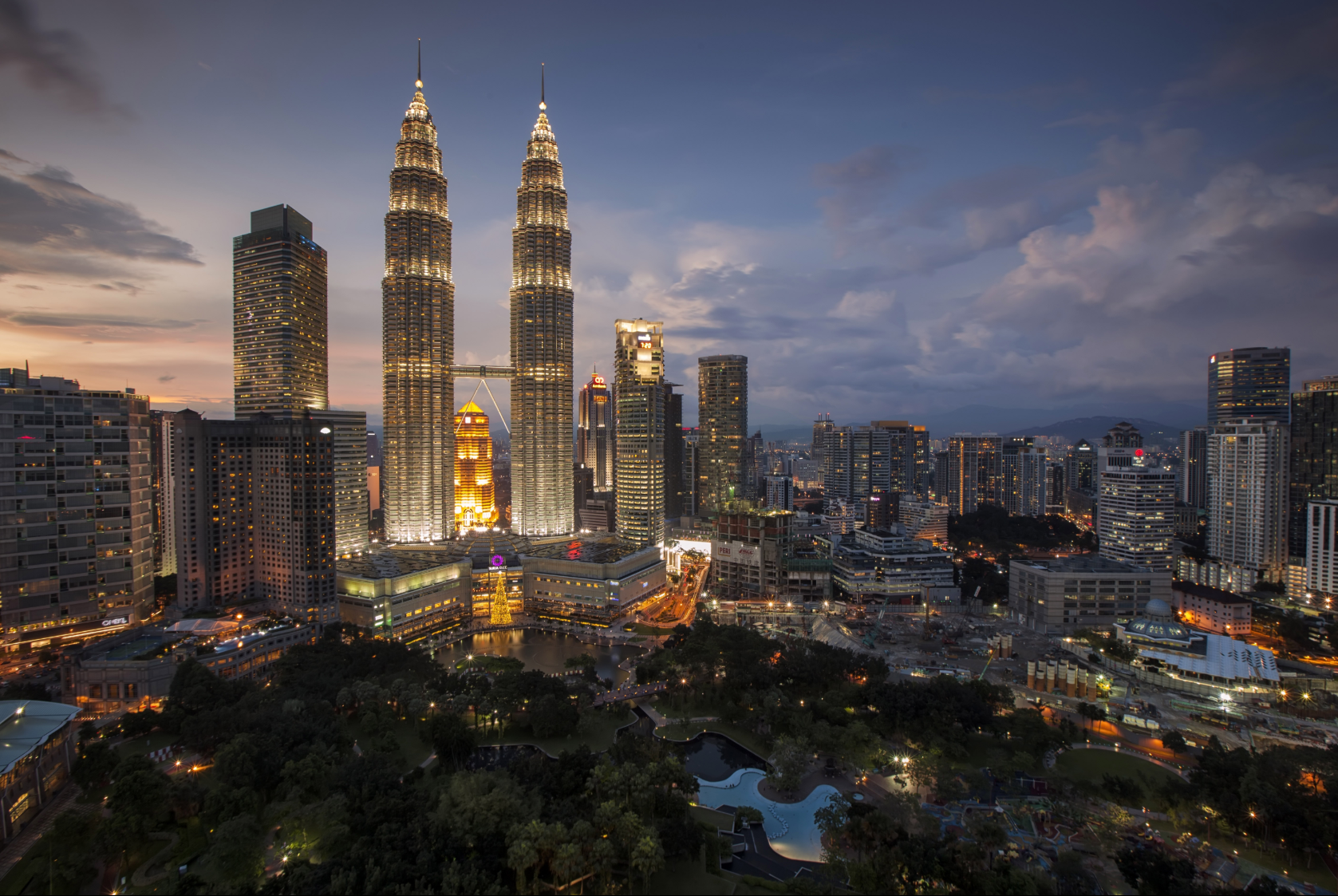
Kuala Lumpur: More Than a Stopover
Most travelers arrive in Kuala Lumpur, often called KL.
Some people treat it as a one-night stop before going somewhere else, but that is a mistake. KL may not have the old-world charm of Penang or the beach appeal of Langkawi, but it is one of the best places to understand modern Malaysia.
The city is a mix of glass towers, old mosques, shopping malls, street food, Indian restaurants, Chinese kopitiams, Malay neighborhoods, rooftop bars, and busy train stations. It can feel futuristic in one corner and deeply traditional a few streets away.
For a first visit, two or three days in KL is enough to get a good sense of the city.
Popular places include the Petronas Twin Towers, Merdeka Square, Central Market, Masjid Jamek, Batu Caves, Thean Hou Temple, Bukit Bintang, Jalan Alor, and KLCC Park. But KL is not only about sightseeing. It is also about eating, using the train, escaping into malls during heavy rain, and realizing how many cultures exist side by side in one city.
One of the best ways to enjoy KL is to avoid overpacking the day. The heat and humidity can be tiring. Plan one or two main areas each day, then leave room for food, coffee, rain, traffic, or simply cooling down indoors.
KL is also a practical base. From here, you can fly almost anywhere in the country, take buses to other cities, or use it as the beginning and end of your Malaysia route.
Penang: The Food and Culture Favorite
If you ask many travelers where they fell in love with Malaysia, a lot of them will say Penang.
Penang, especially George Town, has a special rhythm. It is colorful, walkable in parts, historic, creative, and deeply food-focused. The old streets are full of shophouses, temples, murals, boutique hotels, cafes, and hawker stalls.
But Penang is not a polished theme park. It is a living city. You will see traffic, peeling paint, wet markets, old buildings, modern apartments, local families, backpackers, and serious food lovers all sharing the same space.
The best thing to do in Penang is eat.
Try char kway teow, asam laksa, nasi kandar, rojak, cendol, Hokkien mee, oyster omelette, curry mee, and kaya toast. Some of the best meals may come from humble stalls with plastic chairs and handwritten signs.
Beyond food, visit Kek Lok Si Temple, Penang Hill, Armenian Street, Clan Jetties, Little India, and the old colonial core of George Town. But do not rush from attraction to attraction. Penang rewards wandering.
Three days is a good minimum. Four or five days is better if you like slow travel, food exploration, photography, cafes, and local neighborhoods.
Langkawi: Easy Island Time
Langkawi is one of Malaysia’s most popular island destinations, and it is easy to understand why. It has an airport, beaches, resorts, waterfalls, mangroves, viewpoints, and enough activities to keep most travelers busy for a few days.
But Langkawi is best enjoyed with realistic expectations.
It is not a tiny untouched island where everything feels remote. It is developed in parts, spread out, and easiest to explore with a scooter, rental car, taxi, or ride-hailing app. Some areas feel touristy, especially around Pantai Cenang, but the island still has quiet corners if you look for them.
Popular things to do include the Langkawi Sky Bridge, island hopping, mangrove tours, beach time, waterfalls, sunset cruises, and casual seafood dinners. If you want nightlife, stay closer to Pantai Cenang. If you want quiet, choose accommodation away from the busiest beach strip.
Langkawi is a good place to rest after Kuala Lumpur or Penang. It is not always the most culturally intense part of Malaysia, but it is excellent for slowing down.
Three nights is usually enough for a first visit. Stay longer if you want a beach break rather than a packed itinerary.
Malacca: History in a Compact Package
Malacca, also spelled Melaka, is one of the easiest cultural stops from Kuala Lumpur.
It is known for its colonial history, old streets, riverfront, night market, Peranakan culture, churches, temples, and colorful buildings. Compared with KL or Penang, Malacca feels smaller and easier to understand quickly.
The main tourist area can be busy, especially on weekends, but the city still has charm. Walk along the river, explore Jonker Street, visit Dutch Square, see Cheng Hoon Teng Temple, and try Nyonya food if you have the chance.
Malacca works well as a one-night or two-night stop. A day trip from KL is possible, but staying overnight gives you a better feel for the city after the day-trippers leave.
Cameron Highlands: Tea, Cool Air, and Traffic
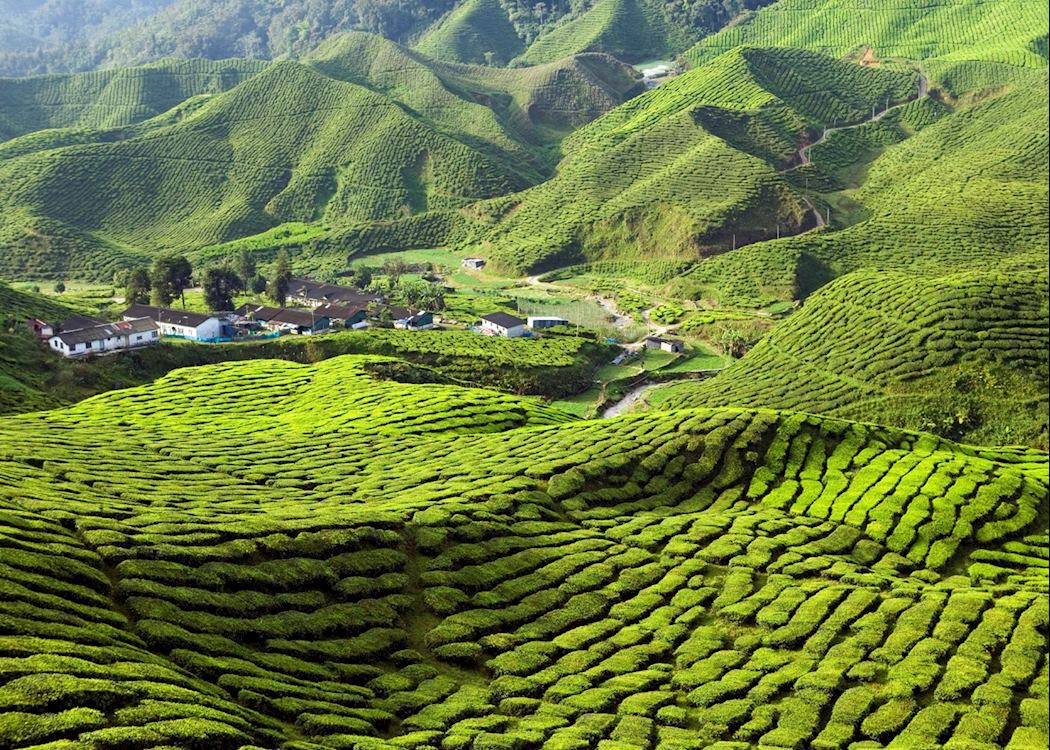
Cameron Highlands is often included in Malaysia itineraries because it offers cooler weather, tea plantations, strawberry farms, mossy forest tours, and mountain scenery.
It can be refreshing after the heat of the lowlands.
However, this is another place where expectations matter. Cameron Highlands is not a remote hidden paradise. It can get crowded, traffic can be frustrating, and some attractions feel commercial. But if you enjoy cooler air, green hills, simple guesthouses, tea views, and slower mountain towns, it can still be worth visiting.
The best way to enjoy Cameron Highlands is to go with a relaxed mindset. Do not expect luxury nature. Expect a slightly old-fashioned hill station with farms, viewpoints, tea, and a break from tropical heat.
Two nights is usually enough for most travelers.
Sabah and Sarawak: Malaysia’s Wilder Side
If Peninsular Malaysia is about cities, food, islands, and cultural variety, East Malaysia is where the trip becomes more nature-focused.
Sabah is known for Kota Kinabalu, Mount Kinabalu, islands, diving, Sepilok Orangutan Rehabilitation Centre, the Kinabatangan River, and wildlife experiences. It is a strong choice for travelers who want rainforest, animals, mountains, or diving.
Sarawak is known for Kuching, Bako National Park, caves, rivers, longhouse culture, and a slower, more relaxed atmosphere. Kuching is one of Malaysia’s most pleasant cities for travelers who enjoy food, museums, river walks, and easy access to nature.
East Malaysia deserves time. Do not add it as an afterthought unless you have enough days. Flights are easy enough, but the experiences are different and often require more planning.
If you only want a first taste, choose either Sabah or Sarawak, not both. If you want wildlife and mountains, consider Sabah. If you want a gentler mix of city, culture, and accessible nature, consider Sarawak.

How Many Days Do You Need in Malaysia?
You can visit Malaysia in a few days, but the country is much better with at least one week.
For a short trip, focus on Kuala Lumpur and one other destination. KL plus Penang works well for food and culture. KL plus Langkawi works well for city and beach. KL plus Malacca is good for a very easy cultural trip.
For a balanced first-time trip, ten days is a sweet spot.
A realistic ten-day route could look like this:
- Days 1–3: Kuala Lumpur
- Days 4–6: Penang
- Days 7–9: Langkawi
- Day 10: Return to Kuala Lumpur or fly home
If you have two weeks, you can add Malacca, Cameron Highlands, or a Borneo section.
A two-week route might look like this:
- Days 1–3: Kuala Lumpur
- Days 4–5: Malacca
- Days 6–8: Penang
- Days 9–11: Langkawi
- Days 12–14: Sabah or Sarawak
This is still a fairly active itinerary, but it gives you a better sense of the country’s range.
Getting Around Malaysia
Malaysia is generally easier to travel than many people expect.
Kuala Lumpur has trains, buses, taxis, and ride-hailing services. The rail network is useful for many popular areas, though not every neighborhood is perfectly connected. Ride-hailing is often convenient when it rains, when you are tired, or when public transport does not go exactly where you need.
Between cities, buses are common and usually comfortable on major routes. Domestic flights are often useful for longer distances, especially between Kuala Lumpur, Penang, Langkawi, Sabah, and Sarawak.
Trains can be useful on certain routes, but they are not always the fastest option for every traveler. For first-time visitors, a mix of flights, buses, and local ride-hailing is usually the simplest.
In island or rural areas, transport depends more on local taxis, rental cars, scooters, or tours. Before renting a scooter, be honest about your experience, local road conditions, and insurance coverage. A cheap rental is not worth an accident.
What to Eat in Malaysia
Food is one of the best reasons to visit Malaysia.
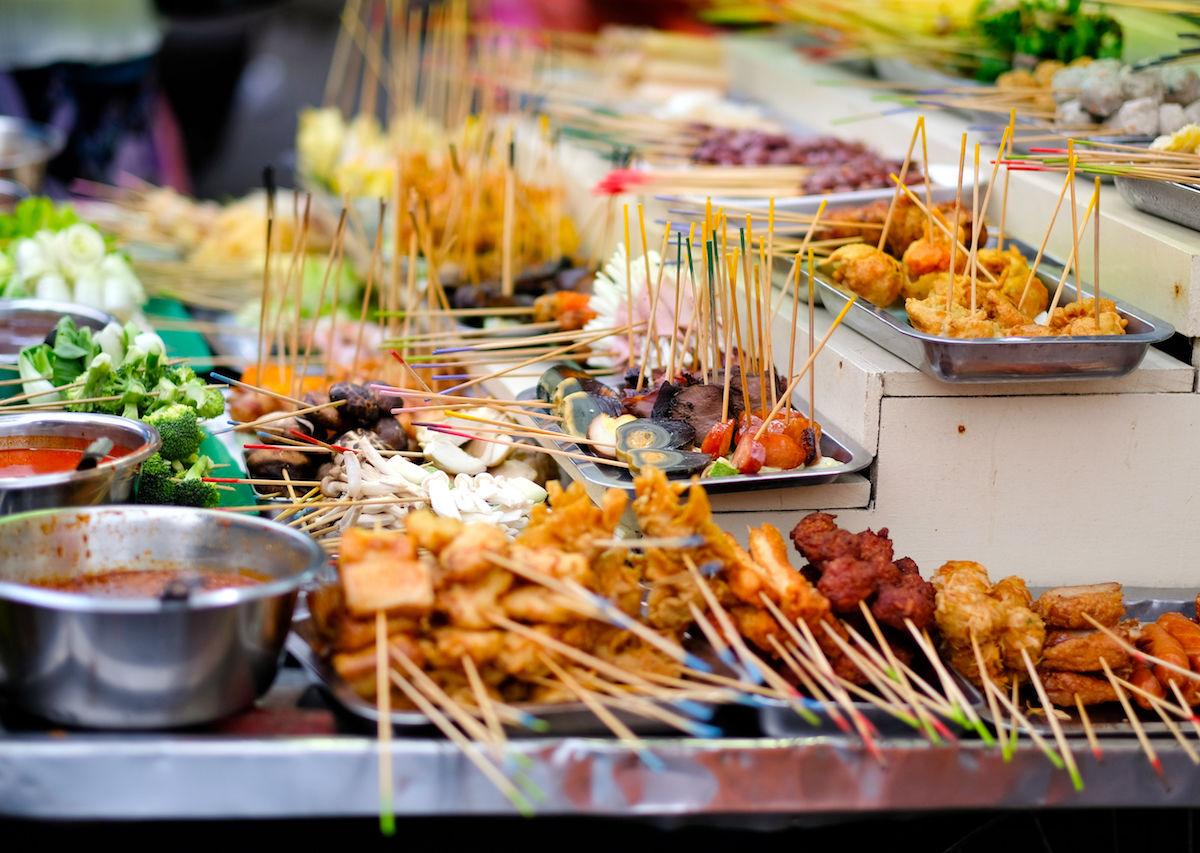
Malaysia’s food reflects Malay, Chinese, Indian, Peranakan, indigenous, and regional influences. You do not need expensive restaurants to eat well. In fact, many of the most memorable meals are casual and affordable.
Start with nasi lemak, often considered one of the country’s defining dishes. Then try roti canai, satay, laksa, char kway teow, nasi kandar, banana leaf rice, Hainanese chicken rice, mee goreng, curry mee, rendang, teh tarik, kaya toast, and local desserts like cendol.
The best approach is to eat regionally.
In KL, explore mamak restaurants, kopitiams, night markets, and food courts. In Penang, focus on hawker food. In Malacca, try Nyonya flavors. In Sabah and Sarawak, look for local specialties that are harder to find on the peninsula.
Food hygiene varies by place, as it does anywhere. Choose busy stalls with high turnover, drink bottled or filtered water if you are unsure, and be careful with food that has been sitting out too long.
Also remember that Malaysia has a Muslim-majority population, so pork and alcohol are not available everywhere, though they are still found in many Chinese restaurants, tourist areas, and licensed venues. Be respectful of local customs, especially during religious periods or when visiting conservative areas.
Budget: Is Malaysia Expensive?
Malaysia is not the cheapest country in Southeast Asia, but it offers good value.
It is usually more affordable than Singapore, often more comfortable than ultra-budget destinations, and less chaotic than some larger cities in the region. Your budget depends heavily on your travel style.
Backpackers can keep costs low by staying in hostels, eating hawker food, using buses, and avoiding too many paid tours. Mid-range travelers can enjoy comfortable hotels, domestic flights, good meals, and private rooms without spending luxury-level money. Luxury travelers can find high-end resorts, especially in Langkawi, Kuala Lumpur, and island destinations.
The biggest budget mistakes are usually not food or basic transport. They are last-minute flights, too many ride-hailing trips, expensive island tours, imported alcohol, resort dining, and constantly moving between destinations.
If you want to save money, slow down. Stay longer in each place, eat local food, use public transport when practical, and book domestic flights early when possible.
Weather: Expect Heat, Humidity, and Sudden Rain
Malaysia is warm and humid year-round.
This sounds obvious, but many travelers underestimate how much the weather affects daily planning. Walking around in the middle of the day can be exhausting. Heavy rain can arrive suddenly. Clothes may feel damp. You may need more breaks than expected.
The best time to visit depends on where you are going because Malaysia has different regional weather patterns. The west coast and east coast do not always have the same ideal season. Borneo has its own variations too.
Instead of searching for one perfect month for all of Malaysia, plan by region.
For city trips such as Kuala Lumpur, you can visit year-round, but bring light clothing, an umbrella, and patience for rain. For islands, check the local season before booking. Some beaches are much better at certain times of year than others.
Do not let rain scare you too much. In many places, rain comes in heavy bursts rather than all-day storms. But do not plan every hour tightly. Weather is one reason Malaysia rewards flexible travel.
Culture and Etiquette
Malaysia is multicultural and generally welcoming, but travelers should still be respectful.
Dress modestly when visiting mosques, temples, and religious sites. Remove shoes where required. Use your right hand when giving or receiving something if possible. Be polite when photographing people or religious spaces. Avoid loud or disrespectful behavior in sacred areas.
English is widely understood in many tourist areas, especially in cities, but learning a few local words is still appreciated. A simple “terima kasih” for thank you goes a long way.
Malaysia is also diverse in terms of religion and lifestyle. Kuala Lumpur may feel modern and relaxed, while smaller towns or rural areas may be more conservative. Adjust your behavior to the place you are in.
Respect is not complicated. Watch how locals behave, avoid treating culture like a costume, and remember that you are visiting someone else’s home.
Safety and Common Travel Issues
Malaysia is generally a comfortable country for travelers, but common sense still matters.
Watch your belongings in crowded places. Be careful with phones near roads or open windows. Use reputable transport options. Check reviews before booking tours. Avoid carrying too much cash. Keep copies of important documents. Be careful when crossing roads, because traffic can be unpredictable.
In nightlife areas, watch your drinks and know how you are getting home. If renting scooters or motorbikes, use proper helmets and understand the risks. Travel insurance is a good idea, especially if you plan outdoor activities, diving, hiking, or long-distance travel.
For parts of eastern Sabah and certain coastal areas, check current travel advisories before planning. Some destinations require extra caution, especially around remote coastal or maritime areas.
Most trips to Malaysia are trouble-free, but good travel planning includes paying attention to local conditions.

Common Mistakes First-Time Visitors Make
The first mistake is trying to do too much.
Malaysia has enough variety to tempt you into building an overpacked itinerary. But if you move every two days, you may spend more time in airports, buses, and taxis than actually enjoying the country.
The second mistake is treating KL only as an airport stop. The city deserves at least a little time.
The third mistake is assuming all islands are the same. Langkawi, Perhentian Islands, Tioman, Redang, and Borneo diving destinations all offer different experiences and seasons.
The fourth mistake is ignoring the weather. Heat and rain can change the pace of your day.
The fifth mistake is eating only in restaurants aimed at tourists. Malaysia’s best food is often casual, local, and inexpensive.
The sixth mistake is not checking entry requirements before traveling. Visa rules, passport validity, digital arrival forms, and health requirements can change, so always check official sources before your trip.
A Realistic 7-Day Malaysia Itinerary
If you only have one week, do not try to see the whole country.
A good first-time route is Kuala Lumpur and Penang.
Days 1–3: Kuala Lumpur
Arrive, adjust to the heat, explore KLCC, Merdeka Square, Central Market, Batu Caves, Bukit Bintang, and Jalan Alor. Eat well, use the train, and do not rush.
Days 4–7: Penang
Fly or travel to Penang. Stay in or near George Town. Focus on food, street art, temples, Penang Hill, local cafes, and slow walks through historic streets.
This route gives you city, culture, food, and history without too much movement.
A Realistic 10-Day Malaysia Itinerary
If you have ten days, add Langkawi for a beach break.
Days 1–3: Kuala Lumpur
Use KL as your arrival point and introduction to modern Malaysia.
Days 4–6: Penang
Spend three days eating, walking, and exploring George Town and surrounding areas.
Days 7–10: Langkawi
Fly or ferry depending on your route and current schedules. Spend your final days relaxing, taking a mangrove tour, visiting viewpoints, and enjoying sunsets.
This itinerary is balanced and realistic for many first-time travelers.
A Realistic 14-Day Malaysia Itinerary
With two weeks, you can add more depth.
Days 1–3: Kuala Lumpur
Explore the city, eat, adjust, and take a possible half-day trip to Batu Caves or FRIM.
Days 4–5: Malacca
Stay overnight to enjoy the historic center at a slower pace.
Days 6–8: Penang
Spend time in George Town, Penang Hill, temples, hawker centers, and local neighborhoods.
Days 9–11: Langkawi
Relax by the beach, take a boat tour, and slow down.
Days 12–14: Sabah or Sarawak
Choose one Borneo region if you want nature. Keep it simple rather than trying to cover too much.
This route gives a fuller picture of Malaysia, but it is more active. If you prefer slow travel, skip one destination and stay longer in fewer places.
What to Pack for Malaysia
Pack for heat, humidity, rain, and casual comfort.
Useful items include lightweight breathable clothing, comfortable walking shoes, sandals, a small umbrella or rain jacket, sunscreen, mosquito repellent, a reusable water bottle, modest clothing for religious sites, swimwear, a portable charger, and a small day bag.
Do not overpack heavy clothes. Laundry is available in many travel areas, and you will likely want to wear light clothing most of the time.
If visiting cooler areas like Cameron Highlands, bring a light jacket or sweater. If visiting religious sites, bring clothing that covers shoulders and knees, or use provided coverings when available.
Final Thoughts: Malaysia Is Best When You Travel Slowly Enough to Notice It
Malaysia is not a country that needs to impress you every second.
Its beauty is often found in ordinary moments: a morning coffee at a kopitiam, a train ride through Kuala Lumpur, a bowl of laksa in Penang, a quiet beach sunset in Langkawi, a river walk in Kuching, a sudden tropical rainstorm, or a conversation with someone who wants to know where you are from.
It is easy to build a trip around famous places, and you should see some of them. But do not forget to leave space for the small things.
Eat slowly. Walk side streets. Try food you cannot pronounce. Take breaks when the heat gets heavy. Sit in a cafe during the rain. Ask locals what they like to eat. Stay an extra night somewhere if it feels right.
Malaysia is not perfect, but it is deeply rewarding when approached with patience and curiosity.
If you want a destination that offers culture, comfort, nature, food, and variety without overwhelming you completely, Malaysia is worth your time.
Just do not treat it as a checklist.
Treat it as a country to experience one meal, one neighborhood, one island, and one conversation at a time.
Frequently Asked Questions About Traveling to Malaysia
Is Malaysia good for first-time travelers to Southeast Asia?
Yes. Malaysia is a strong choice for first-time travelers because it offers good infrastructure, diverse food, multicultural cities, islands, nature, and relatively easy transport compared with some more challenging destinations.
How many days do you need in Malaysia?
One week is enough for Kuala Lumpur and one other destination such as Penang or Langkawi. Ten days is better for a balanced first trip. Two weeks allows you to add Malacca, Cameron Highlands, or part of Borneo.
What is the best first-time Malaysia itinerary?
A realistic first-time route is Kuala Lumpur, Penang, and Langkawi. This gives you a mix of city life, food, culture, and island relaxation without making the trip too complicated.
Is Malaysia expensive to travel?
Malaysia can be affordable or mid-range depending on your style. Local food and buses are usually good value, while domestic flights, resorts, island tours, alcohol, and luxury hotels can increase costs.
Is Kuala Lumpur worth visiting?
Yes. Kuala Lumpur is worth at least two or three days. It has excellent food, cultural landmarks, modern malls, public transport, temples, mosques, markets, and a strong sense of modern Malaysian life.
What should I eat in Malaysia?
Start with nasi lemak, roti canai, laksa, char kway teow, nasi kandar, satay, banana leaf rice, Hainanese chicken rice, cendol, teh tarik, and kaya toast. Penang is especially famous for hawker food.
Is Malaysia safe for tourists?
Malaysia is generally comfortable for tourists, especially in popular travel areas. However, travelers should still watch belongings, use common sense at night, check current travel advisories, and be cautious in certain remote coastal areas of eastern Sabah.
When is the best time to visit Malaysia?
There is no single perfect time for the whole country because weather varies by region. Cities like Kuala Lumpur can be visited year-round, but island destinations should be planned according to local seasons.
Disclaimer: This article is for general travel information only. Entry rules, transport schedules, prices, weather patterns, safety conditions, and local regulations can change. Travelers should check official sources and current advisories before booking or departing.