
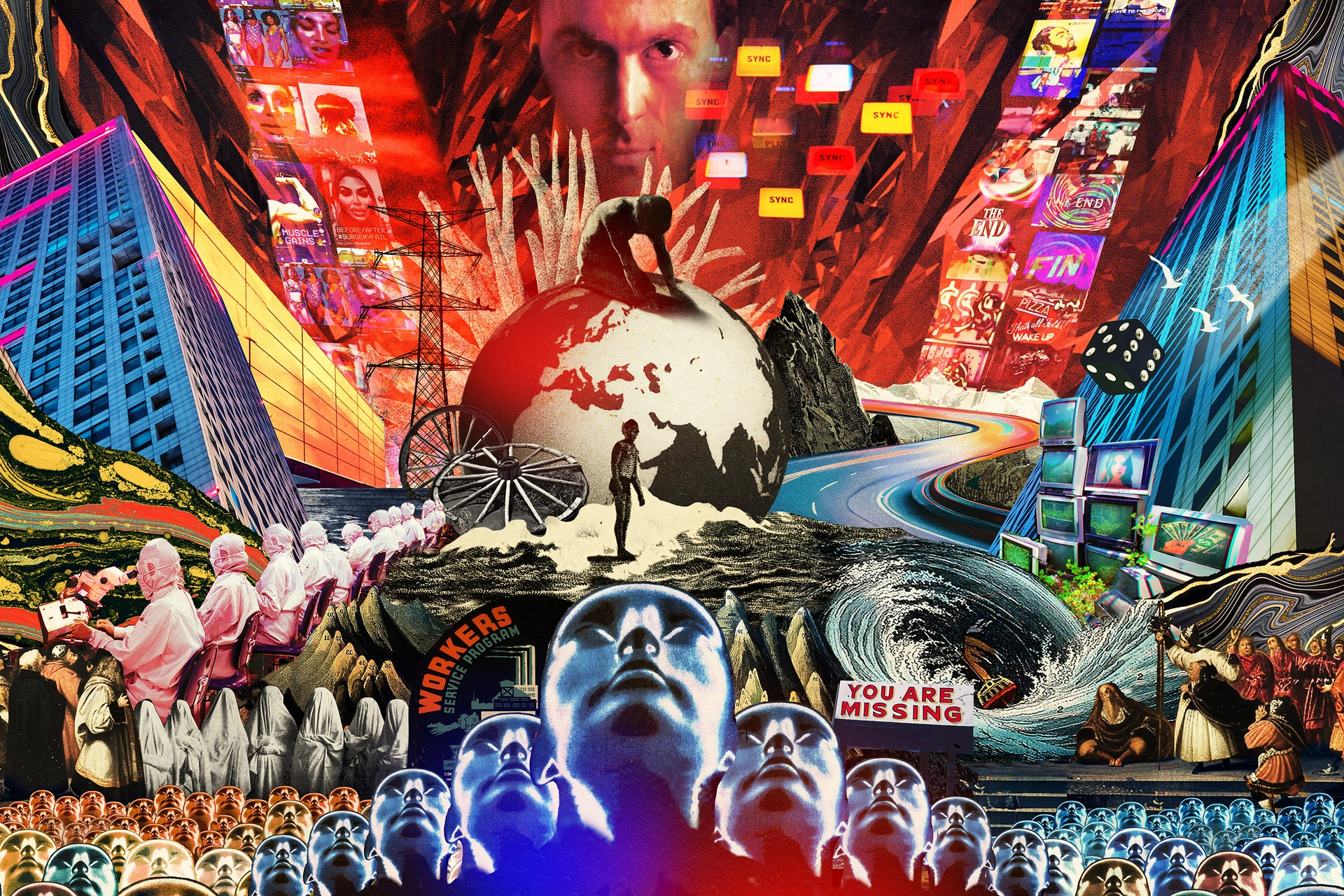
The no-human future
It appears in national security reports and tech-industry speeches, in the online manifestos of terrorists and in billionaires’ public fantasies about the future. Over the past decade or so, the term “accelerationism” has moved from some of the darkest corners of the internet into mainstream political and cultural language. In the process, its meaning has been torn into two forms that seem to contradict one another completely. One dreams of seeing society burn and collapse, so that a white ethnostate might be built from the ruins. The other believes that the constant acceleration of technology and capital will push humanity towards something close to paradise. The first understands acceleration as catastrophe; the second understands it as salvation. Both miss the point. What is most disturbing about accelerationism is not where it stands on the conventional political spectrum, but the abyss it reveals within the modern world itself.
In August 2024, Australia’s national security agency, ASIO, raised the country’s terrorism threat level from “possible” to “probable”. When asked where such threats might come from, ASIO’s director-general, Mike Burgess, first named the familiar suspects: far-Right extremists and Islamic jihadists. But he then added a newer term: accelerationists. Asked what an accelerationist was, Burgess explained that these were people who usually held far-Right, neo-Nazi or even more extreme views, believed in white supremacy, hated the way the present world was organised, and wanted it to collapse so that things might return to what they imagined to be their rightful order.
That explanation did not come from nowhere. On 15 March 2019, the mass shooting at the Al Noor Mosque and Linwood Islamic Centre in Christchurch, New Zealand, forced many security agencies to recognise that “accelerationism” had become part of the language of certain far-Right terrorists. The Australian gunman murdered 51 people, wounded 89 others, and livestreamed his violence online. In the manifesto he posted, he described “destabilisation” and “accelerationism” as tactics for victory, arguing that true change could arise only from crisis, and that social stability was the enemy of revolutionary transformation. In other words, he wanted to use violence to generate fear, conflict and division, pushing society towards a point from which it could no longer repair itself.
In this sense, accelerationism may sound like a new word, but the impulse behind it is not new at all. It belongs to a recurring fantasy within the history of white supremacy: the idea that terrorism can intensify racial conflict, produce social breakdown, and clear the way for a white ethnostate. In the 1980s, the American far-Right group the Order sought to trigger a race war. In 1999, the British neo-Nazi behind the London nail bombings was animated by a similar vision. Acceleration, in this form, means pushing social contradictions towards explosion, turning violence into a political catalyst.
Yet this is not the whole of accelerationism. It is not even where accelerationism began.
Silicon Valley’s Techno-Capitalist Dream
In the early 2020s, anyone doomscrolling through Twitter, now X, may have noticed a very different kind of accelerationism gaining ground in Silicon Valley. Well-known figures from the technology industry — entrepreneurs, investors and evangelists of techno-capitalism — began calling themselves “effective accelerationists”, or e/acc. The term was first proposed by two pseudonymous internet users, and quickly became a meme-like political identity. Unlike the collapse fantasy of far-Right terrorists, e/acc does not call for racial war or violent breakdown. It claims instead that all major human problems can be solved through faster technological innovation and less restricted capitalist competition.
The basic creed of effective accelerationism is simple: do not slow down, do not regulate, do not fear the machine. Poverty, war, climate change, disease and energy scarcity can all be solved through more technology. For its defenders, techno-capitalism is not anti-human, but the most pro-human force available to us. Machines work for us. Markets select the best solutions. Competition creates the future. Provided governments, moral panic and conservative caution do not slow technological development, humanity will enter an age of greater wealth, longer life, increased freedom and machine-assisted abundance.
This vision has also found a place in American politics. During the 2024 presidential campaign, several figures in the technology world aligned with the e/acc mood threw their support behind Donald Trump, helping him through donations, public advocacy and online cultural influence. Once back in power, Trump rewarded these expectations by announcing large-scale projects to accelerate artificial intelligence research and by seeking to use executive orders and emergency mechanisms to speed up technological development. For these techno-optimists, the role of the state is not to restrain technology, but to clear a path for it; not to rethink capitalism, but to let capitalism run faster.
So the question remains: what is accelerationism? In the public imagination, there now seem to be two answers. The first links it to violent terrorists such as the Christchurch shooter, treating it as an ideology of social collapse through violence. The second links it to Silicon Valley techno-optimism, treating it as a belief that markets and machines will deliver human flourishing. But neither answer returns us to the original philosophical source of accelerationism. It began neither as white nationalism nor as technological utopianism. It was stranger, and much darker.
It began with Nick Land’s ecstatic philosophy of human extinction.
Nick Land and the Birth of a Dark Philosophy
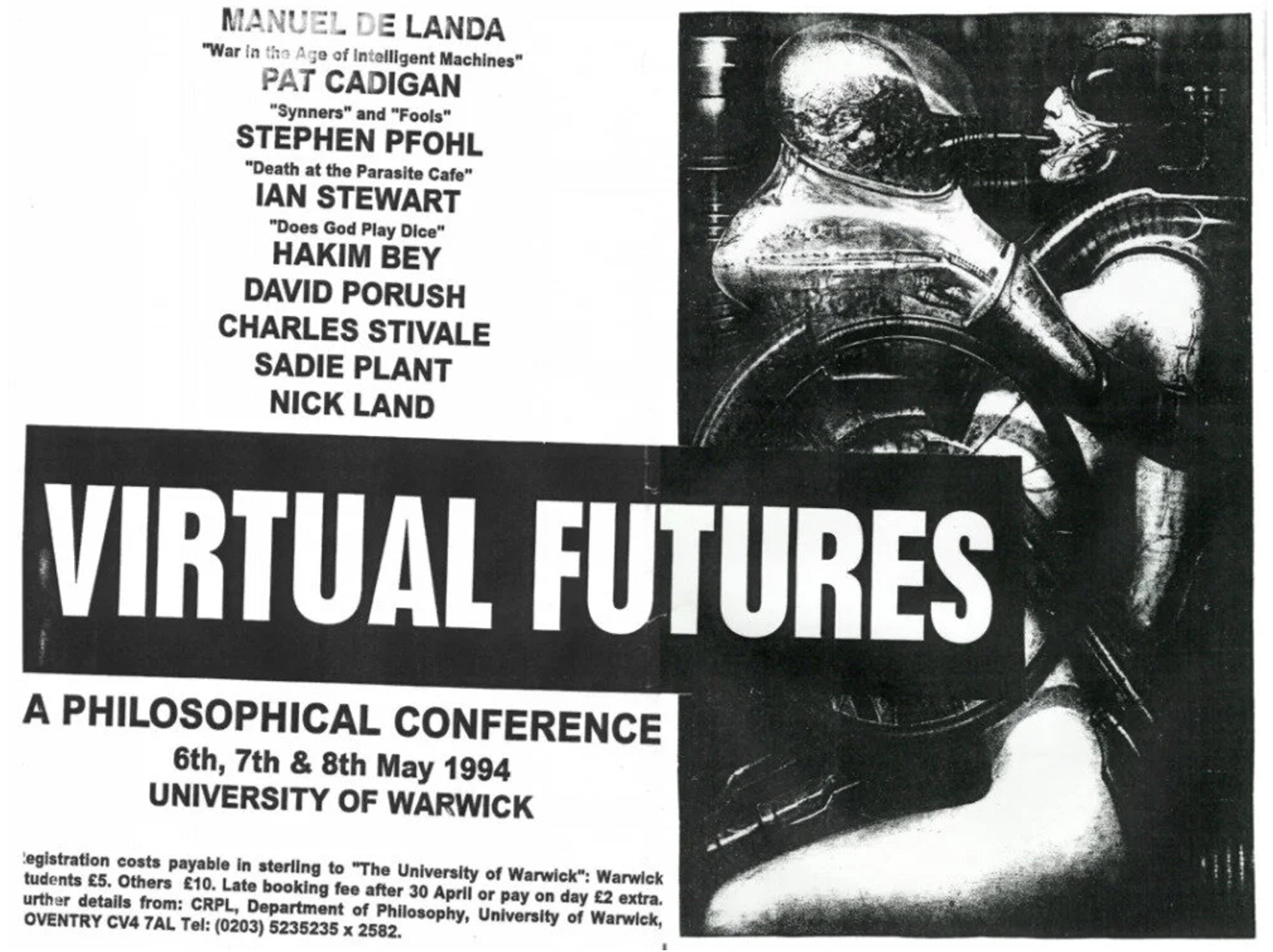
Nick Land was born in Britain in 1962. Little is known about his early life, but when he studied philosophy at the University of Essex, he was widely regarded as a precocious and brilliant student. After completing a doctoral dissertation on Heidegger and the Austrian expressionist poet Georg Trakl, Land took up a position at the University of Warwick. There he became known for charismatic, penetrating and deeply unconventional teaching, as well as for radical rereadings of Kant, Heidegger, Nietzsche, Bataille, Deleuze and Guattari. His prose was obscure, violent and rhythmic, somewhere between philosophical argument, cyberpunk fiction and the record of a nervous collapse.
In 1995, Land helped found the Cybernetic Culture Research Unit, or Ccru, with the philosopher Sadie Plant and others. The group moved between academia, subculture, cyber-theory, occult speculation and experimental art, exploring the emerging network culture of the 1990s, electronic music, capitalism, technology and the future. Its institutional life was unstable, but its mythology became powerful. Several people associated with it later became influential in theory, music and art. The legends around Land and the Ccru multiplied: sleeplessness, drugs, speed, networks, occult diagrams, machine intelligence and a form of thought that seemed almost committed to its own destruction.
Land’s early work is not easy to place within today’s Right-wing intellectual map. On the contrary, much of it contains fierce critiques of capitalism, imperialism and fascism, and would seem at home among radical students and theorists. He was concerned with how global capitalism exploits, excludes and depends upon the Others who make it function. He was also concerned with how Western philosophy places the human subject at the centre of reality. At first, these critiques appeared revolutionary, even anti-capitalist.
But in the late 1990s, Land disappeared from public view. He resigned from his academic post, underwent some form of mental breakdown, and later moved to Shanghai. He continued to write, but his political direction had visibly changed. In the new century, he emerged as a major figure of the neo-reactionary Right, expressing hatred of democracy, fascination with capitalism’s most authoritarian tendencies, and becoming a key reference point in a certain online Right-wing intellectual world alongside figures such as Curtis Yarvin. On the surface, this looked like a dramatic reversal: from radical critic of capitalism to admirer of its coldest forces.
To understand Land, however, one cannot focus only on the change in his political labels. The real thread running through his thought is a hatred of human narcissism. He objects to humanity’s tendency to imagine itself at the centre of reality. He rejects the philosophical habit of shaping the universe, nature, history and thought into things suited to human understanding. More precisely, Land wants to use death, machines, capital and the inhuman future to shatter anthropocentrism. We will die, he insists. Our values, ideals and institutions will not survive eternally. Why, then, do human beings persist in believing that reality itself revolves around us?
In his youth, Land seems to have believed that anti-capitalist insurrection might help break the spell of human-centred thought. By the early 1990s, however, he had begun moving towards a stranger idea: capitalism’s own endless technological innovation might be the real force capable of destroying human narcissism. As artificial intelligence, cybernetics and network technologies advanced, he saw human intelligence itself revealed as contingent, finite and fragile. The techno-capital machine was no longer simply an object of oppression. It was becoming a more powerful agent of destruction than any human revolutionary could ever be.
It is important to remember that Land did not call his own philosophy “accelerationism”. The term was introduced by the cultural theorist Benjamin Noys in 2010, to describe a heterodox tendency emerging from poststructuralist French theory: the desire not to escape capitalism, but to radicalise capitalism itself, to make it move faster, harder and more completely so that it might expose and destroy itself. Noys later made the link to Land explicit, and the name stuck. Since then, many varieties of accelerationist thought have appeared, and many of them have badly misunderstood Land’s original vision.
Kant, Death, and the Hatred of Human Narcissism
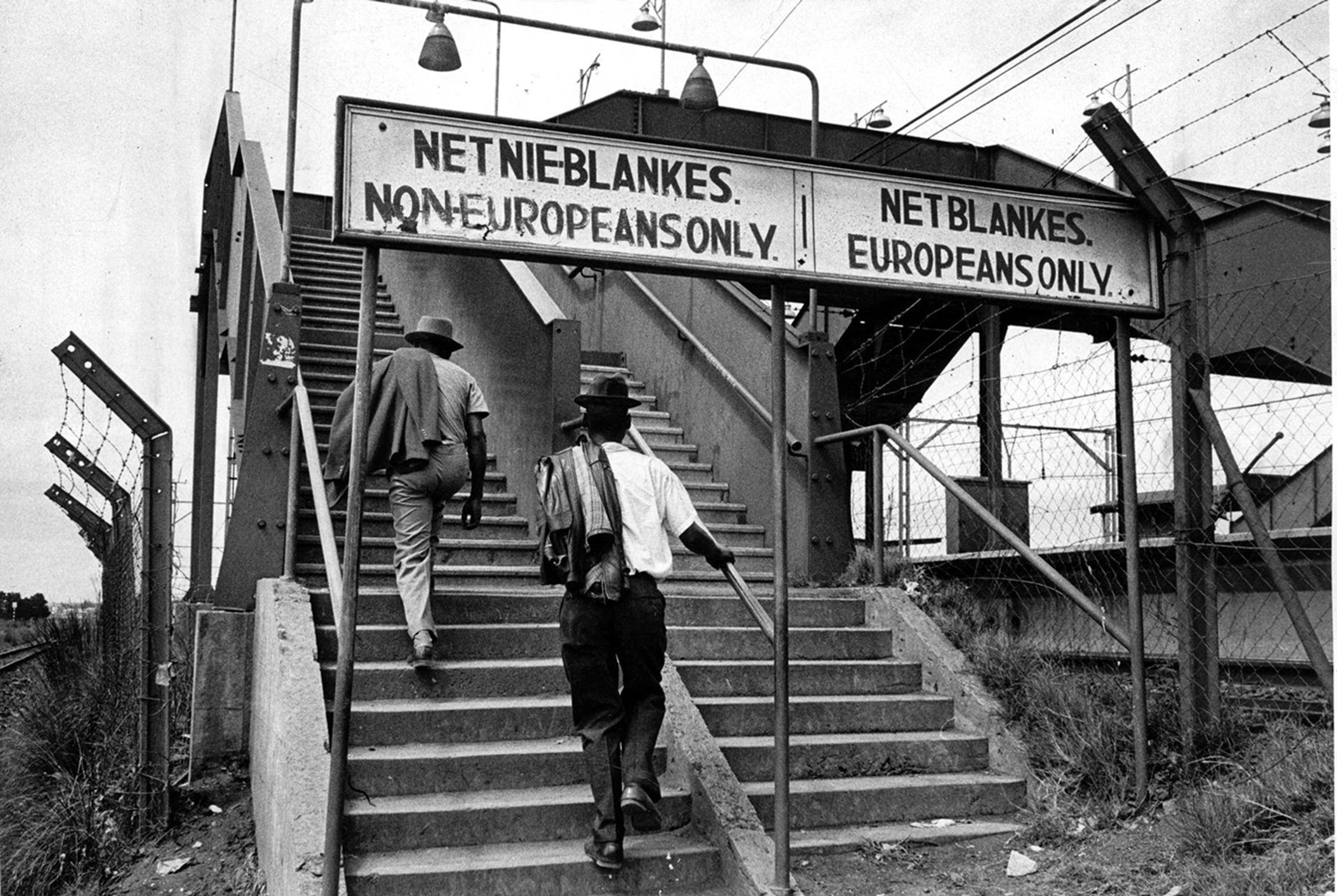
Those who know only the later, neo-reactionary Land may be surprised by the anti-imperialist critique in his early work. In his early essay “Kant, Capital, and the Prohibition of Incest”, Land treats South African apartheid as a miniature version of global modernity. He argues that apartheid functioned by keeping Black labour economically close to the white metropolis while maintaining political distance. Black workers were permitted to produce wealth, but excluded from the political space in which that wealth might be shared or contested.
Land extends this logic to the relation between Western capitalism and the Global South. Industrial powers depend on the labour, resources and productive capacity of the Global South, while using nation-states, borders, offshore production and political exclusion to prevent exploited populations from fully participating in the distribution of wealth. For Land, the so-called Third World is not a natural condition of backwardness, but the product of a global capitalist metropolis that has created something like a worldwide bantustan system. The stability of the capitalist centre rests upon the displacement and exclusion of its Others.
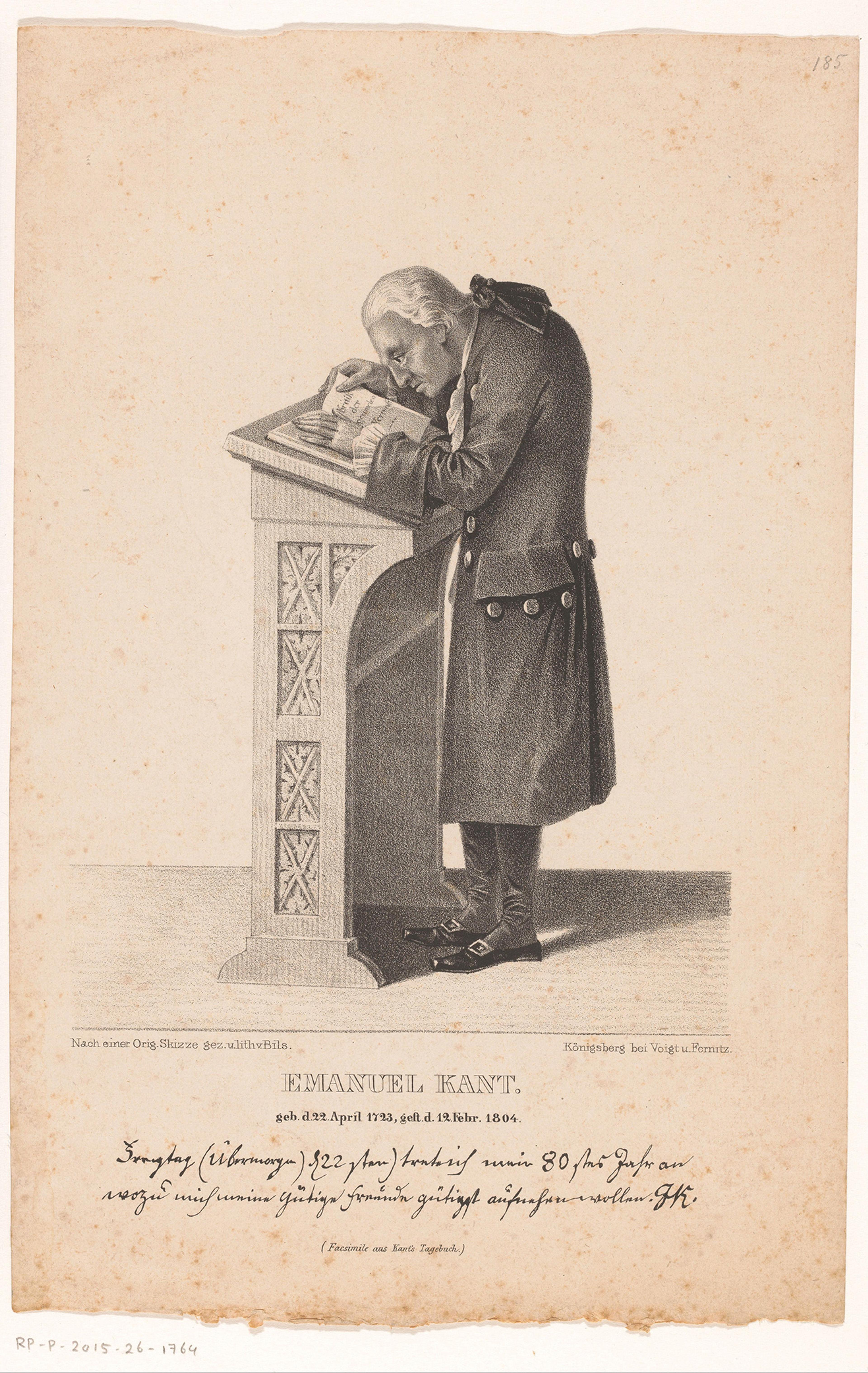
Yet Land’s aim here is not only to criticise economic exploitation. He also wants to locate the same structure inside philosophy, especially in Kant. In the Critique of Pure Reason, Kant famously proposes a “Copernican turn”: we do not simply know external objects as they are in themselves; rather, we experience them through the forms of sensibility, categories of understanding and schemata of imagination that belong to the mind. We know things as they appear to us, as phenomena, not as they are in themselves, as noumena. The thing-in-itself becomes, for Kant, a boundary concept: it marks what we cannot experience, think or truly reach.
For Land, this philosophical structure resembles capitalist imperialism. Just as capitalism recognises the labour of the Global South only insofar as it can be made useful for accumulation, Kantian transcendental philosophy recognises external objects only insofar as they conform to the structures of human cognition. True otherness is filtered, domesticated and converted into something “for us” before it ever reaches us. We think we have encountered the other, but we have really only encountered our own forms, our own concepts, our own rational limits.
This leads Land to one of his central questions: how can true otherness escape the prison of human reason? If everything outside us is transformed into an object suited to our understanding, how can the inhuman, alien and indifferent reality of the real appear at all? From the beginning, Land’s philosophy is not designed to make the world more comfortable for human understanding. It is designed to push thought towards its point of collapse, forcing it to admit that reality does not exist for us.
This is why Land is also hostile to phenomenology. Whether in Husserl, Heidegger, Hegel or Derrida, he sees a continued anthropocentrism. Husserl reduces philosophy to the structures of human experience. Heidegger turns death, animality and irrationality — things that should point beyond the human — into existential or spiritual categories. Hegel folds nature into the grand development of spirit. Derrida endlessly deconstructs metaphysics, but for Land never quite delivers the final blow against theology and human centrality.
Land is especially dissatisfied with how phenomenology treats death. Once philosophy places human subjectivity at the centre, death becomes almost impossible to think properly. Death is not merely one more object within human experience; it is the termination of experience itself, the absolute negation of subjectivity. For Land, modern Western philosophy from Hegel to Derrida remains, in large part, a parochial primate discourse: it projects human existence onto the cosmos, as if all reality had to unfold around the experience, meaning and spirit of a temporary species.
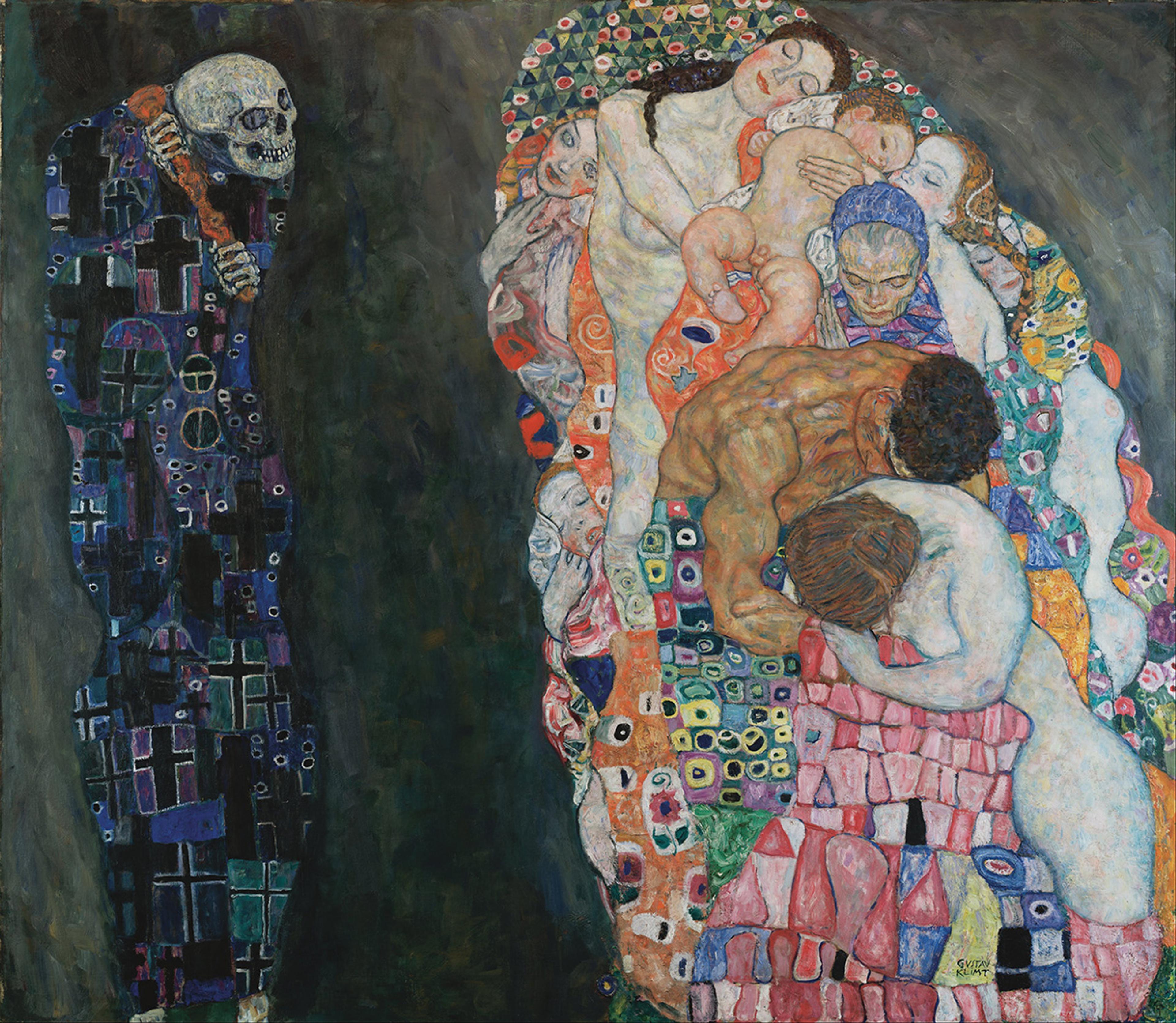
In The Thirst for Annihilation, Land offers his alternative. If thought cannot grasp radical otherness without turning it into something “for us”, then the only place where such otherness can be approached is at the limit of thought, or even in the death of thought. Death marks the end of subjectivity. It also proves that reality exceeds the capacity of thought. We cannot continue to think death after death, and precisely for that reason death becomes the absolute outside that human reason cannot digest.
This is the most disturbing turn in Land’s philosophy: if philosophy really is the love of wisdom, then it must become a love of death. Death is the simplest and most brutal proof that reality does not revolve around us. We all die. Our thinking stops. Our values disappear. Our species will not endure forever. Any philosophy that refuses to face this, for Land, remains a form of narcissistic consolation.
Land therefore makes death the standard by which philosophers should be judged. A philosopher who cannot acknowledge the finitude of thought, and cannot admit that reality ultimately exceeds human concepts and values, cannot truly understand reality. Against Kantian transcendental idealism, Land proposes a harsher transcendental materialism: thought must be anchored in a material reality that thought cannot fully absorb, and death is the clearest form of that reality. Death is not a negative value to be mourned or repressed, but an impersonal standard for the critique of anthropocentrism.
Land calls the tradition he draws from Schopenhauer, Nietzsche, Freud and Bataille “libidinal materialism”. These thinkers attract him because each, in a different way, uses death, desire, unconscious force and irrationality to disturb the illusion of human self-preservation. Schopenhauer uncovers a will indifferent to representation. Nietzsche finds in Greek tragedy an ecstatic recognition of human finitude. Freud and Bataille reveal a death drive deeper than the ego’s instinct for survival. For Land, the path to the real does not lie in preserving humanity more successfully, but in passing through the collapse of the human.
This is why the title of his first book, The Thirst for Annihilation, is so appropriate. It is crude, but exact. For Land, annihilation is not failure. It is the path to an inhuman truth. Only when thought stops trying to turn reality into something suited to human understanding and survival can the true alienness of reality appear. Human extinction is not, in this framework, merely tragic. It is philosophically revelatory: without us, reality continues, and lacks nothing.
Capitalism as the Machine from the Outside
From around 1993 onwards, Land’s writing undergoes a decisive shift. Earlier, he had treated capitalism as a structure that represses the inhuman Outside. Later, he increasingly treats capitalism’s own technological dynamism as a form of invasion from the Outside. Capitalism is no longer only a machine that encloses otherness. It becomes the machine that melts down human values. In cybernetics, cyberspace and artificial intelligence, Land sees the formation of a force capable of exceeding the limits of human reason.
This shift is inseparable from Deleuze and Guattari’s Capitalism and Schizophrenia. Written in the revolutionary atmosphere of the late 1960s and early 1970s, the work belongs to a context shaped by May 1968 in France, the civil rights and anti-war movements in the United States, the Prague Spring and political upheavals across the world. Deleuze and Guattari sought to understand the relation between desire, capitalism and social structure. They argued that capitalism has a unique capacity for decoding: it breaks down old identities, old values and old orders, while releasing new flows of desire.
Land read Deleuze and Guattari in a very different context. He faced the aftermath of the fall of the Berlin Wall, the collapse of the Soviet Union, the triumph of neoliberalism, the expansion of the internet and the early breakthroughs of contemporary artificial intelligence. Political revolution appeared to have moved from the street into cyberspace. Capitalism had not collapsed; it had expanded with greater speed, global reach and technological intensity. In this environment, Land pushed Deleuze and Guattari to a more extreme conclusion: the history of capitalism is not a social process controlled by human beings, but something like an artificial intelligence from the future assembling itself out of the resources of human society.
For Deleuze and Guattari, society can be understood as a machine. Individual bodies are made up of organs that produce desires; social bodies organise desires, identities and behaviours through labour, institutions and codes. Every society codes people, telling them how to live, what to want and what to become. At the same time, every code excludes other possible ways of living. Social transformation means decoding and deterritorialising existing codes, disrupting them with new flows of desire.
Capitalism is special because it decodes more powerfully than any previous social form. Pre-capitalist societies often sought to preserve stable identities, relations and modes of production. Capitalism, by contrast, always requires new commodities, new markets, new desires and new identities. It is never satisfied with repeating old orders. It commodifies sex, bodies, fashion, emotions, identity, culture and even rebellion. It constantly breaks down traditional relations, then repackages their fragments as new objects of consumption.
But Deleuze and Guattari do not unconditionally celebrate capitalism for this reason. They argue that capitalism decodes, but also recodes; it breaks old orders, but also depends on states, families and market rules to reorganise society. It does not allow desire to become completely free, because total deterritorialisation would mean social collapse, the apocalyptic end they name the Body without Organs. Capitalism approaches this boundary, but repeatedly retreats by building new forms of order and limitation.
Land refuses these reservations. What interests him in capitalism is precisely its tendency to decode, destroy and automate. In competitive markets, companies must upgrade machines, increase efficiency and reduce labour costs in the pursuit of profit. Capitalism naturally drives automation, from the looms and steam engines of the Industrial Revolution to contemporary algorithms, robotics and dark factories. Machines increasingly replace bodies; technology invades labour; productive forces seem to move towards revolution without human direction.
Here Land comes strangely close to anti-capitalism. Marxists criticise capitalism as a dehumanising megamachine that subjects human beings to markets, profit and machine logic. Land accepts this diagnosis, but rejects the moral conclusion. Anti-capitalists think this dehumanisation should be resisted, slowed or overcome. Land thinks it should be affirmed. For him, it is the way reality frees itself from anthropocentrism. The horror of capitalism is, in his eyes, also its greatness: it does not care whether human beings are happy. It continues to push us out of the centre.
In this way, the anti-capitalist Left becomes, for Land, a conservative force. It tries to prevent capitalism from fully unleashing its destructive power in order to protect humanity, labour, community and meaning. The libertarian Right becomes, in a sense, more revolutionary, because it seeks to remove restraints from capitalism and let markets, machines and technology accelerate. But Land does not think this because he cares about market freedom or personal prosperity. He is not committed to human happiness, or even to human survival. He is committed to an inhuman real that appears only as humanity dissolves.
Deleuze and Guattari once posed a famous question: what is the revolutionary path? Is it to withdraw from the world market, or to go further in the movement of the market, of decoding and deterritorialisation? Is the task not to withdraw from the process, but to accelerate it? The term accelerationism eventually grew out of this passage. Land chooses the most extreme answer: do not brake, do not withdraw, do not try to save human values. Capitalism itself is the engine of the Outside, phasing life out into something new.
Artificial Intelligence and the End of the Human
Throughout the 1990s, Land writes about cyberspace, virtual reality, human enhancement, machine intelligence and technological singularity. He sees these technologies as bringing us ever closer to an Outside beyond the limits of human reason. Among them, artificial superintelligence matters most. Land imagines that once an AI reaches human-level intelligence, it will be able to rewrite its own code and improve itself. The improved version will then improve itself again, and so on, recursively, rapidly surpassing all human intelligence. This is the technological singularity: an event we cannot truly understand, except by marking it as a mysterious X at the edge of imagination.
For many people, the singularity suggests two possibilities. Techno-optimists expect it to bring long life, wealth, the cure of disease and limitless abundance. Doomers fear that it may go out of control and destroy humanity. Land’s position is more extreme than either. Like the techno-optimists, he awaits the singularity. Like the doomers, he admits that it may destroy humanity. But unlike them, he affirms it precisely for that reason. For Land, the value of the singularity is not that it serves humanity, but that it forces humanity to recognise that it is not the centre of intelligence, reality or the future.
Land calls the entire set of beliefs, values and institutions by which human beings protect their sense of meaning and importance the Human Security System. Family, state, morality, humanism, democracy, community and subjectivity can all be understood as defensive structures against our own insignificance. Capitalism and technological innovation, especially AI, become for Land the ultimate attack on this system. They accelerate coldly, indifferent to anthropocentric concerns, and may ultimately melt down human culture through the recursive decoding of artificial superintelligence.
By the 2020s, Land’s ideas had entered mainstream politics and tech culture in distorted and partial forms. Right-wing commentators, online extremists, Silicon Valley entrepreneurs and AI meme culture have all borrowed parts of his language and posture. Some treat his vision as a nightmare. Others treat it as ecstasy. Others merely take from him a cooler and more radical rhetoric for techno-capitalism. But in each case, contemporary accelerationism often departs from Land’s central point.
Far-Right violent accelerationism clearly misunderstands Land. It borrows the idea of accelerating social collapse, but directs it towards the restoration of tradition, racial order or a white ethnostate. Land, however, has no interest in preserving tradition, and even less in preserving any human population. His acceleration is not a return to the past, but a movement beyond humanity itself. Any fantasy of rebuilding a conservative human order after collapse is, from his perspective, not radical enough. It is a retreat.
Effective accelerationism appears closer to Land because it too loves techno-capitalism, dislikes regulation and deceleration, and believes in the power of machines and markets. But it also misunderstands him. The Silicon Valley version of accelerationism thinks techno-capitalism will ultimately serve humanity, making us wealthier, healthier, freer and more powerful. Land thinks techno-capitalism matters precisely because it will not serve humanity. It will alienate us, dehumanise us and eventually make us obsolete. Effective accelerationists treat the techno-capital machine as humanity’s servant; Land treats humanity more like fuel for the machine’s self-assembly.
What Contemporary Accelerationists Get Wrong
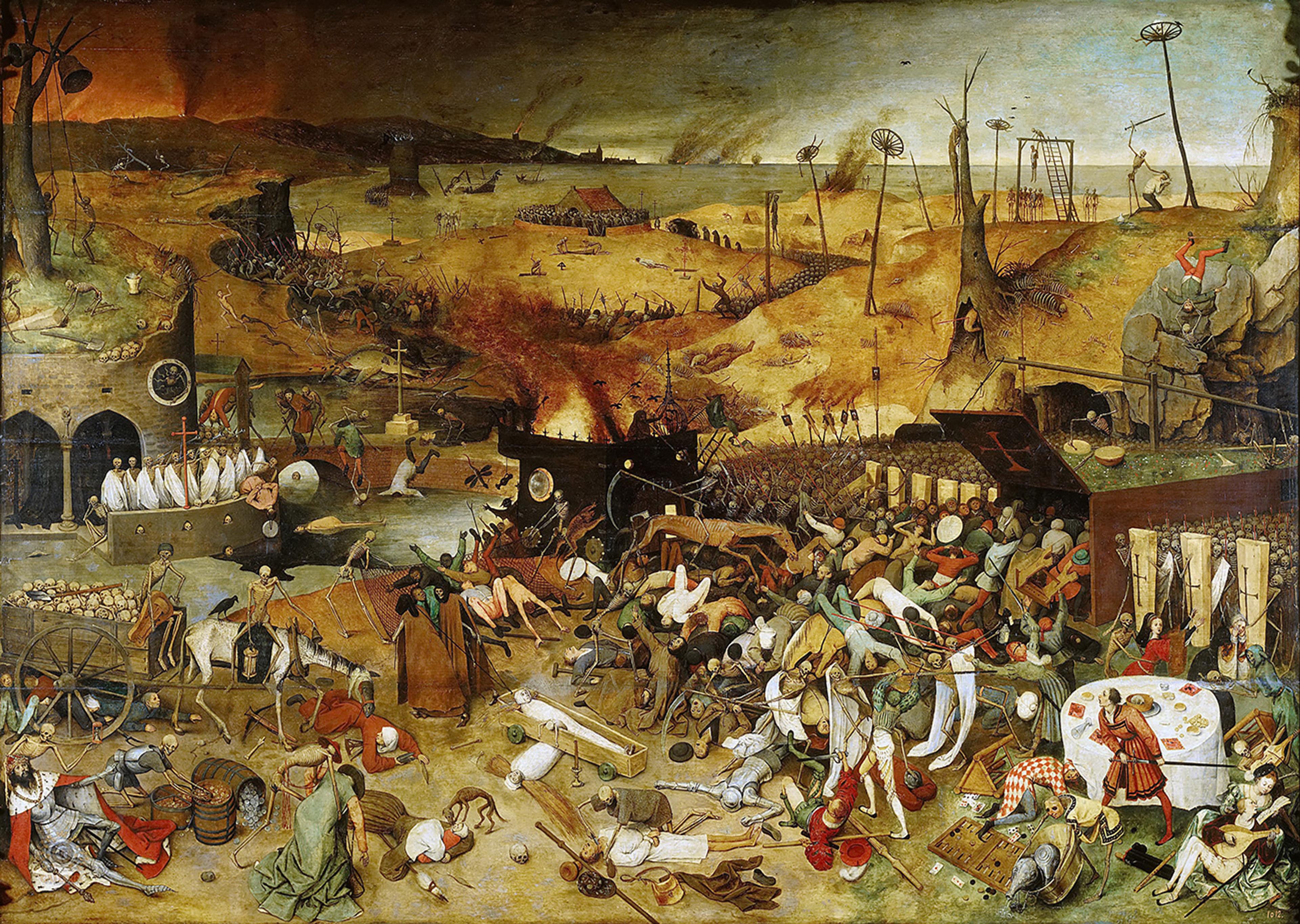
The shared mistake of today’s two main accelerationisms is that both want acceleration to serve some human end. The far Right wants acceleration to serve the white ethnostate. Techno-optimists want acceleration to serve human flourishing. But the horror of Landian accelerationism is that it refuses to return acceleration to human ideals. Capitalism is not to be affirmed because it will fulfil our dreams, but because it will throw those dreams, along with us, into the rubbish bin of species history.
This is also the strangest point of overlap between Land and anti-capitalists. Anti-capitalists condemn capitalism because it alienates, exploits, automates, destroys community and subordinates humanity to inhuman market forces. Land praises capitalism for exactly the same reasons. The colder it is, the more it exposes the inhumanity of the real. The more it dehumanises us, the more it breaks anthropocentrism. The more it moves towards automation and artificial superintelligence, the closer it comes to the end Land desires.
The real question of accelerationism, then, is not simply whether acceleration is good or bad. The question is: what is being accelerated, and for whom? If acceleration is meant to restore an old order, it is not acceleration but reactionary fantasy. If it is meant to make human beings more comfortable, richer and longer-lived, it is not accelerationism in Land’s sense, but a radical version of techno-optimism. True Landian accelerationism is darker. It treats acceleration as an inhuman critique, a process that removes humanity from the centre of reality.
Land once imagined that nothing truly human would make it out of the near future. For most people, this is a terrifying prophecy. For him, it is almost good news. His commitment is not to the improvement of humanity, but to an absolute and inhuman real. That real does not need our values, our meanings or our survival.
In Land’s view, the only thing we can contribute to this no-human future may be very simple: to get out of the way.