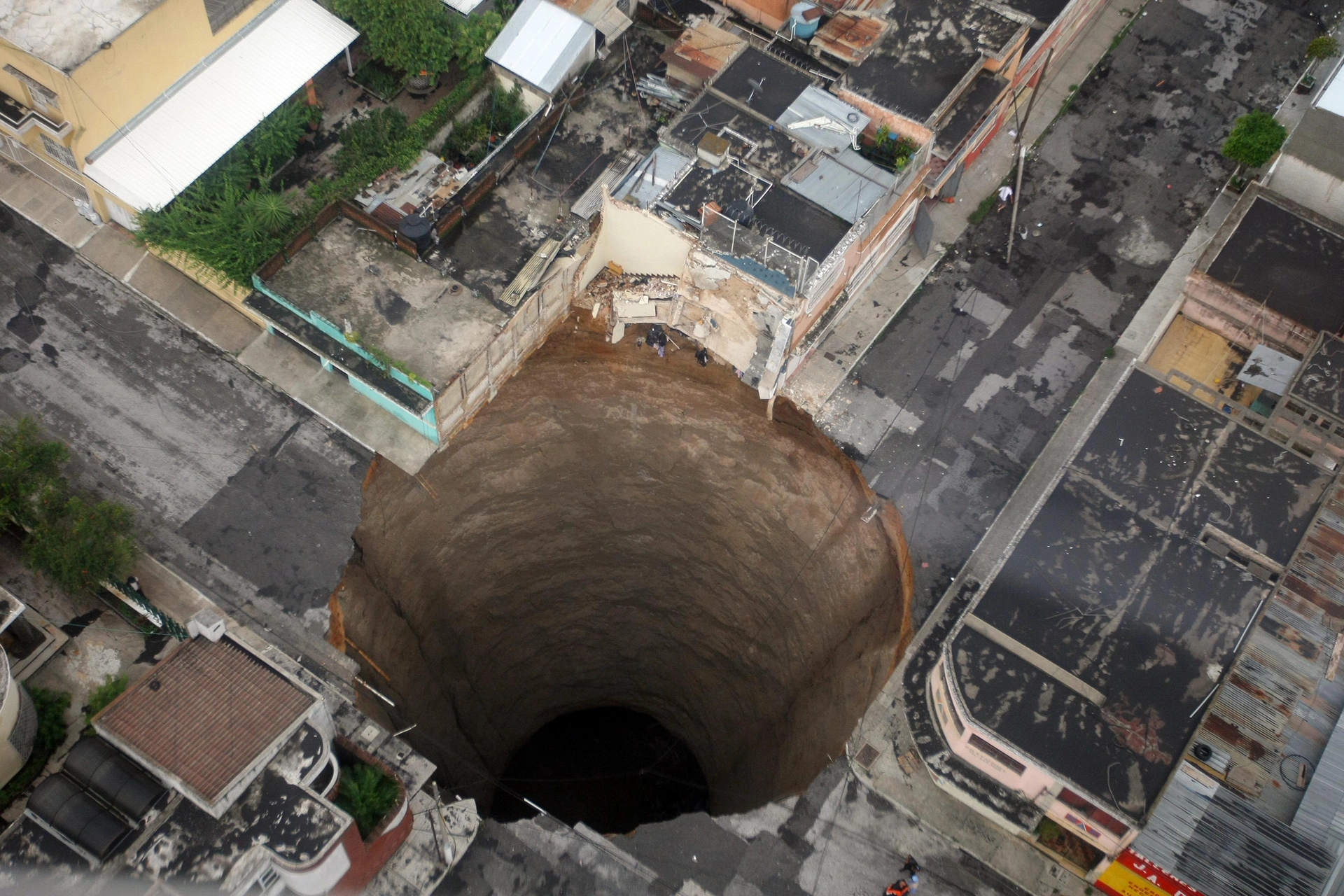
Beneath Our Human Shallows
After the Aral Sea Vanished, the Deep Earth Moved Too
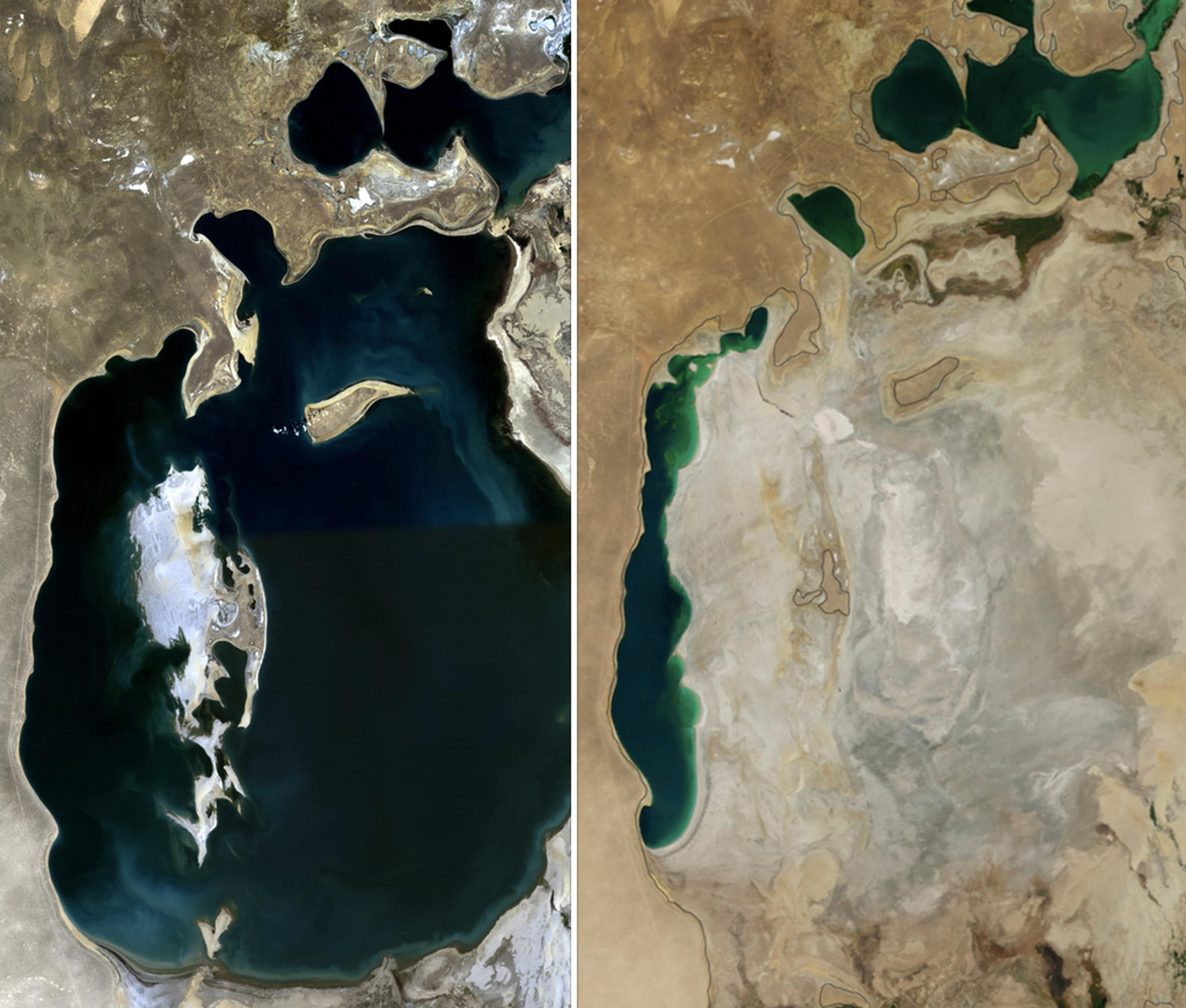
In the 1960s, when Soviet engineers began reshaping the rivers of Central Asia, they probably did not imagine that they were setting in motion a disaster that would later be understood on a planetary scale. Their aim was not to create an environmental catastrophe, but to turn arid land into cotton fields, bringing parts of what are now Uzbekistan and Kazakhstan into a grand project of modernisation. The dream reached back to an older imperial imagination: to irrigate, develop and incorporate supposedly “backward” regions into productive space. To achieve this, they diverted much of the water from the two great rivers that fed the Aral Sea. At the time, the Aral was still the fourth-largest lake in the world, larger than Lake Michigan. The engineers did not intend to drain it, but the Earth system does not always answer human intentions as we expect. Decades later, the sea had almost disappeared, leaving exposed lakebed, salt dust, abandoned fishing boats and ports without water. Those boats, stranded like bones in the desert, became monuments to one of the 20th century’s greatest environmental disasters.
We usually understand the disappearance of the Aral Sea as a surface event. A lake dried up; fisheries collapsed; local climates shifted; communities were displaced; land turned saline; public health deteriorated. All of that is true. But the catastrophe did not stop at the surface. Once around 1,000 cubic kilometres of water had vanished, the crust that had long been pressed down by that immense weight began to rebound. Like a mattress relieved of a heavy load, the ground slowly rose. Recent satellite measurements show that the former Aral Sea region has been lifting by several millimetres a year. More surprisingly still, models suggest that this response did not occur only in the shallow crust. It reached down into the upper mantle. Viscous rock, moving with extreme slowness, responded to the loss of mass above it, perhaps as far down as 190 kilometres.
This may be one of the deepest known effects of a single human act on the Earth. Our deepest mines reach only a few kilometres. The deepest borehole ever drilled descends just over 12 kilometres. We have long dreamed of piercing the crust and touching the mantle, but we have never truly managed it. Yet one intervention in rivers and lakes indirectly caused the mantle itself to respond. The fact is startling, because it seems to show that the Anthropocene is not confined to the atmosphere, the oceans, glaciers or the biosphere. It has entered the solid Earth.
And yet that shock quickly turns into a more complicated humility. One hundred and ninety kilometres sounds deep, but from the perspective of the whole planet it is still a thin layer. Earth’s radius is more than 6,000 kilometres. The mantle extends thousands of kilometres downward; the outer core is a deep sea of liquid metal; the inner core lies still farther away, under pressures beyond ordinary imagination. Even if the disappearance of the Aral Sea caused a slight and slow adjustment in the upper mantle, most of the Earth has no idea that human beings exist. We have touched the deep, but we have not mastered it. We have altered the surface, but we have not become the owners of the planet.
This is the paradox contained in the phrase “beneath our human shallows”. Humanity is now powerful enough to alter many planetary surface processes, and even to provoke a response from the crust and upper mantle. Yet we still live in an exceedingly thin, fragile and shallow layer of the Earth. Our cities, farms, industries, wars, technologies and civilisations all cling to this surface. The disasters we make can be enormous, but our existence remains shallow.
The Anthropocene Reaches Downward, but Not Very Far
Arguments about the Anthropocene have long tended to focus on when it began. Did it begin with agriculture, when humans first started reshaping land, forests and the carbon cycle? Did it begin with the Industrial Revolution, when coal, steam and machinery made humanity a truly global force? Or did it begin in the mid-20th century, when nuclear testing scattered radioactive traces across the planet and wrote a clear signal into the strata? Geologists ultimately declined to formally recognise the Anthropocene as a new epoch, in part because it proved difficult to agree on a single stratigraphic marker. But whether or not it becomes an official geological term, the word captures a real condition: industrial humanity is rewriting the Earth on a planetary scale.
A question asked less often than “when did the Anthropocene begin?” is this: how far does it reach? What does the Anthropocene look like from underground? At depths of hundreds to thousands of metres, the answer is already fairly clear. Oil and gas extraction, mining, groundwater pumping, geothermal development, carbon dioxide storage and the possible future expansion of geological hydrogen extraction are all changing the movement of fluids underground. Researchers have estimated that below 500 metres, the human-driven flux of subsurface fluids now exceeds natural groundwater flow. At that depth, human beings are no longer merely occasional disturbers. We have become one of the dominant forces.
These underground activities are not merely “underground problems”. The most important consequence of extracting oil and gas is that ancient carbon is moved from the lithosphere into the atmosphere, driving climate change. The speed of that carbon transfer far exceeds that of some of the most extreme volcanic events in Earth’s history. The injection and extraction of fluids underground can also trigger earthquakes, and may affect the vast microbial world living deep within the crust. We still know little about this deep biosphere, but it reminds us that the underground is not dead space. It is a complex realm of life, chemistry and slow exchange.
The energy transition will not stop humanity from entering the subsurface. On the contrary, it may lead us to mine more widely and more deeply. Batteries, wind turbines, solar panels and transmission systems require large quantities of metals and rare minerals. Mines will grow larger and may extend farther down. To reduce atmospheric carbon dioxide, humans are also attempting to inject carbon back into rock, where it might mineralise or remain stored for long periods. If billions of tonnes of carbon dioxide are eventually pushed underground each year, the rock record may acquire a strange artificial carbon layer, containing mineral structures that would not otherwise have formed. Geologists of the distant future might look at such strata and wonder why a short-lived species moved carbon so rapidly from the underground to the sky, and then tried to send it back again.
Even more astonishing, perhaps, is groundwater extraction. Each year, humans pump from aquifers a volume of water comparable to draining another Aral Sea from the ground. In many agricultural regions, the land is sinking, wells are being drilled deeper, and irrigation depends on ever greater energy use. This redistribution of water has even shifted the position of Earth’s rotational axis and has become a significant contributor to sea level rise. We often think of climate change as a problem of the atmosphere, but humanity is also redistributing the planet’s water, bringing deep groundwater rapidly to the surface and eventually into rivers, oceans and atmospheric circulation.
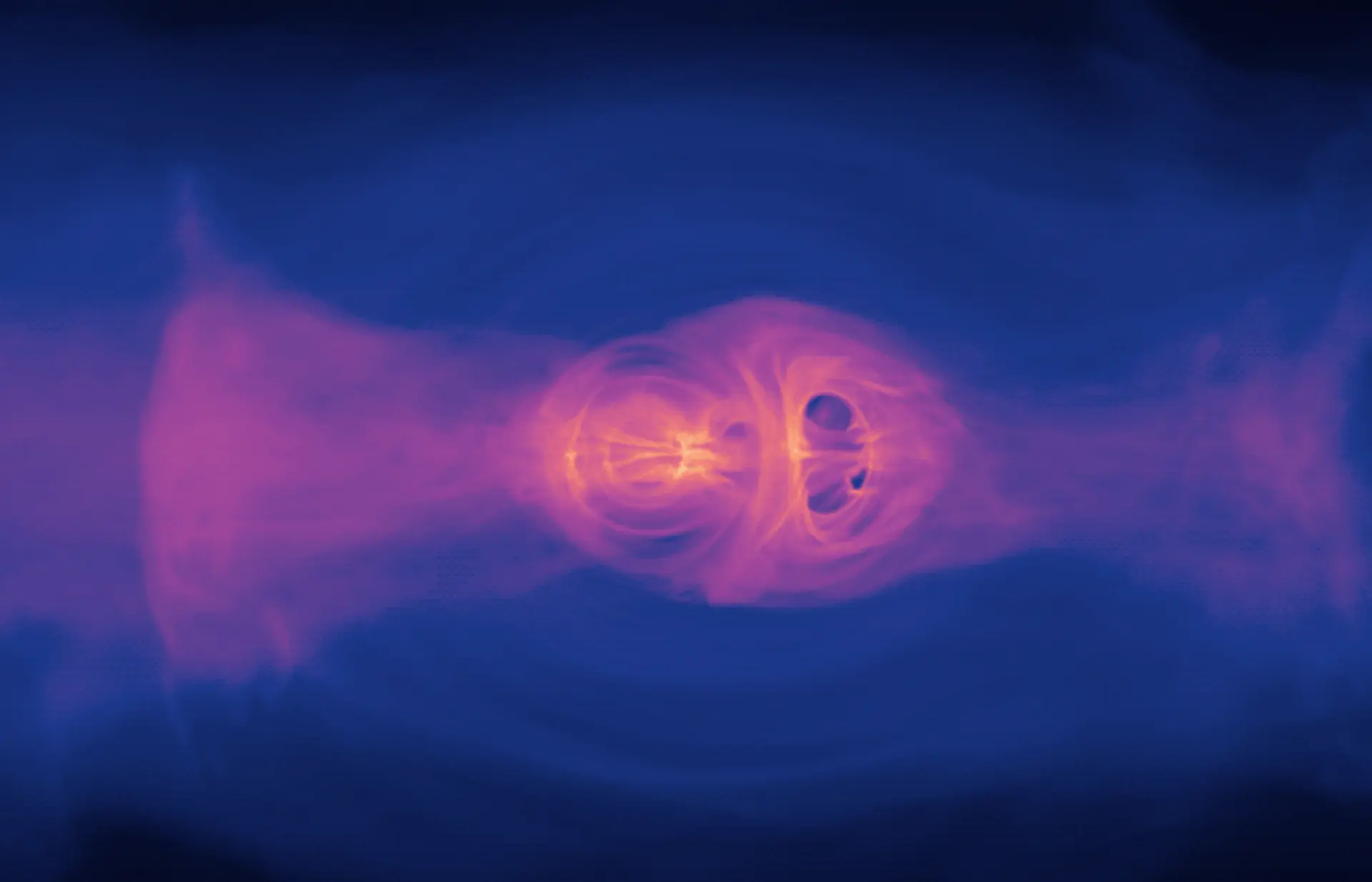
The retreat of glaciers and ice sheets reveals another pathway by which human influence travels downward. Humans emit greenhouse gases, the atmosphere warms, ice melts, the pressure on the crust lessens, the land rebounds, coastlines shift, and volcanic and seismic systems may be affected. The loss of Antarctic ice, for instance, may reduce pressure on magma chambers beneath the ice and alter eruption rates. There is no single simple chain of cause and effect here, but rather a web of interactions: air, water, ice, rock and magma are all involved. Humans press a button at the surface, and the Earth system transmits the disturbance downward in ways we cannot always predict.
If we extend the timescale to tens of millions of years, traces of today’s humanity may even descend into the mantle with oceanic crust. Marine sediments now contain coal ash, plastics, radioactive isotopes, industrial carbon signals and eroded soils. Over immense spans of time, they may be subducted with tectonic plates, transformed by heat and pressure, melted, mixed and diluted. Perhaps one day, an almost imperceptible isotopic trace of the Anthropocene will return to the surface through a volcanic arc. In an even more distant future, some fragments may be carried down towards the deep tectonic graveyards near the edge of the core. But even then, these traces will be little more than dust within the Earth’s enormous cycles. They will not make the mantle ours. They will remind us that we, too, are eventually remixed by the planet.
The Deep Earth Does Not Revolve Around Us
The word Anthropocene carries a dangerous temptation. It stresses that humans have become a geological force, and this is important because it reminds us that we cannot evade responsibility. But it can also reinforce a new kind of arrogance: the impression that humanity has become the protagonist of Earth’s story, that the whole planet now turns around our destruction, our repair and our future. Yet the moment we look even slightly downward, that self-importance begins to falter. Most of the Earth lies beyond direct human experience and beyond human command. The dramatic changes we have made at the surface remain, from the perspective of the planet’s interior, brief and shallow.
The mantle moves slowly over tens and hundreds of millions of years. Oceanic plates are born and then descend into subduction zones. Molten iron churns in the outer core, generating the magnetic field that protects the planet. The inner core remains solid under extreme pressure, influencing Earth’s cooling and magnetic history in ways we still do not fully understand. These processes were operating long before human beings existed, and will almost certainly continue long after us. They will not speed up because of our civilisational anxieties, nor will they alter their basic rhythms to suit our technological ambitions.
This is not to say that human influence is unimportant. Quite the opposite. For life at the surface, human influence is already profound. Climate warming, sea level rise, mass extinction, soil degradation, freshwater depletion and ocean acidification will reshape the future of humanity and many other forms of life. But these changes primarily concern Earth’s habitable surface, not the existence of the planet as a whole. Earth will not be destroyed by human beings. What may be destroyed is the particular state of Earth on which we depend: a relatively stable climate, accessible freshwater, fertile soil, predictable seasons, coastlines suitable for agriculture and cities, and the ecological order required for complex civilisation.
In that sense, the phrase “saving the planet” is not quite right. The planet does not need saving. What needs saving are the conditions that allow us to live upon its surface. The deep Earth will go on. Volcanoes will erupt; mountains will rise and weather away; oceanic crust will be created and destroyed; the core will continue slowly cooling. The question is not whether Earth can continue as a planet. The question is whether human beings can continue to inhabit the thin, temperate, intricate layer at its surface.
This should make us humbler, not more indifferent. The more clearly we understand ourselves as a shallow species, the more carefully we should value that shallow layer. We cannot move into the mantle. We cannot redesign the core. We cannot adjust plate tectonics at will. What we have is the thin dwelling-place made of air, ocean, rivers, glaciers, soils, forests and cities. It is shallow, but for us it is everything. The immensity of the deep Earth does not lessen our responsibility. It clarifies it. We are not managing the whole planet. We are trying to preserve the layer in which we can live.
A Habitable World Comes from Below
If the Anthropocene tells us that humans are changing the surface, the deep Earth reminds us that the surface was made habitable by deeper powers. The air we breathe, the stability of climate, the chemistry of the oceans, the existence of continents, the fertility of volcanic soils, even the pathways of evolution itself, are all linked in complex ways to Earth’s interior. Over recent decades, geoscience has opened new windows into the depths. High-pressure experiments simulate conditions in the core and mantle. Super-deep diamonds bring minerals from the lower mantle to the surface. Seismic waves scan the Earth like a planetary CT image. Numerical models track the movements of plates and mantle over immense spans of time. We are learning that the interior is not a silent background. It is the engine of a habitable planet.
Earth’s magnetic field is one example. The flow of molten iron in the liquid outer core forms the geodynamo, producing the magnetic field that surrounds the planet. This field shields the atmosphere and life from solar wind and cosmic radiation. Without it, Earth might more easily lose water and oxygen from its atmosphere, and the conditions for life would be very different. Recent research has even suggested that, over hundreds of millions of years, there may be a relationship between the strength of Earth’s magnetic field and the concentration of atmospheric oxygen. The reason remains unclear. It may involve atmospheric escape, or it may be linked to supercontinent cycles, mantle heat flow and surface geochemical cycles. Whatever the mechanism, the possibility itself is striking: every breath we take may be indirectly connected to the movement of metal in the planet’s deepest regions.
Rock weathering and the deep carbon cycle act like a global thermostat. When rocks weather at the surface, they react with carbon dioxide in the atmosphere and lock carbon into minerals. Some of that carbon enters marine sediments and is eventually subducted with oceanic crust into the mantle; volcanoes then return part of it to the atmosphere as carbon dioxide. This cycle is very slow, but over Earth’s history it has helped maintain a relatively stable climate. When the planet warms, weathering can draw down atmospheric carbon dioxide. When Earth enters deep freeze, volcanic carbon can help bring it back from the ice. The climate state we inhabit today depends on this balance between the deep and the surface.
Plate tectonics is even more central to Earth’s habitability. It is driven by heat convection in the mantle, and some of that heat comes from the decay of radioactive elements in deep rocks. Plate tectonics circulates rock, water and carbon between the surface and the interior. It helps maintain ocean chemistry, regulate atmospheric carbon dioxide, and build continents, mountains and volcanic arcs. Without continents, there would be no terrestrial ecosystems. Without terrestrial ecosystems, it is difficult to imagine fire, complex technology or human civilisation. Plate tectonics is not geological background far removed from life. It is one of the conditions that allowed life as we know it to unfold.
The Earth system, then, should not be understood only as a combination of atmosphere, ocean and biosphere. It must also include the crust, mantle, core and plate tectonics. A fuller view of the Earth places the power of the deep planet and the vitality of surface life in the same system. Earth is not a sphere with life on the outside and inert rock within. It is a whole made of heat, metal, rock, water, air and life. The softness of the surface and the slowness of the deep are not separate. They are joined.
Seeing Earth’s Scale at the Edge of a Crater
A few months ago, on the summit of Cotopaxi in Ecuador, I felt more strongly than ever that the deep Earth is not an abstraction. Cotopaxi rises to nearly 6,000 metres, remains glaciated and is still active. It is one of the great volcanoes of the Andean chain. In local Quechua tradition, such mountains are not merely geological structures but beings with power, personality and relations. They are apus, mountain spirits. Cotopaxi, Chimborazo and Tungurahua are not only points on a map; they appear in stories and reverence. They bring dangerous eruptions and earthquakes, but also water, fertile soil and the conditions for life in the valleys below.
Geologically, these volcanoes really are related. They are born from the subduction of the Nazca plate beneath the South American continent. Oceanic crust forms at mid-ocean ridges and spends tens of millions of years absorbing water, carbon dioxide and other volatiles, while accumulating sediments made of continental debris and the remains of marine life. As that oceanic plate descends beneath the continent, heat and pressure rise. Water and volatiles are released from the slab and its sediments into the mantle wedge above, lowering the melting point of the rock and generating magma. That magma rises because it is less dense, and eventually erupts at the surface.
A volcano, then, is not an isolated pile of rock. It is the product of atmosphere, water, ocean, life and the Earth’s interior acting together. Continents are weathered into sediment; organisms fall to the seabed; oceanic crust is carried into the deep; the mantle is altered by volatile compounds; magma rises again; volcanoes erupt; new land and soil are formed. Here, the Earth draws on several of its spheres to rebuild itself. A volcano is both destruction and renewal. It is an outlet of the deep Earth and a source of surface life.
When we reached the summit after climbing through the night, the crater was breathing white sulphurous steam. The air was thin, the wind strong, and Chimborazo and Tungurahua rose from the clouds in the distance, catching the first light of morning. Far below, the lights of Quito spread through the valley. The human city looked both vast and fragile. The ground beneath us was new, made of ash, lava and material returned from depth. In that moment, I felt as if I were standing at the edge of a great cycle: the ocean had gone into the Earth, and the Earth had returned it to the sky as rock, steam and volcano.
That feeling is hard to capture in scientific language alone. Perhaps it was the lack of oxygen, perhaps the exhaustion, perhaps the mountain and the crater together producing something close to religious awe. All I know is that up there, the self-centred story of the Anthropocene felt out of place. We have certainly changed the world, but the volcano showed that the world does not revolve around us. The deep Earth, in its own time and through heat and pressure, reworks old oceans, old life and old rock into new land. It does not need us to witness it, though sometimes it allows us to see.
Standing on Cotopaxi, I began to understand why so many cultures have treated volcanoes as sacred. It is not because people did not understand geology, but because they understood awe. Volcanoes really do have relationships: with plates, oceans, glaciers, water, valleys, crops and cities. They are not static scenery, but active powers. Scientific explanation does not diminish this reverence. It deepens it. It tells us that the mountain beneath our feet is not an accidental rise in the landscape, but an expression of the long circulation of the planet.
Learning to Live Humbly on the Shallows
“Beneath our human shallows” is not a way of denying the seriousness of human influence. On the contrary, it makes that seriousness clearer. We have not mastered the whole Earth, yet we have become powerful enough to damage the surface conditions on which we depend. We cannot alter the working of the core, but we can alter the composition of the atmosphere. We cannot command the mantle to stop flowing, but we can drain lakes and aquifers. We cannot rewrite plate tectonics, but we can disrupt the carbon cycle within a few centuries. Our power is not deep, but for our own living space it is dangerous enough.
Perhaps what the Anthropocene should give us is not the arrogance of declaring ourselves the planet’s main character, but a clearer sense of scale. We should admit that humans are a geological force, but not the centre of the planet. We can leave traces in the strata, but we cannot make the Earth’s interior revolve around us. We can change the climate for centuries or millennia, but we cannot easily repair the systems we have disturbed. We are good at acceleration and poor at waiting; good at extraction and poor at return; good at producing change, and often incapable of bearing its consequences.
The lesson of the deep Earth is humility, not helplessness. It teaches us that the processes sustaining surface life are often slow, hidden and ancient, and do not operate on human timescales. It also teaches us that habitability is not a given, but the outcome of a rare balance between many deep and surface processes. Magnetic fields, carbon cycles, plate tectonics, rock weathering, volcanism, oceans and atmosphere have together maintained the conditions of this planet. We live on the surface of that balance, and we are disturbing it with extraordinary speed.
The Aral Sea and Cotopaxi offer two images of the Anthropocene. The Aral Sea shows how, in a few decades, humans can make an inland sea vanish and provoke even the deep Earth into a faint response. Cotopaxi shows how, over tens of millions of years, the Earth weaves ocean, rock, life and air back into mountains, soils and water. One shows our capacity for damage; the other shows the limits of our place. Together, they do not tell a story of human omnipotence. They reveal something more complicated: we are powerful, but shallow; dangerous, but not central.
Perhaps what we need is not a larger fantasy of control, but a deeper sense of belonging. We belong to the surface, and we depend on the deep. The ground beneath us comes from rock cycles; the air we breathe may be protected by the core; the climate we inhabit depends on exchanges between rock and atmosphere; our cities and fields stand on continents made by plate tectonics. If the Anthropocene has any hopeful meaning, it is that we may finally understand this: we are powerful enough to be responsible, but not great enough to be arrogant.
The deep Earth will not stop for us. It will keep flowing, melting, subducting, rising, cooling and remaking itself in the dark. What we can do is learn to place our power within the right scale on this brief and fragile surface. Less illusion of centrality, more geological humility. Less impulse to treat the Earth as a storehouse, more care for the surface world that the deep Earth supports. For beneath our human shallows, the Earth is far deeper than we are, and far more enduring.