Can Nature Really “Malfunction”?
We have grown used to speaking about nature in almost mechanical terms.
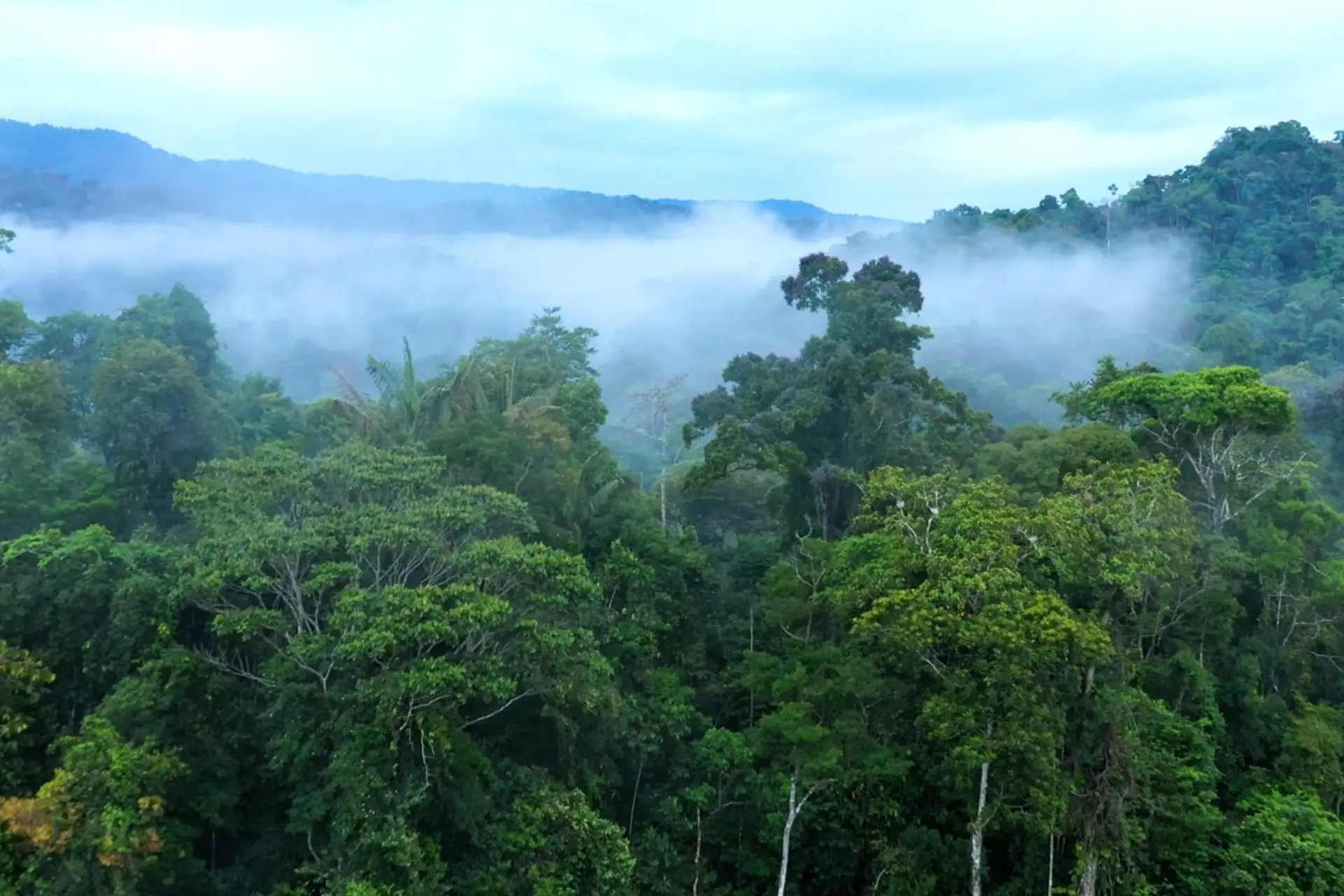
The Amazon rainforest is losing its capacity to act as a carbon sink. Coral reefs are declining, threatening fish stocks across the tropics. The Atlantic Meridional Overturning Circulation, a vast system of ocean currents that helps regulate the climate, may be at risk of collapse this century. In newspapers, magazines, research reports and environmental campaigns, we repeatedly encounter the same kind of language: ecosystems are deteriorating, the Earth system is becoming unstable, and nature is losing its ability to function.
This way of speaking feels familiar. In everyday life, too, we often understand nature through the language of function. Forests absorb carbon dioxide. Wetlands filter water. Bees pollinate crops. Coral reefs support fisheries. Nature appears as a vast service system, and ecological processes begin to look like components in a machine, each performing a task.
But is this really the right way to think?
Forests do absorb carbon, but they do not exist in order to absorb carbon. Wetlands can filter water, but they are not natural sewage-treatment plants. Bees pollinate flowers and crops, but they are not working for human agriculture. Coral reefs sustain rich marine life, but they did not come into being in order to provide protein for human beings.
This is where the problem begins: nature may produce many outcomes that benefit us, but that does not mean nature exists for the sake of those outcomes.
Why Do We Keep Seeing Nature as Something Useful?
In modern environmental discourse, “ecosystem services” has become an extremely influential idea. It reminds us that forests, wetlands, grasslands and oceans are not just scenery in the background of human life. They are closely connected to climate, water, food, health and economic stability.
The concept has real practical value. It helps policymakers, businesses and the public understand why environmental protection matters. When people realise that wetlands can reduce flood risk, forests can help stabilise the climate, and insect pollination is tied to food production, conservation no longer sounds like a moral concern held only by environmentalists. It becomes a public issue tied directly to the functioning of society.
Yet this language also carries a risk. It can make us think that nature’s value lies mainly in what it provides for us.
When we say that the function of a forest is to store carbon, we are viewing the forest from the standpoint of human climate security. When we say that the function of a wetland is to purify water, we are interpreting the wetland through the lens of human water needs. When we say that the function of a coral reef is to support fisheries, we are understanding the reef in terms of human resource use.
These statements are not entirely wrong. But they are not neutral either. They select certain ecological processes, assign them value, and then call them “functions”. In other words, nature has not announced these purposes for itself. We have attached them to nature according to our own needs.
Why the Word “Function” Can Mislead Us
To understand the issue, we need to distinguish between different meanings of “function”.
The first kind of function is a designed function. The function of a clock is to tell time. The function of a car is to transport people. The function of a phone is to communicate. These things can “break down” because they were made for specific purposes. A clock that no longer keeps time has failed in its function. A car that cannot start no longer fulfils its purpose.
The second kind of function is one we assign temporarily. A stone does not naturally have the function of being a paperweight. But if I use it to hold down a stack of papers, it becomes a paperweight in that moment. The function comes not from the stone itself, but from the purpose I give it.
The third kind of function is produced by biological evolution. The function of the heart is to pump blood. The function of the eye is to see. The function of chloroplasts is to carry out photosynthesis. These functions were not designed by human beings, but they can be explained through evolutionary history. Hearts have been retained in animal bodies because pumping blood helps sustain life. That is why we can say that a heart is malfunctioning: it has a standard of proper operation rooted in its biological history.
Ecosystems, however, do not fit neatly into any of these categories.
An ecosystem is not a clock, a car or a phone. It was not manufactured by a designer. Nor is it simply like a stone that we happen to use for a temporary purpose, although we often treat ecosystems in something like that way. More importantly, an ecosystem is not like a heart or an eye: it is not an organ that evolved as a single unit through natural selection.
Forests, wetlands, grasslands and coral reefs are not organs in some giant living body. They do not have one unified organism to serve, they do not have clear boundaries, and they do not reproduce as wholes. They are open, dynamic and constantly shifting networks of life, formed by countless interactions among species, microbes, water, climate, soil and geological processes.
So when we say that an ecosystem is “malfunctioning”, the claim is far more complicated than it first appears.
Ecosystems Are Not Machines, Nor Are They the Earth’s Organs
“The Amazon is the lungs of the planet” is one of the most familiar environmental metaphors. It is vivid, powerful and easy to understand. It helps people grasp the importance of the rainforest. But strictly speaking, the Amazon is not a lung.
A lung is part of a body. It serves the survival of an organism. Its function can be explained through physiology and evolutionary history. The Amazon rainforest, by contrast, is not an organ inside a planetary body. It does not absorb carbon in order to keep some larger Earth-organism alive. It is a complex system made up of trees, soils, animals, microbes, water cycles and climate conditions.
The same problem appears in other environmental metaphors. Some people compare species to rivets in an airplane wing: remove one rivet and the plane may still fly; remove too many, and the plane may crash. This metaphor is powerful because it communicates the danger of species loss and the possibility of unpredictable consequences.
But it has limits. An airplane is designed by engineers. Rivets have fixed positions and specific purposes. Ecosystems are not like that. Species are not parts installed by a designer into a natural machine. They are dynamic and unique. They migrate, compete, cooperate, evolve and change their roles depending on context.
When we compare ecosystems to cars, airplanes or bodily organs, we are using familiar objects to make complex natural systems easier to understand. But these metaphors can quietly smuggle in a mistaken assumption: that ecosystems have a “proper” working state, and that any departure from it is a malfunction.
Reality is not so simple.
Ecosystems change. They reorganise. They decline. They may even collapse. But from nature’s own point of view, such changes are not necessarily failures. New ecological communities may form after volcanic eruptions. Rivers may shift course and alter wetlands. A changing climate may move species into new ranges. These can be dramatic transformations, but they are not automatically signs that nature has failed.
What alarms us is not simply change itself. It is that these changes are destroying the world we depend on, value and hope to preserve.
When Can We Say an Ecosystem Has “Malfunctioned”?
This does not mean that the phrase “ecosystem function” is completely useless. The key is to be clear about whose purpose we are talking about.
If we protect a wetland as part of a city’s flood-control and water-purification system, then when pollution, land reclamation or hydrological disruption prevents it from filtering water, we may say that it has failed relative to that human goal.
If we incorporate forests into climate policy and expect them to absorb and store large amounts of carbon, then when logging, fire or drought turns a forest from a carbon sink into a carbon source, we may say that it has failed relative to our climate objectives.
If coastal communities depend on coral reefs to support fisheries, then when coral bleaching reduces fish populations, the reef is no longer meeting that human need.
But we must be careful: these are not failures from nature’s own standpoint. They are failures relative to the uses and expectations we have assigned to nature.
Wetlands are not obliged to process our pollution. Forests are not obliged to absorb the carbon emitted by industrial society. Coral reefs are not obliged to maintain stable fish stocks for human consumption. What we call function often comes from our choices, needs and values, not from nature’s own purposes.
In other words, ecosystems do not break down in the same way machines do. What can break down is the relationship between human beings and the natural world.
Recognising That Nature Has No Purpose Does Not Weaken Environmentalism
Some may worry that if nature has no intrinsic purpose, and ecosystems do not truly “malfunction”, then the case for protecting nature becomes weaker.
The opposite is true.
Recognising that nature has no human-like purpose does not weaken environmental protection. It makes it more honest.
We do not need to pretend that forests exist in order to absorb carbon for us. We can simply say that we need a stable climate, and that we do not want future generations to inherit a hotter, more extreme and less predictable world. We can also say that the life within forests deserves respect, not merely because it provides resources for us, but because it is part of a living world with its own richness.
We do not need to claim that wetlands exist in order to purify human waste. We can say that wetlands are habitats where birds, fish, insects, plants and countless other forms of life coexist. To destroy a wetland is not merely to lose a “service”. It is to damage an entire world.
We do not need to protect coral reefs only because they support fisheries. Coral reefs are among the most complex, beautiful and fragile ecological landscapes on Earth. Even if they provided no direct economic benefit to human beings, their disappearance would still be an irreversible impoverishment.
This is the deeper reason for conservation: nature does not have to be useful to us before it becomes worthy of care.
The Real Issue Is Human Responsibility
Modern humanity has profoundly altered the planet. We emit greenhouse gases, cut down forests, pollute rivers, transform land, exploit the oceans, and draw countless ecosystems into our systems of food, energy, trade and urban expansion.
In the process, we continually turn nature into a service system. Forests become carbon stores. Rivers become water resources. Land becomes productive capital. Oceans become fisheries. Insects become agricultural labourers. We assign functions to nature, and when those functions no longer serve us, we call it ecological crisis.
But perhaps we need to ask the question differently.
The issue is not only why nature has “lost its function”. It is why we came to understand nature as a set of functions in the first place. The issue is not simply why ecosystems are breaking down. It is why our relationship with nature has reached this point.
Nature has no obligation to perform our tasks. The obligation belongs to those who have transformed, used and depended on the natural world: human beings.
If we want forests to continue helping stabilise the climate, we must stop treating them as endlessly expendable. If we want wetlands to continue purifying water, we must reduce pollution instead of expecting wetlands to absorb the consequences. If we want coral reefs to survive, we must take seriously ocean warming, acidification and overfishing.
We cannot treat nature as a tool and then pretend that its decline has nothing to do with our choices.
Conclusion: What Needs Repair Is Not Nature’s Purpose
Ecosystems do not stop keeping time like broken clocks. They do not stall like cars with damaged parts. They have no blueprint, no instruction manual and no goal assigned by nature itself.
But ecosystems can become poorer, more fragile and irreversibly altered because of human activity. Forests can disappear. Corals can bleach. Rivers can be polluted. Species can go extinct. These changes matter not because nature has failed to fulfil some mysterious mission, but because we are losing a richer, more stable and more habitable world.
Environmentalism does not need to keep presenting nature as a giant machine. It can begin from a more honest recognition: we care about nature because our lives, ethics, futures and imaginations are bound up with it.
Nature is not obliged to serve us.
But we are responsible for the purposes we impose on nature.
What we need to repair is not nature’s lost purpose, but our misuse of the natural world. What we need to accept is not the task of finding meaning for nature, but the responsibility of answering for the meanings we have imposed upon it.