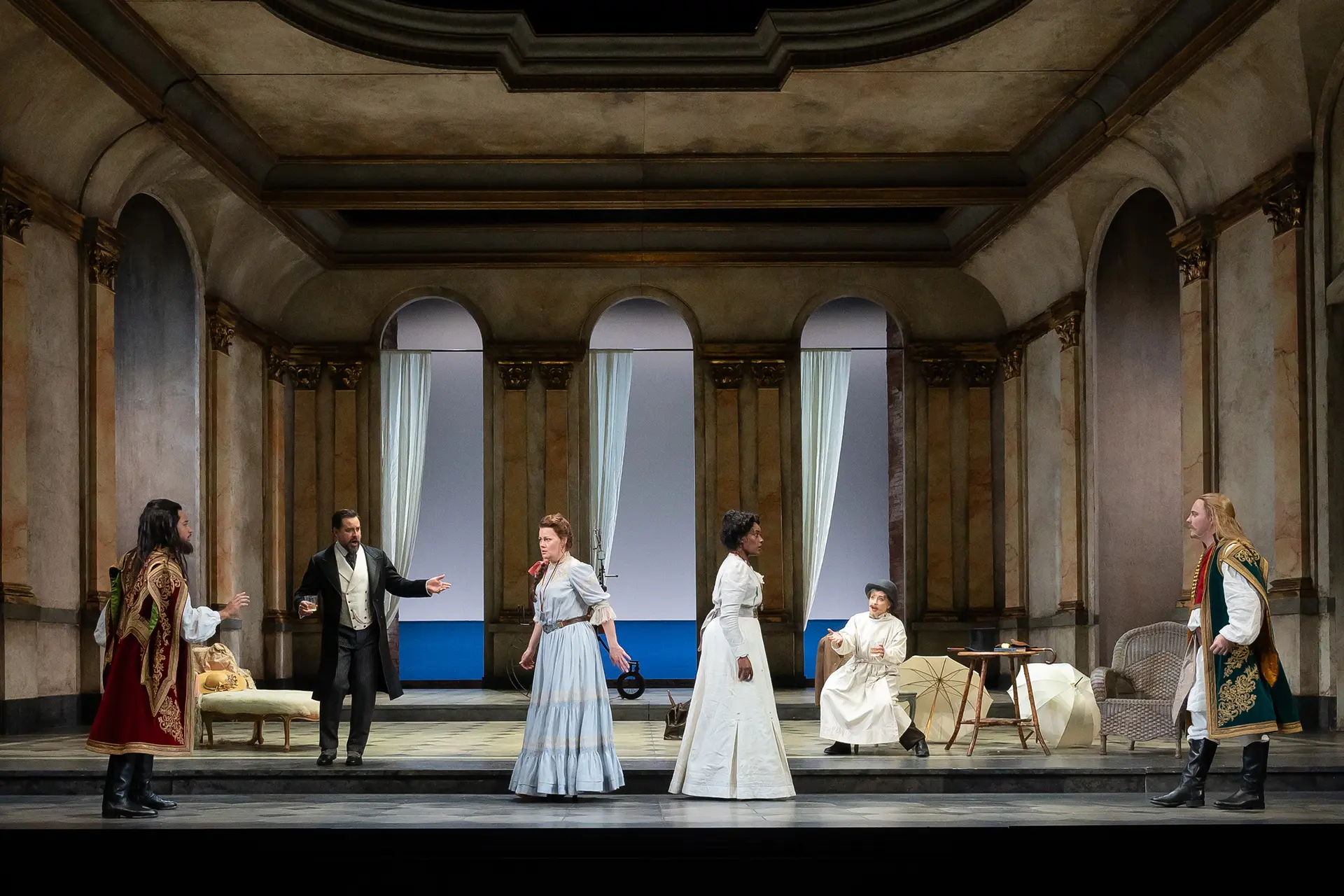
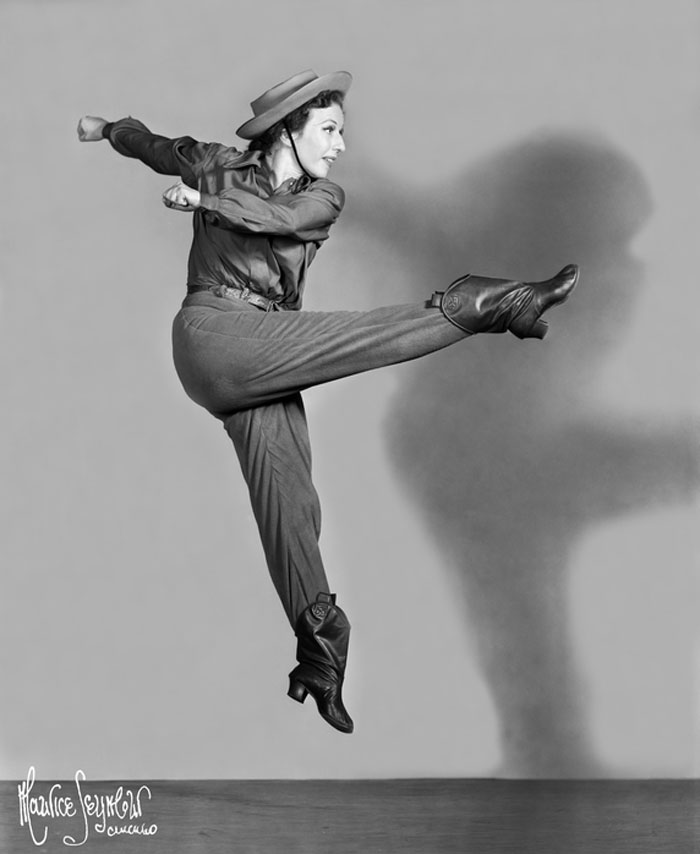
After years of working in relative obscurity, she had finally created something the world could not ignore. The musical was Oklahoma!, and it became a sensation almost immediately. Audiences loved it. Critics noticed it. The production would go on to run for thousands of performances and become one of the most successful shows of its time.
But success did not bring de Mille the clarity she expected.
Instead, it confused her.
She had made other work before Oklahoma! that she believed was stronger, more refined, more deserving of attention. Those pieces had passed quietly. Then suddenly, a work she considered only fairly good became the one that changed her career.
It is a strange thing to succeed at the wrong moment, or at least at the moment you do not understand. Failure can make you doubt yourself, but success can do the same. When the world applauds something you did not think was your best, you begin to wonder whether you understand your own work at all.
That was the place de Mille found herself in: admired, recognized, and deeply uncertain.
The Confusion After Success
Most people imagine that the hardest part of creative work is being ignored.
There is truth in that. It is painful to make something you care about and watch it disappear without response. It is difficult to keep writing, dancing, painting, building, filming, teaching, or creating when the world seems indifferent.
But being praised can be just as disorienting.
Praise does not always arrive for the work you value most. Attention does not always follow your best effort. Sometimes the thing you considered average becomes the thing people love. Sometimes the piece you polished carefully receives silence, while the one you nearly dismissed becomes popular.
This is when self-judgment becomes unstable.
You ask yourself, “Was I wrong about the good work? Was I wrong about the average work? Do I even know what I am making?”
De Mille carried this confusion to Martha Graham, one of the most important choreographers of the twentieth century. She told Graham that she had a burning desire to be excellent, but little faith that she could be.
It was an honest confession, and Graham gave her an answer worth remembering.
The Work Is Not Yours to Judge
Martha Graham’s advice was not to analyze the applause more carefully.
She did not tell de Mille to measure herself against other artists. She did not ask her to decide whether Oklahoma! was truly better than her earlier work. She did not suggest that the market, the audience, or the critics had finally revealed the truth.
Instead, Graham pointed her toward a different responsibility.
There is an energy that moves through each person in a particular way. Your task is not to decide whether that expression is valuable enough before you let it exist. Your task is to keep the channel open.
That is a difficult idea because it runs against one of our deepest habits.
We want to evaluate everything immediately. Is this good? Is this useful? Is this original? Will people like it? Is it better than what I made last time? Is it better than what someone else made?
But judgment is not the same as creation.
In fact, judgment often arrives too early. It stands at the doorway and refuses to let the work enter the room. It asks for proof before there is anything to prove. It wants certainty from a process that can only be understood after it has been lived.
Your job is not to decide whether the work is worthy before it exists. Your job is to make it exist.
Why We Misjudge Our Own Work
We are often terrible judges of our own work.
Part of the reason is that we are too close to it. We remember the struggle behind it. We remember the ugly first draft, the awkward rehearsal, the failed attempt, the moment when it almost fell apart. We know how different the final result is from the perfect version we imagined.
The audience does not see all of that.
They meet the work as it is. They bring their own memories, needs, tastes, frustrations, and desires. They may connect with something you thought was minor. They may ignore something you thought was profound. They may love the sentence you almost deleted or miss the idea you built everything around.
This does not mean the audience is always right.
It means their response is not fully under your control.
The meaning of your work is not created by you alone. It is completed somewhere between what you made and what someone else was ready to receive.
That is why trying to predict the value of your own work can become so exhausting. You are attempting to control not only the work itself, but also the inner life of everyone who may encounter it.
That is too much responsibility for one person to carry.
The Danger of Saying No to Yourself
There are plenty of people in the world who may misunderstand your work.
Some will dislike it. Some will ignore it. Some will compare it unfairly. Some will not be ready for it. Some will be too distracted to notice. Some will judge it through expectations you never agreed to meet.
You cannot prevent all of that.
But you can avoid becoming the first person to close the door.
Many creators do not fail because the world rejects them. They fail because they reject themselves first. They decide the idea is not good enough before they test it. They delete the draft before finishing it. They stop practicing before the skill has time to develop. They compare their beginning to someone else’s maturity and conclude that they should not continue.
This is one of the quietest forms of self-sabotage.
It does not look dramatic. It looks reasonable. You tell yourself you are being realistic. You say you are waiting until the idea is stronger, the timing is better, the confidence is higher, the talent is clearer.
But often, what you are really doing is protecting yourself from the discomfort of being seen while unfinished.
Professionals Keep Producing
Every artist judges their work.
So does every writer, builder, teacher, founder, designer, athlete, parent, and leader. Anyone who cares about what they do will sometimes wonder whether it is good enough.
The difference is not that professionals are free from doubt.
The difference is that they do not let doubt make the final decision.
They produce when the work feels exciting, and they produce when it feels ordinary. They show up when they are praised, and they show up when they are ignored. They learn from feedback, but they do not wait for perfect confidence before continuing.
This is not blind persistence. It is a kind of disciplined openness.
You keep improving. You keep listening. You keep refining. But you also keep allowing the work to move through you before your inner critic blocks it completely.
There is a difference between editing your work and strangling it.
Editing helps the work become clearer. Strangling prevents it from breathing.
Keep Your Eyes on Your Own Paper
There is an old classroom instruction that carries more wisdom than it first appears to have: keep your eyes on your own paper.
As children, we heard it as a warning not to cheat. But as adults, it becomes a lesson about attention.
Your neighbor’s paper is not your responsibility. Their answers, their pace, their handwriting, their approval, their applause, their timing, and their path are not the point.
Your task is to fill your own page.
Every morning, you wake up with something blank in front of you. It may not be a literal page. It may be a conversation, a business, a design, a workout, a meal, a lesson, a child, a customer, a blank screen, or a quiet hour before the day begins.
You get to put your name at the top and decide what you will place there.
Other people may not understand it. They may have different tastes. They may expect something else. They may value speed when you value depth, or popularity when you value honesty, or polish when you are still searching for the shape of the thing.
That is their concern.
Your concern is to do the work clearly and directly.
The Process Is the Place to Stand
Outcomes are unstable places to build your identity.
One day people applaud, and the next day they disappear. One piece succeeds, another fails. One project spreads, another sinks. Sometimes your best effort lands quietly. Sometimes your average effort travels farther than you expected.
If your confidence depends entirely on the reaction, then your inner life will belong to the crowd.
The process gives you firmer ground.
You can control whether you return to the work. You can control whether you practice with care. You can control whether you tell the truth as best you can. You can control whether you keep the channel open.
You cannot fully control whether the world understands what came through.
That does not make the work meaningless. It makes the work human.
What It Means to Keep the Channel Open
Keeping the channel open does not mean producing without standards.
It does not mean every idea is good, every draft is ready, or every attempt deserves applause. It does not mean ignoring craft, discipline, feedback, or revision.
It means refusing to block the work before it has a chance to become something.
It means allowing yourself to begin before you know how the ending will be judged. It means making room for the possibility that your own evaluation may be wrong. It means remembering that the value of your work may not reveal itself on the same day you create it.
Some things need time to find their audience.
Some things need time to teach you why they mattered.
Some things are not meant to be your most celebrated work, but they are still necessary steps in becoming the person who can make better work later.
Final Thoughts: Fill the Paper
Agnes de Mille wanted to know whether she could be excellent.
Martha Graham gave her a better question: can you stay open long enough for the work to pass through you?
That is the question every creator eventually faces.
Can you keep working when your judgment is unreliable? Can you continue when praise confuses you as much as silence? Can you let go of the need to know, in advance, how valuable your contribution will be?
The world does not need you to pre-approve your own expression before offering it.
It needs you to make what only you can make, from the place where you are right now, with the tools and courage you currently have.
Do the work.
Keep the channel open.
Keep your eyes on your own paper.