
Joseph met Marina in Russia in 1962, before exile became the central wound of his life.
They were young. They loved art. He wrote poetry, and she painted. They built a life together with the fragile optimism that young people often have before history enters the room. They fell in love, had a child, and for a while it seemed possible that their private world might remain untouched by the machinery of politics.
Then, in 1972, Soviet officials came to Joseph’s apartment.
They did not arrive to argue with him. They did not come to debate his poems or ask him to explain himself. They stormed in, took him away, placed him on a plane to Vienna, and informed him that he had been exiled from the Soviet Union.
He never saw Marina again.
There are losses that happen slowly, and there are losses that arrive like a door being shut forever. Brodsky’s exile was the second kind. One moment he had a country, a lover, a child, a language, a home. Then the state reached into his life and tore the map in half.
The Poet the State Could Not Tolerate
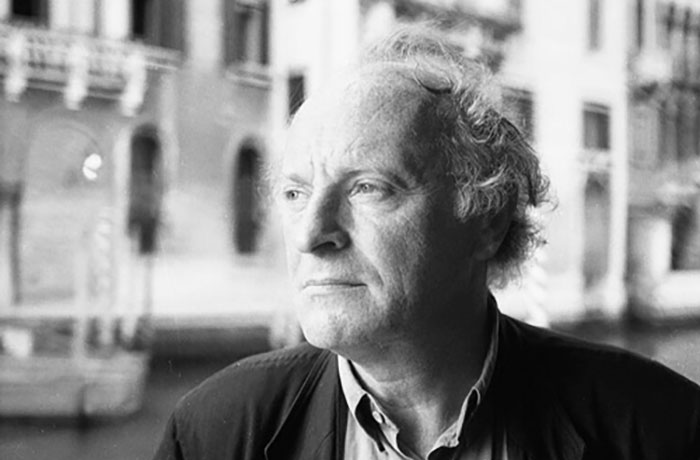
Joseph was Joseph Brodsky, the Russian poet who would later win the Nobel Prize in Literature.
But before the awards, before the American universities, before the recognition, he was a problem to the Soviet government. His work was called “anti-Soviet.” His name was dragged through newspapers. He was pushed out of jobs, watched, judged, and eventually forced out of the country that had formed his language and imagination.
What makes this kind of punishment so brutal is not only what it takes from you. It is what it tries to turn you into afterward.
The oppressor wants your life disrupted, but also your attention captured. They want the wound to become your identity. They want the injustice to keep speaking through you long after the event itself has ended.
Brodsky understood this better than most people because he had lived inside it. He knew what it meant to be judged by people with power. He knew what it meant to be misrepresented. He knew what it meant to have your life changed by forces that did not deserve the dignity of your respect.
And yet, when he later spoke to students about how to deal with enemies, critics, and people who make life miserable, his advice was not revenge.
It was silence.
The Trap Hidden Inside Resentment
When someone harms you, the natural instinct is to keep the story alive.
You tell your friends. You explain what happened. You replay the conversation. You imagine what you should have said. You build the case in your mind again and again, each time becoming both lawyer and witness.
At first, this feels like justice.
It feels like you are defending yourself. It feels like you are proving that what happened was wrong. It feels like refusing to let the other person get away with it.
But something subtle happens when you keep telling the story.
The event does not end when it ends. It continues inside you. It takes more time, more attention, more emotional space. The person who hurt you may have only occupied one hour of your life, but through memory and repetition, you allow them to occupy months.
This is the cruel efficiency of resentment: it lets someone harm you once, and then persuades you to keep helping them.
It Is the Echo That Counts
Brodsky’s insight was simple and severe: your enemies gain significance through your reaction.
What they do matters less than how long you allow it to echo. A cruel remark grows larger when you repeat it. A bad decision gains power when you rehearse it. An unfair moment becomes part of your identity when you keep explaining it to every willing listener.
This does not mean the pain was not real. It does not mean the injustice was acceptable. It does not mean you have to pretend that nothing happened.
It means you should be careful about what you give a second life.
The echo is often more dangerous than the original insult.
Some people cannot steal your talent, your future, or your character. But they can tempt you into spending your best energy thinking about them. They can become the background noise of your mind. They can turn your attention into a stage where they keep performing.
That is why forgetting can sometimes be more powerful than forgiving.
Forgiveness still keeps the other person in the frame. Forgetting removes the frame entirely.
Do Not Turn Pain Into a Personal Religion
There is a strange satisfaction in retelling how badly we were treated.
The audience nods. The story becomes sharper. We polish the details. We add emphasis. We become better at explaining the injustice, and worse at leaving it behind.
Over time, the story can become part of who we are.
We stop saying, “Something unfair happened to me,” and start living as if, “I am the person unfair things happen to.” That is a dangerous transformation. One describes an event. The other becomes an identity.
Once pain becomes identity, it is very hard to surrender. Even healing can feel like a loss, because the wound has become familiar. It gives us something to point to. It explains our bitterness. It gives our anger a home.
But a wound is not a home.
You can acknowledge what happened without building your life around it. You can remember a lesson without worshiping the injury. You can protect yourself in the future without letting the past become the center of your personality.
The Difference Between Learning and Lingering
Not every memory should be erased.
Some experiences teach us who to trust. Some betrayals show us where our boundaries were too weak. Some failures reveal what we should not repeat. There is wisdom in remembering the lesson.
But there is a difference between learning and lingering.
Learning asks, “What does this teach me?”
Lingering asks, “How can I keep feeling this?”
Learning turns pain into judgment. Lingering turns pain into atmosphere. Learning gives you a sharper eye. Lingering gives your enemy a permanent room in your mind.
The goal is not to become numb. The goal is to become free.
You take the lesson, and then you stop feeding the event with more life than it deserves.
Why Negativity Wants an Audience
Negativity grows by circulation.
A bad idea becomes stronger when people repeat it. A cruel person becomes larger when everyone talks about them. A small insult becomes a major event when it is retold, analyzed, defended, and dramatized.
This is true in personal life, and it is even more true in public life.
Outrage travels because people carry it. Drama survives because people feed it. Toxic people often do not need to win an argument. They only need to become the topic.
Attention is a form of oxygen.
When you keep discussing someone who deserves to be forgotten, you may believe you are condemning them, but you are also preserving them. You are keeping their name active. You are giving their behavior circulation. You are helping their presence travel farther than it could have gone on its own.
Some fires do not need to be fought with more fire.
They need to be deprived of air.
Choose What Deserves Your Mind
Your attention is not unlimited.
Every hour spent replaying an insult is an hour not spent building something. Every conversation devoted to an enemy is a conversation not given to a friend, a project, a book, a walk, a plan, or a person who actually deserves you.
This is not about toxic positivity. It is not about pretending everything is fine. It is about refusing to let low-quality people and low-quality events consume high-quality attention.
You would not willingly eat junk food for every meal and expect your body to feel strong. So why fill your mind with junk thoughts and expect your spirit to remain clear?
The mind has a diet too.
Some thoughts nourish you. Some thoughts drain you. Some thoughts sharpen your judgment. Some thoughts keep you trapped in a courtroom where the trial never ends.
Move Through Yellow Lights
Brodsky suggested treating enemies as yellow lights, not red ones.
A red light stops you. It makes you wait. It commands your attention. A yellow light asks you to keep moving carefully, without turning the moment into a destination.
This is a useful image for dealing with critics and detractors.
Do not crash into them. Do not deny they exist. Do not pretend every insult is harmless. But also do not stop your whole life because someone tried to make themselves important by getting in your way.
Notice them, learn what you need to learn, and keep moving.
There is no dignity in letting every difficult person become a permanent interruption.
Forgetting Is Not Weakness
Many people think forgetting means surrender.
They imagine that if they stop talking about what happened, the other person has won. If they no longer feel angry, the injustice has been erased. If they move on, the pain was not serious.
But forgetting can be an act of control.
It says, “You do not get to live here anymore.”
It says, “This event does not deserve more of my life.”
It says, “I will not turn my mind into a monument for someone who harmed me.”
There are times when action is necessary. There are times when truth should be spoken, boundaries should be enforced, and harm should be confronted. But after the necessary action has been taken, there is often a second decision: whether to keep carrying the person mentally.
That is where many people remain trapped.
They leave the situation, but not the story.
What Brodsky’s Life Makes Clear
Brodsky had more reason than most people to keep speaking of injustice.
He was not merely criticized. He was exiled. His life was torn apart by a state powerful enough to punish him and petty enough to fear his poems. If anyone had earned the right to rehearse his grievances, he had.
And yet his advice was to reduce the echo.
That does not make his suffering smaller. It makes his response larger.
He understood that a person can survive oppression and still lose years afterward to mental captivity. He understood that enemies do not only want to change your circumstances. They want to colonize your attention.
Freedom, then, is not only the ability to leave a place.
It is also the ability to stop carrying the place inside you.
Final Thoughts: Spend Your Echo Wisely
Life will give you critics. Some will be official, some self-appointed. Some will misunderstand you. Some will envy you. Some will use your mistakes as entertainment. Some will try to make your life smaller because they do not know how to enlarge their own.
You cannot prevent all of this.
But you can decide how much echo they receive.
You can decide whether their cruelty becomes a passing event or a permanent broadcast. You can decide whether your attention remains with your work, your people, your future, and your peace, or whether it is donated to someone who never deserved it.
The world is loud enough already.
Do not spend your voice amplifying what should be forgotten.
Negativity does not need a louder speaker. It needs less airtime.
Save your echo for something worth hearing.