
The first thing I noticed at the Picasso exhibition was not a painting. It was the number.
There were paintings, sketches, ceramics, stage designs, prints, and fragments of a life that seemed to have spilled endlessly onto paper and canvas. But behind all of it was a fact that felt almost impossible to hold in my mind: researchers have catalogued more than 26,000 works by Pablo Picasso, and some estimates suggest the real number may be far higher.
Picasso lived to be ninety-one. If you begin counting from the age of twenty, that means he produced, on average, roughly one new piece of art every day for more than seventy years.
One piece of work every day.
Not for a month. Not during a burst of youthful energy. Not for one inspired season. Every day, across wars, fame, relationships, reinventions, scandals, old age, and whatever private storms were moving through his life.
Standing in that exhibition, it was easy to understand why the world still speaks his name. He did not merely make art. He lived as if art were the central organ of his existence. Everything else seemed to beat around it.
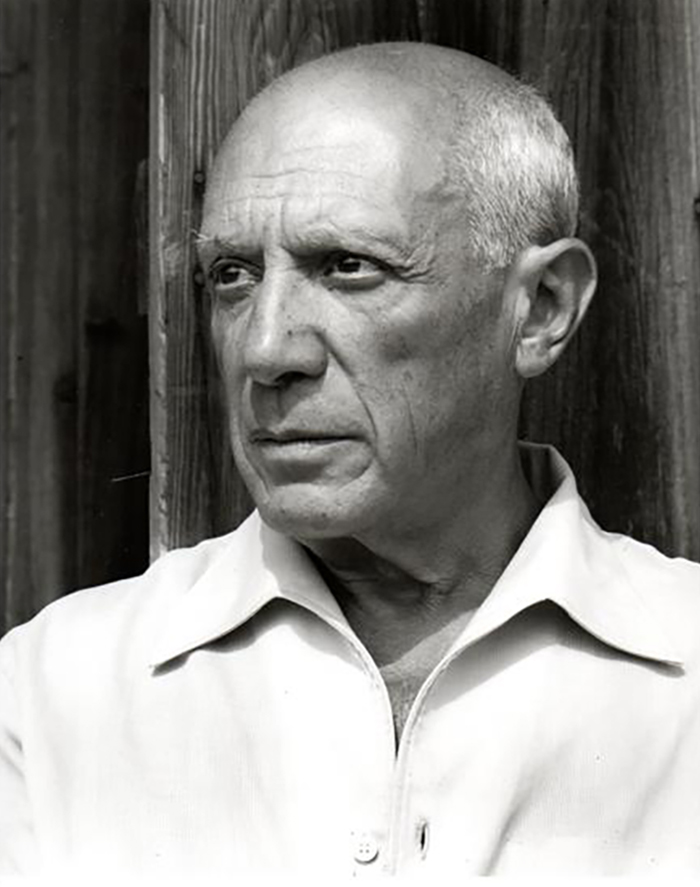
The Man Behind the Output
It is tempting to tell the story of Picasso as a clean story of genius.
He helped shape Cubism. He experimented with collage. He changed the language of modern art. He produced so much work that his influence became almost impossible to avoid. Other artists studied him, copied him, argued with him, reacted against him, and measured themselves against him.
That is the version of greatness we like to admire. It is neat. It is impressive. It makes success look like a monument.
But monuments cast shadows.
The deeper you look into Picasso’s life, the harder it becomes to separate the brilliance from the wreckage around it. His devotion to art was astonishing, but his devotion to people was far more unstable. His romantic life moved through marriages, affairs, younger women, broken families, jealousy, and emotional damage that did not disappear simply because the paintings were beautiful.
To love Picasso, it seems, was often to orbit a planet that could never truly orbit you back.
When Art Becomes the Primary Relationship
Most people build their lives around a few central relationships and then make room for interests, ambitions, and private passions. Picasso seemed to live in the reverse order.
His primary relationship was with his work.
The people around him often became part of the weather system of that work. They inspired periods, colors, subjects, moods, and stylistic changes. They entered his art, but they did not always find safety in his life.
This is the uncomfortable part of talking about greatness. The same intensity that allowed Picasso to produce at a nearly impossible level may also have made him difficult, selfish, and destructive in private. The same hunger that pushed him to reinvent his art again and again may have also pushed him to treat relationships as temporary sources of energy, novelty, and emotional fuel.
That does not excuse the damage. But it helps explain the larger pattern.
Sometimes a person’s greatest strength is not separate from their greatest cost. Sometimes it is the cost.
The Shadow Side
Every extreme strength creates an extreme imbalance.
A person who is unusually focused may become unusually absent. A person who is relentlessly ambitious may become difficult to love. A person who has a rare tolerance for conflict may win in public and wound people in private. A person who demands perfection from themselves may eventually demand it from everyone nearby.
This is the shadow side: the hidden cost of the very traits we praise.
We like to imagine strengths as pure advantages. Discipline is good. Focus is good. Confidence is good. Curiosity is good. Competitiveness is good. But a strength turned up high enough can begin to burn through everything around it.
Focus can become neglect.
Confidence can become arrogance.
Curiosity can become restlessness.
High standards can become emotional coldness.
The quality itself is not always the problem. The problem is what happens when one quality becomes so dominant that it crowds out the rest of life.
Shadows Do Not Only Belong to Artists
Picasso is an extreme example, but the pattern is not limited to artists.
You can see it in athletes who become unbeatable in competition but unbearable at home. You can see it in founders who build companies through obsession and then discover they have neglected their health, marriage, or children. You can see it in doctors who survive emotionally by becoming detached, only to find that the same detachment follows them into their personal lives.
You can see it in ordinary people too.
- The friend who is always helpful may never learn when to simply listen.
- The worker who is always reliable may become resentful because everyone depends on them.
- The parent with high standards may raise children who feel they can never be enough.
- The entrepreneur who is always chasing opportunity may slowly lose the ability to be present.
These are not dramatic failures from the outside. In many cases, they look like virtues. That is what makes them hard to notice.
But a virtue without balance can become a private burden.
The Price Hidden Inside Success
Success is seductive because we usually meet it at the surface.
We see the painting on the museum wall. We see the championship record. We see the bestselling book, the large company, the fit body, the impressive career, the beautiful house, the public applause.
What we do not always see is the trade.
What was ignored so that this could be built? Who waited while this person worked? What part of the self was sacrificed? What relationships became thin? What small joys disappeared? What pain became normal because the reward looked impressive from the outside?
It is easy to say you want the result. Nearly everyone wants the result.
But the better question is whether you want the life that produces it.
The Question Nobody Wants to Ask
Most people ask, “What kind of success do I want?”
That is not a bad question, but it is incomplete. A more honest question is: “What kind of cost am I willing to carry?”
Do you want the business if it means carrying stress through dinner every night? Do you want the body if it means waking up early when you would rather sleep? Do you want the promotion if it means becoming less available to the people who love you? Do you want the creative life if it means spending years making work that nobody notices?
There is no universal answer.
Some people will gladly accept one cost and reject another. Some people want public achievement badly enough to tolerate private sacrifice. Others would rather live quietly and protect their peace. The mistake is not choosing one path or the other. The mistake is pretending there is a path with no shadow at all.
The More Extreme the Greatness, the Longer the Shadow
At the ordinary level, most strengths are manageable. A little discipline improves your life. A little ambition creates momentum. A little competitiveness makes you sharper. A little perfectionism can help you produce better work.
But at the extreme edge of performance, the same qualities can become consuming.
The more one part of life is turned all the way up, the more likely another part is being turned down.
This is why greatness can be so complicated. It is not only a story of talent and effort. It is also a story of concentration. To become extraordinary in one area, people often become unusually one-dimensional. Their energy narrows. Their identity narrows. Their attention narrows.
Sometimes that narrowness creates a masterpiece.
Sometimes it creates a lonely life.
Often, it creates both.
What to Do With Your Own Shadow
The point is not to avoid ambition. It is not to become average on purpose or to distrust every strength you have.
The point is to become more honest about what your strengths are asking from you.
If you are intensely driven, where does that drive become impatience? If you are deeply caring, where does that care become control? If you are highly disciplined, where does that discipline become rigidity? If you are creative and restless, where does that restlessness make you unreliable?
Self-awareness does not remove the shadow, but it gives you a chance to manage it before it manages you.
You may still choose the difficult path. You may still decide that the art, the company, the mission, the body, the craft, or the work is worth the cost. But at least you are choosing with your eyes open.
Final Thoughts: Choose the Whole Thing
Greatness is rarely clean.
It often comes mixed with obsession, sacrifice, imbalance, and pain. The same fire that warms the room can burn the house down. The same quality that makes someone remarkable in one area can make them difficult in another.
This does not mean we should stop admiring excellence. It means we should admire it more honestly.
Picasso’s art can be extraordinary, and his personal life can still be troubling. A champion can be brilliant in the ring and broken outside of it. A leader can build something valuable and still pay a private price for the way it was built.
The lesson is not that success is bad.
The lesson is that success is never free.
Before you chase someone else’s version of greatness, pause long enough to ask what shadow comes with it. Because the life you want is not only made of the prizes you hope to win. It is also made of the costs you are willing to live with.