
Can Games Enrich Our Lives?
Article Summary: Whether games can enrich our lives depends less on whether we play them, and more on the role they play in our daily world. A good gaming experience can bring relaxation, achievement, social connection, creativity, emotional recovery, and immersive storytelling. It gives people a space outside everyday pressure where they can explore, experiment, fail, and try again. But if games become a way to escape reality, consume time, avoid relationships, or damage health, they can also make life feel emptier. Games are not the enemy of life, but they should not become the whole of life either. A healthy relationship with gaming allows it to support life, not replace it.
Some people hear the word “games” and immediately think of wasted time.
Sitting in front of a screen is often judged as unserious. Playing after work can be mistaken for avoiding responsibility. Enjoying a game may be treated as childish, lazy, or unproductive.
But real life is rarely that simple.
Some people relax through games after a tense day. Some meet friends there. Some find a sense of achievement they have been missing. Some are moved by a story. Some rediscover creativity through building, solving, exploring, cooperating, or simply entering another world for a while.
The Core Question
The real question is not simply whether games are good or bad. The real question is whether games help us return to life with more energy, imagination, connection, and balance.
Why Are Games So Appealing?
Games attract people not only because they are fun.
On a deeper level, games offer experiences that real life does not always provide easily.
In real life, progress is often slow. Effort does not always bring immediate results. Mistakes may carry real consequences. Work can feel endless. Growth can be hard to measure. There is no clear progress bar telling us that we are becoming better.
Games work differently. They often provide clear goals, rules we can understand, feedback we can see, and chances to try again after failure.
Games give people a feeling of agency.
Even in a virtual world, the feeling “I can do something, make a choice, and affect what happens next” can be emotionally meaningful.
Games Can Offer Small, Light Moments of Achievement
In everyday life, achievement often takes a long time.
A work project may take months. Fitness results may take weeks or years. Saving money, improving relationships, learning a skill, or changing a lifestyle rarely produces instant visible progress.
Games often break achievement into smaller steps.
Small Achievements in Games May Look Like:
Completing a Quest
A task begins, unfolds, and ends with a clear feeling of completion.
Solving a Puzzle
The mind receives a satisfying signal: I understood it, I solved it, I moved forward.
Improving Over Time
Leveling up, building skills, or winning a difficult match can restore a sense of progress.
These achievements may not change real life directly, but they can provide a real psychological effect: I finished something. I got better. I still know how to try.
Games Can Help Us Rest — But They Should Not Become Permanent Escape
One of the most common reasons people play games is to relax.
The real world can be heavy. Work pressure, money worries, academic competition, family responsibility, relationship stress, and uncertainty about the future can all crowd the mind.
A game can reorganize attention. Instead of replaying the same real-life worries, the mind turns toward a map, a mission, a story, a team, a puzzle, or a world that can be entered for a while.
Rest vs. Escape
If gaming helps you recover and return to real life with more energy, it may be rest. If it keeps you avoiding every problem that needs care, it may be turning into escape.
Games can be a window outside reality. But they should not become a door that we never walk back through.
Game Stories Can Move Us Like Novels or Films
Many people underestimate the storytelling power of games.
They imagine games only as winning, losing, fighting, collecting, or leveling up. But many games have become powerful narrative experiences. Some explore war and humanity. Some explore loneliness and discovery. Some tell stories about family, sacrifice, grief, growth, memory, and moral choice.
Unlike films or novels, games invite participation.
You do not only watch the story.
You move through it, make choices inside it, protect characters, lose things, find clues, and complete a journey with your own hands.
A good game can feel like a book you remember long after finishing it. It can expand emotional experience, not merely consume time.
Games Can Create Real Social Connection
Some people imagine gamers as isolated people sitting alone in dark rooms. That picture is incomplete.
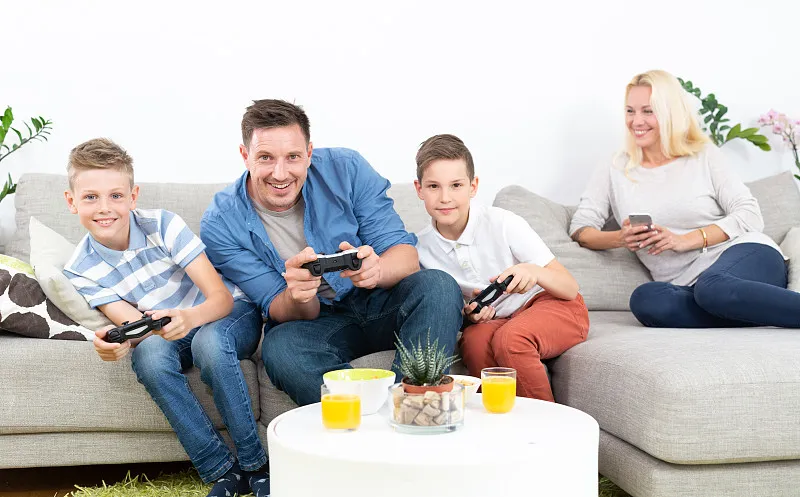
Many games are social spaces. Friends can team up. Families can play party games together. Strangers can cooperate toward a shared goal. Long-term teammates can become real friends. Game communities can provide belonging for people who have not found it elsewhere.
How Games Connect People
Shared Goals
Working together toward a mission can make conversation feel natural.
Low-Pressure Interaction
Some people find it easier to bond through play than through direct social performance.
Distance-Friendly Friendship
Friends in different cities can still meet inside a shared world for an evening.
“Come this way.” “I will help you.” “Let’s try again.” “Next time, same hour.”
These simple sentences can carry a real kind of companionship.
Games Can Spark Creativity
Not all games are only about winning or losing.
Some games are about building, designing, decorating, farming, crafting, managing, editing characters, creating stories, or shaping entire worlds. In these spaces, players do not only consume an experience. They make something.
That sense of creation can be surprisingly meaningful.
Creative Space
Games can offer a low-cost space for imagination, trial, error, rebuilding, and personal expression.
In real life, many people have little room to create. Work can be repetitive. Budgets may be limited. Space may be small. Time may be fragmented. Games can open a small world where personal taste, planning, and imagination have room to move.
Games May Train Skills, But They Should Not Be Over-Glorified
Games can help practice certain abilities.
Some games involve reaction speed, spatial judgment, strategy, cooperation, resource management, problem-solving, patience, and repeated trial and error.
But it is also important not to over-glorify gaming as automatic growth.
Games can open a door.
But skills only truly matter when they can support real life: communication, discipline, creativity, patience, and better choices outside the screen.
Not every game has the same value. Not every play style leads to growth. Playing more does not automatically mean becoming wiser. The healthier view is that games can inspire and practice certain abilities, but real life remains the place where those abilities must be lived.
Games Remind Adults How to Play
Adults often forget something simple: humans need play.
As children, play feels natural. Building blocks, hide-and-seek, drawing, role-playing, inventing stories, running around, and exploring without a clear purpose are all part of life.
But adulthood often turns everything into utility.
Adult Life Often Turns Everything Into a Goal
Learning Becomes Performance
We learn to get credentials, results, promotions, or measurable progress.
Rest Becomes Optimization
Even relaxation can feel like something that must be productive or high quality.
Joy Becomes Justified
We often feel we must explain why something fun deserves our time.
Games can remind us that some joy does not need to prove itself. Sometimes it is enough to enter a world, explore, laugh, fail, try again, and play for the sake of play.
But Games Can Also Make Life Feel Emptier
It is also necessary to be honest: games can become harmful when boundaries disappear.
Gaming may begin as rest, but it can become a way to avoid sleep, work, study, relationships, health, money responsibilities, or painful emotions.
The clearest warning sign is not simply playing many hours. It is when gaming no longer brings joy, but still feels impossible to stop.
When Gaming Turns Unhealthy
If you keep playing even when it leaves you empty, guilty, exhausted, anxious, or more disconnected from real life, it may be time to rebuild boundaries.
What Does a Healthy Relationship With Games Look Like?
A healthy relationship with games is not about never playing.
It is also not about playing as much as possible.
It is about proportion, intention, and freedom.
Healthy Gaming Means:
You Enjoy the Game
The experience brings pleasure, relaxation, curiosity, or connection rather than only compulsion.
Life Still Has Other Sources of Meaning
Work, relationships, health, rest, learning, and real-world responsibilities still have space.
You Can Start and Stop
You remain able to choose when to play, when to pause, and when to return to the rest of life.
Is Gaming Enriching You or Draining You?
The best way to understand your relationship with games is not to judge yourself harshly, but to observe honestly.
Questions Worth Asking
How do I feel after playing?
More relaxed, connected, and refreshed — or more empty, guilty, irritated, and tired?
Is gaming replacing important parts of life?
Sleep, work, study, exercise, hygiene, meals, relationships, and finances should not be consistently sacrificed.
Am I resting or avoiding?
Rest gives energy back. Avoidance leaves real problems growing in the background.
Can I stop when I choose to?
The ability to stop is one of the clearest signs that gaming still belongs to you.
Games Can Be Seasoning, Not the Whole Meal
A healthy life should not contain only work, responsibility, and pressure.
It also needs entertainment, imagination, exploration, play, and joy that does not always have to justify itself.
Games can be one of those parts. Like a good movie, a novel, a short trip, a concert, or a relaxed weekend afternoon, they can add color and texture to life.
The Right Place
Games can make life richer when they are part of the meal. They become risky when they are the only thing we eat.
Why We Should Not Mock People for Enjoying Games
Everyone has ways of resting.
Some people shop. Some watch shows. Some exercise. Some fish. Some drink coffee. Some read novels. Some organize rooms. Some play games.
As long as a habit does not harm life, hurt others, or erase a person’s sense of self, it does not deserve automatic contempt.
You may see someone playing a game.
But you may not know how tired they were that week, how much pressure they carried, or whether that shared virtual world is how they stay connected with friends.
Games do not need to be worshiped. But liking games should not automatically be treated as childish or immature. A more mature view looks at how a person lives overall, not only whether they play.
The Best Relationship Between Games and Reality
The ideal relationship is not one where games and real life fight for control.
It is one where they can support each other.
Games and Life Can Nourish Each Other When:
Reality Has Priority
Health, sleep, relationships, work, study, and responsibilities remain protected.
Games Offer Restoration
Playing helps you rest, laugh, imagine, connect, or reset emotionally.
The Boundary Is Clear
You can enter the game world with joy and leave it without feeling lost.
Final Thoughts
Can games enrich our lives?
Yes — but with conditions.
When games bring relaxation, creativity, companionship, story, achievement, and joy, they can make life richer. They can give people a place to breathe outside reality’s pressure, a way to play again, and sometimes even a new form of connection with others.
But when games become a way to avoid life, lose sleep, escape responsibility, depend emotionally on virtual success, spend impulsively, or replace real-world connection, they no longer enrich us. They slowly drain us.
Games themselves are not the enemy.
Losing boundaries is the real problem.
A healthy life does not need to reject games. But it also cannot become only games. We can allow ourselves to play, immerse, explore, and feel joy in virtual worlds while remembering that our bodies, relationships, work, sunlight, rooms, meals, responsibilities, and real problems still need care.
The best version of gaming does not make us disappear from life.
It helps us rest, imagine, and return to life with a little more energy.
Perhaps this is where games can truly enrich us: they remind us that life needs more than efficiency. It also needs play. It needs imagination. It needs small pockets of joy. It needs moments when we stop rushing forward and allow ourselves, seriously and sincerely, to play for a while.
Final Reflection: Games can be a window into other worlds and a small light during tired days. But the most meaningful kind of play is the kind that helps us return to our real lives with more curiosity, balance, and joy.