

Stay on the Bus: Why Great Work Requires Patience
Most people give up on their best work too early. Not because they lack talent, and not because they are incapable of improvement, but because the beginning of almost every meaningful path looks disappointingly ordinary.
You start writing, and your work sounds like someone else’s. You start taking photographs, and your images resemble the artists you admire. You build a business, and your first ideas feel borrowed from better companies. You begin a creative life, and before long, someone points out that what you are doing has already been done.
That moment is painful. It can feel like proof that you chose the wrong direction. It can make you want to start over, change your style, abandon your project, or search for a cleaner path where nobody has gone before.
But originality does not usually appear at the first stop. It appears after you stay with the work long enough for your influences to separate from your voice.
The Lesson Hidden in a Bus Station
In 2004, Finnish-American photographer Arno Rafael Minkkinen gave a commencement speech at the New England School of Photography. Instead of offering the graduates a list of career tips, he gave them a metaphor.
He described the bus station in Helsinki, where many buses begin their routes from the same central area. For a while, different buses travel along the same road. They stop at the same stops. They seem to be going in the same direction.
Minkkinen asked the students to imagine that each bus stop represented a year in the life of an artist. After three years of work, a photographer might show their portfolio and hear, “This looks like someone else’s work.” Maybe the images resemble a famous photographer. Maybe the subject, mood, or method has already been explored.
The natural reaction is to panic. You get off the bus. You rush back to the station. You choose a different route. You start again, hoping this next path will finally make you original.
But after another few years, the same thing happens. The new work is compared to someone else. The old doubt returns. So you get off again. You keep switching buses, always working, always starting over, but never staying long enough to see where the route actually leads.
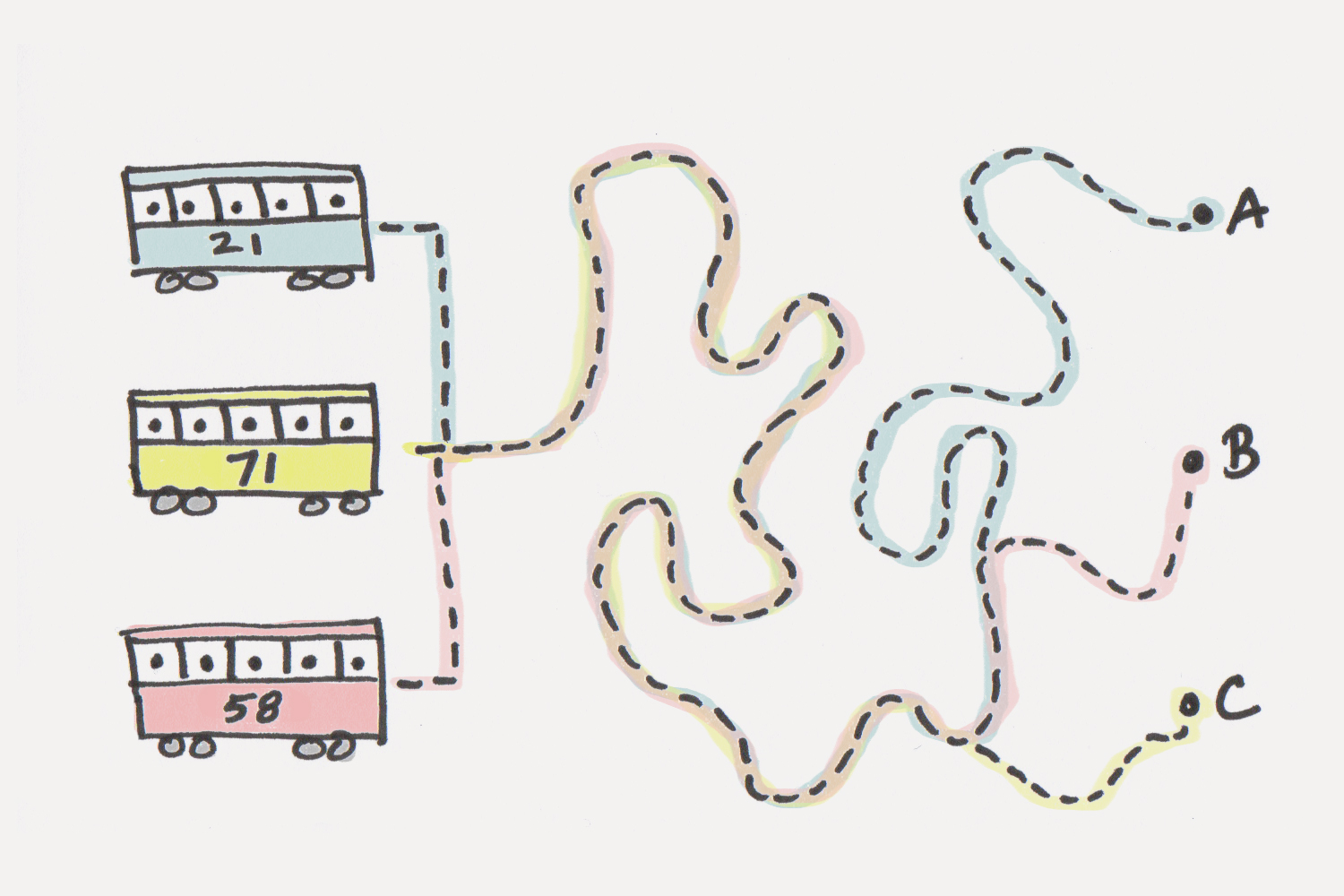
Stay on the Bus
Minkkinen’s advice was simple: stay on the bus.
The reason is that buses may share the same road at the beginning, but they do not stay together forever. After a while, the routes begin to separate. One bus turns north. Another heads west. A third continues toward a destination nobody could see from the station.
Creative work follows a similar pattern. In the beginning, your work may look like the work of your teachers, your influences, your competitors, or your heroes. This does not necessarily mean you are on the wrong path. It may simply mean you are still near the beginning of the route.
If you stay long enough, something begins to change. Your choices become more specific. Your taste sharpens. Your mistakes teach you. Your small preferences accumulate. What once looked borrowed begins to carry your fingerprints.
The difference does not come from switching paths every time you feel ordinary. It comes from continuing past the point where most people get off.
Consistency Alone Is Not Enough
It is easy to hear this story and conclude that success is simply about consistency. Keep showing up. Keep doing the work. Keep putting in the hours.
There is truth in that. Nobody becomes skilled without repetition. You cannot develop a craft without time. You cannot build a body of work without returning to the work again and again.
But consistency by itself can be misleading.
Many people spend thousands of hours in classrooms without becoming exceptional learners. Many people write emails every day without becoming strong writers. Many people go to the gym for years without becoming elite athletes.
Time matters, but time alone does not transform you. Repetition matters, but repetition without attention can become routine. The deeper lesson is not merely to keep working. It is to keep reworking.
The Real Work Is Rework
Average work is often done once. Great work is revised many times.
A casual student reads an idea and moves on. A serious student returns to it, questions it, connects it to other ideas, and learns it again at a deeper level. A casual writer finishes a draft and calls it done. A serious writer rewrites the sentence, restructures the paragraph, removes what is unnecessary, and searches for the clearer version underneath.
The same is true in almost every field. Athletes do not improve because they repeat the same movement mindlessly. They improve because they notice what is wrong and adjust. Designers do not create better work simply by making more screens. They improve by looking closely, asking better questions, and refining the details.
This is what happens when you stay on the bus. You are not just accumulating years. You are accumulating revisions.
The first version of your work may be derivative. The second may still be rough. The tenth may not yet feel like yours. But if you keep improving, your work slowly moves away from imitation and toward identity.
Why Starting Over Feels So Tempting
Starting over can feel productive because it gives you the emotional reward of a fresh beginning. A new project has no visible flaws yet. A new path has not disappointed you yet. A new identity allows you to imagine a better version of yourself without facing the unfinished work in front of you.
But the beginning is often the easiest part to romanticize. Everything feels possible because nothing has been tested.
The harder work begins after the first excitement fades. That is when comparison appears. That is when boredom appears. That is when you notice the gap between what you want to make and what you are currently able to make.
Many people interpret that gap as a sign they should quit. In reality, it is often the exact place where growth begins.
If you leave every time the work becomes uncomfortable, you never reach the part of the route where your direction begins to separate from everyone else’s.
Originality Takes Longer Than We Want
Most people want originality to arrive quickly. They want to feel unique from the beginning. They want their work to stand apart before they have spent enough time understanding what they are truly trying to say.
But originality is often not a starting point. It is a result.
You begin by copying the forms you admire. Then you begin to notice what does not fit you. You remove a little. You add a little. You change the rhythm. You keep what feels honest and discard what feels borrowed. Slowly, the work becomes less like an imitation and more like a record of your decisions.
This cannot be rushed. You cannot skip the early overlap. You cannot instantly arrive at the far end of the route.
You have to ride long enough for the road to split.
Which Bus Will You Choose?
The difficult part is that nobody can tell you with certainty which bus is the right one.
There is no perfect guarantee when you choose a craft, a business, a creative direction, a career path, or a long-term project. You cannot know in advance whether this route will lead to recognition, mastery, money, meaning, or regret.
That uncertainty is part of the price.
But not choosing is also a choice. If you keep returning to the station, always looking for a better platform, you may remain busy for years without ever building the depth that comes from commitment.
At some point, you have to decide what kind of work is worth revisiting. What story do you want to keep telling? What problem do you want to keep solving? What craft are you willing to improve even after the first version disappoints you?
The Patience to Become Yourself
Staying on the bus does not mean stubbornly repeating mistakes. It does not mean ignoring feedback, refusing to evolve, or pretending every path is equally good.
It means staying long enough to revise. It means giving your work the chance to become more precise. It means allowing your early influences to become part of your foundation rather than proof that you should quit.
The people who produce meaningful work are not always the ones who begin with the most original idea. Often, they are the ones who keep refining an ordinary beginning until something unmistakably theirs emerges.
They do not simply put in the hours. They pay attention to the hours. They revise inside the hours. They learn from what the work is trying to teach them.
That is how a route becomes a voice. That is how practice becomes mastery. That is how imitation becomes identity.
Final Thoughts: Stay Long Enough to See the Difference
The early stages of meaningful work rarely feel special. They often feel crowded, uncertain, and embarrassingly similar to what others have already done.
But that is not always a reason to leave. Sometimes it is simply what the first few stops look like.
If you care about the work, stay with it. Improve it. Question it. Rework it. Let it mature. Let your decisions accumulate. Let your taste become visible through revision.
You may not know exactly where the route will end. Nobody does. But you will never discover the difference your work can make if you keep getting off before the road begins to separate.
Choose your bus carefully. Then stay on it long enough for your own direction to appear.