Build the Ultimate Emergency Kit for Your Car in 5 Easy Steps
Car Safety & Emergency Prep
Build the Ultimate Emergency Kit for Your Car in 5 Easy Steps
A car emergency kit is one of those things you hope you never need — until the day you really need it. A dead battery, flat tire, sudden storm, long traffic delay, or roadside breakdown can turn stressful quickly. The good news is that building a useful kit does not have to be expensive or complicated. You just need the right items, packed in a way you can actually find them when it matters.
Article Summary: A good car emergency kit should help you stay visible, handle common roadside problems, take care of yourself and your passengers, manage weather-related issues, and stay organized. This guide breaks the process into five simple steps: choose the right storage setup, pack visibility and safety gear, add basic repair tools, include personal survival supplies, and customize the kit for your climate and driving habits.
Most people do not think about a car emergency kit during an ordinary drive. You get in, start the engine, follow the route, and assume everything will go as planned. Usually, it does. But roads are unpredictable. A battery can die in a parking lot. A tire can lose air on a quiet road. A snowstorm can slow traffic to a crawl. A phone can run out of power exactly when you need to call for help.
The purpose of an emergency kit is not to prepare for every possible disaster. That would be impossible and overwhelming. The real goal is simpler: give yourself a practical buffer when something goes wrong. A good kit buys you time, keeps you safer, makes you more visible, and helps you stay calm while waiting for help or solving a small problem yourself.
The best kit is not the biggest one. It is the one you can store neatly, understand quickly, and use without digging through a messy trunk. Think of it as a small roadside safety system: visibility, power, tools, warmth, water, first aid, and communication.
Before You Start
Build your kit for the real places you drive. A city commuter, a parent with kids, a winter road-trip driver, and someone who drives through rural areas may all need slightly different supplies.
Step 1: Choose a Storage Setup You Will Actually Use
The first step is not buying gadgets. It is choosing where everything will live. If your emergency supplies are scattered between the glove box, trunk, back seat, door pockets, and garage shelf, they will not help much when you are stressed on the side of the road.
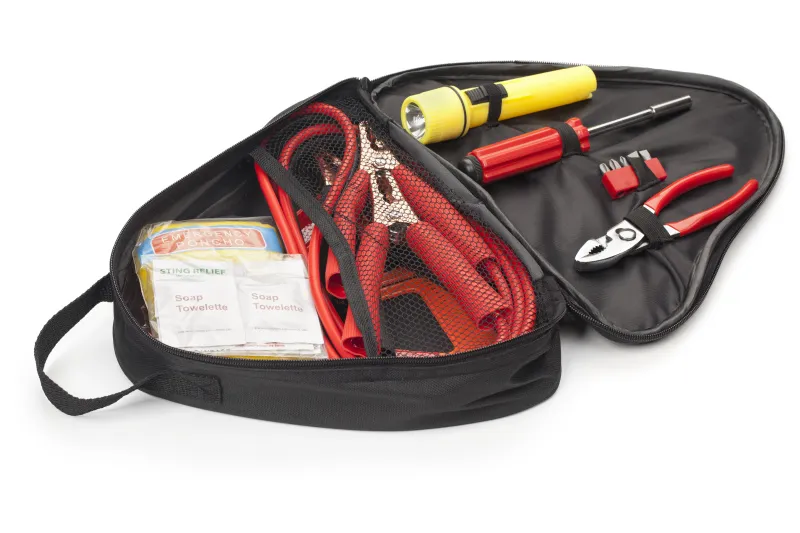
Use a small storage bin, soft-sided organizer, backpack, or zippered tool bag. The container should be easy to lift, easy to open, and durable enough to handle temperature changes inside a vehicle. A clear bin can make items easier to see, while a soft bag may fit better in a crowded trunk.
Keep the most urgent items accessible. A flashlight, warning triangle, reflective vest, phone charger, and first-aid kit should not be buried under heavy luggage. If you often take road trips, place the kit where you can reach it without unpacking the entire car.
Good Storage Rule
If you cannot find an item in 30 seconds, your kit is too messy. Use smaller pouches inside the main bag for first aid, tools, food, and cold-weather gear.
Step 2: Pack Visibility and Roadside Safety Gear First
When your car breaks down, visibility becomes one of the most important safety issues. Other drivers need to see you early, especially at night, in rain, in fog, around curves, or on busy roads. Before you think about tools or snacks, make sure your kit helps you stay visible.
A reflective warning triangle, LED flare, or roadside emergency marker can alert approaching drivers that your vehicle is stopped. A reflective vest is also useful if you need to step outside the vehicle. It may feel unnecessary until you are standing beside a dark road trying to change a tire.
A flashlight is another essential item. Choose one that is bright, reliable, and easy to hold. Keep extra batteries with it, or use a rechargeable model and check the charge regularly. A headlamp is even better for tire changes or engine checks because it keeps both hands free.
Visibility Comes First
Your first priority during a roadside emergency is not fixing the car immediately. It is making sure you and your vehicle are visible and away from danger as much as possible.
Step 3: Add Tools for the Most Common Car Problems
A car emergency kit should help with the problems drivers are most likely to face: a dead battery, low tire pressure, a flat tire, a minor mechanical issue, or a small roadside repair. You do not need to carry a full mechanic’s garage in your trunk. You need practical tools that match common situations.
Jumper cables are a classic emergency kit item, but a portable jump starter can be even more useful because it does not require another vehicle. If you choose a jump starter, keep it charged and read the instructions before you need it. An emergency is not the best time to learn how the device works.
Tire supplies matter too. Make sure your spare tire is properly inflated and that your jack and lug wrench are actually in the car. A small tire pressure gauge and portable tire inflator can help with slow leaks or low-pressure warnings. If your vehicle does not come with a spare, understand what repair kit or roadside plan you have instead.
A few basic tools can also help: work gloves, pliers, a multi-tool, duct tape, zip ties, a small screwdriver set, shop towels, and a tire pressure gauge. These items may not solve every problem, but they can help you manage small issues without feeling completely helpless.
Tools Worth Keeping in the Car
Battery help: jumper cables or a charged portable jump starter.
Tire help: tire pressure gauge, portable inflator, spare tire, jack, and lug wrench.
Small fixes: work gloves, multi-tool, duct tape, zip ties, shop towels, and a basic screwdriver.
Night help: flashlight, headlamp, extra batteries, and reflective warning gear.
Step 4: Pack Supplies for You, Not Just the Car
Many drivers build a kit full of tools but forget that the people inside the car may need help too. If you are waiting for roadside assistance, stuck in traffic for hours, delayed during a storm, or pulled over in an unfamiliar area, personal comfort and safety become important.
Start with water. Keep sealed bottles or emergency water pouches in the car, and rotate them periodically, especially if your vehicle sits in extreme heat. Add nonperishable snacks such as protein bars, nuts, dried fruit, crackers, or other foods that can handle storage. If you often drive with children or pets, pack for them too.
A first-aid kit is essential. It should include bandages, antiseptic wipes, gauze, medical tape, gloves, pain reliever, and any personal medical items your household may need. If someone in your family depends on specific medication, consider how you would handle an unexpected delay away from home.
Communication is another personal safety category. A car phone charger should stay in the vehicle, not move back and forth between bags. A small power bank is also useful, especially if your car battery dies and you cannot charge from the vehicle. Keep a paper map or written emergency numbers if you often drive through areas with poor signal.
Think Beyond the Vehicle
The car may be the thing that breaks down, but you are the one waiting. Pack water, food, first aid, phone power, warmth, and basic comfort items so the situation stays manageable.
Step 5: Customize the Kit for Weather, Season, and Location
A good emergency kit changes with your environment. A driver in Florida does not need the same kit as someone in Minnesota. A mountain road trip is different from city commuting. A summer beach drive is different from a winter highway drive.
In cold climates, add a blanket, gloves, hat, hand warmers, ice scraper, small shovel, traction material such as sand or non-clumping cat litter, and extra windshield washer fluid rated for freezing temperatures. These items are especially useful if you get stuck, delayed, or stranded in snow or ice.
In hot climates, focus more on water, sun protection, a cooling towel, extra phone power, and items that can tolerate heat. Avoid leaving anything in the car that may melt, leak, burst, or become unsafe in high temperatures.
For rural driving or long road trips, add more food and water, a paper map, extra medication, a portable charger, and anything you would want if help took longer to arrive. If you drive with pets, keep a leash, collapsible bowl, extra water, and a small amount of pet food in the car.
Seasonal Reminder
Review your car emergency kit at least twice a year: once before summer heat and once before winter weather. Replace expired food, check batteries, recharge power banks, and remove anything damaged by temperature changes.
Do Not Forget Documents and Small Practical Extras
Some of the most useful emergency items are not dramatic. They are small, boring things that make a stressful moment easier. Keep a copy of your roadside assistance information, insurance card, registration details, and emergency contacts where you can find them. If you use a digital-only insurance card, make sure you can access it even when your phone has poor service.
Cash can also be helpful. You do not need to store a large amount in the car, but a small emergency amount may help if a card reader is down, a toll situation changes, or you need to buy water, fuel, or supplies somewhere that does not accept your preferred payment method.
Other practical extras include a rain poncho, hand sanitizer, wet wipes, tissues, trash bags, a small notebook, pen, and a seatbelt cutter/window breaker tool stored within reach. The last item should not be buried in the trunk. If you choose to carry one, keep it in a place the driver can access from the seat.
The best emergency kit is practical, not impressive.
A simple kit that includes power, visibility, water, warmth, first aid, and tire or battery help is more useful than a huge box of random items you never check.
Where to Keep Each Item in the Car
Organization matters because emergencies are stressful. When something goes wrong, you do not want to unpack your entire trunk to find a flashlight or first-aid kit. Think in zones.
Keep quick-access items near the driver or front passenger area: phone charger, small flashlight, emergency contacts, seatbelt cutter, and maybe a reflective vest. Keep larger tools in the trunk or cargo area: jumper cables, tire inflator, warning triangles, blanket, shovel, traction material, and tool pouch.
Food, water, and first aid should be easy to reach but protected from damage. If you live somewhere with extreme heat or cold, rotate these items often. A kit is only helpful if the supplies inside are still usable.
Simple Car Kit Layout
Front area: phone charger, small flashlight, emergency contact card, and seatbelt cutter/window breaker.
Glove box: insurance information, registration copy if appropriate, first-aid basics, and a small notepad.
Trunk or cargo area: larger tools, blanket, warning triangles, water, snacks, tire supplies, and weather-specific items.
Check the Kit Before Long Trips
A car emergency kit is not something you pack once and forget forever. Batteries die. Food expires. Water bottles leak. Power banks lose charge. Flashlights get borrowed. Gloves disappear. Children eat the emergency snacks. Life happens.
Before a long drive, take five minutes to check the kit. Make sure your phone charger is still there, your flashlight works, your jump starter is charged, your spare tire has air, and your water and snacks are still usable. This quick check can prevent an emergency kit from becoming a box of false confidence.
Also check the vehicle itself: tire pressure, fuel level or battery charge, windshield washer fluid, oil, coolant, and route conditions. A kit is helpful, but prevention is even better.
Road Trip Rule
Before any long drive, check the car and the kit. The best emergency plan starts before you pull out of the driveway.
Final Thoughts
Building the ultimate car emergency kit does not mean filling your trunk with every survival item on the internet. It means preparing for the problems you are most likely to face: a dead battery, low tire, flat tire, dark roadside stop, bad weather, long delay, minor injury, empty phone battery, or unexpected wait for help.
Start with a good container. Add visibility gear. Pack tools for common vehicle problems. Include supplies for people, not just the car. Then customize the kit for your climate, passengers, and driving habits. That simple structure is enough to make you more prepared than many drivers on the road.
You may never need everything in your kit. That is fine. The value of preparation is that when something does happen, you are not starting from panic. You have light, power, water, warmth, tools, and a plan.
Final Reminder: A car emergency kit is not about fear. It is about giving yourself options. When the road surprises you, even a small, well-organized kit can turn a stressful situation into something you can handle calmly.