
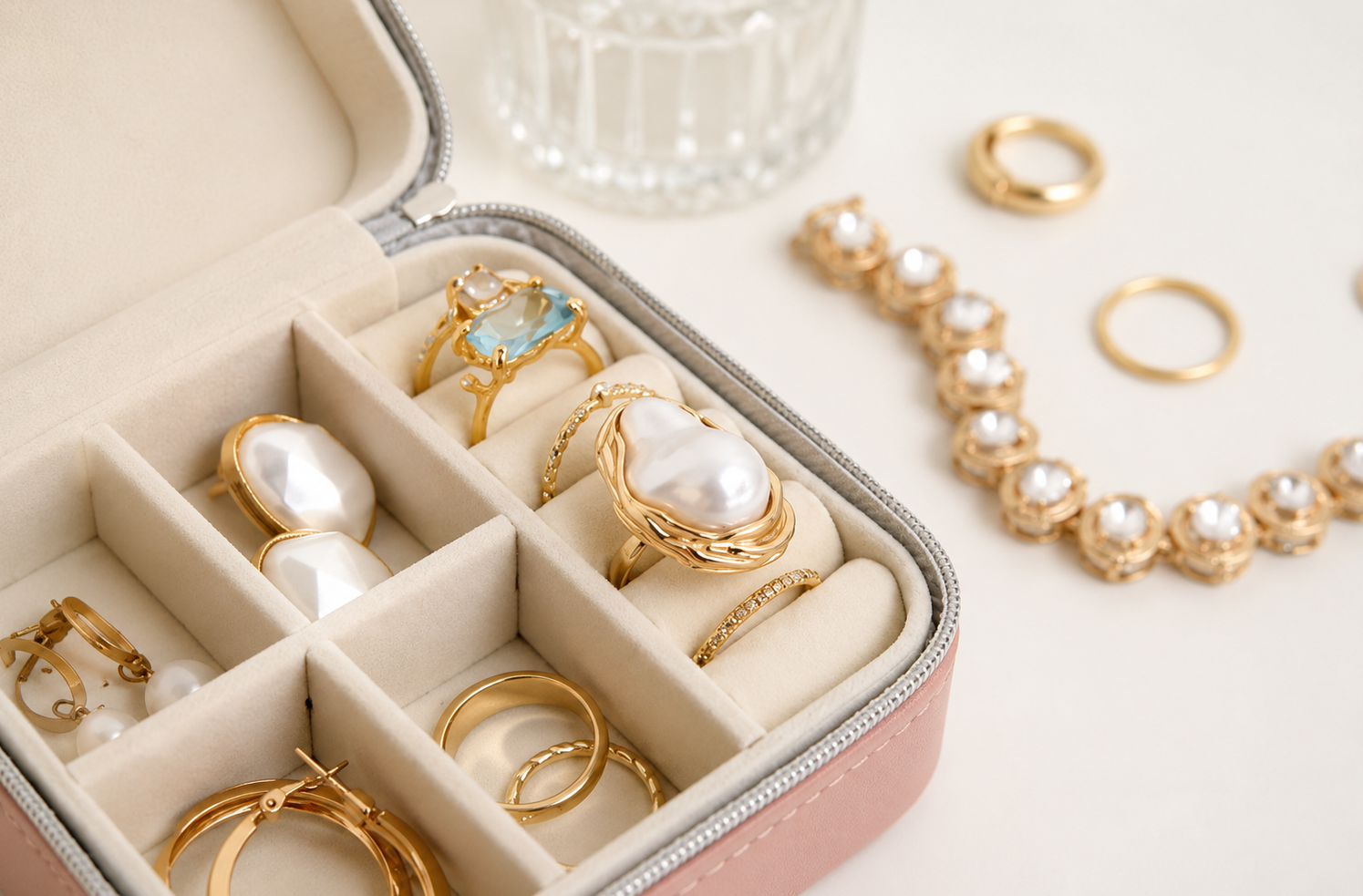
Easy Jewelry Storage Ideas for Home and Travel Organization
Article Summary: Jewelry storage is not only about keeping accessories pretty on a dresser. It is about making daily dressing easier, preventing necklaces from tangling, protecting delicate pieces, and helping you find the right item without digging through a messy drawer. Whether you own a few everyday pieces or a larger collection of rings, earrings, bracelets, watches, and necklaces, the right organization system can save time and reduce damage. This guide shares simple jewelry storage ideas for home and travel, including drawer organizers, trays, wall displays, travel cases, pouch systems, anti-tangle packing methods, and practical habits that keep your jewelry neat wherever you are.
Jewelry has a funny way of becoming messy even when you do not own that much of it. One day your rings are sitting neatly in a dish, your necklaces are hanging in order, and your earrings are paired. A week later, one necklace is wrapped around another, a favorite stud is missing, and the bracelet you wanted to wear is hiding at the bottom of a drawer.
Good jewelry storage does not need to be expensive or complicated. In many cases, the best system is simple: separate pieces by type, keep daily items easy to reach, protect delicate jewelry from scratches, and have a travel method that prevents everything from turning into a knot inside your bag.
The goal is not to create a perfect showroom. The goal is to make your jewelry easy to see, easy to use, and easy to care for. A practical storage setup helps you enjoy what you already own instead of forgetting half your collection exists.
Start by Sorting Your Jewelry Before Buying Storage
Before buying a jewelry box, tray, travel case, or wall organizer, take a few minutes to sort what you already own. This step sounds basic, but it prevents a common mistake: buying a beautiful organizer that does not fit your real collection.
Lay everything out on a clean surface and group similar items together. Put rings in one area, earrings in another, necklaces in another, and bracelets or watches in another. You may notice patterns quickly. Maybe you own more earrings than you thought. Maybe most of your necklaces are delicate chains that tangle easily. Maybe your daily jewelry is mixed with pieces you only wear once or twice a year.
Once you can see the full collection, remove anything broken, mismatched, uncomfortable, or no longer your style. You do not have to throw everything away immediately. You can create a repair pile, a donation pile, and a “maybe” pile. But your main storage space should be reserved for jewelry you actually wear and want to protect.
Jewelry Sorting Flow: A Simple First Step
Step 1
Lay all jewelry on a clean surface.
Step 2
Group by type: rings, earrings, necklaces, bracelets.
Step 3
Separate daily pieces from special occasion pieces.
Step 4
Choose storage based on what you actually wear.
Create a Daily Jewelry Zone at Home
Most people do not wear every piece of jewelry they own every day. You probably have a few favorites: small earrings, a simple necklace, a watch, a bracelet, or a ring you reach for again and again. These pieces deserve a dedicated daily zone.
A daily jewelry zone can be as simple as a small tray on your dresser, a ring dish near your bed, or a shallow organizer inside your top drawer. The idea is to keep your most-used pieces visible and easy to return at the end of the day. If putting jewelry away feels effortless, you are much less likely to leave it scattered around the house.
Avoid making this daily zone too large. If you place your entire collection there, it will quickly become cluttered. Think of it as your jewelry “landing spot,” not your full storage system.
Quick Organization Tip
Keep your daily jewelry zone small. If it holds only your most-used pieces, it stays neat and helps you get ready faster in the morning.
Use Drawer Dividers for a Clean, Hidden Storage System
If you prefer a clean surface without jewelry on display, drawer dividers are one of the easiest storage solutions. They keep items separated while hiding visual clutter. This works especially well for people who own many small pieces, such as studs, rings, pins, small hoops, and delicate bracelets.
Velvet-lined trays are popular because they feel soft and help prevent scratches. Clear acrylic dividers are useful if you like seeing everything at a glance. Adjustable bamboo or fabric dividers can also work well, especially if your drawer is shallow.
The key is to avoid overcrowding each section. If six pairs of earrings are piled into one small square, you will still spend time searching. Give each category enough room so pieces do not fight for space.
Home Storage Layout: What Goes Where?
Top Drawer
Everyday rings, studs, watches, and simple bracelets.
Hanging Area
Long necklaces, layered chains, and pieces that tangle easily.
Closed Box
Special occasion jewelry, sentimental pieces, and delicate items.
Travel Kit
Small case, pouches, zip bags, and anti-tangle tools ready to pack.
Hang Necklaces to Prevent Tangles
Necklaces are usually the hardest jewelry category to store. Fine chains tangle easily, pendants scratch one another, and long necklaces often become messy when they are dropped into a box. Hanging them is usually the simplest solution.
You can use a wall-mounted jewelry organizer, small hooks inside a closet door, a hanging necklace stand, or even a decorative rail with individual hooks. The important part is spacing. If necklaces overlap too much, they can still knot together.
For very delicate chains, consider hanging each one separately or storing it in a slim pouch. For statement necklaces, give them more breathing room so beads, stones, and metal details do not rub against one another.
Keep Earrings Paired and Easy to See
Earrings are small, which makes them easy to lose. The best earring storage system keeps pairs together and makes them visible. If you own mostly studs, a divided tray or earring card system works well. If you prefer hoops and dangling earrings, a stand or hanging display may be easier.
A simple trick is to store tiny studs in pairs inside small compartments. For travel, you can attach pairs to a small piece of felt, foam, or card and place them in a pouch. This prevents them from disappearing into the corners of your bag.
If you often lose earring backs, keep a few spare backs in a tiny container inside your jewelry drawer or travel case. It is a small detail, but it can save an outfit when you are getting ready quickly.
Use Small Trays for Styling, Not Just Storage
Jewelry trays are useful because they create boundaries. A ring dish near the sink can prevent you from leaving rings on the counter. A small tray on your dresser can hold the pieces you plan to wear tomorrow. A slim tray inside your closet can help you match jewelry with outfits while getting dressed.
The trick is to use trays intentionally. One tray can be for daily jewelry. Another can be for items you recently wore and need to put back later. A third can hold pieces that need cleaning or repair. This creates a simple flow instead of letting everything pile up in one place.
Tray System: A Simple Way to Control Clutter
Daily Tray
Holds your most-worn pieces for quick morning access.
Return Tray
Temporary spot for pieces you took off and need to file away.
Care Tray
Keeps items that need cleaning, repair, or new earring backs.
Choose Closed Storage for Delicate or Sentimental Pieces
Not every piece should sit out in the open. Delicate jewelry, sentimental pieces, fine jewelry, and items you wear rarely are often better kept in closed storage. A jewelry box with soft lining, individual pouches, or small fabric bags can help protect these pieces from dust, scratches, and accidental drops.
Closed storage also helps if you live in a humid area or have pets and children at home. Jewelry left on open surfaces can easily be knocked off, tangled, or misplaced. Keeping special pieces separate from everyday accessories makes them easier to protect.
If you own valuable jewelry, consider storing it in a secure location and keeping photos or purchase details in a safe place. For everyday organization, simple protective habits are usually enough, but expensive or irreplaceable pieces deserve extra care.
Travel Jewelry Storage Should Be Small, Secure, and Tangle-Proof
Traveling with jewelry can be surprisingly annoying. Necklaces tangle, earrings disappear, rings slip into the bottom of a bag, and bracelets scratch one another. A good travel jewelry system should be compact, secure, and easy to unpack when you arrive.
A small travel jewelry case is one of the easiest options. Look for one with separate sections for rings, earrings, necklaces, and bracelets. If you do not want to buy a case, small zip pouches, pill organizers, soft cloth bags, and even tiny resealable bags can work well for short trips.
The best travel rule is to pack less than you think you need. Choose versatile pieces that match multiple outfits. A pair of small earrings, one simple necklace, one statement piece, and one watch or bracelet may be enough for many trips.
Travel Packing Flow: From Outfit Plan to Jewelry Case
1. Plan your outfits first — Jewelry should match your clothes, not the other way around.
2. Choose versatile pieces — Pack jewelry that works with more than one outfit.
3. Separate by type — Keep rings, earrings, bracelets, and necklaces in different spaces.
4. Check before leaving — Count what you packed so it is easier to repack before going home.
Easy Anti-Tangle Tricks for Necklaces
Necklaces are the most likely to become tangled during travel. One simple method is the straw trick: thread one side of a necklace through a straw, then clasp it closed. This keeps the chain straight and prevents it from wrapping around other pieces. For shorter necklaces, you can cut the straw to fit the chain length.
Another option is to place each necklace inside a small resealable bag, leaving the clasp outside the bag before sealing it. This keeps the chain from moving too much. Soft pouches also work, but they are best when each necklace has its own pouch.
Avoid packing multiple fine chains together in one compartment. Even if they look safe when packed, they may shift during travel and become tangled by the time you arrive.
Travel Tip
For delicate necklaces, one chain per pouch is the safest rule. It may take slightly more space, but it prevents frustrating knots when you unpack.
Use Pouches for Bracelets, Watches, and Statement Pieces
Bracelets, watches, and statement jewelry often need more protection than small rings or studs. Hard surfaces can scratch each other, and large pieces can press against delicate chains. Soft pouches are useful because they create a gentle barrier between items.
If you are packing watches, wrap them in a soft cloth before placing them into a pouch or case. For chunky bracelets, avoid packing too many together. A few seconds of separation before travel can prevent scratches that are difficult to fix later.
For statement earrings or delicate pieces with stones, consider a small hard-shell travel case. Soft pouches are convenient, but they may not protect fragile shapes from pressure inside a crowded suitcase.
Keep a Small Jewelry Repair Kit
A tiny jewelry repair kit can be very useful at home and while traveling. It does not need to be complicated. A few spare earring backs, clear mini bags, a soft cleaning cloth, a small safety pin, and a tiny container for loose pieces can solve many small problems.
At home, keep the repair kit near your jewelry storage area. When a piece needs attention, do not put it back with your regular jewelry. Place it in a “repair” section so you remember to fix it or take it to a professional if needed.
For travel, a mini version of the kit can prevent small issues from becoming annoying. Losing an earring back or needing a quick wipe before dinner is much easier when you already have the basics packed.
Avoid Common Jewelry Storage Mistakes
One common mistake is storing all jewelry together in one large box. This may look convenient at first, but it usually leads to tangles, scratches, and forgotten pieces. Jewelry needs separation, especially if you own delicate chains or items with stones.
Another mistake is keeping jewelry in places where you often remove it quickly, such as bathroom counters, kitchen shelves, or random bags. Moisture, cleaning products, and daily clutter can damage or misplace pieces. It is better to create a few intentional drop zones where jewelry can be placed safely.
Overpacking jewelry for travel is another common issue. Bringing too many options often creates more mess than style. A smaller, more thoughtful selection is easier to manage and less stressful to repack.
Common Mistake vs. Better Habit
Common Mistake
Tossing rings, earrings, bracelets, and necklaces into one large box or pouch because it feels faster in the moment.
Better Habit
Separate jewelry by type and give delicate pieces their own space, even if the system is simple and inexpensive.
Build a Jewelry Rotation System
If you own more jewelry than you regularly wear, a rotation system can help. Instead of keeping everything in your daily area, choose a small selection for the week or month. This makes getting dressed faster and helps you actually use pieces that might otherwise stay hidden.
For example, you might keep three necklaces, three pairs of earrings, two bracelets, and your favorite rings in your daily tray. At the end of the week, switch a few pieces. This keeps your style fresh without making your dresser messy.
A rotation system is especially useful if you like seasonal style. Light pieces, pearls, or colorful earrings may feel right in summer, while warmer metals, bold pieces, or darker stones may suit colder months.
Final Thoughts
Jewelry storage does not have to be complicated to work well. The best system is the one that matches your habits. If you like seeing your jewelry, use trays, hooks, and displays. If you prefer a clean surface, use drawers, boxes, and dividers. If you travel often, keep a small jewelry case ready so packing does not become a last-minute problem.
The most important principle is separation. Necklaces need space to avoid tangles. Earrings need to stay paired. Rings need a soft landing spot. Bracelets and watches need protection from scratches. Once every category has a place, jewelry becomes much easier to use and care for.
A good jewelry organization system also makes style more enjoyable. When your pieces are visible, protected, and easy to reach, you are more likely to wear what you love instead of reaching for the same item every day simply because it is the only one you can find.
Final Reminder: Easy jewelry storage starts with simple habits: sort by type, keep daily pieces accessible, protect delicate items, and pack travel jewelry separately. A small, thoughtful system can prevent tangles, save time, and help you enjoy your jewelry at home or on the go.