Digital Marketing and Promotion Services: A Practical Guide for Business Growth
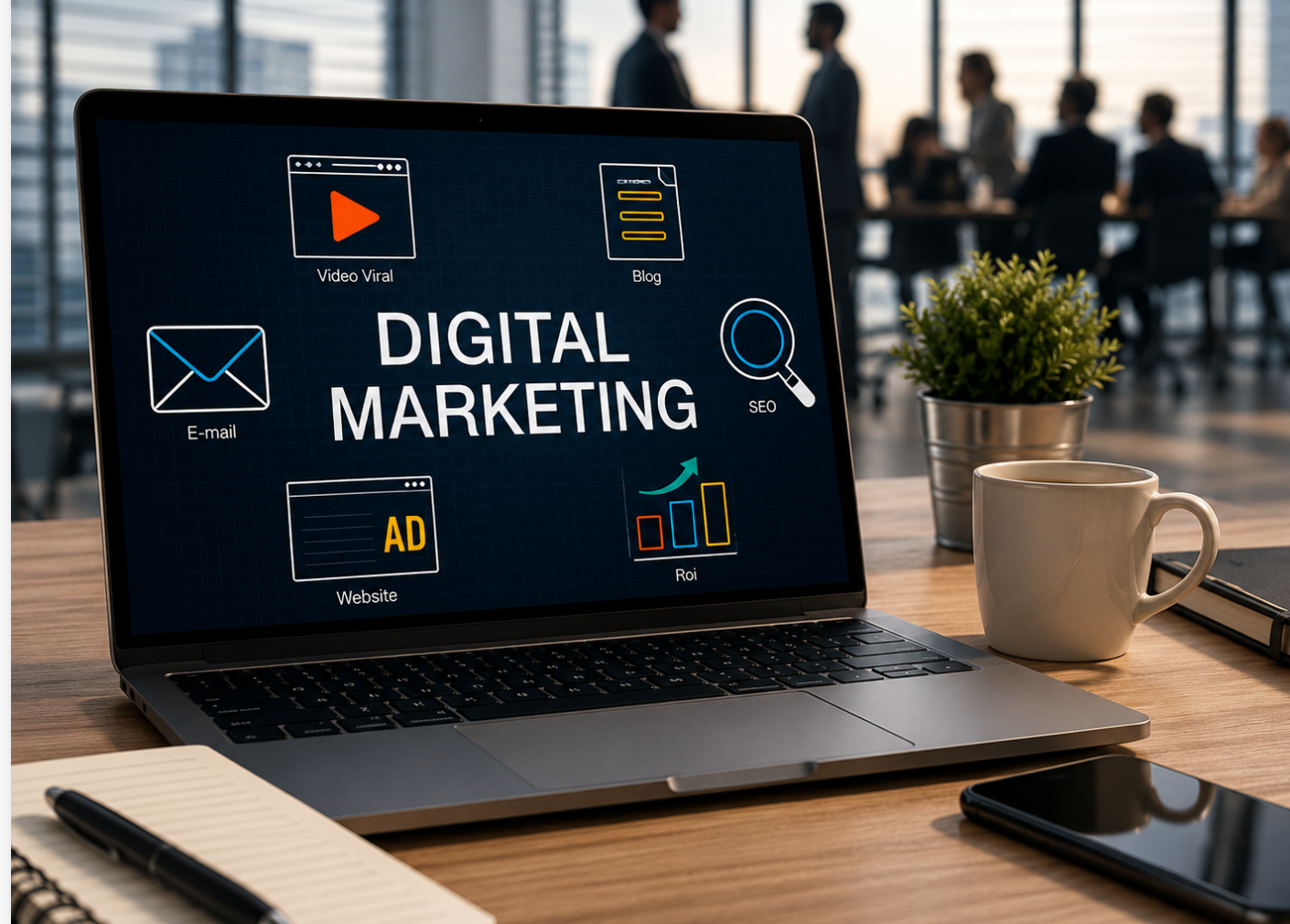
Article Summary: Digital marketing and promotion services help businesses increase online visibility, attract the right audience, build customer trust, and turn attention into measurable results. These services can include search engine optimization, social media marketing, paid advertising, content marketing, email campaigns, influencer partnerships, website optimization, analytics, and conversion strategy. The best digital marketing plan is not built around one channel alone. It combines clear audience research, strong messaging, useful content, targeted promotion, data tracking, and continuous improvement. Whether a company is small, growing, or already established, digital marketing services can help it reach customers more efficiently, compete in crowded markets, and create long-term business growth when executed with strategy and consistency.
Digital marketing has become one of the most important growth tools for modern businesses. Customers now search online before buying, compare brands through reviews, watch product videos, follow creators for recommendations, and expect businesses to be visible across multiple digital channels. A company that is difficult to find online may lose attention before a customer ever reaches its website.
This is why digital marketing and promotion services matter. They help businesses show up where customers are already spending time: search engines, social media platforms, email inboxes, websites, online communities, video platforms, and paid advertising networks. These services are not only about posting more often or running ads. They are about building a connected system that attracts, engages, and converts the right audience.
A business may have a useful product, a strong service, or a competitive price, but if the message does not reach the right people, growth becomes difficult. Digital marketing helps close that gap. It gives companies the ability to target specific audiences, test different messages, measure campaign performance, and improve based on real data.
The challenge is choosing the right mix of services. SEO, paid ads, social media, email marketing, content strategy, and influencer promotion all have value, but not every business needs the same plan. The strongest strategy depends on the product, audience, budget, timeline, and business goals.
What Are Digital Marketing and Promotion Services?
Digital marketing and promotion services are professional strategies used to promote products, services, brands, or businesses through online channels. These services can be handled by an in-house team, freelancers, marketing agencies, consultants, or a combination of different specialists.
The goal is to help businesses reach people who may be interested in what they offer. This can happen through search engine visibility, social media content, paid advertising, email campaigns, website optimization, video marketing, influencer collaborations, online PR, and data analysis.
Unlike traditional marketing, digital marketing is highly trackable. A business can see how many people viewed an ad, clicked a link, opened an email, watched a video, visited a landing page, added products to a cart, or completed a purchase. This makes it easier to understand what is working and what needs improvement.
Digital promotion also allows more precise targeting. Instead of sending one broad message to everyone, businesses can create campaigns for specific audience groups based on interests, search intent, location, behavior, purchase history, or engagement level.
Why Digital Marketing Matters for Modern Businesses
Customers rarely make decisions in a straight line. They may discover a brand on TikTok, search for reviews on Google, visit the website, compare prices, sign up for an email discount, leave the site, see a retargeting ad, and finally purchase several days later. Digital marketing helps a business stay visible throughout that journey.
Online visibility is especially important because customers often research before buying. They want to know whether a brand is trustworthy, whether the product solves their problem, whether other customers are satisfied, and whether the company feels reliable. A strong digital presence can answer these questions before a salesperson is ever involved.
Digital marketing also gives smaller businesses a chance to compete. A local service provider, independent store, online brand, or new startup may not have the budget for large traditional advertising campaigns, but it can still reach a targeted audience through SEO, social media, email, and focused paid ads.
Another advantage is speed. Campaigns can be launched, tested, adjusted, and improved quickly. If an ad is not performing, the business can change the creative. If a landing page is weak, it can be rewritten. If an email subject line gets poor results, it can be tested against another version. This flexibility makes digital marketing useful in fast-changing markets.
Search Engine Optimization Services
Search engine optimization, or SEO, helps a website appear more prominently in search results when people look for related products, services, or information. SEO is valuable because search traffic often comes from people who already have intent. They are not simply scrolling; they are actively looking for answers.
SEO services may include keyword research, technical website improvements, content creation, on-page optimization, internal linking, local SEO, link building, page speed improvement, and search performance reporting. The goal is to make the website easier for search engines to understand and more useful for visitors.
For example, a local gym may want to appear when people search for workout classes nearby. An e-commerce store may want product pages to rank for buying-intent keywords. A software company may use blog content to answer common customer questions and attract leads over time.
SEO is not usually instant. It takes time to build authority, improve content, and earn visibility. However, once it works, it can become one of the most valuable long-term traffic channels because the business can continue receiving visitors without paying for every click.
SEO Tip
Good SEO is not only about ranking higher. It is about matching the right search intent with useful content, clear structure, and a strong user experience.
Social Media Marketing Services
Social media marketing helps brands connect with audiences through platforms such as Instagram, TikTok, Facebook, LinkedIn, YouTube, Pinterest, and X. These platforms are useful for brand awareness, community engagement, product education, customer interaction, and social proof.
Social media services may include content planning, creative production, caption writing, short video editing, community management, influencer outreach, paid social campaigns, analytics reporting, and brand voice development. A strong social strategy is not just about posting frequently. It is about posting with purpose.
Different platforms serve different goals. TikTok may be strong for discovery and short-form storytelling. Instagram can work well for lifestyle visuals and product presentation. LinkedIn is useful for B2B marketing, thought leadership, hiring, and professional services. YouTube supports longer education, reviews, and trust-building content.
The best social media marketing feels native to the platform. A brand should not simply copy the same post everywhere. Each platform has its own content rhythm, audience expectations, and style of communication.
Paid Advertising and Performance Marketing
Paid advertising helps businesses reach targeted audiences faster. While SEO and organic social media can take time, paid ads can create immediate visibility. Common channels include Google Ads, Meta Ads, TikTok Ads, LinkedIn Ads, YouTube Ads, display networks, and retargeting campaigns.
Paid marketing services usually include campaign strategy, audience targeting, keyword selection, ad creative, copywriting, landing page review, budget management, A/B testing, conversion tracking, and performance reporting. The goal is not just to get clicks. The goal is to acquire customers at a cost that makes business sense.
Search ads are useful when customers already know what they are looking for. Social ads are often useful for discovery, product education, and visual storytelling. Retargeting ads can bring back people who visited a website but did not purchase or submit a form.
Paid ads can waste money quickly if the strategy is weak. Strong ads need the right audience, clear message, compelling offer, attractive creative, and a landing page that turns attention into action. Traffic without conversion is not growth; it is only activity.
Content Marketing and Brand Education
Content marketing focuses on creating useful information that attracts, educates, and builds trust with potential customers. Instead of only asking people to buy, content marketing helps them understand a problem, compare options, learn something useful, or feel more confident in a decision.
Content can take many forms: blog articles, buying guides, videos, case studies, newsletters, white papers, tutorials, infographics, podcasts, social posts, webinars, and product comparison pages. The best format depends on the audience and the type of decision they are making.
A skincare brand may publish educational content about ingredients and routines. A financial service may create guides about budgeting or loans. A software company may offer tutorials and case studies. A local service provider may answer common questions customers search for before booking.
Strong content marketing supports other channels too. Blog posts can improve SEO. Videos can be used in social media and ads. Guides can become email lead magnets. Case studies can support sales conversations. Content becomes more valuable when it is planned as part of a larger marketing system.
Email Marketing and Customer Retention
Email marketing remains one of the most practical ways to maintain direct contact with customers and leads. While social platforms are controlled by algorithms, email gives businesses a more owned communication channel. A well-managed email list can support product launches, lead nurturing, repeat purchases, and loyalty.
Email marketing services may include newsletter strategy, automated flows, welcome sequences, abandoned cart emails, product recommendations, segmentation, promotional campaigns, copywriting, design, and performance reporting. These emails can be personalized based on customer behavior, making them more relevant than generic announcements.
For e-commerce businesses, email can recover lost sales and encourage repeat buying. For service businesses, it can educate leads and keep the brand top of mind. For creators and consultants, it can build a loyal audience that is not fully dependent on social media visibility.
The strongest email campaigns are not only promotional. They mix useful content, timely offers, customer stories, product education, and relevant reminders. This helps subscribers feel that the brand is providing value, not only asking for attention.
Email Marketing Reminder
Email works best when it is segmented and timely. A new subscriber, loyal customer, inactive lead, and abandoned cart shopper should not always receive the same message.
Website and Conversion Optimization
Digital marketing does not end when someone clicks. The website or landing page must complete the job. If visitors arrive but leave quickly, the business may have a conversion problem. This can happen because the page is slow, confusing, poorly designed, hard to navigate, or unclear about the offer.
Conversion optimization focuses on improving the user experience so more visitors take action. This action may be purchasing, booking a consultation, filling out a form, downloading a guide, joining a list, or contacting the business.
Common improvements include clearer headlines, stronger calls to action, faster loading speed, better mobile design, trust badges, testimonials, simpler forms, improved product descriptions, better images, and easier checkout flow. Small changes can sometimes create meaningful improvements in conversion rate.
A business should think of its website as the center of many digital marketing activities. Ads, SEO, social posts, and emails often send people back to the website. If the website is weak, every channel becomes less effective.
Choosing the Right Digital Marketing Services
Choosing the right digital marketing services starts with goals. A business that needs immediate leads may prioritize paid ads and landing pages. A business that wants long-term organic visibility may focus on SEO and content marketing. A brand launching a visual product may need social media, influencer marketing, and short-form video content.
Budget and timeline also matter. SEO can be powerful, but it usually takes time. Paid ads can move faster, but they require budget discipline and careful testing. Social media can build community, but it needs consistency. Email marketing can drive strong results, but only if the business has or is building a quality list.
It is also important to understand the customer journey. Where do customers first discover the brand? What questions do they ask before buying? What objections stop them? Which channels influence their decision? A service mix should match that journey instead of copying what another company is doing.
Measuring Digital Marketing Success
Digital marketing should be measured with the right metrics. A campaign may receive many views, but views alone do not always mean business growth. The most useful metrics depend on the campaign goal. Awareness campaigns, lead generation campaigns, and sales campaigns should not be judged in the same way.
For awareness, useful metrics may include reach, impressions, video views, branded search growth, social engagement, and website visits. For lead generation, form submissions, cost per lead, email sign-ups, and consultation bookings matter more. For sales, conversion rate, revenue, average order value, return on ad spend, and customer acquisition cost are usually more important.
Businesses should also track quality, not only quantity. A campaign that brings 1,000 low-quality visitors may be less valuable than one that brings 100 highly interested prospects. The goal is not just traffic. The goal is the right traffic and the right actions.
Regular reporting helps teams make better decisions. Instead of waiting until the end of a campaign, businesses should review performance throughout the process. This makes it easier to adjust targeting, creative, landing pages, offers, and budgets before too much money is wasted.
Measurement Tip
Do not measure every campaign by the same metric. First define the goal, then choose the numbers that actually show whether that goal is being achieved.
Common Digital Marketing Challenges
One common challenge is channel overload. Businesses often feel pressured to be everywhere: TikTok, Instagram, Google, Facebook, LinkedIn, YouTube, email, blogs, podcasts, and more. But spreading effort too thin can lead to weak execution. It is usually better to choose a few channels that match the audience and do them well.
Another challenge is inconsistent messaging. If ads say one thing, the website says another, and social media has a completely different tone, customers may feel confused. A strong digital strategy needs a clear core message that stays consistent across channels, even when the format changes.
Competition is also a challenge. Many businesses are using the same platforms and targeting similar audiences. This makes creativity, positioning, and customer understanding more important. A business cannot rely only on being present online; it needs to communicate why it is worth choosing.
Finally, data can become overwhelming. Marketing platforms generate many numbers, but not all of them are equally useful. Businesses need to focus on metrics that connect to real goals instead of getting distracted by vanity metrics.
Practical Tips for Implementing Digital Marketing Services
Start with a simple audit. Review your website, search visibility, social profiles, email list, ad performance, customer reviews, and analytics. Look for obvious gaps. Is your website mobile-friendly? Are product or service pages clear? Can customers contact you easily? Are you tracking conversions correctly?
Next, define one or two primary goals. A business may want more leads, more sales, more brand awareness, more local visibility, or better customer retention. Trying to improve everything at once can create confusion. Focused goals make it easier to choose the right services and measure progress.
Then build a channel plan. Decide which channels matter most for your audience and business model. A local service company may need local SEO and Google search ads. A beauty product may need TikTok videos, influencer content, and email campaigns. A B2B service may need LinkedIn, SEO articles, and lead nurturing.
Finally, test and improve continuously. Digital marketing is not a one-time setup. Campaigns need monitoring, creative updates, audience adjustments, content improvements, and performance analysis. The businesses that improve steadily often outperform those that launch once and stop learning.
Common Mistakes to Avoid
One common mistake is launching campaigns without understanding the audience. If the business does not know who it is trying to reach, even a large budget may produce weak results. Audience research should come before creative production and media spending.
Another mistake is focusing only on traffic. More visitors are useful only if the website can convert them. A business should improve landing pages, offers, product descriptions, trust signals, and calls to action before scaling traffic aggressively.
A third mistake is copying competitors without understanding strategy. Just because another brand uses a certain platform does not mean it is right for your business. The better question is whether that channel reaches your audience and supports your goals.
Finally, many companies give up too quickly. SEO, content, brand building, and email nurturing often need time. Paid ads can move faster, but they still need testing. Digital marketing works best when businesses stay consistent, review data, and improve step by step.
Final Thoughts
Digital marketing and promotion services are essential for businesses that want to grow in an online-driven market. They help brands become visible, attract the right audience, communicate value, generate leads, increase sales, and build stronger customer relationships.
The most effective digital marketing plans usually combine several services rather than depending on one channel alone. SEO builds long-term discovery. Social media creates engagement and personality. Paid ads provide speed and targeting. Content builds trust. Email supports retention. Website optimization turns attention into action.
The right strategy depends on the business, audience, budget, and goals. Companies that stay informed, test regularly, listen to customers, and adapt quickly will be better positioned to compete. Digital marketing is not only about being online. It is about showing up with the right message, in the right place, at the right time.
Final Reminder: Digital marketing works best when strategy comes before activity. Define your audience, clarify your offer, choose the right channels, measure meaningful results, and keep improving. A strong digital presence is built through focus, consistency, useful content, and smart promotion.