Nystagmus: Causes, Symptoms, Types, Diagnosis, Treatment, and Daily Vision Support
Article Summary: Nystagmus is a condition that causes the eyes to move rapidly and involuntarily. These movements may go side to side, up and down, or in a circular pattern, and they can affect one or both eyes. Some people are born with nystagmus or develop it during infancy, while others develop it later because of inner ear problems, neurological conditions, head injury, medication effects, alcohol or drug use, or eye disorders. Nystagmus may cause blurry or shaky vision, trouble seeing in the dark, light sensitivity, dizziness, balance problems, and unusual head positioning. Treatment depends on the cause, but glasses, contact lenses, treating underlying conditions, medication, surgery, visual aids, school support, and practical daily adjustments can all help improve quality of life.
Vision usually feels automatic. You look at a face, a road sign, a screen, or a book, and your eyes quietly adjust so the image stays steady. For people with nystagmus, that steady focus can be much harder to maintain. The eyes may move even when the person is trying to keep them still, creating a sense that the world is blurred, shaky, or difficult to lock onto.
Nystagmus can look different from person to person. In some children, it appears early in life and becomes part of how they learn to see, read, move, and interact with the world. In adults, new nystagmus can feel sudden and unsettling, especially if it comes with dizziness, balance issues, headache, weakness, or other neurological symptoms.
The condition is not just “eyes moving too much.” It can involve the eyes, brain, inner ear, visual development, medications, and sometimes the nervous system. That is why a careful diagnosis matters. Once the cause and pattern are better understood, treatment and daily adjustments can be matched more realistically to the person’s needs.
Eye Health Reminder: This article is for general educational purposes only. If nystagmus appears suddenly, worsens quickly, or comes with severe dizziness, headache, weakness, confusion, double vision, trouble walking, or vision loss, seek medical care promptly.
What Is Nystagmus?
Nystagmus is an involuntary eye movement disorder. The eyes move repeatedly without the person choosing to move them. The movement may be horizontal, vertical, rotary, or mixed. Some people have constant eye movements, while others notice symptoms more in certain directions of gaze, when tired, under stress, or when trying to focus.
These eye movements can interfere with how clearly the brain receives visual information. Instead of a stable image, the visual system may receive repeated motion signals. This can lead to blurry vision, difficulty reading, poor depth perception, or the need to turn or tilt the head to find a clearer viewing position.
Simple Explanation
Nystagmus means the eyes move back and forth, up and down, or in a circular way without control. Because the eyes do not stay completely steady, vision may look blurry, shaky, or harder to focus.
How Normal Eye Movement Works
The eyes do not work alone. They are coordinated by the brain, eye muscles, nerves, and the vestibular system in the inner ear. When you turn your head, the inner ear detects movement and helps the eyes adjust so your view remains steady. This is one reason you can walk, turn, or look around without the world appearing to bounce constantly.
Nystagmus can occur when this coordination is disrupted. The issue may begin in the eyes, the brain, the nerves that control eye movement, or the inner ear balance system. In some people, especially infants, the exact cause is not always found.
Eyes
The eyes receive visual information and depend on stable movement to keep images clear.
Brain
The brain coordinates eye movement, balance, focus, and visual processing.
Inner Ear
The vestibular system helps stabilize vision when the head moves.
Common Symptoms of Nystagmus
The main symptom of nystagmus is uncontrollable eye movement. However, the way it affects daily life can vary widely. Some people mainly notice blurred vision. Others struggle with reading, balance, night vision, glare, or focusing on distant objects.
Children may not always complain about vision problems because they may not know what “normal” vision looks like. Instead, parents may notice head tilting, holding books very close, difficulty tracking moving objects, or trouble seeing clearly in certain lighting.
Symptoms people may experience
✓ Rapid, uncontrolled eye movements.
✓ Blurry, shaky, or unstable vision.
✓ Trouble seeing clearly in low light.
✓ Sensitivity to bright light or glare.
✓ Dizziness or balance problems.
✓ Head tilting, turning, or nodding to focus.
✓ Eye strain or fatigue while reading.
✓ Difficulty with schoolwork, driving, or screen use.
Types of Nystagmus
Doctors describe nystagmus in several ways. One way is by when it begins: congenital, spasmus nutans, or acquired. Another way is by how the eyes move: pendular or jerk. These descriptions help doctors narrow down possible causes and decide what testing may be needed.
Eye Movement Patterns: Pendular, Jerk, Horizontal, Vertical, and Rotary
Nystagmus can also be described by its movement pattern. In pendular nystagmus, the eyes move back and forth with similar speed in both directions, almost like a swinging pendulum. In jerk nystagmus, the eyes drift in one direction and then quickly jerk back in the opposite direction.
The direction of movement also matters. Horizontal nystagmus means the eyes move side to side. Vertical nystagmus means they move up and down. Rotary nystagmus means the eyes move in a circular or twisting pattern. Some people have a combination.
What Causes Nystagmus?
Nystagmus can have many causes. Some are related to how the eyes and visual system develop. Others involve the inner ear, brain, nervous system, head injury, medication effects, or substances such as alcohol and drugs. In some cases, doctors cannot identify one clear cause.
Because the list of possible causes is broad, diagnosis should not be based only on what the eye movement looks like at home. A complete evaluation helps separate long-standing, stable forms from new or potentially serious causes.
Eye Conditions
Cataracts, strabismus, retinal disorders, or low vision conditions can be linked with nystagmus.
Neurological Causes
Stroke, multiple sclerosis, brain tumors, or head injury may affect eye movement control.
Inner Ear Problems
Balance-related conditions, including vestibular disorders, can cause eye movement changes.
Congenital Nystagmus in Babies and Children
Congenital nystagmus usually begins early in infancy. Parents may notice that the baby’s eyes move side to side, especially when the child is trying to look at something. Some children also develop a preferred head position because a certain angle gives them clearer vision. This is sometimes called a “null point,” where the eye movement is less intense.
Early evaluation is important because nystagmus may be linked with other eye conditions. A child may need glasses, low-vision support, school accommodations, or treatment for an underlying eye problem. Even when the eye movement itself cannot be fully stopped, the child’s visual development and learning environment can often be improved.
Signs parents may notice
The baby’s eyes move repeatedly from side to side.
The child holds objects very close to the face.
The child turns or tilts the head to see better.
Reading or tracking moving objects seems difficult.
Bright light seems uncomfortable.
The child struggles more in dim lighting.
Teachers notice difficulty seeing the board or reading small text.
Acquired Nystagmus in Adults
Acquired nystagmus develops later in life. Unlike some congenital forms, it may feel more disturbing because the brain is used to stable vision. Adults may describe the world as moving, bouncing, or spinning. Some also develop nausea, dizziness, poor balance, or difficulty walking.
New nystagmus in an adult should be medically evaluated, especially if it appears suddenly. The cause may be something treatable, such as medication effect or inner ear disease, but it can also be related to neurological conditions that need prompt attention.
Seek urgent care if new nystagmus comes with:
Sudden severe dizziness or vertigo.
New weakness, numbness, facial drooping, or trouble speaking.
Severe headache or confusion.
New double vision or vision loss.
Trouble walking or loss of coordination.
Recent head injury.
Repeated vomiting or severe dehydration.
How Nystagmus Is Diagnosed
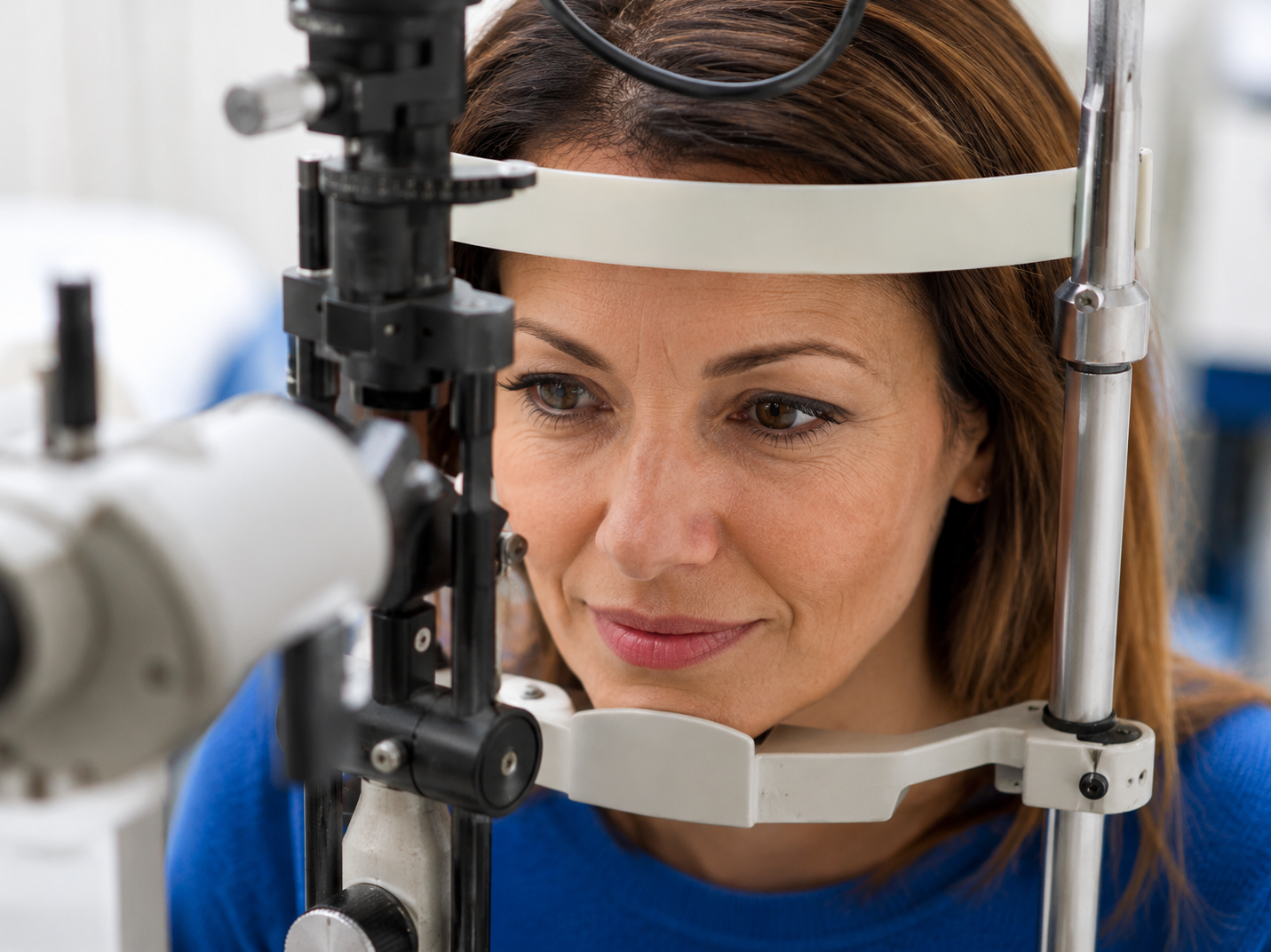
Diagnosis usually begins with a detailed history and physical exam. The doctor will ask when the eye movements started, whether symptoms are constant or occasional, whether vision is blurry or shaky, and whether dizziness, balance problems, hearing changes, headaches, or neurological symptoms are present.
Depending on the situation, the evaluation may involve an eye doctor, neurologist, ear specialist, or neuro-ophthalmologist. The goal is not only to confirm nystagmus, but also to understand why it is happening.
What the doctor may check
| Eye exam | Checks visual acuity, eye health, refraction, alignment, and possible eye disease. |
| Eye movement exam | Looks at direction, speed, pattern, and whether head position changes symptoms. |
| Ear or vestibular exam | Checks whether balance or inner ear problems may be involved. |
| Neurological exam | Evaluates coordination, strength, sensation, reflexes, and brain-related signs. |
| Imaging or lab tests | MRI, CT, blood work, or eye movement recordings may be used when needed. |
Tests That May Be Used
Testing depends on age, symptoms, and whether nystagmus is long-standing or newly developed. A baby with early nystagmus may need a detailed pediatric eye exam. An adult with new dizziness and nystagmus may need inner ear or neurological testing.
Treatment Options for Nystagmus
Treatment depends on the cause. If nystagmus is caused by a medication, alcohol, drug use, an inner ear condition, or another medical problem, addressing that cause may improve the eye movement. If nystagmus is congenital or related to visual development, the focus may be on improving vision and helping the person function better.
Glasses and contact lenses do not cure nystagmus, but they can improve clarity. For some people, clearer vision can reduce strain and make daily activities easier. In certain cases, medication or eye muscle surgery may be considered.
Practical Treatment Note
The best treatment plan depends on whether nystagmus is congenital, acquired, vision-related, balance-related, medication-related, or neurological. A complete diagnosis usually comes before deciding on treatment.
Living With Nystagmus: Daily Vision Support
Living with nystagmus often means learning what helps the eyes work better. Small changes in lighting, print size, screen setup, rest breaks, and head position can make a real difference. These changes do not cure the condition, but they can reduce fatigue and make daily tasks easier.
Daily support checklist
✓ Use larger print for books and screens.
✓ Increase contrast on phones, tablets, and computers.
✓ Improve lighting, especially for reading.
✓ Take frequent visual breaks during close work.
✓ Reduce glare with hats, tinted lenses, or screen filters.
✓ Get enough sleep, as fatigue may worsen symptoms.
✓ Use visual aids when needed.
✓ Ask for accommodations at school or work.
Supporting a Child With Nystagmus
Children with nystagmus may adapt in creative ways. They may hold books close, tilt their head, sit close to screens, prefer certain lighting, or avoid visually demanding tasks. These behaviors are not laziness or bad habits. They may be the child’s way of finding the clearest possible vision.
School support can make a big difference. Teachers may need to understand that a child with nystagmus may need front-row seating, large-print materials, digital copies of assignments, extra time for reading, or permission to move closer to the board.
Parent-Friendly Tip
If your child holds books close or tilts their head to see, do not rush to correct the posture without asking an eye specialist. That position may be helping them find their clearest view.
Nystagmus and Driving, Reading, and Screen Use
Nystagmus can affect practical tasks such as driving, reading, working on a computer, or navigating unfamiliar places. Some people meet driving vision standards with glasses or contacts, while others may not. This depends on visual acuity, field of vision, glare sensitivity, and local driving rules.
Reading and screen use may be easier with larger fonts, high contrast, reduced glare, and frequent breaks. Many people also benefit from using accessibility features on phones and computers, such as zoom, text-to-speech, dark mode, or screen magnification.
Helpful adjustments for daily tasks
| Reading | Use larger print, strong contrast, and good lighting. |
| Screens | Increase font size, use zoom, reduce glare, and take breaks. |
| Driving | Ask an eye doctor whether vision meets local safety requirements. |
| Work or school | Request accommodations such as enlarged materials, better seating, or digital copies. |
Emotional and Social Impact
Nystagmus can affect more than vision. Children may feel different if classmates notice their eye movements or head posture. Adults may feel self-conscious during conversations, interviews, or social situations. People with acquired nystagmus may also feel anxious if their vision suddenly becomes unstable.
Support matters. A clear diagnosis, practical accommodations, and open communication with teachers, employers, and family members can reduce stress. Some people also benefit from low-vision support services, occupational therapy, counseling, or community support groups.
Helpful Mindset
Nystagmus is not a personal flaw or a lack of effort. If someone tilts their head, sits closer, uses large print, or takes visual breaks, they are adapting to their vision in a practical way.
Questions to Ask Your Doctor
What type of nystagmus do I or my child have?
Is this congenital or acquired?
Could an eye condition, inner ear problem, medication, or neurological issue be causing it?
Do we need an eye exam, neurological exam, ear exam, MRI, CT scan, or eye movement recording?
Would glasses or contact lenses improve vision?
Is eye muscle surgery an option in this case?
Are there medications that may help or worsen symptoms?
What school, work, or daily accommodations would be useful?
Are there warning signs that should prompt urgent medical care?
How often should follow-up exams be scheduled?
Frequently Asked Questions About Nystagmus
Can nystagmus go away?
It depends on the cause. Some childhood forms may improve over time. Acquired nystagmus may improve if the underlying cause, such as medication effect or inner ear disease, is treated. Some forms are long-term but can still be managed.
Does nystagmus mean someone is blind?
Not necessarily. Many people with nystagmus have usable vision, especially with glasses, contact lenses, visual aids, and accommodations. The level of vision varies from person to person.
Why does my child tilt their head?
Some children find a head position where the eye movement is reduced and vision becomes clearer. This position is sometimes called a null point. An eye doctor can evaluate whether treatment or support is needed.
Can glasses cure nystagmus?
Glasses usually do not stop the eye movements, but they can improve vision clarity. Clearer vision can make reading, schoolwork, driving evaluation, and daily tasks easier.
Is sudden nystagmus serious?
It can be. New nystagmus in an adult, especially with dizziness, weakness, headache, confusion, trouble walking, or vision loss, should be evaluated promptly because neurological or inner ear causes may need treatment.
Can people with nystagmus drive?
Some can, and some cannot. It depends on visual acuity, glare sensitivity, depth perception, and local driving laws. An eye doctor can help determine whether vision meets driving safety requirements.
Final Thoughts: Nystagmus Is Manageable With the Right Support
Nystagmus can make vision feel unstable, but it does not mean a person cannot learn, work, read, play, or live independently. The key is understanding the type of nystagmus, identifying any treatable cause, and building a practical support plan around the person’s real daily needs.
For children, early eye care and school accommodations can make a major difference. For adults, especially those with new symptoms, diagnosis is important because acquired nystagmus may point to inner ear, medication-related, or neurological causes.
The most useful approach is often a combination of medical evaluation, vision correction, lifestyle adjustments, low-vision tools, and practical support from family, teachers, employers, and specialists.
Final Reminder: Nystagmus causes involuntary eye movements that can affect vision, balance, reading, and daily comfort. Some forms begin in infancy, while new adult-onset nystagmus should be evaluated carefully. With proper diagnosis, vision support, treatment of underlying causes, and practical accommodations, many people manage nystagmus successfully.