Could I Have a Herniated Disk? Symptoms, Causes, Diagnosis, Treatment, and Recovery Tips
Article Summary: A herniated disk happens when the soft inner center of a spinal disk pushes through a tear or weak spot in the tougher outer layer. It can press on nearby nerves and cause sharp pain, burning pain, numbness, tingling, or muscle weakness. Herniated disks are most common in the lower back, where pain may travel into the buttocks, thigh, calf, or foot, but they can also occur in the neck and cause symptoms in the shoulder, arm, or hand. Many cases improve with time, rest, gentle movement, anti-inflammatory medication, and physical therapy. However, symptoms such as loss of bladder or bowel control, numbness in the saddle area, severe weakness, fever, or rapidly worsening pain should be treated as urgent warning signs.
Back pain has a way of arriving at the worst possible moment. You may feel fine while sitting, driving, watching TV, or working at a desk. Then you stand up, twist slightly, lift something ordinary, or cough — and suddenly a sharp pain shoots through your lower back or down your leg.
When pain travels from the spine into the buttock, leg, shoulder, or arm, many people start wondering whether they have a herniated disk. It is a reasonable question. A herniated disk can irritate or compress nearby nerves, and nerve pain often feels different from ordinary muscle soreness. It may burn, sting, shoot, tingle, or create weakness in a limb.
The good news is that a herniated disk does not always mean surgery. In fact, many people improve with conservative care. The more useful question is not simply “Do I have a herniated disk?” but “How serious are my symptoms, what nerve may be involved, and what should I do next?”
Medical Reminder: This article is for general educational purposes only. Back pain with severe weakness, loss of bladder or bowel control, numbness around the genitals or rectum, fever, unexplained weight loss, or pain after major injury should be evaluated urgently by a healthcare professional.
What Is a Herniated Disk?
Your spine is made of a series of bones called vertebrae. Between many of these bones are soft, flexible cushions called disks. These disks work like shock absorbers. They help the spine bend, twist, carry weight, and absorb pressure during everyday movement.
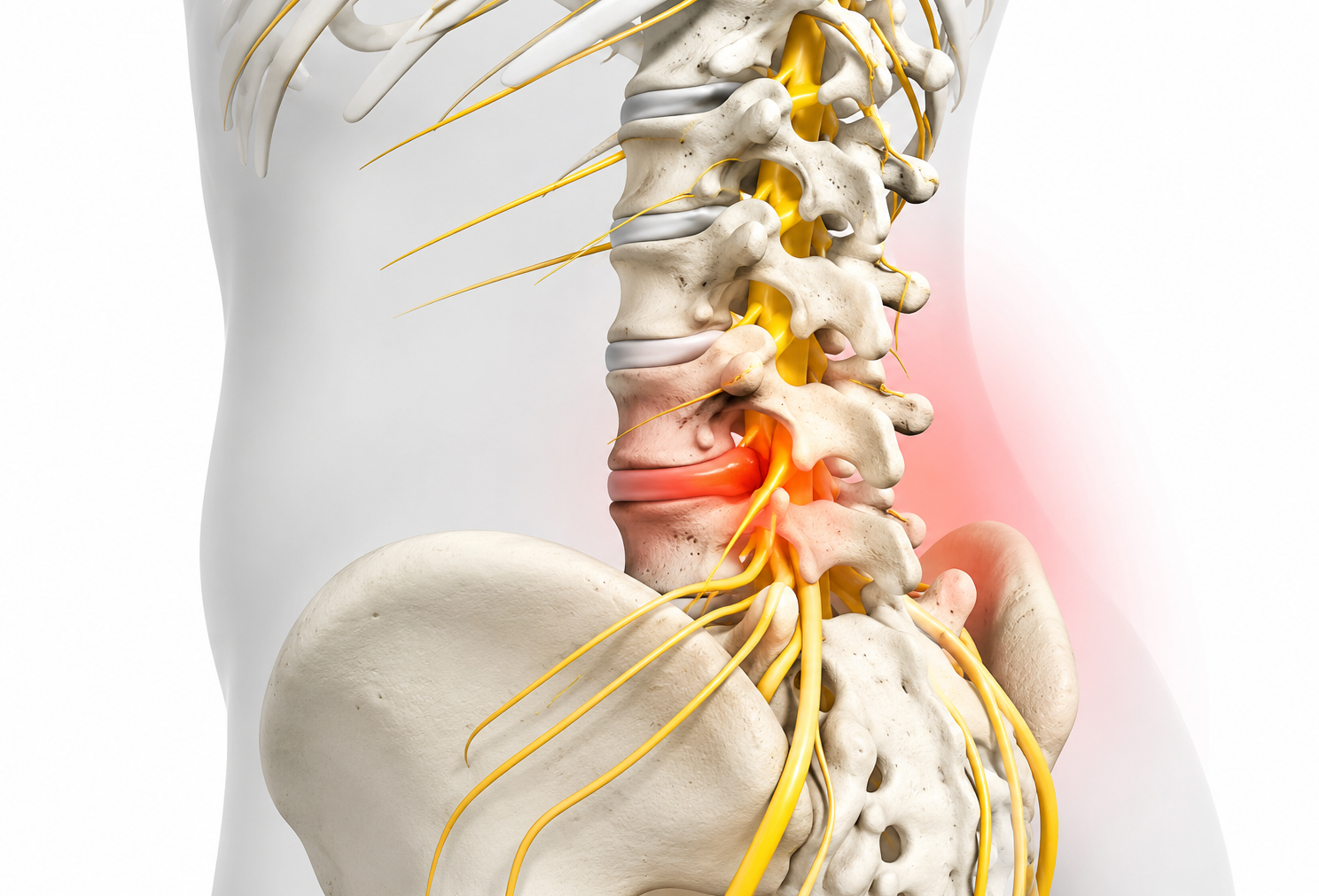
Each disk has two main parts. The outer ring is tougher and more fibrous. The inner center is softer and jelly-like. A herniated disk happens when the outer layer tears or weakens enough that the inner material pushes outward. If that material presses on a nearby nerve, symptoms can travel into the arms or legs.
Simple Explanation
A herniated disk means the soft inside of a spinal disk has pushed through a tear or weak spot in the outer layer. The disk itself may not hurt much, but when it irritates a nearby nerve, the pain can travel into the leg, foot, shoulder, arm, or hand.
Herniated Disk vs. Bulging Disk: What Is the Difference?
People often use the words “herniated disk,” “slipped disk,” and “bulging disk” as if they mean the same thing. They are related, but they are not exactly identical. Both can affect spinal nerves, but the disk changes are different.
A bulging disk usually means the disk has spread outward more broadly, often because of age-related wear or disk degeneration. A herniated disk usually means the outer layer has a tear or rupture, allowing the inner disk material to push out more focally. A herniation may happen suddenly after lifting, twisting, or injury, although it can also develop gradually.
Common Symptoms of a Herniated Disk
A herniated disk does not always cause symptoms. Some people only discover one after imaging is done for another reason. Symptoms usually appear when the herniated disk irritates or compresses a nerve.
The location of symptoms depends on where the disk herniation occurs. A lower back herniation often affects the sciatic nerve pathway and can cause pain down the buttock, thigh, calf, or foot. A neck herniation may cause pain, numbness, or weakness that travels into the shoulder, arm, or hand.
Symptoms people often describe
✓ Sharp, shooting, or burning pain.
✓ Pain that travels into one arm or leg.
✓ Numbness or tingling in a limb.
✓ Muscle weakness near the affected nerve.
✓ Pain that worsens with sitting, coughing, or sneezing.
✓ Pain that improves when lying down or changing position.
✓ Symptoms mainly on one side of the body.
✓ Difficulty lifting the foot, gripping objects, or climbing stairs.
What Does a Herniated Disk Feel Like?
Many people describe herniated disk pain as different from typical back soreness. Muscle pain may feel achy, tight, or stiff. Nerve pain often feels electric, burning, stabbing, or shooting. It may travel along a clear path instead of staying only in the back or neck.
A lower back herniated disk may produce sciatica-like pain. This can start in the lower back or buttock and move down the back or side of the leg. Some people feel symptoms all the way into the foot or toes. A neck herniated disk can create pain around the shoulder blade, shoulder, arm, wrist, or fingers.
Why Sitting, Coughing, or Sneezing Can Make It Worse
One frustrating part of a herniated disk is that ordinary actions can suddenly feel painful. Sitting may increase pressure on the disks in the lower back. Coughing, sneezing, or straining may briefly raise pressure around the spine and irritate the already sensitive nerve.
This does not always mean the injury is getting worse each time you cough or sit. It often means the nerve is inflamed and sensitive. Still, movements that reliably increase radiating pain should be reduced or modified while the disk and nerve recover.
Practical Tip
If sitting worsens leg pain, try shorter sitting periods, lumbar support, frequent standing breaks, or lying on your side with a pillow between your knees. Avoid staying in one painful position just to “push through.”
What Causes a Herniated Disk?
A herniated disk can happen after a sudden injury, but it often develops on top of gradual disk wear. As disks age, they lose some water content and become less flexible. A disk that once tolerated bending and lifting easily may become more vulnerable to tearing.
Sometimes the trigger is obvious: lifting a heavy box, twisting while carrying weight, falling, or making a sudden awkward movement. Other times, the pain appears after something surprisingly small, because the disk may have been weakening for months or years before symptoms started.
Disk Wear
Over time, disks may dry out, lose flexibility, and become more likely to tear.
Sudden Strain
Lifting, twisting, bending, or sudden force can trigger symptoms.
Nerve Pressure
Pain often begins when herniated material irritates or compresses a nerve.
Risk Factors That May Increase Your Chances
Anyone can develop a herniated disk, but some people have higher risk. Age is one factor, especially during the years when disks have begun to lose flexibility but people are still physically active. Work habits, body weight, smoking, genetics, and movement patterns can also contribute.
Emergency Symptoms: When Back Pain Cannot Wait
Most herniated disk symptoms are not emergencies. But certain signs can mean a nerve is being seriously compressed or that another dangerous condition is present. These symptoms should not be managed at home.
Seek urgent medical care if you have:
Loss of bladder or bowel control.
Numbness around the rectum, genitals, inner thighs, or saddle area.
Rapidly worsening leg or arm weakness.
Trouble walking, foot drop, or frequent falls.
Back pain with fever, chills, or signs of infection.
Severe pain after a fall, accident, or major injury.
Back pain with a history of cancer or unexplained weight loss.
How a Herniated Disk Is Diagnosed
Diagnosis usually begins with a conversation and physical exam. Your doctor may ask where the pain travels, whether you have numbness or weakness, what movements worsen symptoms, and whether there was a specific injury. The exam often checks posture, movement, reflexes, strength, sensation, and walking pattern.
Imaging is not always needed right away. Many cases improve with conservative care, and imaging may show disk changes that are not actually causing symptoms. However, MRI or other tests may be recommended if symptoms are severe, persistent, worsening, or linked with nerve problems.
What the doctor may check
| Reflexes | Changes in knee, ankle, arm, or shoulder reflexes can suggest nerve irritation. |
| Muscle strength | Weakness may show which nerve root is affected. |
| Sensation | Light touch, vibration, or pinprick testing may reveal numb areas. |
| Walking pattern | Heel walking, toe walking, or balance checks can reveal weakness. |
| Pain triggers | Certain leg or neck movements may reproduce nerve pain and guide diagnosis. |
Tests That May Be Used
If the diagnosis is unclear or symptoms are not improving, your doctor may order imaging or nerve tests. These tests help rule out other causes of pain and identify whether a specific nerve is compressed.
Treatment: Most People Start With Conservative Care
Many herniated disks improve without surgery. The goal of early treatment is to reduce nerve irritation, control pain, protect movement, and gradually rebuild function. This usually involves a balance of rest and activity — not complete bed rest for weeks.
During the first few days, you may need to reduce painful activities. As symptoms settle, gentle walking and guided exercises often help more than staying completely still. Your doctor or physical therapist can help you choose movements that calm pain instead of aggravating it.
Home Care During the First Few Days
The first few days can be uncomfortable. The goal is not to “fix” the disk overnight, but to calm the painful flare. Small choices matter: how you sit, sleep, walk, lift, and return to activity can either reduce irritation or keep triggering it.
Early recovery checklist
✓ Avoid lifting, twisting, and deep bending at first.
✓ Take short walks if walking reduces symptoms.
✓ Use ice early if pain feels sharp or inflamed.
✓ Try heat later if muscles feel tight or guarded.
✓ Change positions before pain becomes intense.
✓ Sleep in a position that keeps the spine comfortable.
✓ Avoid long bed rest unless specifically advised.
✓ Call a doctor if symptoms worsen or weakness appears.
Physical Therapy and Exercise
Physical therapy is often helpful when pain lasts beyond the early flare or when movement becomes limited. A therapist may teach you positions that reduce nerve irritation, gentle mobility work, core and hip strengthening, posture strategies, and safer ways to lift or sit.
The right exercise depends on your symptoms. Some people feel better with gentle extension movements, while others need a different approach. A good rule is simple: an exercise should not make radiating pain travel farther down the arm or leg.
Exercise Safety Tip
If a movement causes pain to spread farther down your leg or arm, stop and ask a clinician for guidance. In many disk-related cases, the goal is to reduce radiating symptoms, not challenge them aggressively.
When Surgery May Be Considered
Surgery is not the first step for most people with a herniated disk. It may be considered when pain remains severe despite conservative treatment, when symptoms significantly limit daily life, or when nerve compression causes progressive weakness.
One common surgery is a microdiscectomy, where the surgeon removes the portion of disk pressing on the nerve. The decision depends on symptom severity, imaging findings, neurological exam results, overall health, and how much conservative care has helped.
Before choosing surgery
Ask what nerve is compressed, whether your symptoms match the MRI, what conservative options remain, what recovery looks like, what risks are involved, and what signs would make surgery more urgent.
How Long Does Recovery Take?
Recovery time varies. Some people improve within a few weeks. Others need several months for nerve pain, numbness, or weakness to settle. Nerves heal slowly, so symptoms can improve gradually even after the sharpest pain begins to fade.
It is common for recovery to be uneven. You may have better days and worse days. A flare after overdoing activity does not always mean you have permanently damaged the disk again, but it is a sign that your body needs a slower return to loading.
Daily Habits That Protect Your Spine
Once symptoms begin improving, prevention becomes important. A herniated disk can recover, but the spine still benefits from better movement habits. The goal is to reduce repeated stress on the disk and build stronger support around the spine.
Spine-friendly habits
Keep heavy objects close to your body when lifting.
Avoid twisting while carrying weight.
Use your hips and knees instead of rounding your lower back.
Take breaks from prolonged sitting.
Strengthen the core, hips, and back gradually.
Walk regularly if it feels good for your symptoms.
Set up your desk so your spine is not constantly flexed forward.
Return to exercise slowly after a flare.
What Not to Do With a Suspected Herniated Disk
Some well-meaning habits can make symptoms worse. The most common mistake is either doing too much too soon or doing nothing at all for too long. Recovery usually works best when activity is modified, not completely abandoned.
Do not force painful stretches
Aggressive stretching can irritate an already sensitive nerve.
Do not stay in bed for weeks
Too much rest can increase stiffness and reduce strength.
Do not ignore weakness
Worsening weakness can mean a nerve needs urgent attention.
Questions to Ask Your Doctor
Do my symptoms match a herniated disk or another back problem?
Which nerve may be irritated or compressed?
Do I need an MRI, or can we start with conservative care?
What symptoms would mean I need urgent care?
Which activities should I avoid for now?
Should I use ice, heat, medication, or physical therapy?
What exercises are safe for my specific symptoms?
When can I return to work, lifting, sports, or normal exercise?
How long should I wait before considering injections or surgery?
What can I do to reduce the chance of another flare?
Frequently Asked Questions About Herniated Disks
Can a herniated disk heal on its own?
Yes, many herniated disks improve with time and conservative care. The disk material may shrink, inflammation may settle, and nerve irritation may decrease. Recovery can take weeks to months, depending on severity.
What is the fastest way to recover?
There is no instant fix. The fastest safe path is usually reducing painful triggers, staying gently active, using medication only if safe, following a physical therapy plan when needed, and avoiding movements that make nerve pain worse.
How do I know if it is muscle pain or disk pain?
Muscle pain usually stays more local and feels tight or sore. Disk-related nerve pain often travels into an arm or leg and may include numbness, tingling, burning, or weakness. A doctor can help tell the difference.
Do I need an MRI right away?
Not always. If symptoms are mild and improving, your doctor may start with conservative care. MRI is more likely if symptoms are severe, persistent, worsening, or linked to weakness or other red flags.
Will I have a herniated disk for life?
The disk may not return to its exact original shape, but symptoms often improve significantly. Many people return to normal life with better movement habits, therapy, and time.
When is surgery necessary?
Surgery may be needed for emergency symptoms, progressive weakness, or pain that remains disabling despite nonsurgical treatment. Most people are evaluated for conservative care first unless urgent nerve compression is suspected.
Final Thoughts: A Herniated Disk Is Painful, but Often Treatable
A herniated disk can be scary, especially when pain shoots down the leg or into the arm. But symptoms do not automatically mean permanent damage or surgery. Many people recover with time, guided movement, medication when appropriate, physical therapy, and better spine habits.
The most important step is paying attention to the pattern. Local back soreness, radiating nerve pain, numbness, tingling, and weakness all tell different parts of the story. If symptoms are improving, conservative care may be enough. If symptoms are worsening or red flags appear, medical evaluation becomes urgent.
Recovery is usually not about one perfect stretch or one miracle treatment. It is about reducing nerve irritation, restoring movement, building support, and returning to daily activities at the right pace.
Final Reminder: A herniated disk can cause sharp pain, numbness, tingling, and weakness when it irritates a nerve. Many cases improve without surgery, but bladder or bowel changes, saddle numbness, fever, severe injury, or worsening weakness should be treated as urgent warning signs.