Spina Bifida: Causes, Types, Treatment, Prevention, and Living Well With a Split Spine
Article Summary: Spina bifida is a birth condition that affects how the spine and spinal cord develop before birth. It happens when the neural tube, which later forms the brain and spinal cord, does not close completely during early pregnancy. The condition can be mild and hidden, or it can be more serious and involve exposed spinal nerves, movement challenges, bladder and bowel problems, hydrocephalus, learning differences, and lifelong medical care. The three main types are spina bifida occulta, meningocele, and myelomeningocele. Treatment depends on the type and severity, and may include surgery, shunt placement, physical therapy, mobility support, bladder and bowel management, orthopedic care, special education, and adult transition planning. Folic acid before and during early pregnancy can significantly reduce the risk of neural tube defects.
Spina bifida is often described as a “split spine,” but that phrase only gives a small picture of what the condition can mean. For some people, spina bifida is so mild that they never know they have it. For others, it affects movement, sensation, bladder control, bowel function, brain fluid balance, learning, independence, and daily care from childhood into adulthood.
The condition begins very early in pregnancy, often before a person knows they are pregnant. During normal development, a structure called the neural tube closes and later forms the baby’s brain and spinal cord. When part of that tube does not close fully, the spine and nearby tissues may not form in the usual way. The result can be a gap in the backbone, exposed nerves, or a fluid-filled sac on the baby’s back.
Although spina bifida can be serious, medical care has improved greatly. Many children born with spina bifida now grow into adulthood, go to school, build friendships, work, participate in sports, and make their own healthcare decisions. The key is early diagnosis, coordinated care, practical support, and planning for changing needs over time.
Important Health Note: This article is for general educational purposes only. Spina bifida diagnosis, pregnancy planning, surgery, bladder care, bowel care, and mobility decisions should always be guided by qualified healthcare professionals.
What Is Spina Bifida?
Spina bifida is a neural tube defect that is present at birth. The neural tube is an early structure in the embryo that develops into the brain, spinal cord, and surrounding tissues. When the neural tube does not close completely, the spine may not form a complete protective covering around the spinal cord.
The effect can range from a small hidden gap in the spine to a visible sac containing spinal fluid, nerves, or part of the spinal cord. The more spinal nerves are involved, the more likely a child may have movement, sensation, bladder, bowel, or orthopedic challenges.
Spina bifida is not one single experience. One person may walk without assistance and only discover the condition on an X-ray. Another may need surgery shortly after birth, a wheelchair, bladder catheterization, bowel programs, and long-term specialist care. This wide range is why understanding the type and location of the defect matters so much.
Simple Explanation
Spina bifida happens when the spine and spinal cord do not close completely before birth. The condition can be mild and hidden, or it can affect nerves that control movement, sensation, bladder function, and bowel function.
Why the Location of Spina Bifida Matters
Spina bifida can occur at different levels of the spine. The location helps predict which nerves may be affected. A defect higher on the spine can involve more nerve pathways and may lead to more significant movement and sensation problems. A lower defect may affect the legs, feet, bladder, or bowel in different ways.
Even children with the same type of spina bifida may have different abilities. Some walk independently, some use braces or crutches, and others use wheelchairs. Some have strong upper-body function but need help with bladder routines. Others may have learning challenges related to hydrocephalus or brain development.
The Three Main Types of Spina Bifida
Spina bifida is usually grouped into three main types: spina bifida occulta, meningocele, and myelomeningocele. These types differ in how much of the spine, spinal cord, nerves, and surrounding membranes are involved.
Spina Bifida Occulta
The mildest and most hidden form. There is a small gap in the spine, but the spinal cord and nerves are usually not exposed. Many people never know they have it.
Meningocele
A sac of spinal fluid and protective membranes pushes through an opening in the back, but the spinal cord itself is usually not inside the sac.
Myelomeningocele
The most severe form. The spinal canal remains open, and a sac may contain spinal cord tissue and nerves, which can be damaged.
Mayo Clinic notes that treatment depends on severity: spina bifida occulta often does not need treatment, while other forms may require surgery and long-term care. :contentReference[oaicite:1]{index=1}
Spina Bifida Occulta: The Hidden Form
Spina bifida occulta is the most common and usually the mildest type. “Occulta” means hidden. In many cases, the spinal cord and nerves are normal, and the person has no symptoms. The condition may be discovered by accident when an X-ray or imaging test is done for another reason.
Sometimes there may be a small sign on the skin over the spine, such as a tuft of hair, dimple, birthmark, or fatty lump. Most of the time, these signs are harmless, but certain skin findings in babies should be checked by a doctor to make sure there is no deeper spinal issue.
Clinical Note: A small dimple or mark near the lower back is common in babies, but deep dimples, unusual hair patches, drainage, lumps, or abnormal leg movement should be evaluated by a healthcare professional.
Meningocele: A Fluid-Filled Sac
Meningocele is less common than spina bifida occulta. In this type, the protective membranes around the spinal cord push outward through an opening in the spine, creating a sac filled with spinal fluid. The spinal cord itself is usually not in the sac, which often means nerve damage is less severe than in myelomeningocele.
Some children with meningocele have few symptoms, while others may have bladder or bowel problems, movement concerns, or other complications depending on the defect. Surgery is often used to close the opening and protect the spinal structures.
Myelomeningocele: The Most Severe Type
Myelomeningocele is also called open spina bifida. In this form, the spinal canal is open, and a sac may contain spinal cord tissue and nerves. Because nerve tissue is exposed and can be damaged, this type is more likely to cause paralysis, leg weakness, loss of sensation, bladder and bowel problems, orthopedic complications, and hydrocephalus.
A baby with myelomeningocele usually needs specialized care immediately after birth, and sometimes surgery may be considered before birth in selected cases. Treatment is not only about closing the back. It is also about protecting the brain, kidneys, bladder, bowel, skin, bones, mobility, and development over time.
Symptoms and Signs of Spina Bifida
Symptoms depend on the type of spina bifida, the level of the spine involved, and how much nerve tissue is affected. In the mildest cases, there may be no symptoms at all. In more severe cases, symptoms are visible at birth and may affect movement, sensation, bladder control, bowel control, and brain fluid balance.
In babies with meningocele or myelomeningocele, a sac may be visible on the back. In myelomeningocele, the spinal cord tissue may be exposed without a normal skin covering. This requires careful handling and urgent specialist care.
Movement Changes
Weak leg muscles, limited movement, foot deformities, uneven hips, or scoliosis.
Bladder and Bowel Issues
Urine leakage, infections, constipation, stool accidents, or difficulty emptying fully.
Hydrocephalus
Extra fluid may build up in the brain, sometimes causing an enlarged head or pressure symptoms.
Learning and Development
Some children may have attention, processing speed, planning, or learning challenges.
Urgent Newborn Warning: If a baby is born with an open sac or exposed tissue on the back, the area should be protected and the baby should receive urgent specialist care. Do not press on or attempt to clean the sac without medical instruction.
What Causes Spina Bifida?
There is no single known cause of spina bifida. Researchers believe it develops from a combination of genetic, nutritional, and environmental factors during early pregnancy. In many cases, parents will never be able to identify one clear reason it happened.
Folate, also called vitamin B9, plays an important role in early neural tube development. Folic acid is the synthetic form used in supplements and fortified foods. CDC states that taking 400 micrograms of folic acid daily before and during early pregnancy can help prevent neural tube defects. :contentReference[oaicite:2]{index=2}
Other risk factors may include certain anti-seizure medicines, poorly controlled diabetes during pregnancy, obesity, a previous pregnancy affected by a neural tube defect, and possibly high body temperature early in pregnancy from fever, hot tubs, or saunas. These risk factors do not guarantee a baby will have spina bifida, but they can increase risk.
Is Spina Bifida Genetic?
Spina bifida can be more common in families where someone has had a neural tube defect, which suggests that genes may play a role. However, it is usually not caused by one simple gene passed directly from parent to child. Instead, many genes may influence how the body processes folate, builds tissues, and closes the neural tube.
If someone has spina bifida or has had a previous pregnancy affected by spina bifida, they should speak with a doctor before pregnancy. A higher dose of folic acid may be recommended for a specific time period before conception and during early pregnancy.
Pregnancy Planning Reminder: If you have spina bifida, have had a child with spina bifida, or take seizure medication, talk with your doctor before pregnancy about folic acid dose, medication safety, diabetes control, and screening options.
How Spina Bifida Is Diagnosed Before Birth
Spina bifida is often diagnosed during pregnancy through screening and imaging. Prenatal testing can help families and medical teams plan delivery, specialist care, surgery options, and newborn treatment.
Ultrasound is one of the most important diagnostic tools. A detailed second-trimester ultrasound can show an opening in the spine, a sac on the baby’s back, or brain signs associated with open spina bifida. Mayo Clinic lists ultrasound, blood tests, amniocentesis, and imaging among diagnostic tools used in spina bifida evaluation. :contentReference[oaicite:3]{index=3}
Diagnosis After Birth
Sometimes spina bifida is diagnosed after birth, especially if there was no prenatal testing, if imaging did not show the defect, or if the type is mild. A visible sac on the back usually leads to immediate evaluation. Hidden forms may be noticed later because of skin markings, back findings, urinary symptoms, foot changes, or imaging done for another reason.
After birth, doctors may use ultrasound, MRI, X-rays, kidney and bladder tests, neurological exams, and orthopedic evaluations depending on the child’s symptoms. The goal is to understand the spine, nerves, brain, bladder, kidneys, hips, feet, and movement abilities.
Care Planning Note: A baby with spina bifida often needs a team, not just one doctor. Neurosurgery, urology, orthopedics, rehabilitation, physical therapy, occupational therapy, and developmental specialists may all be involved.
Treatment Options for Spina Bifida
Treatment depends on the type and severity of spina bifida. Mild spina bifida occulta may not require treatment. More serious types may require surgery, shunt placement, orthopedic procedures, bladder management, bowel programs, mobility devices, therapy, educational support, and long-term monitoring.
Treatment is not only about fixing one opening in the back. It is about supporting the whole person over time. A newborn’s priorities may be protecting the spinal cord and treating hydrocephalus. A school-age child may need mobility support and learning accommodations. A teenager may need privacy, independence, and transition planning. An adult may need self-management tools and adult specialists.
Fetal Surgery Before Birth
In selected cases of myelomeningocele, surgery may be considered before birth. This is called fetal surgery or prenatal repair. The goal is to close the opening over the spinal cord while the baby is still in the uterus, potentially reducing nerve damage and some complications.
Mayo Clinic notes that prenatal surgery for spina bifida has been shown to improve outcomes related to walking, hydrocephalus, and Chiari malformation in selected cases. However, fetal surgery is not suitable for everyone and carries risks, including preterm birth and risks for the pregnant person. :contentReference[oaicite:4]{index=4}
Specialist Decision: Fetal surgery is a highly specialized option. Families need a detailed discussion with maternal-fetal medicine specialists, fetal surgeons, neurosurgeons, neonatologists, and the broader care team.
Newborn Surgery and Early Care
If fetal surgery is not performed, babies with open spina bifida often have surgery soon after birth. The surgeon closes the opening, places tissues back safely, and protects the spinal cord and nerves as much as possible. This surgery can reduce infection risk and help prevent further damage.
If hydrocephalus is present, the baby may need a shunt or another procedure to drain excess cerebrospinal fluid. A shunt is a small tube that redirects fluid from the brain to another area of the body where it can be absorbed. Shunts can be lifesaving but require monitoring because they can block, break, or become infected.
Mobility Support and Physical Therapy
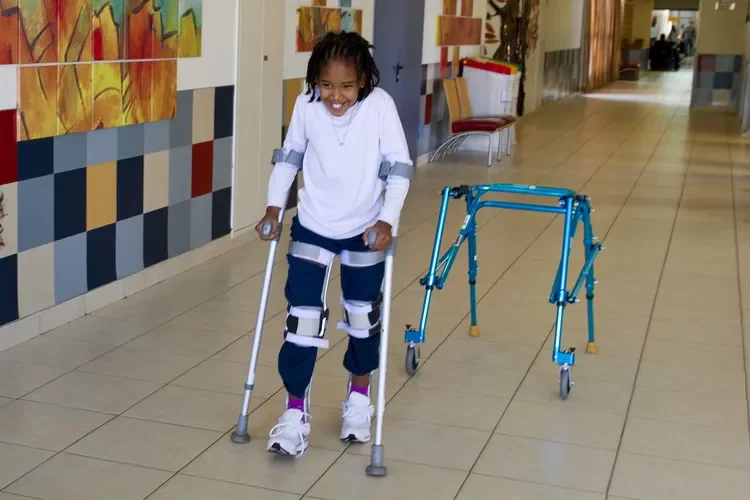
Mobility varies widely in spina bifida. Some children walk independently. Some walk with braces, crutches, or walkers. Some use wheelchairs part-time or full-time. The goal is not to force one method of movement, but to support safe, efficient, confident independence.
Physical therapy may begin early to support range of motion, strength, positioning, stretching, balance, and mobility skills. Occupational therapy can help with dressing, bathing, school tasks, adaptive tools, and daily independence.
Independence Reminder: A wheelchair, brace, walker, or crutch is not a sign of failure. The right mobility tool can protect energy, prevent injury, and help a child participate more fully in school, play, travel, and community life.
Bladder and Bowel Management
Bladder and bowel care is one of the most important parts of long-term spina bifida management. Nerve differences can make it hard for the bladder to empty fully or store urine safely. If not managed, bladder problems can lead to urinary tract infections, kidney damage, leakage, and social stress.
Many children use clean intermittent catheterization, which means inserting a small tube into the bladder at regular times to empty urine. Some use medicines to relax the bladder or reduce pressure. Regular kidney and bladder monitoring helps protect long-term health.
Bowel routines may include diet changes, fluids, stool softeners, laxatives, suppositories, enemas, or surgical options in some cases. A reliable routine can reduce accidents, constipation, discomfort, and embarrassment.
Hydrocephalus, Chiari II, and Brain-Related Concerns
Many babies with myelomeningocele also have hydrocephalus, which is a buildup of cerebrospinal fluid in the brain. Hydrocephalus can increase pressure and may require treatment with a shunt or another neurosurgical procedure.
Some children also have Chiari II malformation, where part of the brain is positioned lower than usual. This may affect breathing, swallowing, arm movement, or other functions in some cases. The care team will monitor symptoms and imaging findings.
Shunt Warning Signs: Call medical care urgently if a child with a shunt has repeated vomiting, severe headache, unusual sleepiness, irritability, swelling along the shunt path, fever, seizures, or sudden changes in vision, balance, or behavior.
Tethered Cord: A Problem That Can Appear Later
Tethered cord happens when the spinal cord is attached in a way that prevents it from moving freely as a child grows. Some children with spina bifida are at risk for this complication. As the child grows, the tethered spinal cord can stretch and lead to new or worsening symptoms.
Signs may include worsening leg weakness, new pain, changing foot shape, increased stiffness, scoliosis progression, worsening bladder function, or new bowel problems. Surgery may be needed if tethered cord causes significant symptoms.
Monitoring Tip: New changes in walking, strength, pain, bladder routines, bowel function, or spine shape should be reported to the spina bifida care team, even if the child had been stable for years.
Learning, School, and Development
Many children with spina bifida do well in school, but some may have learning differences. Challenges can include attention, organization, processing speed, planning, memory, math skills, or problem-solving. These difficulties may be related to hydrocephalus, brain development, frequent medical appointments, fatigue, or other factors.
Support should be practical rather than limiting. Some children benefit from extra time, written instructions, assistive technology, therapy services, school nursing support, bathroom plans, elevator access, transportation accommodations, or individualized education planning.
Skin Care and Pressure Injury Prevention
Some people with spina bifida have reduced sensation in parts of the body. This means they may not feel pain from pressure, heat, shoes rubbing, braces pressing, or skin injury. A small sore can become serious if it goes unnoticed.
Daily skin checks are important, especially on the feet, heels, hips, back, and areas touched by braces or wheelchair seating. Skin redness, blisters, swelling, warmth, cuts, burns, or open areas should be treated early.
Daily Care Tip: If sensation is reduced, check the skin every day. Good shoes, properly fitted braces, pressure-relieving cushions, and early treatment of redness can prevent serious wounds.
Prevention: Why Folic Acid Matters
Not every case of spina bifida can be prevented, but folic acid can reduce the risk of neural tube defects. Because the neural tube closes very early in pregnancy, folic acid is most helpful when taken before pregnancy and during the first weeks of pregnancy.
CDC recommends that all women capable of becoming pregnant get 400 micrograms of folic acid every day. :contentReference[oaicite:5]{index=5} For people with a previous pregnancy affected by a neural tube defect or other high-risk factors, doctors may recommend a higher dose before pregnancy and during early pregnancy.
Living With Spina Bifida in Early Childhood
Babies and toddlers with spina bifida may need surgery, frequent appointments, therapy, and careful monitoring. Families may feel overwhelmed at first because care can involve many specialists. Over time, routines often become more familiar.
Early intervention services can help with movement, communication, feeding, play skills, and development. Parents can also support independence by encouraging ordinary childhood activities: play, parks, toys, songs, books, and choices.
Helpful Early Childhood Habits
Keep specialist appointments organized in one calendar.
Check skin daily if sensation is reduced.
Encourage movement and play within safe limits.
Ask about early intervention services.
Teach body awareness in age-appropriate language.
Support small choices, such as clothing, toys, and routines.
Build independence gradually rather than doing everything for the child.
Teenagers With Spina Bifida
The teen years bring new questions: privacy, independence, friendships, dating, school goals, driving, sports, bathroom routines, body image, and mental health. Teens with spina bifida need the same respect and expectations as other teenagers, with support adapted to their medical needs.
This is also the time to practice healthcare self-management. A teen can gradually learn the names of their doctors, medicines, supplies, surgeries, allergies, shunt warning signs, catheter routines, and emergency contacts. Parents can shift from doing everything to coaching and supervising.
Adults With Spina Bifida
Many people with spina bifida now live well into adulthood. Adult life can include work, college, relationships, parenting, sports, independent living, and community involvement. But medical needs do not disappear. Adults may still need urology care, kidney monitoring, skin checks, mobility support, pain management, shunt monitoring, and mental health support.
Transition from pediatric to adult care can be challenging because adult providers may not always have the same spina bifida expertise. Planning ahead helps. Adults should keep a personal medical summary that includes diagnosis type, surgery history, shunt details, bladder and bowel routines, medications, allergies, and emergency warning signs.
Adult Care Tip: Keep copies of neurosurgery records, shunt information, urology results, kidney imaging, medication lists, and emergency plans. These records can save time when changing doctors or seeking urgent care.
Emotional Health and Family Support
Spina bifida affects more than the body. It can affect confidence, family routines, social life, school participation, dating, privacy, and mental health. Children may feel different because of braces, wheelchair use, bathroom routines, scars, or frequent medical appointments. Parents may feel stress, grief, guilt, or exhaustion.
Mental health support should be treated as part of care, not an afterthought. Counseling, peer groups, disability communities, family therapy, school support, and age-appropriate self-advocacy can make a real difference.
Support Reminder: A child with spina bifida is not defined by medical needs. Build routines that support treatment, but also make room for play, friendships, hobbies, independence, privacy, and joy.
Questions to Ask the Spina Bifida Care Team
Because spina bifida care can involve many specialists, families often need clear questions to stay organized. Bringing a notebook or shared digital document to appointments can help track answers and next steps.
Helpful Questions for Appointments
What type of spina bifida does my child have?
What level of the spine is involved?
Is hydrocephalus present, and does my child need a shunt?
What signs of shunt malfunction should we watch for?
How should we manage bladder emptying and bowel routines?
What kidney monitoring is needed?
What mobility supports or braces are recommended?
Does my child need physical or occupational therapy?
Should we watch for tethered cord symptoms?
What school accommodations may help?
How do we plan the transition to adult care?
Frequently Asked Questions About Spina Bifida
Can a person with spina bifida live a full life?
Yes. Many people with spina bifida go to school, work, build relationships, play sports, and live independently or semi-independently. The level of support needed varies widely.
Does spina bifida get worse with age?
The original birth defect does not “spread,” but complications can appear or change over time. Tethered cord, shunt problems, pain, skin breakdown, mobility changes, and urinary issues may need lifelong monitoring.
Can spina bifida be prevented?
Not all cases can be prevented, but taking folic acid before and during early pregnancy can reduce the risk of neural tube defects. CDC recommends 400 mcg daily for all women capable of pregnancy. :contentReference[oaicite:6]{index=6}
Is spina bifida always visible at birth?
No. Severe forms may be visible at birth, but spina bifida occulta can be hidden and may only be found later through imaging or subtle signs.
Final Thoughts: Spina Bifida Needs Lifelong Support, Not Limits
Spina bifida can bring serious medical challenges, but it does not erase a child’s personality, abilities, dreams, or future. With surgery, therapy, mobility support, bladder and bowel care, school accommodations, and strong family support, many people with spina bifida live active and meaningful lives.
The most effective care is coordinated and proactive. Families should not wait for problems to become emergencies. Regular follow-up with neurosurgery, urology, orthopedics, rehabilitation, therapy, and primary care can protect health and independence over time.
For pregnancy prevention, folic acid remains one of the most important public health tools. For children and adults already living with spina bifida, the focus becomes function, dignity, safety, participation, and self-determination.
Final Reminder: Spina bifida is a lifelong condition, but with early treatment, careful monitoring, practical support, and respect for independence, many people with spina bifida can grow, learn, work, participate, and live with confidence.