
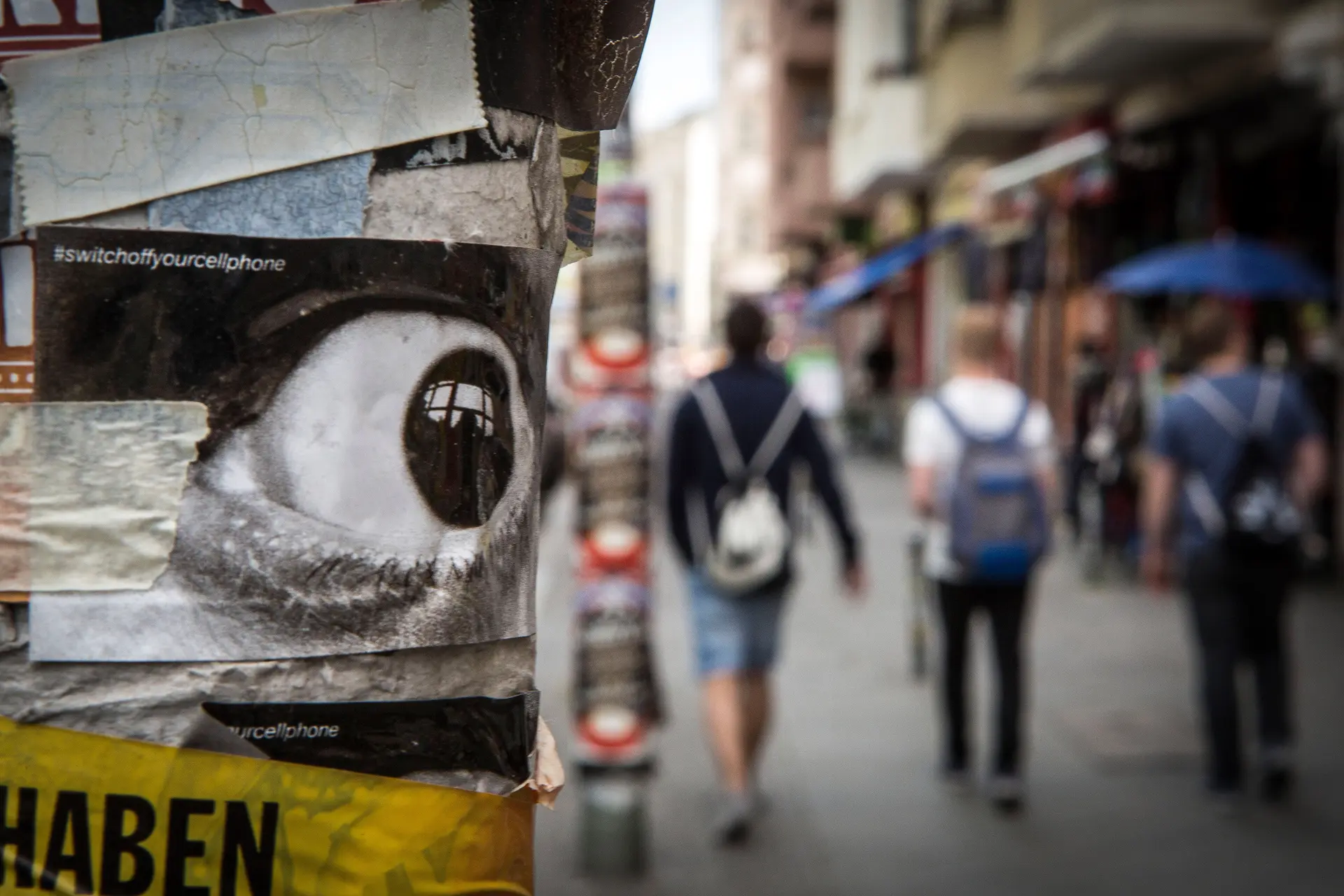
The prophet in your pocket
Prometheus gave fire to humanity, but he did not place a smartphone in our hands. In myth, fire marks the beginning of civilization. It represents the moment when human beings stepped out of darkness, cold, and helplessness, and began to cook, warm themselves, make tools, and illuminate the night. Yet today, the glowing screen in our pocket may have entered human life even more deeply than fire once did. It wakes us up, records our sleep, arranges our schedule, stores our photographs, reminds us to drink water, tells us how to get somewhere, and when we are bored, anxious, lonely, or angry, it immediately offers us a video, a piece of news, an argument, or a link to something we might buy.
It is easy to think of digital technology as something almost natural. Smartphones, laptops, smartwatches, social platforms, search engines, and artificial intelligence systems now surround modern life like air and water. We look at our phones first thing in the morning and last thing at night. Children learn to swipe a screen before they can speak in full sentences. Adults find it difficult to separate themselves from their devices even when walking, eating, travelling, or supposedly resting. Over time, we forget a simple but crucial truth: digital technology is not part of nature.
Smartphones do not grow on trees. Social media does not form like a river. These things are not strawberries, lakes, clouds, mountains, or valleys. They are artefacts.
An artefact is something designed, made, named, used, and given a purpose by human beings. A hammer is an artefact. A chair is an artefact. Law is an artefact. Money is an artefact. A symphony, a church, a highway: all are artefacts. Their existence depends on human intention. They could have been otherwise. A chair could have a different height. A door handle could have a different shape. A letter could have a different form. A legal system could be built on different values. A city could have been planned with different roads. A software interface, of course, could also have been designed differently.
This means that no artefact, in all its details, is inevitable. Why is the smartphone as we know it rectangular? Why does its screen constantly light up? Why do apps send notifications? Why do social platforms have likes, shares, comments, and followers? Why do videos play automatically one after another? Why do shopping platforms remember what we viewed, how long we stayed, and which products made us hesitate? None of this is destiny. None of it is a law of nature. These are design choices.
And design choices are never innocent.
An artefact has not only a form, but also a purpose. When we design something, we do not merely decide how it feels to the touch, what colour it has, what sound it makes, or how much space it occupies. We also decide what it is supposed to make possible. A pillow is designed for rest. A pen is designed to transfer ink onto paper. A toaster is designed to turn bread warm and brown. A chair is designed to support the body. A good chair may even be more than useful. It may be beautiful. It may allow a person to sit so comfortably that the body disappears from attention, leaving the mind free to read, write, talk, or think.
Digital technology is similar. It appears to offer countless functions. A phone can make calls, send emails, take photographs, provide directions, handle payments, track exercise, translate languages, play music, and manage a calendar. It can even tell you how many minutes you meditated today, and then tell you how many hours you spent on your phone, creating a fresh source of anxiety after helping you relieve the previous one. Digital technology seems to be everything at once: a personal assistant, an entertainment machine, a wallet, a map, a camera, an office, and a social space.
But hidden among these conveniences are two deeper forces: surveillance and prediction. More precisely, surveillance in the service of prediction.
Technology Is Never Merely a Tool; It Also Shapes the User
Technology companies often repeat a familiar claim: technology itself is neutral; what matters is how people use it.
The claim sounds reasonable, even modest. It seems to respect human choice and warns us not to blame the tool for everything. A knife can cut vegetables or hurt a person. A car can carry someone home or run someone over. The internet can spread knowledge or misinformation. The conclusion appears obvious: tools have no morality; only people do.
But this is only half true, and the missing half is the most important one.
Technology is not a blank object that falls from the sky. It is designed. Once something is designed, it already contains a judgment about what is worth doing. Nobody creates a tool with no purpose at all. Even a blank sheet of paper is not completely neutral. Its flatness, emptiness, lightness, and foldability invite us to write, draw, record, wrap, or turn it into a paper airplane.
There is a useful philosophical concept called “affordance”. Put simply, an affordance is what an object invites us to do. A door with a handle invites us to pull it. A flat button invites us to press it. A book invites us to read it. A chair invites us to sit. Of course, a book can also be used to press instant noodles, steady a table, hit someone, or, in extreme cases, start a fire. But those are not its primary invitations. Its real design purpose is to preserve, carry, and transmit words.
Digital products also have affordances, and their affordances are often more hidden than those of traditional objects. A red notification dot on a social platform does not merely tell us that something new has happened; it summons us to click immediately. Infinite scroll is not merely a convenient way to browse; it removes the natural boundary at which we might stop. Autoplay does not merely save us one small action; it reduces the moment in which we might choose whether to continue. The like button is not merely a way to express approval; it trains people to compress complex feelings into a measurable gesture. Rankings, trending lists, recommendation feeds, and follower counts are not merely ways of organizing information. They constantly suggest what is worth seeing, what is worth caring about, what is happening, and what counts as important.
So when we say that users are free to decide how to use technology, we must also admit that technology is constantly deciding how to guide users.
Many digital products do not encourage people to stop and reflect. They encourage immediate reaction. They prefer speed, emotion, conflict, and measurable engagement. The angrier a person becomes, the more likely they are to comment. The more anxious they feel, the more likely they are to refresh. The lonelier they are, the longer they may stay. The more afraid they are of missing out, the more likely they are to keep watching. A platform does not need to command you to become addicted. It only needs to make addiction the easiest path.
This is why the myth of technological neutrality is so dangerous. It makes us believe that every problem is simply a problem of personal discipline. You spend too much time on your phone because you lack self-control. You are influenced by misinformation because you are not intelligent enough. You become angry on a platform because you cannot manage your emotions. You buy things because you lack maturity as a consumer. But if an entire system is designed to capture attention, stimulate desire, extend screen time, and collect behavioural data, then we cannot blame only the individual.
Of course individuals still have responsibility. But designers have responsibility too. Platforms have responsibility. Companies have responsibility. Institutions have responsibility.
If a city designs all its roads to be dangerous and chaotic, we cannot blame only pedestrians for not being careful enough. If a food product is deliberately made to be intensely sweet, fatty, and addictive, we cannot blame only consumers for lacking restraint. If an app is designed to push, tempt, collect, predict, and retain, we cannot blame only users for failing to turn it off.
A technology product does not simply lie there in silence, waiting for someone to use it. It is constantly issuing invitations, and sometimes commands. Its interface, buttons, default settings, reward mechanisms, algorithmic rankings, and business model all work together to shape user behaviour.
We think we are using our phones. Often, our phones are also using us.
Surveillance Has Become the Default, and Prediction Has Become the Business Model
The deepest structural problem with modern digital technology is not only that it distracts us, damages our eyesight, weakens our sleep, or reduces our patience. These are real problems, but they are not the deepest one. The deeper issue is that many digital systems are designed from the beginning to collect data.
Our phones do not only have microphones and cameras. They also have location systems, accelerometers, gyroscopes, light sensors, fingerprint recognition, facial recognition, Bluetooth, communication records, and countless app permissions. A phone can know where we go, how long we stay, when we wake up, when we sleep, whom we message, what we search, what we watch, what we buy, which page we pause on, which product makes us hesitate, and which kind of content most easily ignites our emotions.
And that is only the phone itself. Smartwatches record heart rate, movement, sleep, and bodily states. Smart speakers wait to be activated by voice. Cars collect driving habits. Smart-home devices record domestic routines. Office software records collaboration patterns. Social platforms record relationships. Map apps record movement. Shopping platforms record desire. Payment platforms record purchasing power. Search engines record questions, interests, fears, and needs.
What is frightening about digital society is that surveillance no longer always appears as secret police, cameras, and interrogation rooms. It often appears as convenience.
We use maps because they are convenient. We use payment apps because they are convenient. We use social platforms because they are convenient. We use cloud documents because they are convenient. We wear smartwatches because they are convenient. We accept personalized recommendations because they are convenient. Behind each convenience, there may be an exchange of data. We give up a little location data for directions. We give up browsing history for recommendations. We give up shopping habits for discounts. We give up bodily data for health reminders.
The problem is that data does not necessarily remain within the immediate service that collected it. The value of data lies precisely in the fact that it can be stored, copied, combined, analysed, and reused. A single data point may not matter much. But when countless data points are connected, a person’s outline becomes increasingly clear. You may never have directly told anyone who you are, but your behaviour has already begun to speak for you. What you like, what you hate, what you fear, what moves you, when you are vulnerable, when you are impulsive, when you are lonely, when you are most likely to buy something, and when you are most likely to change your mind: all of these can become objects of calculation.
Surveillance is not the end. Prediction is the end.
Companies collect data not merely to know what you have done, but to predict what you will do next. What you may buy, what you may click, what you may believe, whom you may like, whom you may vote for, where you may go, and what content you may respond to. The more accurate the prediction, the more precise the advertising. The more precise the advertising, the greater the profit. Prediction is no longer just a technical ability. It has become a business model.
But predicting human behaviour is not like predicting the weather. The weather does not change its behaviour because a forecast says it will rain tomorrow. People, however, may change their behaviour because of a prediction. More importantly, when a platform controls the interface and the flow of content, it does not merely predict behaviour; it can help produce that behaviour.
If a platform predicts that you like a certain kind of extreme content, it can continue showing you more of it. The more you watch, the more the platform treats its prediction as correct. The more correct the prediction appears, the more similar content it serves. Over time, prediction becomes formation. The algorithm does not merely discover your interests; it cultivates them. It does not merely reflect your emotions; it amplifies them. It does not merely serve your choices; it narrows them.
This is the most dangerous feature of digital prediction: it often becomes a self-fulfilling prophecy.
If a person is labelled by a system as “high risk”, they may be subjected to more scrutiny, more restriction, and more suspicion. Those added pressures may worsen their situation, making the original prediction appear more accurate. If a user is identified as “likely to buy”, they may be continuously fed promotions and advertisements. The more they buy, the more the system confirms the label. If a group is predicted to be vulnerable to a certain kind of political message, that group may be repeatedly targeted with similar content until it is actually pushed toward that position.
Prediction appears to describe the future. In reality, it may be manufacturing it.
Surveillance Gives Power, and Power Reduces Freedom
Surveillance is not always evil. Parents watching small children are engaged in a form of surveillance. Teachers maintaining order during an exam are doing something similar. Doctors observing a patient’s vital signs, police investigating suspects, and airports checking for dangerous objects all involve some kind of surveillance. In these contexts, surveillance can have legitimate reasons, because it responds to a clear risk and is usually limited by rules.
The problem begins when surveillance expands from a specific situation into a general condition, from exception into default, from a clear purpose into unlimited collection. At that point, it begins to alter the relationship between people and power.
A person who is constantly watched can hardly remain fully free. Even if no one immediately punishes them, they begin to adjust themselves. They consider which words are safe to say and which are better left unsaid. Which places are safe to visit and which may be misunderstood. Which friends are safe to contact and which relationships may leave a trace. Which searches look normal and which may become suspicious. The power of surveillance lies not only in what it actually sees, but also in making people believe they may be seen at any moment.
This is why the most effective form of surveillance is not always violent. It can be quiet. It does not need to knock on the door every day. It does not need to arrest everyone. It does not need to publicly announce every prohibition. It only needs each person to understand: your behaviour is recorded, your data is stored, your patterns are analysed, and your deviations may be noticed.
Under such conditions, people gradually learn to manage themselves. At first glance, this may sound positive, because a society of “good behaviour” appears orderly. But if that behaviour comes from fear of being seen, fear of being scored, or fear of being misjudged by a system, then it is not moral maturity. It is the shrinking of freedom.
Authoritarian politics has always relied on surveillance because surveillance makes people easier to control. In the past, a regime that wanted to understand its population needed a vast network of human labour: informants, files, wiretaps, surveillance officers, censorship, and secret police. East Germany’s Stasi was terrifying precisely because it created a massive surveillance network in which ordinary people could not know who was recording them, who was reporting them, or which words and actions might become evidence in the future.
Today, surveillance can be more automated, more ordinary, and more gentle in appearance. Much information is not forcibly taken from us; we hand it over ourselves. We put our lives into our phones, our social relationships onto platforms, our payments into systems, our memories into the cloud, our routes into maps, our bodies into devices, and our questions into search boxes.
If past surveillance required someone to follow you, today your life can be reconstructed by accessing your data trail. Where you work, when you leave, where you usually go on weekends, whom you eat with, roughly how much you earn, what products interest you, what political issues you care about, whether you have recently been sleeping poorly, whether you are anxious, whether you are looking for a new job, whether you are worried about an illness.
This is not a science-fiction future. It is a capacity already built into modern digital infrastructure.
Some will say that most surveillance today is not designed for political oppression, but for commercial profit. Platforms want money, advertisers want sales, companies want to optimize services. This is not the same as secret police. There is truth in that. Commercial surveillance and state surveillance are not identical. But once data is collected, power already exists. Whoever owns data has the power to see others. Whoever can see others can predict them. Whoever can predict them can influence them.
Power does not remain harmless simply because its original justification sounds mild.
Commercial power also has political consequences. Technology giants do not live outside politics as pure engineers. They possess wealth, infrastructure, platform rules, channels of communication, and social influence. They can decide which content is more visible, which voices are amplified, which accounts are restricted, and which information is recommended to which people. A change in platform rules can determine the survival of media organizations. A change in a recommendation algorithm can alter the direction of public debate. A change in search ranking can shape the way people encounter knowledge.
When a small number of private companies control the infrastructure of public life, and when that infrastructure lacks transparency, accountability, and democratic supervision, society develops a dangerous imbalance of power.
This is not merely a question of “technological progress”. It is a political question.
The Ethics of Prediction: People Should Not Be Judged by the Shadow of Their Future
Prediction is everywhere in modern life. We rely on weather forecasts to plan travel, medical predictions to assess health risks, economic forecasts to make policy, and traffic predictions to choose routes. Prediction can reduce uncertainty and help us avoid disaster. Without prediction, many modern systems could not function.
But predictions about human beings, especially when used to distribute opportunities, impose punishment, guide surveillance, or govern society, require special caution.
A prediction sounds like a fact, but it is not a fact. Facts concern what has already happened. Predictions concern what has not yet happened. A fact can be proven or disproven. A prediction often remains suspended in ambiguity. Whether a person has already done something can be investigated, evidenced, challenged, and debated. Whether a person may do something in the future cannot be truly proven in the present.
If someone is punished for something they have done, that belongs to the traditional realm of responsibility. We can debate whether the evidence is sufficient, whether the procedure is fair, and whether the punishment is proportionate. But if someone is excluded in advance because a system predicts that they may commit a crime, may default on a loan, may perform poorly, or may not deserve an opportunity, then the situation becomes deeply dangerous. They are not facing a clear accusation that can be answered. They are facing a shadow cast by the future.
Worse still, prediction systems often judge individuals through statistical groups. Your neighbourhood, income level, educational background, consumption habits, social network, age, occupation, and past record may all be fed into a model. The system may not truly know you. It may infer your future from how “people like you” have behaved before. A person is no longer treated as a particular individual, but as the representative of a data pattern.
This conflicts with the basic spirit of justice. Justice should treat people, as far as possible, as concrete persons rather than compressing them into probabilities. A person should bear responsibility for what they have done, not for what a system thinks they may do because they resemble others.
Algorithmic prediction is becoming increasingly common in criminal justice, lending, hiring, insurance, education, and public administration. It often appears under the names of efficiency, fairness, and objectivity. Machines do not get tired, lose their temper, or display obvious personal prejudice. They can appear more reliable than human judgment. But algorithms do not grow from a vacuum. They use data drawn from real societies, and real societies are full of inequality, bias, and historical residue. If certain groups have been more heavily policed, more often arrested, or more frequently rejected in the past, the data will record that inequality and allow the algorithm to repackage it as “objective prediction”.
In this way, prediction may not correct injustice. It may automate it, expand it, and legitimize it.
Prediction also invites manipulation. Once a prediction becomes public, it may influence behaviour. Financial forecasts can shift investor confidence. Election polls can affect voters’ expectations. Trending rankings can manufacture popularity. Bets in prediction markets can create the appearance that a candidate is more popular than they really are. People do not make decisions only according to reality; they also make decisions according to what others predict reality will become.
This makes prediction a language of power. It appears to say, “The future will be like this.” But it may actually be saying, “You had better act this way.” When certain technology figures claim that regulating technology will block progress or even bring disaster, that is not merely an opinion. It is also a command: do not stand in the way, do not question, do not regulate, do not limit our development.
We must learn to identify the interests behind predictions. Who is making the prediction? What resources do they control? What do they want others to believe? Who benefits if the prediction comes true? And if people change their behaviour out of fear of the prediction, who gains more freedom to act?
Prediction is not prophecy. It should not be treated as destiny.
Democracy Needs Uncertainty, While Technological Power Desires Predictability
A healthy democracy does not try to make everything predictable. On the contrary, democracy lives through uncertainty.
A real election matters because its result is not predetermined. Public debate matters because people may still be persuaded and may still change their minds. Freedom of the press matters because power cannot fully control the movement of information. Freedom of association, freedom of expression, freedom of movement, and privacy matter because people need spaces that are not completely managed.
Democracy is not a system that seeks absolute order. It recognizes that human beings are complex, society is plural, and the future is open. It allows disagreement, opposition, error, minority views, and the possibility that today’s losers may become tomorrow’s majority. Democracy certainly needs rules, but it cannot turn society into a machine whose highest goals are prediction and control.
Yet many directions of digital development move toward the opposite: greater visibility, deeper datafication, more accurate prediction, more stable behavioural guidance, fewer accidents, and stronger management.
For companies, uncertainty means loss. If users do not know what they will buy, platforms have trouble placing advertisements. If users may leave at any moment, platforms design mechanisms to retain them. If public emotion is hard to grasp, political advertisers seek more precise segmentation. If consumer desire is unstable, the market attempts to shape desire through recommendation and promotion.
For certain systems of governance, uncertainty is also troublesome. Population movement, shifts in public opinion, protest, organization, and collective anger are all unpredictable forces. The more a power structure seeks stability and control, the more it will love surveillance and prediction technologies. These technologies promise to make society more “legible”: where everyone is, which group everyone belongs to, what each person may do, and what risk category each person should receive.
Such legibility does not necessarily bring freedom. It may bring management.
When people in a society become easier to classify, score, track, and predict, it becomes harder for them to escape fixed labels. In the past, a person could move to a new place and start again. Today, digital records may follow them. In the past, some youthful mistakes faded with time. Today, they may be searched, screenshotted, backed up, and circulated. In the past, people could have different selves in different social settings. Today, platforms and data systems attempt to merge those fragments into a unified profile.
The more clearly a person is seen, the harder it becomes to preserve ambiguity. Yet people need ambiguity. We need solitude, experimentation, change, failures that are not recorded, foolishness that is not permanently preserved, and opportunities to redefine ourselves.
Democracy also needs this ambiguity. A completely transparent society may sound honest, but it can easily resemble a prison. If transparency applies only to ordinary citizens and not to the powerful, then it is not public accountability. It is one-way exposure. A true democracy should make power transparent while allowing citizens privacy; it should not make citizens transparent while power hides behind black-box algorithms and commercial secrecy.
From Ancient Oracles to Modern Algorithms, We Still Need to Question the Prophets
The human fascination with prediction did not begin in the digital age. In ancient Greece, people turned to oracles for answers. Should a city go to war? Could a ruler seize power? Was disaster approaching? Should a person travel? Was a marriage wise? Where was fate leading? Such questions might be brought to temples, priests, diviners, and seers.
The Oracle of Delphi mattered because human beings fear uncertainty. The future unsettles us, so we long for someone to tell us what will happen. Even when the answer is vague, even when the prophecy can be reinterpreted after the fact, people are willing to believe that some higher voice has seen what has not yet occurred.
The rise of philosophy was, in one sense, a resistance against this prophetic culture. Philosophy asks us not merely to accept mysterious declarations, but to ask questions: What is the evidence? What is the cause? Is there a better explanation? Why should we believe this? Who benefits from our belief?
What ancient philosophers did in the face of myth and prophecy remains useful today. Only now, the prophets no longer wear priestly robes or speak from temples. They may stand on product-launch stages, at venture-capital conferences, at artificial intelligence summits, or behind influential social media accounts. Their language is no longer divine will, but models, efficiency, innovation, disruption, the future, growth, and unstoppable trends.
They tell us that technology will solve education, medicine, work, loneliness, governance, and almost everything else. They tell us artificial intelligence will change everything, data will optimize everything, and algorithms will understand everything. They tell us not to fear, not to regulate, not to slow progress. They tell us the future has already arrived, and they happen to hold the ticket to it.
We should not reject technology. Nor should we imagine every technology as a conspiracy. Many technologies genuinely improve life, help people gain knowledge, stay connected, work more efficiently, treat disease, and express themselves. The problem is not the existence of technology itself. The problem begins when technology is made sacred, when technological development is described as an unquestionable destiny, and when critics are dismissed as backward, fearful, or anti-progress.
Modern superstition does not necessarily believe in gods. It may believe that data is always objective, algorithms are always efficient, markets are always right, innovation is always good, and technology companies always understand the future better than public institutions.
This is why we need to recover critical thinking.
We should ask modern prophets more questions. Whose future are you describing? Who pays the price for your convenience? Who owns the data you collect? How do your models judge people? Who bears the cost of your errors? Where do your profits come from? Who restrains your power? When you predict that democracy will decline, regulation will fail, or surveillance will produce safety, are you describing the future, or preparing the ground for the future you want?
Real progress should not fear questions. Technology worthy of trust should not ask people to stop asking them.
What We Need Is Not Anti-Technology, but a Redesign of Technology
To criticize digital technology is not to romanticize a past without the internet. The past was not always beautiful, and technology is not the sole cause of human decline. Before smartphones, there were still rumours, prejudice, loneliness, violence, abuses of power, and social injustice. We should not blame every complex human problem on screens, nor imagine that throwing away our phones would restore innocence to the world.
But admitting this does not mean accepting the current structure of digital technology.
Since digital technology is an artefact, it can be redesigned. If it is not natural destiny, then it can be changed. Platforms can be designed with less addiction and more autonomy. Apps can collect less data by default, instead of collecting as much as possible. Recommendation systems can reduce emotional manipulation instead of rewarding anger and extremity. Social media can reduce the importance of vanity metrics instead of measuring everyone through likes, followers, and shares. Algorithmic decisions can become more transparent and appealable, rather than handing people’s opportunities to incomprehensible black boxes.
We also need to rethink the responsibility of technology companies. They cannot deeply shape public life while claiming to be mere tool providers. A platform that influences news distribution carries a public responsibility similar to that of media. An algorithm that affects employment, lending, education, or justice must be subject to public scrutiny. A company that collects personal data on a massive scale must explain how that data is used, protected, deleted, and kept from abuse.
At the same time, democratic societies need new institutional capacities. Regulation should not merely repair harm after the fact; it should enter the design stage. Privacy should not be an option hidden in complex terms and conditions; it should be the default principle. Data collection should be minimized, not maximized. Algorithmic systems should be open to external audits, especially when they affect important public interests. Users should have real choices, not a false choice between “agree to everything” and “do not use the service at all”.
Most importantly, we need to change our cultural imagination of technology. We should no longer treat “can” as automatically meaning “should”. The ability to predict a person’s behaviour does not mean we have the right to predict it. The ability to collect a person’s data does not mean we have the right to collect it. The ability to keep users online for longer does not mean we should design for that. The ability to use algorithms to influence public opinion does not make that influence legitimate.
Technology ethics should not be decoration added after a product is complete. It should be part of the foundation from the beginning.
What we need is not smarter surveillance, more precise manipulation, or gentler control. We need technology that respects people. It should expand human capacities rather than weaken judgment. It should help people connect rather than exploit loneliness. It should help people understand the world rather than trap them in information bubbles. It should help democratic societies conduct better public debate rather than turn the public sphere into an attention casino.
A truly excellent digital product should not ask only how to increase clicks, retention, conversion, and growth. It should also ask: Does it make users freer? Does it respect privacy? Does it protect attention? Does it allow people to leave? Does it help people understand and participate in public life? Does it reduce inequalities of power, or does it enlarge them?
If technological design serves only profit, people become resources. If it serves only prediction, people become probabilities. If it serves only control, society becomes an object of management.
And human beings should not be reduced to resources, probabilities, and objects.
Conclusion: Do Not Hand the Future to the Prophet in Your Pocket
We live in an age of portable prophets. Our phones predict what we want to see. Platforms predict what we will buy. Algorithms predict what we will believe. Systems predict what kind of person we may become. They constantly tell us: the next piece of content is here, the next product is here, the next friend is here, the next choice is here. They seem to know us better than we know ourselves, and to know the future before we do.
But the future should not be defined only by prediction systems.
What is most precious about human beings is precisely that we are not fully predictable. We change our minds. We begin again. We break habits. We learn from mistakes. We become unexpectedly brave. We resist under pressure. At certain moments, we say no. A person who is completely predictable may no longer be free. A society that is completely predictable may no longer be democratic.
The hope of democracy exists in an open future. It exists in the ability of people to argue, choose, organize, oppose, revise, and reimagine their common life. If technology supports this ability, it is a tool of civilization. If technology weakens this ability, it may become a tool of control.
The question today is not whether we want technology, but what kind of technology we want. Do we want technology that treats human beings as mines of data, or technology that respects human dignity? Do we want technology that constantly watches, predicts, and guides people, or technology that leaves room for privacy, space, and choice? Do we want technology that makes power more hidden, more concentrated, and harder to resist, or technology that makes public life more open, transparent, and accountable?
The fire Prometheus brought once made humanity more capable. But fire can also burn cities, destroy forests, and consume life. Technology is the same. It can illuminate the world, and it can create new darkness. The question is not whether we possess fire, but whether we know how to restrain it, use it, and prevent a few people from turning it into a weapon against the many.
When today’s digital prophets predict a future of total connection, total calculation, and total prediction, we do not need to kneel before them. Like the ancient philosophers who refused mystical explanations, we can cut open the prophecy and examine what is inside: knowledge or interest, public good or commercial ambition, a future of freedom or a blueprint for control.
If someone is predicting the death of democracy while building the systems that weaken it, we should not treat that prediction as fate. What we should do is prevent that system from becoming reality.
Let technology serve human beings again, rather than making human beings serve technology.
Perhaps that is what would truly make Prometheus proud.