
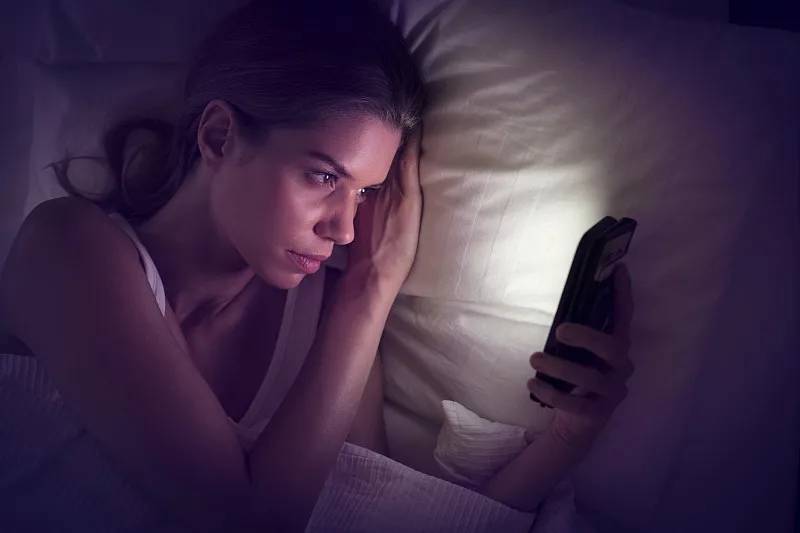
Is Your Phone Stealing Your Sleep? The Link Between Screen Time and Sleep Quality
Article Summary: Many people think poor sleep is only caused by stress, irregular schedules, or lack of self-control. But phones can affect sleep in a quieter way: they keep the brain receiving information, emotion, stimulation, comparison, and unfinished conversations at the very moment it should be slowing down. Screen time affects sleep not only because of light exposure, but also because short videos, notifications, social media, work messages, and the habit of “just five more minutes” can delay bedtime and reduce the quality of rest. Improving sleep does not always require quitting your phone completely. It often begins with rebuilding bedtime boundaries and letting the night slowly step away from the endless feed.
There is a kind of night many people know too well.
You are already tired, but the phone is still in your hand. You only meant to check one message. You only wanted to watch one short video. You only wanted to relax for five minutes. You only wanted to see whether someone replied. You only wanted a little piece of the day that felt like it belonged to you.
Then half an hour disappears.
Then an hour.
The room is dark, but the screen is bright. Your body is exhausted, but your eyes are still receiving new images. You tell yourself, “I’ll sleep now,” but your finger keeps moving. One post becomes another. One emotion becomes another. You are lying in bed, yet your mind feels as if it is standing at a street corner that never closes.
The Core Idea
Your phone may not steal your entire night all at once. More often, it steals your sleepiness, your quiet transition into rest, and the clear morning you hoped to have tomorrow.
Sleep Quality Is More Than the Number of Hours
Many people judge sleep only by time.
“I slept seven hours, so I should be fine.” “I went to bed at midnight and woke up at seven, so that should count.” “I’m tired, but maybe work is just busy.”
But sleep quality is not only about how long you spend in bed. Good sleep also means your sleep is reasonably continuous, refreshing, and restorative. If you often struggle to fall asleep, wake repeatedly during the night, or feel tired even after spending enough time in bed, your sleep may not be giving your body and mind the recovery they need.
This is why the effect of phone use can be easy to miss. You may still sleep for several hours. You may not call yourself an insomniac. Yet the sleep may feel shallow, delayed, fragmented, or strangely unrefreshing.
Many modern sleep problems are not total sleeplessness.
They are nights that technically include sleep, but do not truly restore you.
The First Way Phones Steal Sleep: Delayed Bedtime
The most direct way phones affect sleep is often not by keeping you awake all night. It is by pushing bedtime later, little by little.
This delay feels harmless in the moment. One more message. One more video. A few more comments. One more look at tomorrow’s weather. One more scroll through social media. Each “one more” is so small that it barely feels worth resisting.
But small delays add up. And the morning alarm rarely moves later just because you gave the phone another hour of your night.
A large 2025 study in JAMA Network Open found that adults who used screens before bed were more likely to report later bedtimes, shorter sleep duration, and poorer self-rated sleep quality compared with those who did not use screens before bed. The study was observational, so it shows association rather than proving that screens cause every sleep problem. Still, it reflects a pattern many people recognize from their own lives: the phone often makes bedtime slide.
Bedtime Reality
Your phone rarely says, “Stay awake for another hour.” It simply gives you enough tiny reasons not to stop yet.
Blue Light Is Not the Only Problem
When people talk about phones and sleep, blue light is usually the first thing mentioned.
Light exposure at night can matter because it may affect circadian rhythm and the body’s natural preparation for sleep. But if we blame everything on blue light, we miss a bigger part of the problem: the content itself.
Before sleep, you are not only looking at light. You are looking at work messages, social updates, worrying news, arguments in comment sections, shopping recommendations, other people’s lives, and content that makes you laugh, envy, worry, compare, desire, or feel left behind.
Even with night mode turned on, the brain may remain emotionally and mentally activated. A dimmer screen does not make stressful work messages relaxing. A warmer color filter does not make an endless video feed restful.
The screen is not only a source of light.
It is a doorway to work, comparison, entertainment, pressure, stimulation, and unfinished emotional loops.
Short Videos Make It Hard for the Brain to Power Down
Short videos are especially difficult at bedtime because they are so smooth.
You do not need to choose much. You do not need to wait. You do not need to think. One video ends, and the next one begins immediately.
Within a few minutes, your brain may experience humor, surprise, anger, curiosity, envy, desire, fear, and emotional recognition. Each clip lights up a new response before the previous one has settled.
This is the opposite of what sleep needs. Sleep asks the brain to slow down. Short videos train the brain to expect another hit of stimulation. Sleep asks the body to become quiet. Short videos keep refreshing attention.
Night Scroll Warning
After a long scroll, many people do not feel truly rested. They feel tired, scattered, empty, and strangely unable to stop.
Bedtime Phone Use Is Often an Escape From the Day
Many people do not keep scrolling at night simply because the phone is entertaining.
Sometimes, bedtime scrolling happens because it feels like the only part of the day that belongs to them.
The day was filled with work, study, chores, family responsibilities, messages, errands, and obligations. Finally, you are lying down. Your logical mind knows you should sleep, but emotionally, something inside says: I have not had any time for myself today.
The phone becomes compensation. Not because you do not want sleep, but because you do not want the day to end without having a moment of freedom, entertainment, or control.
Sometimes the problem is not only a bad bedtime habit.
Sometimes the day is so full that the night becomes the only place where the self tries to get something back.
Notifications Keep the Mind on Standby
Notifications are another quiet way phones disturb the night.
Even if you are not actively scrolling, a phone beside the bed can keep your mind slightly alert. A vibration, a screen lighting up, a message preview, or a red badge can all suggest that something may need your attention.
Is someone looking for me? Did something happen at work? Did a client respond? Did I miss something important?
Sleep needs a sense of safety. Notifications create the feeling that life may interrupt at any time.
Night Notification Reset
Use Do Not Disturb
Let only truly urgent calls or contacts bypass the setting.
Remove Work Alerts
If possible, keep work channels from entering the last part of your night.
Keep the Screen Face Down
Even a small flash of light can invite the mind back into alertness.
The Phone Changes the Meaning of the Bed
A bed should be a clear place: sleep, rest, relaxation.
But for many people, the bed has become a second office, movie theater, shopping mall, social room, news center, and emotional dumping ground.
You reply to messages in bed. You watch videos in bed. You check work notifications in bed. You shop in bed. You compare yourself in bed. You carry unfinished pieces of the day into the exact place that should help you release them.
Over time, the brain can begin to learn that bed is not where sleep starts. Bed is where more stimulation happens.
Bed Boundary
One powerful change is to finish your final phone use outside the bed, then let the bed become the beginning of rest again.
Why Bedtime Scrolling Makes Tomorrow Harder
Late-night phone use does not only affect that night. It changes the next day.
You fall asleep later, so waking up becomes harder. Your sleep may feel lighter, so your mood becomes more fragile. Your focus drops, so tasks take longer. Tasks take longer, so you work later. You feel exhausted at night, so you reach for your phone again to escape. The cycle quietly repeats.
Many people think they are only giving their phone a small extra piece of the night. But that small piece can shape the next morning’s patience, energy, food choices, concentration, and emotional balance.
Sleep is not empty time.
Sleep is the base system that supports focus, mood, decision-making, patience, and the ability to live the next day well.
Do Not Make Your Phone the Only Bedtime Comfort
Many people scroll before bed because the phone provides instant comfort.
When you are tired, it gives entertainment. When you are anxious, it gives escape. When you are lonely, it gives the feeling of company. When you do not want to think about tomorrow, it gives a temporary hole to hide in.
This is why simply taking the phone away can feel difficult. You are not only removing a device. You are removing a familiar form of emotional comfort.
A more realistic approach is to prepare new forms of comfort: a soft lamp, a book that is not too stimulating, a cup of warm water, ten minutes of stretching, a few lines of journaling, quiet music, or writing tomorrow’s top three tasks on paper so the mind does not keep holding them.
Bedtime Comfort
The phone often gives temporary numbness. A better bedtime routine gives the body a slower path into real relaxation.
You Do Not Need to Quit Your Phone. You Need a Digital Curfew
For many people, completely avoiding phones at night is unrealistic. Some people need to reply to family. Some use their phone as an alarm. Some use it for music, reading, or necessary messages.
So instead of starting with perfection, start with a digital curfew.
A digital curfew means your phone has a nighttime exit plan. For example, one hour before sleep, stop short videos, social media, shopping platforms, and work messages. Thirty minutes before sleep, move the phone away from the bed. The final part of the night can be reserved for low-stimulation activities: reading, stretching, journaling, breathing, or quiet washing up.
A Simple Digital Curfew
60 Minutes Before Sleep
Stop high-stimulation apps: short videos, social media, shopping, and work messages.
30 Minutes Before Sleep
Move the phone away from the bed and switch to a calmer activity.
15 Minutes Before Sleep
Let the night become quiet: dim light, slow breathing, gentle reading, or no input at all.
Move the Phone Away From the Bed
If you make only one change, start with the phone’s location.
Do not keep it beside your pillow if you can avoid it.
When the phone is within reach, you do not need a strong decision to pick it up. You wake in the night, check the time, and open a message. You cannot sleep, so you scroll. The morning alarm rings, and your first waking minutes disappear into content before you have even sat up.
Put the phone across the room, on a desk, outside the bedroom, or somewhere that requires you to stand up to reach it. If needed, use a simple alarm clock instead of your phone.
Distance Creates Boundaries
Many nighttime phone habits survive not because you truly need the phone, but because it is too close.
Redesign the Last Hour Before Bed
A good last hour before bed does not need to be elaborate. Its purpose is not to create a perfect ritual, but to lower stimulation gradually.
A Gentle One-Hour Wind-Down
First 20 Minutes: Close the Day
Stop work messages, social media, and short videos. Let the outside world become quieter.
Middle 20 Minutes: Reset the Space
Wash up, clear the bedside area, prepare tomorrow’s clothes, or tidy one small surface.
Final 20 Minutes: Invite Sleep
Read a few pages, stretch gently, write a few lines, breathe slowly, or simply lie down without new input.
Sleep is not forced into existence. It is invited by an environment that tells the body there is nothing more to solve right now.
If You Still Reach for Your Phone, Do Not Start With Shame
When people try to change bedtime phone habits, they often fall into self-blame.
Why did I scroll again? Why do I have no self-control? I knew this was bad for me, so why did I still do it?
Shame rarely helps. In fact, it can push you back toward the phone, because the phone is often what you use to escape uncomfortable feelings in the first place.
A better question is: what am I looking for when I reach for my phone at night?
Kinder Questions
Am I trying to relax, avoid tomorrow, soothe loneliness, delay the end of the day, or escape from a feeling I have not had time to face?
Not Every Sleep Problem Is Caused by Your Phone
It is important to be honest: phones are not the only reason people sleep poorly.
Stress, anxiety, depression, pain, medication, caffeine, alcohol, irregular schedules, noise, light, temperature, sleep apnea, and other health conditions can all affect sleep. If you often cannot fall asleep, wake repeatedly, wake too early and cannot return to sleep, feel severely sleepy during the day, or notice that sleep problems are affecting your work and life, it may be worth seeking professional guidance.
Reducing bedtime screen time is an important starting point, but it is not a magic cure for every sleep issue. It simply removes one common source of stimulation so you can better understand what else may be affecting your rest.
Less screen time can help create better conditions for sleep.
But if sleep problems continue, the deeper cause may need more attention than a phone habit alone.
When Sleep Improves, the Day Changes Too
When you reduce bedtime phone use, the change may not be dramatic on the first night. But after a few days, you may begin noticing small shifts.
Mornings feel less painful. The mind feels less foggy. Emotions feel less explosive. Work feels a little easier to sit with. You may rely less on sugar, caffeine, and constant stimulation. You may feel more connected to your body, instead of feeling dragged through the day.
Better sleep gently lifts many parts of life. Not because sleep solves everything, but because it gives you back the system you use to face everything.
Sleep Reflection
Your phone gives you more content. Sleep gives you the capacity to live with more clarity, patience, and steadiness.
Final Thoughts
Is your phone stealing your sleep?
The answer may not be a simple yes or no. The phone itself is not the enemy. The problem begins when it enters the final hour before bed, sits beside the pillow, fills every moment of boredom and anxiety, and quietly changes the rhythm of the night.
It can make bedtime later. It can keep the brain emotionally awake. It can turn the bed into an entrance to the information stream. It can keep you mentally on standby through notifications. It can replace true rest with stimulation. And it can leave tomorrow’s version of you carrying the cost.
Improving sleep does not have to begin with extreme rules. You can move the phone farther away, reduce short videos at night, turn off unnecessary alerts, set a digital curfew, replace scrolling with low-stimulation comfort, and let the bed become connected with sleep again.
Good sleep is not only closing your eyes. It is letting the body know that the day is over. Letting the brain know that it no longer has to receive. Letting your emotions know that they can be put down for a while. Letting yourself know that you do not have to borrow energy from tomorrow just to escape tonight.
Your phone can accompany you through many parts of life. But the final part of the night is worth giving back to yourself.
Final Reflection: A truly quiet night is not empty. It is simply a night where you are no longer being chased by content, notifications, comparison, and the feeling that there is always one more thing to check.