In the Age of Short Videos, Do Children Still Need to Read Long Articles?
Article Summary: Short videos are now part of children’s everyday media environment. They can be entertaining, informative, and even useful for quick learning. But they cannot fully replace long-form reading. Long articles train patience, sustained attention, deeper reasoning, vocabulary growth, and the ability to follow complex ideas from beginning to end. The real issue is not whether children should avoid short videos completely. The better question is how families and schools can help children build a healthier “attention diet,” where fast content and deep reading each have their proper place.
A child can watch ten short videos in ten minutes and feel as if they have learned something about science, animals, history, cooking, sports, or space. The screen moves quickly. The music is catchy. The explanation is short. The reward is immediate. Compared with that, a long article can feel slow, quiet, and demanding.
This is why many parents and teachers are asking a very practical question: in a world where information is delivered in seconds, do children still need to read long articles? If a video can explain a concept faster, why should a child spend time reading several pages?
The answer is yes, children still need long-form reading. But the reason is not nostalgia. It is not because older learning methods are automatically better. Children need long articles because long reading trains a different kind of mind. It asks them to stay with an idea, follow a line of reasoning, hold details in memory, notice structure, and build meaning gradually.
Core Question
Fast content gives information. Long reading builds thinking.
A healthy learning life does not need to reject short videos. It needs to protect the child’s ability to read, reflect, and stay with complex ideas.
Short Videos Are Not the Enemy, but They Are Not Enough
It is too simple to say that short videos are bad and long articles are good. Short videos can introduce new interests. A child may discover astronomy through a short clip, become curious about a historical figure, or learn a quick explanation of a science experiment. For many children, video is an entry point into curiosity.
The problem begins when short videos become the main way a child receives information. Short videos often compress ideas. They move quickly from one point to another. They usually reduce friction, remove silence, and keep stimulation high. That makes them easy to watch, but not always easy to think with.
Long articles do something different. They slow the mind down. They require the reader to hold an argument, follow transitions, remember earlier points, and connect examples to a larger message. This is why long reading still matters, even when short videos can explain many things quickly.
Long Articles Train the Attention Muscle
Attention is not only something children either have or do not have. It is also something they practice. A child who only experiences fast-moving content may become used to constant change: new image, new sound, new joke, new topic, new reward. Long reading asks for another kind of attention. It asks the child to stay.
Staying with a text is not always comfortable at first. Children may feel bored after a few paragraphs. They may want to check something else. They may lose track and need to reread. But this effort is part of the training. The mind learns to hold focus without being pulled by every new stimulus.
This kind of attention matters far beyond reading class. Math problems, science experiments, writing assignments, music practice, sports strategy, and real conversations all require sustained attention. If children never practice staying with complex material, many other learning tasks become harder too.
The Attention Training Curve
Minute 1–3
Minute 4–8
Minute 9–15
After 15 min
Long Reading Builds Vocabulary in a Different Way
Children learn words from many places: conversation, videos, school, games, songs, and daily life. But long reading exposes them to a different kind of language. Articles, essays, stories, and books often use more precise vocabulary, more complex sentence structures, and more varied ways of expressing ideas.
In short videos, language is often quick, casual, and supported by images. The child can understand the general meaning even if the words are simple. In long articles, the words carry more of the meaning. Readers must pay attention to how sentences connect and how one paragraph develops the next.
This matters because vocabulary is not only about knowing more words. It is about having more tools for thinking. A child who has words for cause, contrast, uncertainty, evidence, pattern, consequence, and perspective can think with more precision. Long reading helps build that language quietly over time.
Parent Tip
When a child meets a new word in a long article, do not only ask for the definition. Ask, “What is happening in the sentence around this word?” Context helps vocabulary become meaningful.
Reading Long Articles Teaches Children to Follow an Argument
Many short videos make one point quickly. A long article often does something more layered. It introduces a question, gives background, develops several ideas, offers examples, considers objections, and then reaches a conclusion. Following that structure is a major thinking skill.
Children need this skill because real-world issues are rarely one-sentence problems. Climate, health, history, money, friendship, technology, and identity all require layered thinking. If children only consume content that gives immediate conclusions, they may become less practiced at following how a conclusion is built.
Long reading helps children see that good thinking has steps. An opinion should have reasons. A claim should have evidence. A conclusion should connect to what came before. These are not just reading skills. They are citizenship skills, communication skills, and decision-making skills.
How a Long Article Builds Thinking
Question
What problem or idea is being introduced?
Reasoning
What evidence, examples, or explanations support it?
Conclusion
What does the reader understand after following the whole path?
The Problem Is Not Screen Time Alone, but Attention Habits
Parents often talk about screen time as if the number of minutes is the only issue. Time matters, but attention habits matter too. Thirty minutes of thoughtful documentary viewing is different from thirty minutes of endlessly swiping through unrelated clips. A digital reading app is different from a feed designed for constant interruption.
The concern with short-video habits is not simply that children are watching screens. It is that the mind can become used to rapid switching. If every few seconds brings a new reward, long reading may begin to feel unusually difficult. The child may not dislike reading itself; they may dislike the slower rhythm because their attention has been trained elsewhere.
This means the solution is not just to say “read more” or “watch less.” Children need help rebuilding comfort with slower attention. They need reading routines that feel possible, not punishments that make books seem like enemies of fun.
Children Need Reading Stamina, Not Just Reading Ability
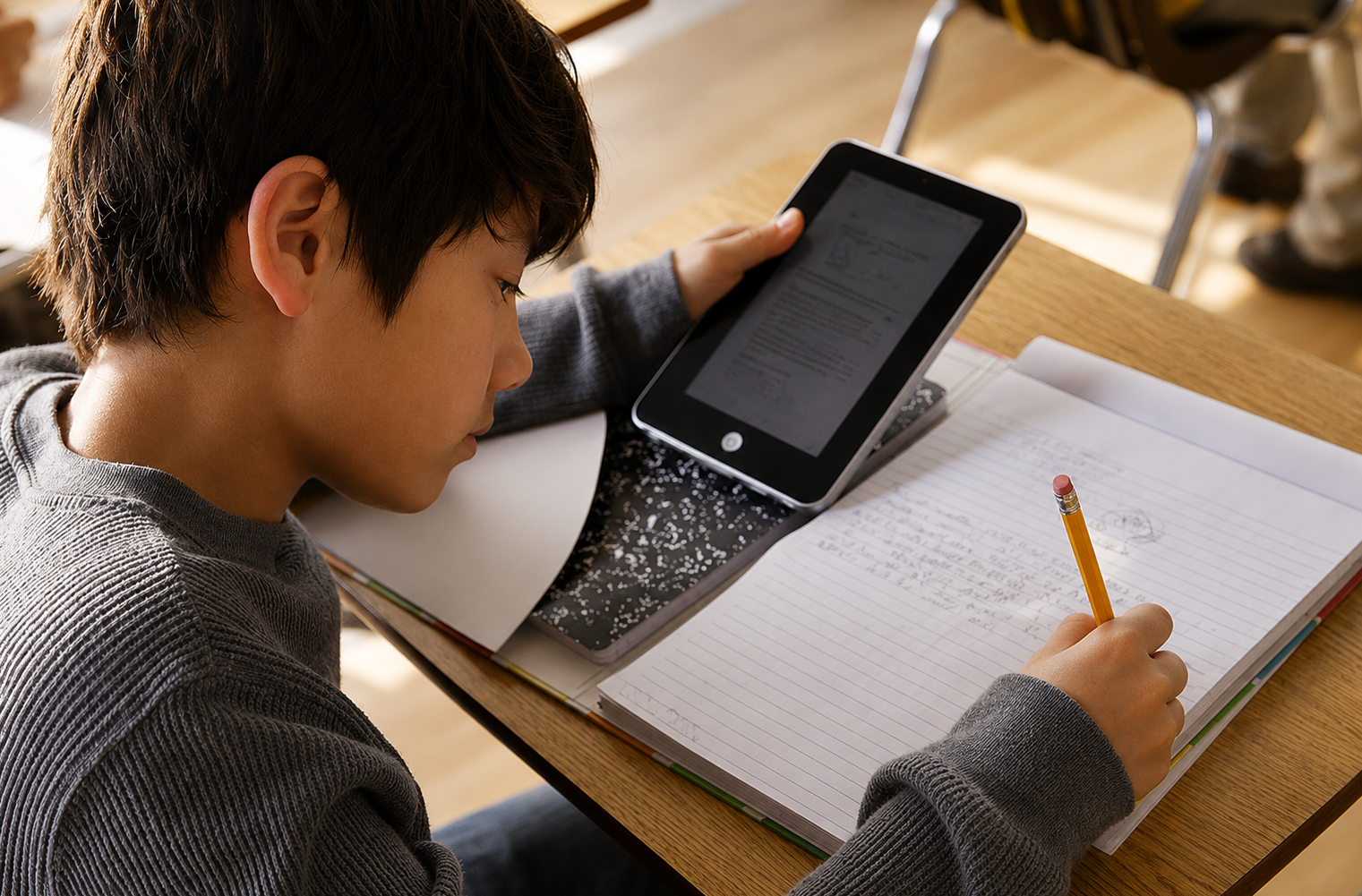
A child may know how to read but still lack reading stamina. Reading stamina is the ability to stay with text for a reasonable period without giving up immediately. It grows gradually, just like physical stamina.
If a child has not read long texts for a while, expecting them to suddenly enjoy a difficult article for forty minutes may not work. A better approach is to build step by step. Start with shorter but complete texts. Then move to longer articles. Then ask for short reflections, summaries, or conversations.
The goal is not to force children into silent suffering. The goal is to help them experience that long reading can become manageable and even satisfying when they are not thrown into it too abruptly.
A Gentle Reading Stamina Plan
Week 1: Ten-minute reading
Choose short articles with clear topics. Focus on finishing and explaining the main idea.
Week 2: Fifteen-minute reading
Add one question after reading: What surprised you, confused you, or interested you?
Week 3: Twenty-minute reading
Try a longer article. Pause once in the middle to summarize what has happened so far.
Week 4: Reading plus response
After reading, write three sentences: main idea, supporting point, personal response.
Long Reading Helps Children Develop Inner Speech
One quiet benefit of long reading is the development of inner speech. When children read, they practice hearing ideas inside their own minds. They ask silent questions. They imagine scenes. They predict what comes next. They disagree with a sentence. They reread a paragraph and adjust their understanding.
This internal conversation is important. It supports reflection, self-control, planning, and independent thought. Short videos often do more of the work for the viewer: the voice explains, the images show, the music sets the mood. Reading leaves more space for the child’s own mind to participate.
That space can feel quiet, and some children may find it boring at first. But boredom is not always a problem to eliminate instantly. Sometimes it is the doorway to imagination and deeper thinking.
Helpful Reframe
If a child says, “This feels slow,” that does not always mean the reading is useless. It may mean their mind is practicing a slower, deeper rhythm.
What Parents Can Do Without Turning Reading Into a Battle
Many parents want their children to read more, but the way reading is introduced matters. If reading becomes only a punishment for watching videos, children may see books and articles as the boring opposite of fun. That makes resistance stronger.
A better approach is to connect reading with curiosity. If a child watches a short video about sharks, space, fashion, football, ancient Egypt, or cooking, use that interest as a bridge. Find a longer article on the same topic. The video becomes the doorway, and the article becomes the deeper room.
Parents can also read alongside children. This does not mean hovering or testing them constantly. It can be as simple as setting a shared quiet reading time, asking one thoughtful question afterward, or letting the child choose between two article topics. Choice reduces resistance.
From Short Video to Long Reading: A Bridge Strategy
Watch
Notice what topics naturally catch the child’s attention.
Choose
Find a longer article, story, interview, or explainer on the same subject.
Read
Set a realistic reading time instead of demanding a full long session immediately.
Talk
Ask, “What did the article add that the video did not have time to explain?”
Schools Should Teach Slow Reading as a Modern Skill
In a fast media environment, slow reading is not old-fashioned. It is a modern skill. Students need to learn how to handle long instructions, reports, contracts, essays, research, news analysis, and complex workplace documents. Many important texts in adult life cannot be reduced to a fifteen-second clip.
Schools can support this by teaching reading strategies directly. Students should learn how to preview an article, identify the main idea, track an argument, annotate lightly, summarize sections, ask questions, and compare sources. These skills make long reading less intimidating.
Schools should also avoid treating long reading as only a test task. If every article is followed by pressure and scoring, students may read defensively. Discussion, curiosity, and personal response should also have a place.
Children Do Not Need Only Long Articles
It is important to be balanced. Children do not need a childhood made only of long articles and serious books. They need play, conversation, movement, creativity, stories, images, music, and yes, sometimes short videos. The goal is not to create guilt around every screen.
What children need is variety. Fast content can entertain and introduce ideas. Long reading can deepen those ideas. Conversation can help children process what they read and watch. Writing can help them organize their own thoughts. These experiences support one another when they are balanced.
A healthy media life is not about choosing one format forever. It is about helping children understand that different formats do different jobs. A short video can open the door. A long article can help them walk further inside.
A Balanced Attention Plate
Short Videos
For curiosity, quick exposure, visual examples, and entertainment.
Long Reading
For focus, vocabulary, reasoning, patience, and deeper understanding.
Conversation
For questions, opinions, clarification, and emotional connection.
Writing
For organizing thoughts and turning information into expression.
A Practical Home Routine for Long Reading
Families do not need a strict academic program to support long reading. A small routine can be enough. The routine should be predictable, realistic, and connected to the child’s interests. It should also leave room for choice.
For example, a family might choose three evenings a week for quiet reading. The child can choose between two articles or one story and one article. After reading, the parent does not need to give a test. A simple question works better: What was the most interesting part? What did you disagree with? What did you learn that the video did not explain?
This keeps reading connected to thought, not just completion. Children are more likely to return to long reading when they feel it gives them something to say.
A 20-Minute Reading Routine
3 minutes
Preview the title, headings, and first paragraph.
12 minutes
Read without switching apps or checking other screens.
3 minutes
Say the main idea in your own words.
2 minutes
Share one question, opinion, or new word.
Final Thoughts
In the age of short videos, children still need to read long articles—not because videos are useless, but because reading trains abilities that short videos rarely develop on their own. Long reading builds attention, vocabulary, reasoning, reflection, and the ability to stay with complexity.
The best approach is not to create a war between screens and books. Children live in a media-rich world, and they need guidance, not fear. Short videos can spark curiosity. Long articles can deepen it. The two do not have to be enemies if adults help children move from quick interest to deeper understanding.
What matters most is balance. A child who can enjoy a short video and also sit with a long article has more than information. They have range. They can move between speed and depth, entertainment and reflection, quick answers and careful thought. That range may be one of the most important learning skills of this generation.
Final Reminder: Short videos can open a child’s curiosity, but long articles help that curiosity grow roots. Children still need long-form reading because deep thinking takes time, language, patience, and practice.