Why Slow Travel Is Better Than Rushing Through Tourist Spots
There is a strange kind of tiredness that comes from traveling too fast.
It is not the same as being tired after a long walk or a day in the sun. It is a deeper kind of exhaustion—the feeling of waking up in a new city and already being behind schedule. Breakfast becomes something to finish quickly. Streets become routes between attractions. A beautiful view becomes a photo stop. By the end of the day, you have seen a lot, but somehow remember very little.
Many people travel like this because they feel they have to. Flights are expensive. Vacation days are limited. Social media makes every destination look like a checklist. If you are going to Paris, you should see the Eiffel Tower, the Louvre, Montmartre, Notre-Dame, Versailles, and maybe fit in a river cruise. If you are going to Japan, you should do Tokyo, Kyoto, Osaka, Nara, Mount Fuji, and maybe Hiroshima if there is time. If you are going to Southeast Asia, why not see three countries in two weeks?
It sounds efficient. It looks impressive on an itinerary.
But travel is not only about how many places you can say you have visited. It is also about what those places are allowed to become in your memory.
That is where slow travel begins.
Slow travel does not mean doing nothing. It does not mean staying in one place for months or avoiding famous attractions. It simply means giving a place enough time to feel real. It means choosing depth over speed, attention over collection, and experience over proof.
The problem with rushing is that everything becomes a task
A rushed trip often begins with excitement, but it quickly becomes a schedule.
You wake up early because there are five places to see. You check the map before you check the weather. You move through the city with a list in your head: museum, temple, market, viewpoint, restaurant, sunset spot. Even when something interesting appears on the way—a small bakery, a quiet street, a local park, an old man selling fruit—you may not stop because it is not part of the plan.
At some point, travel starts to feel like work.
You are not really asking, “What is this place like?”
You are asking, “What do I need to finish today?”
There is a big difference.
Tourist spots are not the problem. Many famous places are famous for a reason. The problem is when the whole trip becomes a race from one spot to another. You may stand in front of a beautiful building and feel nothing because your mind is already on the next location. You may eat a meal while checking train times. You may take photos you barely look at later.
This is how a trip can become full but not meaningful.
Slow travel gives you permission to stop treating every hour like it must produce evidence. You do not need to turn every moment into a photo, a review, or a story. Sometimes the best part of a trip is the hour you did not plan.
You remember ordinary moments more than you expect
When people talk about travel, they usually mention landmarks first. But years later, the memories that stay are often smaller.
A morning coffee in a quiet neighborhood.
A conversation with a shop owner.
Getting lost and finding a street you loved.
A rainy afternoon spent in a bookstore.
The smell of food from a night market.
Watching people walk home from work.
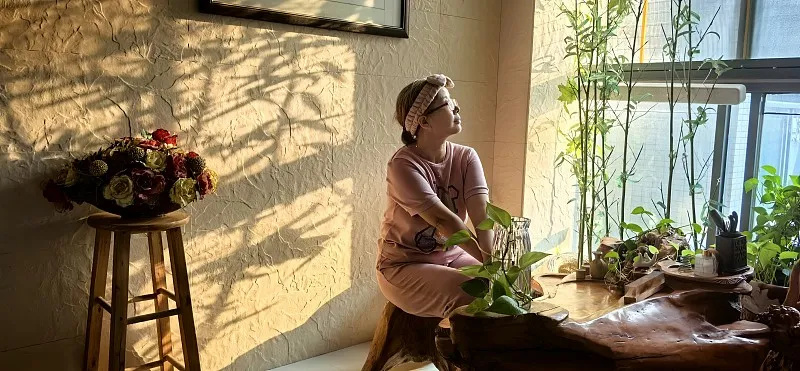
Sitting by a window with no urgent plan.
These moments rarely make it onto a “top 10 things to do” list, but they are often the moments that make a place feel alive.
The reason is simple: ordinary moments create connection.
A landmark can impress you. A normal street can help you understand how a city breathes. A famous restaurant can be memorable. A small local place you found by accident can feel personal. A packed itinerary gives you highlights. Time gives you texture.
Slow travel makes room for that texture.
It allows you to notice how people order breakfast, when shops open, what the neighborhood sounds like at night, how the city changes after rain, where locals sit, how public transport feels during rush hour, and what daily life looks like beyond the tourist center.
That kind of travel may not look as dramatic online, but it often feels richer in real life.
Slower travel can actually make a trip less stressful
One of the most practical reasons to travel slowly is that travel already contains enough stress.
Flights get delayed. Weather changes. Hotels are not always as expected. You take the wrong bus. A museum is closed. Your phone battery dies. A restaurant you saved is fully booked. A train station is more confusing than it looked on the map.
When your schedule is packed too tightly, one small problem can ruin the entire day.
Slow travel gives your trip space to absorb reality.
If it rains in the morning, you can go later. If you are tired, you can rest without feeling guilty. If you fall in love with a neighborhood, you can stay longer. If a local recommends something unexpected, you can actually go.
This flexibility changes the mood of a trip. Instead of constantly trying to catch up, you begin to feel present. You stop measuring the day only by how many attractions you completed. You start asking what would make the day enjoyable, not just efficient.
That does not mean you should travel without any plan. A good trip still needs structure. But the structure should support the experience, not control it completely.
A simple rule helps: plan fewer things than you think you can handle.
If you believe you can visit five places in one day, plan three. If a city seems like it needs two days, give it three if possible. If you are changing cities, do not underestimate the energy lost to packing, checking out, waiting, transferring, checking in, and reorienting yourself.
Moving takes time, but it also takes mental energy.
Slow travel respects that.
You spend less time in transit and more time actually being somewhere
Fast travel often looks exciting on paper because the itinerary covers so much ground. But what the itinerary does not show clearly is the amount of time lost between places.
A two-hour train ride is not just two hours. It is packing your bag, getting to the station, finding the platform, waiting, traveling, arriving, getting to your hotel, checking in, unpacking, and figuring out where you are again.
A short flight can consume half a day.
When you move too often, your trip becomes a series of transitions. You are always arriving, leaving, or preparing to leave. You never quite settle.
Slow travel reduces that friction.
Staying longer in fewer places allows you to learn the rhythm of a destination. You find the nearest grocery store. You discover which cafe you like. You understand the metro line. You remember the way back without opening your map. The city stops feeling like a puzzle and starts feeling familiar.
That familiarity is underrated.
The first day in a new place is often about orientation. The second day is easier. By the third or fourth day, you begin noticing things you missed at first. You walk more naturally. You make better choices. You stop following only the obvious routes.
A place often becomes more interesting after the pressure to “figure it out” has passed.
Slow travel is usually better for your budget
Rushing through many destinations can become expensive quickly.
Every move costs money: trains, flights, buses, taxis, luggage storage, airport transfers, new hotel fees, last-minute meals, and convenience purchases when you are too tired to choose carefully. The faster you move, the more likely you are to pay for speed and convenience.
Slow travel often lowers those costs.
Staying longer in one place may allow you to book better accommodation rates. You can shop for simple groceries instead of eating every meal out. You learn which places are overpriced and which are genuinely good. You make fewer rushed decisions. You are less likely to buy things just because you are tired, hungry, or stressed.
It also helps you avoid the “tourist panic” of thinking every meal must be special, every day must include paid activities, and every hour must be used perfectly.
When you slow down, you realize that not every good travel experience costs money. Walking through a neighborhood, sitting in a public square, visiting a local market, taking a ferry, watching sunset, or spending time in a park can be just as memorable as a ticketed attraction.
Slow travel does not automatically mean cheap travel, but it often makes spending more intentional.
It is also a more respectful way to visit
Tourism can bring money and attention to a place, but it can also create pressure. When travelers rush through destinations, they often consume places quickly: arrive, photograph, eat, post, leave. The destination becomes a backdrop.
Slow travel encourages a different relationship.
When you stay longer, you are more likely to support local businesses beyond the most famous spots. You may return to the same cafe, buy from a small shop, take a local class, use public transport, or explore neighborhoods outside the tourist core. You also become more aware that people live where you are traveling.
This awareness matters.
A city is not only a collection of attractions. A beach is not only a photo location. A temple is not only architecture. A market is not only content. These are parts of people’s daily lives, histories, beliefs, and communities.
Slowing down gives you a better chance of being a guest rather than just a consumer.
You listen more. You observe more. You interrupt less. You begin to understand that travel is not only about what a place gives you, but also about how you move through it.
Slow travel does not mean skipping famous places
There is sometimes a strange pressure in travel culture to avoid tourist spots completely, as if anything popular is automatically shallow. That is not necessary.
You can travel slowly and still visit famous places.
You can see the Colosseum, the Grand Palace, the Taj Mahal, Times Square, the Eiffel Tower, Machu Picchu, or the temples of Kyoto. These places can be meaningful, beautiful, and worth visiting.
The difference is how you approach them.
Instead of rushing through a famous site just to say you have been there, give it time. Learn a little history before you go. Visit at a quieter hour if possible. Sit nearby after the visit. Notice the details. Let the place be more than a photo.
Slow travel is not anti-tourism. It is anti-rushing.
It is not about proving that you are more sophisticated than other travelers. It is about making choices that allow you to experience a place more fully.
Sometimes that means visiting the famous museum. Sometimes it means skipping it because you would rather spend the afternoon walking along the river. Both can be valid. The point is to choose intentionally, not automatically.

How to practice slow travel, even with limited time
Not everyone can travel for months. Most people have limited vacation days, fixed budgets, work responsibilities, family obligations, and return flights that cannot be ignored.
Slow travel is still possible.
You do not need unlimited time. You just need to stop trying to fit unlimited expectations into limited time.
Choose fewer destinations. If you have one week, consider one city and one nearby area instead of four cities. If you have ten days, maybe choose two or three places instead of five. If you only have a weekend, explore one neighborhood properly rather than crossing the entire city for every famous spot.
Leave empty space in the itinerary. A free afternoon is not wasted time. It is where the trip can breathe.
Stay in a neighborhood that feels livable, not just convenient for attractions. Walk when possible. Visit a local market. Take the same route twice and notice what changes. Eat somewhere without checking every review first. Spend one morning with no major plan.
Most importantly, stop treating rest as failure.
You are allowed to sleep in. You are allowed to sit in a cafe. You are allowed to return to a place you liked instead of chasing something new. You are allowed to have a quiet day in a beautiful city.
A trip does not become valuable only when you are exhausted by the end of it.
The best trips leave room for surprise
Overplanning can make travel feel safe, but it can also remove the possibility of surprise.
Some of the best travel experiences happen because something did not go according to plan. You missed a bus and found a better route. A restaurant was closed, so you tried the place next door. Rain changed your schedule, and you spent the afternoon somewhere unexpected. You talked to someone who suggested a street, a dish, a viewpoint, or a small museum you never would have found online.
These moments need space.
A packed itinerary has no room for surprise. Every delay feels like a problem. Every unexpected opportunity feels like an interruption.
Slow travel lets the trip participate in its own creation.
You still guide it, but you do not control every second. You allow the destination to answer back.
That is when travel starts to feel less like consumption and more like discovery.

What you bring home from slow travel
When you rush, you bring home proof.
Photos, tickets, souvenirs, names of places, a long list of things you saw.
When you travel slowly, you bring home something harder to measure.
A feeling for a place. A better understanding of how people live. A memory of a street you walked every morning. A dish you still think about. A slower rhythm you want to keep. A reminder that life does not always need to be optimized.
This is one of the quiet gifts of slow travel: it can change not only how you travel, but how you return.
You may come home more aware of your own routines. You may notice how often you rush through normal life too—meals, conversations, mornings, weekends, workdays. You may begin to understand that the desire to hurry is not only a travel habit. It is a life habit.
Slow travel teaches attention.
And attention is something many people are missing, not only on vacation but every day.
A slower trip is not a smaller trip
There is a fear that if you travel slowly, you will miss out.
You will see fewer cities. Fewer landmarks. Fewer countries. Fewer things to list when someone asks what you did.
That may be true.
But seeing fewer things does not always mean having a smaller experience.
A rushed trip can make ten places feel thin. A slower trip can make one place feel full.
Travel is not a competition to collect the most destinations. It is a chance to step outside your usual life and meet the world with more openness than you normally have time for.
Sometimes that happens at a famous monument. Sometimes it happens over breakfast. Sometimes it happens when you are lost. Sometimes it happens when you stop moving long enough to notice where you are.
Slow travel is better not because it is trendy, but because it gives travel back its meaning.
It reminds us that the goal is not to finish a destination.
The goal is to experience it.