The Next Step for mRNA Technology: From Vaccines to Disease Treatment
Article Summary: mRNA technology became widely known through COVID-19 vaccines, but its deeper significance is not only about making vaccines faster. It represents a new medical idea: instead of always giving the body a finished drug, scientists can give cells temporary instructions to produce a specific protein. This approach may help train the immune system, replace missing proteins, support cancer immunotherapy, or deliver gene-editing tools. The next stage of mRNA technology is moving from infectious disease vaccines toward cancer treatment, rare diseases, protein replacement, immune engineering, and precision medicine. But the road ahead is not simple. Delivery, safety, immune response, manufacturing cost, long-term effectiveness, and public trust will determine how far this technology can truly go.
Some technologies change the world without looking dramatic from the outside.
There is no shining machine, no giant metal device, no futuristic laboratory scene that ordinary people can easily recognize. There is only a tiny molecule of information, carefully designed, protected inside a delivery system, and sent into the body for a temporary purpose.
That is part of what makes mRNA technology so fascinating.
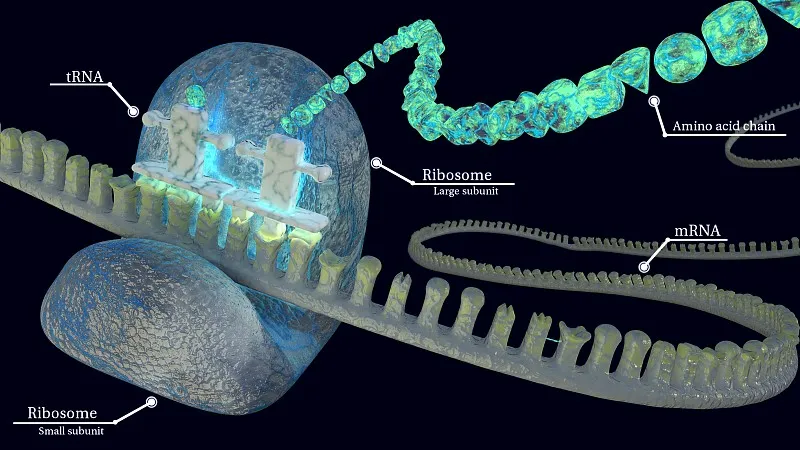
It does not always work by bringing a finished protein or drug into the body. Instead, it can give cells a short-lived set of instructions: make this protein for a while, then let the message disappear. The body reads the message, performs the task, and eventually breaks the mRNA down.
Before the COVID-19 pandemic, many people had never heard the word mRNA. After the pandemic, it became one of the most discussed scientific terms in modern medicine — praised, questioned, misunderstood, and closely watched.
The Core Idea
mRNA technology is not only a vaccine story. It is a platform built around biological instructions — and those instructions may one day be used in many different ways to prevent, treat, or manage disease.
The Real Shift: Medicine Moves From “Giving Drugs” to “Giving Instructions”
Traditional medicines often give the body a finished substance: a chemical compound, an antibody, a protein, or another therapeutic agent that directly acts on a target.
mRNA changes the logic. Instead of always delivering the finished product, it can deliver the recipe.
If the body were a city, traditional medicine might look like trucks bringing finished supplies into the city. mRNA is more like sending a temporary blueprint to a factory. The factory produces what is needed for a limited time, and the blueprint is then broken down.
This sounds elegant, but it also reveals the challenge. The instructions must be accurate. They must reach the right cells. They must produce the right amount of protein. They must not remain active for too long. And the body’s immune response must stay within a safe and useful range.
mRNA is powerful because it is programmable.
But programmability only becomes medicine when the design, delivery, dose, safety, and clinical benefit all work together.
From COVID-19 to RSV: mRNA Is Moving Beyond One Disease
The most familiar application of mRNA technology is COVID-19 vaccination. These vaccines showed the public that mRNA could be designed, manufactured, and used at large scale under urgent conditions.
But mRNA has not remained only a COVID-19 technology. It is now being explored and used in other infectious disease settings, including respiratory viruses.
One important example is RSV. Moderna’s mRNA RSV vaccine, mRESVIA, has been authorized for older adults and for certain younger adults at increased risk of RSV lower respiratory tract disease. This matters because it shows mRNA technology moving into more routine respiratory disease prevention, not only emergency pandemic response.
Vaccine Platform Insight
mRNA’s advantage is not simply speed. Its deeper strength is that the same basic platform can be redesigned for different targets once scientists understand what protein the immune system should learn to recognize.
Future mRNA vaccines may continue to be explored for influenza, combination respiratory vaccines, emerging viruses, and diseases where rapid antigen updates could be useful.
But speed should never be confused with skipping safety. Every vaccine still needs evidence, quality control, regulatory review, and ongoing monitoring.
Cancer Treatment: One of the Most Exciting and Difficult Frontiers
If mRNA vaccines helped prove the platform, cancer treatment may become one of its most ambitious tests.
Cancer is not one disease. It is a vast group of diseases. Even within the same type of cancer, two patients may have tumors with very different mutations. Cancer cells are also difficult because they come from the body’s own cells, which means the immune system may not always recognize them as foreign enemies.
One major idea in mRNA cancer vaccines is to help the immune system see cancer more clearly.
A particularly important direction is personalized neoantigen vaccination. In simple terms, scientists analyze a patient’s tumor, identify mutations that may create unique cancer markers, and design an mRNA vaccine that teaches the immune system to recognize those markers.
How a Personalized mRNA Cancer Vaccine May Work
Step 1: Read the Tumor
The patient’s tumor is sequenced to identify mutations that may create unique cancer-related markers.
Step 2: Design the Message
An mRNA sequence is designed to encode selected neoantigens that may help train the immune system.
Step 3: Train the Immune System
The goal is to help immune cells recognize and attack cancer cells carrying those markers.
This approach is deeply compelling because it suggests cancer treatment may become more personal. But it is also extremely complex. It requires tumor sequencing, antigen selection, rapid manufacturing, combination with other therapies, and strong evidence that the treatment improves real outcomes.
mRNA cancer vaccines are not magic bullets. Some are still investigational, and different cancers will respond differently. The field is promising, but it must be judged by clinical evidence, long-term follow-up, and careful safety evaluation.
Rare Diseases and Protein Replacement: Helping the Body Make What It Lacks
Another possible future for mRNA lies in rare diseases and protein replacement therapy.
Many genetic diseases involve the body being unable to make a certain functional protein, or making a protein that does not work properly. Traditional approaches may involve enzyme replacement, protein therapy, gene therapy, or long-term disease management.
mRNA offers another idea: if the correct mRNA can be delivered to the right cells, the body might temporarily produce a missing or insufficient protein.
Treatment Difference
In vaccines, mRNA often teaches the immune system what to recognize. In protein replacement, mRNA may help cells temporarily produce a functional protein the body needs.
This sounds elegant, but the scientific challenge is enormous. The mRNA must reach the correct tissue, produce enough protein, avoid unwanted immune reactions, and potentially be given repeatedly if long-term expression is needed.
The promise is real, but so is the difficulty. Rare disease treatment requires not only clever design, but also reliability, access, affordability, and long-term safety.
Gene Editing Delivery: mRNA as a Temporary Toolmaker
One of the most advanced and carefully watched directions is the combination of mRNA with gene editing.
Gene-editing tools need to enter cells to work. Delivery is one of the central challenges. How do you send the tool to the right cells? How long should it remain active? How do you reduce off-target effects? How do you make sure the benefit outweighs the risk?
mRNA may serve as a temporary instruction sheet for making gene-editing proteins inside cells. After the editing tool is produced for a limited period, the mRNA is degraded.
Temporary expression can be an advantage.
In some settings, scientists may want a tool to appear briefly, perform a task, and then disappear rather than remain active indefinitely.
This area is exciting, but it must be treated with great seriousness. Gene editing in the human body involves safety, ethics, long-term monitoring, tissue targeting, and strict regulatory standards. It is not casual body modification. It is a carefully controlled medical frontier.
Delivery Systems: The Quiet Heroes Behind mRNA Technology
mRNA is fragile. Without protection, it can be degraded quickly and may not reach the cells where it needs to work.
This is why delivery systems matter so much. Lipid nanoparticles, often called LNPs, have become one of the most important delivery platforms for mRNA. They help protect the mRNA and support its entry into cells.
If mRNA is the message, the delivery system is the envelope, the shipping box, and the navigation method all at once.
Why Delivery Is So Important
Protection
The mRNA must be protected long enough to reach useful cells.
Targeting
Future therapies may need to reach specific tissues, not only immune cells or the liver.
Control
Delivery affects dose, tissue distribution, immune response, and treatment performance.
The future of mRNA is not only the future of RNA design. It is also the future of delivery science.
Why Scientists Are Excited: Speed, Flexibility, and Programmability
Why does mRNA attract so much scientific attention?
One reason is speed. Once the target protein is identified, an mRNA sequence can often be designed relatively quickly. This is valuable for infectious disease response and potentially for personalized therapies.
Another reason is flexibility. The same general manufacturing platform may be adapted by changing the mRNA sequence. In a way, the platform stays similar while the biological instruction changes.
A third reason is programmability. mRNA can be designed to encode a specific protein, whether the goal is immune training, protein production, cancer antigen presentation, or temporary expression of a therapeutic tool.
Platform Advantage
mRNA’s value is not only that it can be designed quickly. Its value is that biology can be approached as information — but that information must still prove itself in real human bodies.
The Challenges: mRNA Is Not a Universal Key
Any technology with enormous promise can become overhyped. mRNA is no exception.
It is easy to say, “If we can program mRNA, we can solve many diseases.” But medicine is never that simple. A technology that works beautifully in one disease may face very different obstacles in another.
The Main Obstacles Ahead
Delivery
Different organs and cell types require different delivery strategies.
Dose and Immune Response
Too little expression may not help; too much may increase side effects or unwanted immune activation.
Manufacturing and Cost
Personalized therapies may require sequencing, algorithmic design, custom production, and strict quality control.
Long-Term Evidence
Many diseases require years of follow-up to understand durability, recurrence, and safety.
Medical progress should not be built on mythology. It should be built on evidence, transparency, careful regulation, and time.
From Mass Vaccines to Personalized Treatment
One of the most interesting things about mRNA is that it can point in two directions at once: large-scale public health and highly personalized medicine.
Infectious disease vaccines are often designed for large populations. A personalized cancer vaccine may be designed for one patient’s tumor. Rare disease therapies may target small patient groups. Gene-editing delivery may require tissue-specific precision.
This means drug development and manufacturing may change. Some therapies may no longer be built only for broad groups, but for more precisely defined patients — and sometimes for individual people.
The future question is not only “Can we design it?”
It is also “Can we make it safely, quickly, affordably, and fairly for the people who need it?”
How the Public Should Understand mRNA
The future of mRNA technology depends not only on laboratories and clinical trials, but also on public understanding.
Public understanding should not mean blind enthusiasm. It should also not mean automatic fear.
A better approach is evidence-based openness. mRNA is not a virus. mRNA vaccines do not work by giving people an infection. mRNA is a temporary information molecule. Its effect depends on what it encodes, where it is delivered, how much is used, and what clinical data show.
Clear Thinking
“mRNA” is not automatically safe or automatically dangerous. Each product must be evaluated by its design, purpose, evidence, benefits, risks, and the people it is meant to help.
The Most Important mRNA Directions to Watch
If the next decade of mRNA development were drawn as a map, several regions would stand out.
Five Areas Worth Watching
Respiratory Virus Vaccines
COVID-19, RSV, influenza, and possible combination vaccines may continue to shape public health use.
Cancer Immunotherapy
Personalized neoantigen vaccines and combinations with immune checkpoint inhibitors are especially important areas of research.
Rare Diseases
mRNA may help some cells temporarily produce proteins that are missing or insufficient in certain genetic conditions.
Cell and Immune Engineering
mRNA may be used to temporarily change cell behavior in controlled therapeutic settings.
Gene Editing Delivery
mRNA may support temporary production of editing tools, but this area demands especially rigorous safety standards.
Real Breakthroughs Usually Do Not Happen Overnight
We often imagine medical breakthroughs as sudden moments.
One day the experiment works. One day the medicine is approved. One day a disease is transformed. One day the future arrives.
Real biomedical progress is usually slower. It moves through basic research, animal studies, early clinical trials, dose testing, safety evaluation, failure, redesign, larger trials, regulatory review, post-approval monitoring, and real-world data.
mRNA technology will follow the same path. The success of one application does not guarantee the success of every application. And controversy around one product should not be used to dismiss an entire scientific platform.
Scientific Maturity
The most responsible attitude toward mRNA is neither hype nor fear. It is hope disciplined by evidence.
mRNA Changes How We Imagine Treatment
Traditionally, we often think of treatment as attacking disease from the outside: killing a virus, blocking inflammation, removing a tumor, replacing a missing substance, or shutting down a harmful pathway.
Those approaches remain essential. But mRNA adds another possibility: asking the body to temporarily learn a new task.
Teach the immune system to recognize a virus. Help it see cancer cells. Let cells produce a missing protein. Allow a gene-editing tool to appear briefly. Use information to guide biology from within.
mRNA turns medicine into a language of instructions.
Its promise is not only one product or one vaccine, but a new way of thinking about how information can guide healing.
Final Thoughts
The next step for mRNA technology is the movement from vaccines into a wider world of disease treatment.
It may continue to shape infectious disease prevention. It may help build new cancer immunotherapies. It may offer fresh approaches for rare diseases, protein replacement, immune engineering, and gene-editing delivery. But this path will not be simple, and it should not be romanticized as an instant cure for everything.
mRNA is not a miracle label. It is not a technology to worship blindly, and not one to reject automatically. It is a powerful medical platform still growing into its future.
Its future depends on whether scientists can solve delivery, dosing, safety, cost, manufacturing, and long-term effectiveness. It also depends on whether regulators, clinicians, patients, and the public can evaluate it with evidence rather than emotion alone.
Years from now, we may look back and realize that mRNA’s most important legacy was not only one vaccine. It may be that medicine learned to give the body information — and that cells, immune systems, and therapies began to cooperate in ways earlier generations could barely imagine.
This is a long road. But it has already begun.
Final Reflection: mRNA technology is not only about fighting disease from the outside. It is about learning how to guide the body from within — carefully, temporarily, and with the discipline that real medicine requires.