Why Do Humans Explore Mars?
Article Summary: Humans explore Mars not simply because it is relatively close, and not only to prove technological power. Mars is like a distant mirror. It may once have been warmer, wetter, and more suitable for life than it is today. By studying Mars, we can ask whether life exists beyond Earth, understand how planets change over time, and learn more about Earth’s own past and future. Mars exploration also pushes progress in robotics, communication, energy systems, materials, life-support technology, and deep-space operations. Most importantly, Mars represents an old human instinct: the desire to look beyond the visible world and ask whether the universe has another answer waiting for us.
Some questions sound romantic, but they are not easy to answer.
One of them is this: why do humans explore Mars?
Mars is far away. It has no blue oceans, no forests, no city lights, and no air that humans can breathe. Sending a spacecraft there requires enormous money, technology, patience, risk, and years of planning. Every launch, every landing, every signal received from Mars carries the work of thousands of people calculating, testing, failing, correcting, and trying again.
From the perspective of ordinary life, Mars can feel almost irrelevant. Earth has enough problems already: climate change, energy, disease, poverty, conflict, education, and the daily pressure of survival. So it is reasonable to ask: why look at a cold, dusty red planet when so much still needs to be repaired here?
The answer is not that Mars matters more than Earth.
In many ways, exploring Mars helps us understand Earth more deeply.
The Core Idea
Mars exploration is not an escape from Earth. At its best, it is a way of studying life, technology, planetary change, and our responsibility to the only home we truly know.
Mars Fascinates Us Because It Feels Like Another Version of Earth
Mars is not fascinating only because it looks red or appears often in science fiction. It fascinates us because it is both familiar and alien.
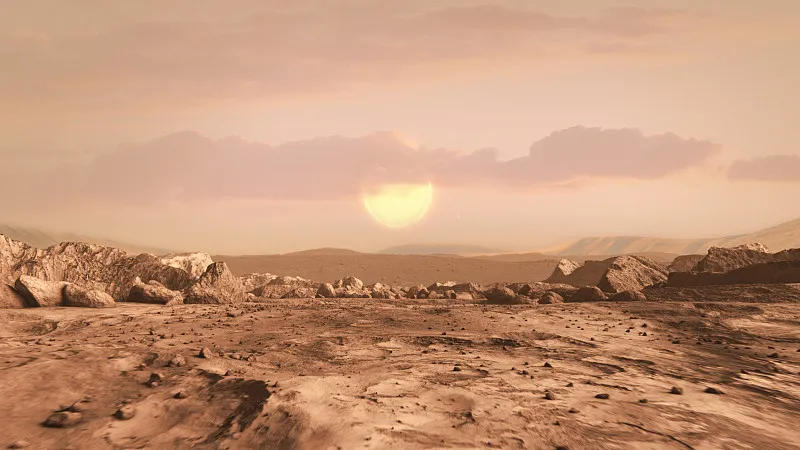
It has valleys, canyons, volcanoes, polar ice caps, dunes, ancient river-like features, and landscapes that look strangely recognizable. Yet it is also dry, cold, thin-aired, and hostile to human life. This combination makes Mars feel like a world that once had a different story.
Scientific missions have found strong evidence that ancient Mars was once wetter and warmer than it is today, with conditions that may have been more favorable for life. That turns Mars into one of the most important questions in the solar system.
If Mars was once more Earth-like, what happened?
Where did its water go? Why did its atmosphere thin? Could it once have supported microbial life? And what does its history teach us about planetary survival?
Exploring Mars Is a Search for Life’s Bigger Story
One of the deepest reasons humans explore Mars is the search for signs of life.
This does not mean scientists expect forests, animals, cities, or movie-like aliens. The more realistic question is quieter but even more profound: did microbial life ever exist on Mars?
If Mars once had water, chemistry, energy, and a more favorable environment, then it may have had some of the ingredients needed for life. Searching for ancient biosignatures is not only about Mars. It is about understanding whether life is rare or common in the universe.
The Life Question
If life once appeared on Mars, then life may not be a miracle limited to Earth. If it never appeared there, Earth may be even more precious than we already believe.
Either answer would change how we understand ourselves. Mars may tell us whether life is a lonely exception or part of a larger cosmic pattern.
Mars Preserves Clues That Earth Has Lost
Earth is alive with change. Plate tectonics, oceans, weather, volcanoes, erosion, and living organisms constantly reshape its surface. This makes Earth beautiful, but it also means many ancient records have been erased or transformed.
Mars, by comparison, may preserve certain ancient planetary records more clearly. Its rocks and landscapes can act like pages from an old book about the early solar system.
NASA’s Perseverance rover is exploring Jezero Crater, a location scientists believe once had water and may preserve signs of an environment that was friendly to life in the distant past. Its work includes studying rocks, looking for possible signs of ancient microbial life, and collecting samples that may one day be returned to Earth for detailed study.
What Martian Rocks May Help Us Understand
Water History
How water once shaped Martian landscapes, minerals, and possible habitable environments.
Climate Change
Why a planet that may once have been wetter became the cold and dry world we see today.
Possible Life Clues
Whether ancient environments left chemical, mineral, or structural hints related to life.
Mars Helps Us Understand Earth’s Fragility
Some people worry that space exploration pulls attention away from Earth. But Mars often does the opposite. It makes Earth feel more precious.
Mars today is cold, dry, and wrapped in a thin atmosphere. Its surface is not friendly to unprotected human life. When we study Mars, we see what a planet can lose: a thicker atmosphere, stable surface water, and an environment that may once have been more hospitable.
Earth’s oceans, breathable air, magnetic protection, climate balance, soil, forests, and living systems are not ordinary features of every world. They are part of an extraordinary planetary condition that allows life to flourish.
Earth Reflection
Mars is not a replacement for Earth. It is a reminder that a living planet is not something to take for granted.
Mars Exploration Pushes Technology Forward
Exploring Mars is not only a scientific challenge. It is also an engineering challenge.
How do you send a spacecraft across millions of miles? How do you land safely on a planet with a thin atmosphere? How do you control a rover when signals take time to travel? How do you power machines through cold, dust, distance, and uncertainty? How would future astronauts produce water, oxygen, food, shelter, and return capability far from Earth?
These questions are difficult, and that difficulty is part of their value. To reach Mars, humans must invent better systems.
Technologies Mars Exploration Encourages
Robotics and Autonomy
Rovers and landers must make decisions and operate in environments where humans cannot directly intervene in real time.
Communication and Navigation
Deep-space missions require precise navigation, reliable communication, and careful planning across enormous distances.
Life Support and Resource Use
Future human missions will depend on air, water, food, energy, radiation protection, and systems that work far from home.
Not every space technology immediately changes ordinary life. But the process of solving hard problems often creates knowledge, tools, and methods that spread into wider scientific and engineering fields.
Mars Is a Training Ground for Deep-Space Exploration
If humans are ever going to explore farther into the solar system, Mars is one of the great training grounds.
The Moon is closer and useful for testing technologies, operations, and long-term living beyond Earth. Mars is a much harder step. It requires longer travel, greater independence, more complex return planning, slower communication, stronger life-support systems, and deeper psychological endurance.
A human mission to Mars would not be a simple journey. It would test medicine, psychology, engineering, food production, radiation protection, closed-loop habitats, emergency response, and teamwork under isolation.
Becoming a spacefaring civilization will not happen through slogans.
It will happen through patient testing, repeated failures, better systems, and a growing ability to live responsibly beyond Earth.
Mars Teaches Patience in an Impatient Age
There is something beautiful about Mars exploration because it is slow.
A spacecraft takes months to reach Mars. Signals are not instant. A rover’s route may be planned carefully over rough terrain. A single rock sample can represent years of planning and decades of future scientific hope.
This is very different from the speed of modern life. We are used to instant replies, instant results, instant entertainment, and instant opinions. Mars does not work that way.
A Lesson From Mars
Some of the most important questions cannot be answered quickly. They require patience, careful evidence, and the humility to wait for truth.
Mars Lives in Human Imagination
Mars is not only a scientific destination. It is also a cultural symbol.
It is the red point in the night sky, the name of an ancient god, the setting of novels and films, the dream of astronomers, the challenge of engineers, and the distant world that ordinary people imagine when they look upward.
Mars holds our imagination because it is positioned at the edge of possibility. It is not as unreachable as another star, but not as familiar as Earth orbit. It is far enough to inspire awe and near enough to feel like one day we might truly stand there.
Mars is both real and symbolic.
It is a physical planet made of rock and dust, but it also represents the human need to keep asking what lies beyond the next horizon.
Mars Should Not Become an Excuse to Neglect Earth
A mature conversation about Mars must also include caution.
Mars should not be treated as an easy backup planet. It is an extremely harsh environment. Even if future humans build bases there, that would not mean we can abandon Earth’s climate, ecosystems, oceans, forests, or communities.
Exploring Mars should deepen our sense of responsibility, not weaken it. It should remind us that habitable worlds are rare and fragile, and that technology without humility can become dangerous.
Responsible Exploration
We should explore Mars to expand knowledge, not to excuse carelessness toward Earth.
In the End, Exploring Mars Is Also Exploring Ourselves
Mars is a planet. But the act of exploring Mars also reveals something about humanity.
Why do we spend decades studying a distant world? Why do we send robots across barren plains? Why does a photo of Martian rocks excite scientists? Why do people cheer when a rover lands safely? Why does the question of ancient life matter so much?
Because humans are not only a survival species. We eat, build, work, trade, protect, and struggle. But we also look upward. We ask why. We wonder where life began, how far it reaches, and whether consciousness is alone in the dark.
The Questions Behind Mars Exploration
Origin
How common are the conditions that allow life to emerge?
Future
Can humans learn to live beyond Earth without losing responsibility for Earth?
Identity
Are we alone, or are we part of a larger story of life in the universe?
Final Thoughts
Why do humans explore Mars?
Because Mars holds secrets about planetary evolution. Because it may once have had environments where life could exist. Because it can help us understand Earth’s past and future. Because it pushes technology forward. Because it prepares us for deeper exploration. Because it forces us to think about life, civilization, responsibility, and our place in the universe.
Mars exploration is not a simple adventure. It is more like a letter written to the future. We send spacecraft, study rocks, analyze atmosphere, search for water, collect samples, design human missions, and wait for answers that may take decades to fully understand.
Mars is far away, but the questions it asks are close to us.
How should we protect our own planet? How should we use technology without becoming arrogant? How should we understand life in a universe so large? How can exploration become not conquest, but a deeper form of learning?
Perhaps the true meaning of exploring Mars is not proving that humans can leave Earth. Perhaps it is this: when we finally look closely at another world’s silence, dust, and emptiness, we understand more deeply how precious Earth’s blue oceans, breathable air, forests, life, and ordinary mornings really are.
Final Reflection: Mars is not only a destination in space. It is a question placed in the sky, asking humanity whether curiosity, wisdom, and responsibility can grow together.