
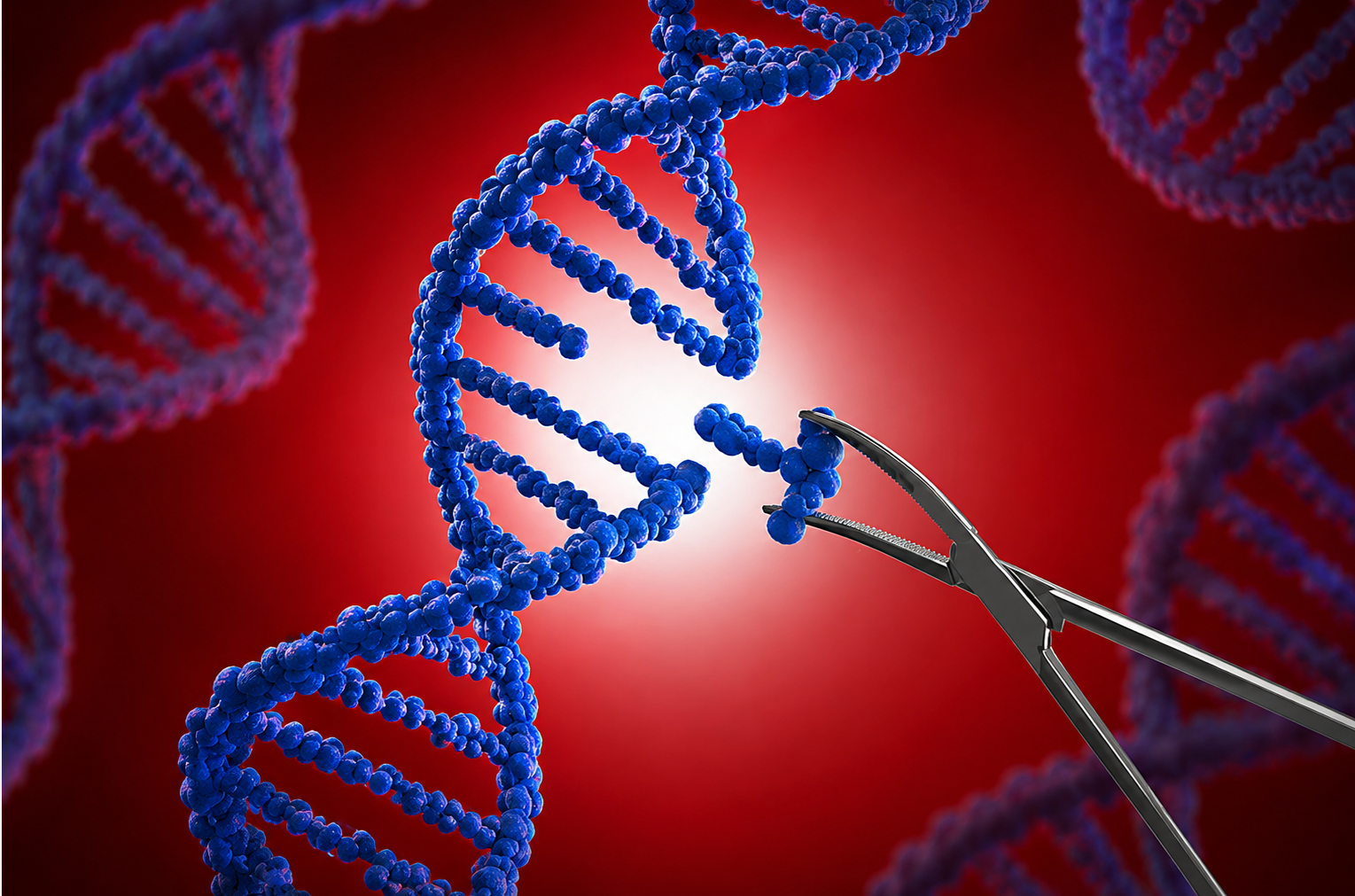
The Future of Gene Editing: Curing Disease or Redesigning Humanity?
Article Summary: Gene editing gives scientists the ability to make targeted changes to DNA, opening the door to new ways of treating genetic disease, studying biology, and developing future therapies. But it also raises major ethical questions, especially when edits could affect future generations or be used for non-medical enhancement. The future of gene editing should not be framed as a simple choice between fear and progress. The real challenge is building a careful path where medical benefit, safety, fairness, consent, and human dignity remain at the center.
Gene editing sounds like something from a futuristic novel: find a mistake in the code of life, cut it, repair it, and change the outcome. For families affected by inherited diseases, that idea can feel deeply hopeful. For ethicists, doctors, and ordinary citizens, it can also feel unsettling. If we can change DNA, what exactly should we change?
The excitement is understandable. Many diseases begin with changes in genes. If scientists can correct or work around those changes, medicine may become more precise and more powerful. Instead of treating only symptoms, future therapies may target the biological source of a condition.
But the concern is also understandable. DNA is not just a technical system. It is connected to identity, family, inheritance, disability, inequality, and the meaning of human limits. Gene editing does not only ask, “What can science do?” It asks, “What kind of society do we want to become?”
The Gene Editing Crossroads
Therapeutic Path
Treat serious disease
Use gene editing to reduce suffering, repair harmful mutations, or create better treatments for medical conditions.
Enhancement Path
Redesign human traits
Use editing to influence traits such as appearance, strength, intelligence, or other non-medical preferences.
What Gene Editing Actually Does
Gene editing refers to technologies that allow scientists to make specific changes to DNA. DNA carries instructions that help cells build proteins and perform biological functions. When those instructions contain harmful changes, they can contribute to disease. Gene editing aims to add, remove, disable, or alter genetic material in a targeted way.
CRISPR is the best-known gene-editing tool, partly because it made targeted editing more accessible to researchers. It is often described as a kind of molecular editing system, although that metaphor can be too simple. Editing DNA is not like correcting a typo in a word processor. Cells are living systems, and biological outcomes can be complex.
The key point is that gene editing gives researchers a level of control that previous generations of medicine did not have. Instead of only responding to disease after it appears, gene editing raises the possibility of changing the underlying biological instructions. That is both the promise and the reason for caution.
The Hope: Treating Disease at Its Source
The strongest moral case for gene editing is medical. Some diseases are caused or strongly influenced by genetic changes that lead to severe pain, disability, early death, or lifelong treatment. If gene editing can safely reduce or correct the biological cause of such conditions, it may transform lives.
This is why many researchers, patients, and families see gene editing as more than a technical breakthrough. For them, it represents the possibility of fewer hospital visits, less suffering, and a future that once seemed impossible. In that context, the word “editing” is not about designing a perfect person. It is about repairing something harmful.
Still, even therapeutic use requires caution. A treatment must be tested carefully. Long-term effects matter. Access matters. Cost matters. A technology that can help people should not become available only to the wealthiest families or countries.
Important Medical Note
Gene editing is a medical and scientific field that requires professional oversight, clinical testing, and regulatory review. This article is for general education and should not be read as medical advice.
The Boundary: Somatic Editing vs. Germline Editing
One of the most important distinctions in gene editing is the difference between somatic editing and germline editing. Somatic editing targets cells in the body that are not passed on to future generations. For example, editing blood cells to treat a blood disorder would affect the treated person, not their future children.
Germline editing is different. It involves changes that could be inherited by future generations, such as edits made to embryos, eggs, sperm, or cells that would contribute to reproduction. This raises much deeper ethical questions because future people cannot consent, and the effects may travel through families over time.
This boundary is central to the debate. Treating a patient who is already alive is one kind of decision. Changing the genetic inheritance of future generations is another.
Two Types of Human Gene Editing
Somatic Editing
Affects the treated person
Usually discussed as a medical therapy. The edit is not meant to be inherited by future children.
Germline Editing
May affect future generations
Raises deeper questions about consent, inheritance, safety, social pressure, and human identity.
The Fear: From Healing to Enhancement
Most people are more comfortable with gene editing when the goal is to treat serious disease. The debate becomes harder when the goal shifts toward enhancement. What if editing is used not to prevent illness, but to influence height, appearance, athletic ability, memory, or other traits people consider desirable?
At first, enhancement may sound like personal choice. If a parent wants the best for a child, why not use technology to improve the child’s future? But this question becomes complicated quickly. What counts as improvement? Who defines it? Would children be accepted only if they meet certain genetic expectations? Would society become less tolerant of difference?
Many traits are also influenced by many genes and by environment. Intelligence, personality, talent, and health are not controlled by simple switches. The idea of designing a perfect human often ignores biological complexity and social consequences.
Safety Is Not a Minor Detail
In public discussions, gene editing is sometimes described as if scientists simply cut out a bad gene and replace it with a good one. Real biology is not that clean. DNA functions inside living cells, and genes interact with one another, with development, and with the environment.
Safety concerns include unintended edits, incomplete editing, immune reactions, delivery challenges, unknown long-term effects, and the possibility that changing one biological pathway may affect another. These concerns do not mean gene editing should be abandoned. They mean careful research and regulation are essential.
The safety standard should be especially high when edits could affect future generations. A mistake in one patient is serious. A mistake passed down through reproduction raises an entirely different level of responsibility.
Safety Reminder
The question is not only whether an edit can be made. The question is whether it can be made safely, predictably, ethically, and with enough evidence to justify its use.
Fairness May Become the Hardest Question
Even if gene editing becomes safer and more effective, another question remains: who gets access? Advanced medical technologies are often expensive at first. If gene editing therapies are available only to wealthy families or wealthy countries, they could deepen existing inequalities.
The fairness problem becomes even sharper if gene editing moves toward enhancement. Imagine a world where some children are genetically modified for perceived advantages while others are not. Education, wealth, healthcare, and social opportunity are already unequal. Genetic technology could add a new layer to that inequality.
This is why the future of gene editing cannot be left only to laboratories and markets. Public policy, global cooperation, patient voices, disability advocates, ethicists, and communities all need a place in the conversation.
The Fairness Test
Access
Can patients who need treatment actually receive it, or only those who can afford it?
Representation
Are diverse populations included in research, policy, and safety evaluation?
Pressure
Could families feel forced to edit children to keep up with social expectations?
Human Dignity
Does the technology respect people as they are, rather than treating some lives as less acceptable?
Disability, Difference, and the Meaning of “Better”
Gene editing conversations often use words like cure, prevention, improvement, and normal. These words can be helpful, but they can also hide assumptions. Many disability advocates remind us that people are not defined only by medical diagnosis. A society can reduce suffering while still respecting people with disabilities as full, valuable human beings.
This does not mean treatment is wrong. Many people living with serious genetic conditions actively want better therapies. The point is that medical progress should not become a message that some lives are less worthy. There is a difference between fighting disease and rejecting human difference.
A mature gene-editing future must hold both truths at once: suffering should be reduced where possible, and human worth should never depend on genetic perfection.
“The goal should be less suffering, not less diversity.”
Gene editing will be judged not only by what it can change in DNA, but by whether it helps build a society that is healthier, fairer, and more humane.
Why Governance Cannot Wait Until the Technology Is Perfect
Some people argue that society should wait until gene editing becomes more advanced before having difficult ethical debates. But that is risky. Once a technology becomes widely available, it becomes harder to shape its direction. Governance needs to develop alongside science, not after it.
Good governance does not mean stopping all research. It means creating clear rules, oversight, transparency, public discussion, safety standards, and consequences for irresponsible use. It also means recognizing that gene editing is a global issue. A decision made in one country can affect international trust and scientific norms everywhere.
The future of gene editing should not be shaped only by the fastest actors or the richest markets. It should be guided by public values as well as scientific capability.
The Future May Be More Ordinary Than Science Fiction
Public imagination often jumps to designer babies, superhumans, or a world where parents choose every trait. Those fears are not meaningless, but the near-term future of gene editing may be more medical and less cinematic. Many researchers are focused on treating specific diseases, improving delivery methods, reducing side effects, and making therapies more accessible.
That ordinary work matters. It may not look dramatic, but it is where real progress happens: one disease, one mechanism, one clinical trial, one safety question, one patient group at a time. Responsible science is often slower than public imagination.
The danger is not only that science may go too far. It is also that public discussion may become too shallow. We need a conversation that avoids both blind fear and blind optimism.
A More Realistic Future Timeline
Near term: Better therapies
More research into specific diseases, delivery systems, safety, and clinical outcomes.
Middle term: Access and cost debates
Society must decide how advanced therapies can reach more people fairly.
Long term: Harder ethical boundaries
Questions around heritable editing, enhancement, and human identity may become more urgent.
A Better Question Than “Should We Edit Humans?”
The question “Should we edit humans?” is too broad to be useful. A better question is: under what conditions, for what purpose, with what evidence, with whose consent, and with what social safeguards?
Editing a patient’s cells to treat a severe disease is not the same as editing an embryo for preferred traits. Studying cells in a lab is not the same as creating heritable changes. Using gene editing as a last-resort medical therapy is not the same as selling enhancement to the highest bidder.
Careful distinctions matter. Without them, society either panics at every use of gene editing or accepts every use as progress. Neither reaction is wise.
Better Public Debate
The future of gene editing should be judged case by case. Purpose, safety, consent, inheritance, access, and social impact all matter.
Final Thoughts
Gene editing may become one of the most important medical tools of the future. It could help treat diseases that have caused suffering for generations. It could deepen our understanding of biology and give doctors new ways to intervene before damage becomes irreversible.
But gene editing also forces humanity to face questions that are larger than medicine. What counts as a disease? What counts as improvement? Who gets access? Who gives consent? How do we protect future generations? How do we avoid turning human diversity into a problem to be corrected?
The future should not be built on fear, but it should not be built on excitement alone either. The best path is careful progress: use gene editing to reduce suffering where evidence is strong, keep heritable editing under strict ethical scrutiny, reject shallow dreams of genetic perfection, and make fairness part of the design from the beginning.
Final Reminder: Gene editing is powerful because it touches the code of life. Its highest purpose should be to heal, not to create a narrow idea of human perfection. The future of this technology will depend not only on what scientists can edit, but on what society has the wisdom to protect.