Why Nuclear Fusion Energy Is Called an “Artificial Sun”
Fusion Energy
Science Explained
Article Summary: Nuclear fusion energy is often called an “artificial sun” because it tries to use the same basic energy principle that powers the Sun: light atomic nuclei combine and release energy. On Earth, scientists do not build a tiny Sun in the ordinary sense. Instead, they create extremely hot plasma and try to control fusion reactions using advanced machines, magnetic fields, lasers, materials, cooling systems, and precise engineering. The phrase “artificial sun” is vivid, but the real story is more interesting: fusion is not magic sunlight in a bottle. It is one of humanity’s hardest attempts to turn a star-like physical process into a safe, reliable energy source.
The phrase “artificial sun” sounds almost like science fiction. It brings to mind a glowing sphere, a miniature star, or a machine that somehow captures sunlight and keeps it burning indoors. That image is dramatic, but it is not exactly what fusion scientists are building.
Nuclear fusion energy is called an artificial sun because it borrows the Sun’s core idea: energy can be released when light atomic nuclei join together. The Sun does this naturally under enormous pressure and temperature. On Earth, we try to recreate the essential reaction under controlled conditions, but with machines instead of gravity.
This is why the phrase is both useful and incomplete. It helps people understand fusion quickly, but it can also make the technology sound simpler than it really is. Building fusion energy is not just copying the Sun. It is learning how to control one of the most powerful processes in nature inside a human-made system.
The Name “Artificial Sun” Comes From One Shared Principle
In the Sun
Gravity does the holding
The Sun’s immense mass creates pressure and temperature that allow fusion to continue naturally.
same basic reaction idea
In a Fusion Device
Engineering does the holding
Machines use plasma control, magnetic fields or lasers, and advanced materials to create conditions for fusion.
What Fusion Actually Means
Nuclear fusion is the process in which light atomic nuclei combine to form a heavier nucleus. When this happens, a small amount of mass is converted into energy. That energy can appear as the motion of particles, heat, and radiation depending on the reaction.
The basic idea is simple enough to describe, but extremely hard to achieve. Atomic nuclei are positively charged, so they naturally repel one another. To make them fuse, they must come close enough for the strong nuclear force to take over. That usually requires extreme temperature, pressure, or confinement.
This is where plasma enters the story. At very high temperatures, matter becomes a hot, charged gas made of ions and free electrons. Plasma is sometimes called the fourth state of matter. It is not a normal flame, and it is not ordinary gas. It behaves in ways that require careful control.
Why the Sun Can Do It Naturally
The Sun is a massive natural fusion reactor, but not because it is simply “hot.” Its size matters. The Sun’s gravity squeezes its core with enormous pressure. That pressure, combined with high temperature, allows hydrogen nuclei to fuse over time and release energy.
The energy produced in the Sun’s core eventually makes its way outward and reaches Earth as sunlight. Every warm afternoon, every plant using photosynthesis, and every solar panel receiving light is connected to this fusion process happening far away.
On Earth, we do not have the Sun’s gravity. That is the central challenge. We cannot simply place fuel in a container and expect it to fuse. We must create the right conditions artificially and hold them long enough for useful fusion reactions to happen.
Simple Explanation
The Sun uses gravity to keep fusion going. Fusion devices on Earth must use technology to replace what gravity does naturally in a star.
How Scientists Try to Build an “Artificial Sun” on Earth
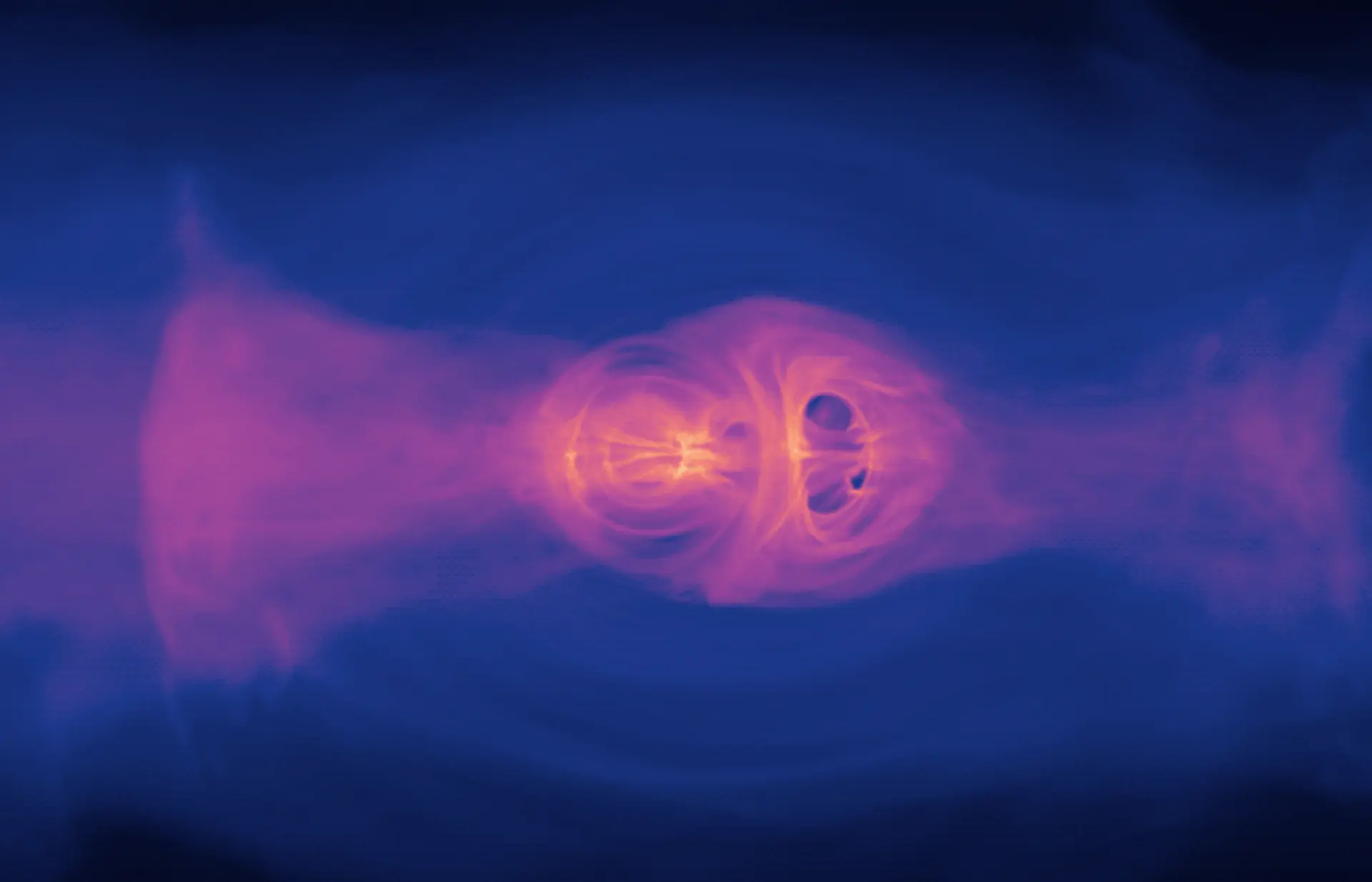
The phrase artificial sun usually refers to fusion devices that heat fuel into plasma and try to control it long enough for fusion to occur. There are several approaches, but two are especially well known: magnetic confinement and inertial confinement.
Magnetic confinement uses powerful magnetic fields to hold hot plasma away from the walls of the machine. The most famous design is the tokamak, a doughnut-shaped device that tries to keep plasma stable as it moves around the chamber. Another design, the stellarator, uses more complex magnetic geometry to control plasma in a different way.
Inertial confinement works differently. It uses powerful lasers or other drivers to compress a tiny fuel target very rapidly, creating conditions where fusion can occur for a brief moment. Instead of holding plasma for a longer time, it creates a very intense event in a very small space.
Two Main Roads Toward Fusion Energy
Magnetic Confinement
Uses magnetic fields to guide and contain extremely hot plasma. Tokamaks and stellarators belong to this family.
Inertial Confinement
Compresses tiny fuel targets very quickly, often using powerful lasers, to trigger fusion conditions for a short moment.
Why Fusion Needs Such Extreme Temperatures
The most surprising fact about fusion is that a fusion device on Earth may need temperatures far hotter than the center of the Sun. This sounds strange until we remember the missing ingredient: the Sun has enormous gravitational pressure, while a machine on Earth does not.
To make nuclei collide and fuse often enough, scientists must push the fuel into an extreme state. High temperature gives particles enough energy to move rapidly. Confinement keeps them together long enough. Density also matters because fusion depends on how often particles meet.
Fusion is therefore not only about heat. It is a three-part challenge: heat the plasma, confine it, and keep it stable. If any one of these fails, the reaction becomes too weak or too short to be useful for energy production.
The Fuel: Why Deuterium and Tritium Are Often Mentioned
Many fusion experiments focus on two forms of hydrogen: deuterium and tritium. Deuterium exists naturally and can be found in water. Tritium is rarer and must be carefully produced, handled, and managed. When deuterium and tritium fuse, they can release a large amount of energy compared with the tiny amount of fuel involved.
This fuel choice is one reason fusion is so attractive. The amount of fuel needed is small, and the energy density is high. But fuel is still part of the engineering challenge. A future fusion power plant would need a reliable way to produce and recycle tritium, manage materials exposed to energetic particles, and convert fusion energy into electricity.
In other words, the fuel story is promising but not effortless. Fusion has extraordinary potential, but that potential depends on solving many connected systems, not only making a reaction happen.
Clear Distinction
Achieving a fusion reaction is not the same as building a practical fusion power plant. A power plant must produce energy reliably, safely, repeatedly, and economically.
Why Fusion Is Seen as a Promising Energy Source
Fusion attracts attention because it offers a vision of large-scale energy with very low carbon emissions during operation. It does not burn fossil fuels. Its fuel requirements are small compared with chemical fuels. It also does not work like a conventional nuclear fission reactor, where heavy atoms split apart.
Another reason people are excited about fusion is safety. Fusion reactions are difficult to maintain. If the plasma cools or becomes unstable, the reaction stops. This is very different from the image of an uncontrolled artificial sun burning endlessly. In practice, keeping fusion going is the hard part.
Still, fusion should not be described as a perfect energy source with no challenges. It involves radiation management, materials damage, tritium handling, cost, complexity, and large engineering systems. A realistic discussion should recognize both the promise and the difficulty.
Why It Is So Hard to Turn Fusion Into Electricity
People sometimes hear about successful fusion experiments and wonder why fusion power plants are not already everywhere. The reason is that producing fusion energy for a short experiment is not the same as producing electricity for a city, day after day, at a competitive cost.
A practical fusion plant must do many things at once. It must create plasma, keep it stable, protect the machine from heat and particle damage, produce or supply fuel, capture energy, convert heat into electricity, maintain safety systems, and operate reliably. Each part is difficult. Combining all parts is even harder.
This is why fusion has often been described as a technology of great promise and great patience. Progress is real, but it moves through experiments, prototypes, failures, redesigns, and gradual improvements.
From Fusion Reaction to Useful Electricity
Reaction
Nuclei fuse and release energy inside a controlled environment.
Capture
The machine must absorb and manage the energy safely.
Conversion
Heat must be converted into electricity through power systems.
Reliability
The entire system must work repeatedly, safely, and economically.
Why Fusion Is Different From Fission
Fusion and fission are both nuclear processes, but they are not the same. Fission splits heavy atomic nuclei, such as uranium, into smaller nuclei. Fusion combines light nuclei into heavier ones. Both can release energy, but they involve different fuels, reactor designs, waste profiles, safety behavior, and technical challenges.
This distinction matters because many people hear the word “nuclear” and immediately think of existing nuclear power plants. Fusion belongs to the nuclear family, but its reaction mechanism is closer to what happens in stars than to what happens in today’s fission reactors.
That does not mean fusion has no safety or environmental questions. It means those questions are different. A careful public conversation should avoid both fear-based confusion and unrealistic hype.
Why the Phrase “Artificial Sun” Can Be Misleading
The phrase artificial sun is memorable, but it can create the wrong image. A fusion reactor is not a burning star inside a building. It does not shine like the Sun in the sky. It is a carefully controlled energy system designed to create and manage plasma conditions where fusion can occur.
The phrase also makes fusion sound like a finished technology, when in reality commercial fusion power is still a major scientific and engineering goal. Experiments have made important progress, but building practical fusion power plants remains one of the hardest energy challenges.
A better way to understand the phrase is this: fusion energy is called an artificial sun because it imitates the Sun’s energy source, not because it recreates the Sun itself.
What “Artificial Sun” Means — and Does Not Mean
It Means
Humans are trying to use a star-like fusion process to produce energy under controlled conditions.
It Does Not Mean
Scientists are placing a miniature Sun on Earth or creating an uncontrolled ball of fire.
Why Fusion Still Inspires People
Fusion inspires people because it sits at the edge of what humans can imagine and build. It connects the physics of stars with the practical needs of energy systems. It asks engineers to control plasma hotter than anything found in ordinary life. It asks scientists to understand matter under extreme conditions. It asks society to think about energy beyond fossil fuels.
It also inspires because it is difficult. Easy problems rarely change civilization. Fusion is not a quick fix for today’s energy problems, and it should not be used as an excuse to delay renewable energy, efficiency, storage, or grid improvements. But difficult long-term research still matters.
If fusion succeeds at scale, it could become part of a cleaner and more resilient energy future. If it takes longer than expected, the research still deepens our knowledge of plasma physics, materials, superconducting magnets, lasers, control systems, and high-performance engineering.
Fusion is not just an energy project. It is a patience project.
It reminds us that some technologies require decades of science, engineering, failure, redesign, and public trust before they can become part of everyday life.
Final Thoughts
Nuclear fusion energy is called an artificial sun because it tries to use the same basic process that powers the Sun: light nuclei combine and release energy. But the phrase should be understood carefully. A fusion device is not a small star sitting on Earth. It is a highly engineered system designed to create, control, and use plasma under extreme conditions.
The dream is powerful because the potential is large: low-carbon energy, small fuel amounts, and a process rooted in the physics of stars. The challenge is equally large: plasma stability, materials, fuel cycles, energy capture, cost, and reliable operation all have to work together.
That is what makes fusion one of the most fascinating scientific projects of our time. It is not just about making energy. It is about whether humans can learn to control a star-like process with enough care, precision, and responsibility to make it useful on Earth.
Final Reminder: Fusion is called an “artificial sun” because it follows the Sun’s energy principle, not because it copies the Sun completely. The name is poetic, but the science is real: create plasma, make nuclei fuse, capture the energy, and turn one of nature’s most powerful reactions into a practical human energy source.