Deep Learning vs. Surface Learning: Why Some Knowledge Stays and Some Disappears
Not all studying leads to real understanding. Some learning helps you pass a short quiz and then fades quickly. Other learning changes the way you think, solve problems, and connect ideas. The difference often comes down to whether you are learning on the surface or learning deeply.
Education Topic
Article Summary: Deep learning and surface learning are two very different ways of approaching knowledge. Surface learning focuses on memorizing facts, copying answers, and doing just enough to get through a task. Deep learning focuses on understanding meaning, connecting ideas, asking questions, applying concepts, and reflecting on mistakes. Surface learning may work for short-term recall, but it often fails when students need to explain, solve unfamiliar problems, or use knowledge in real life. Deep learning takes more effort, but it builds stronger memory, better judgment, and more flexible thinking.
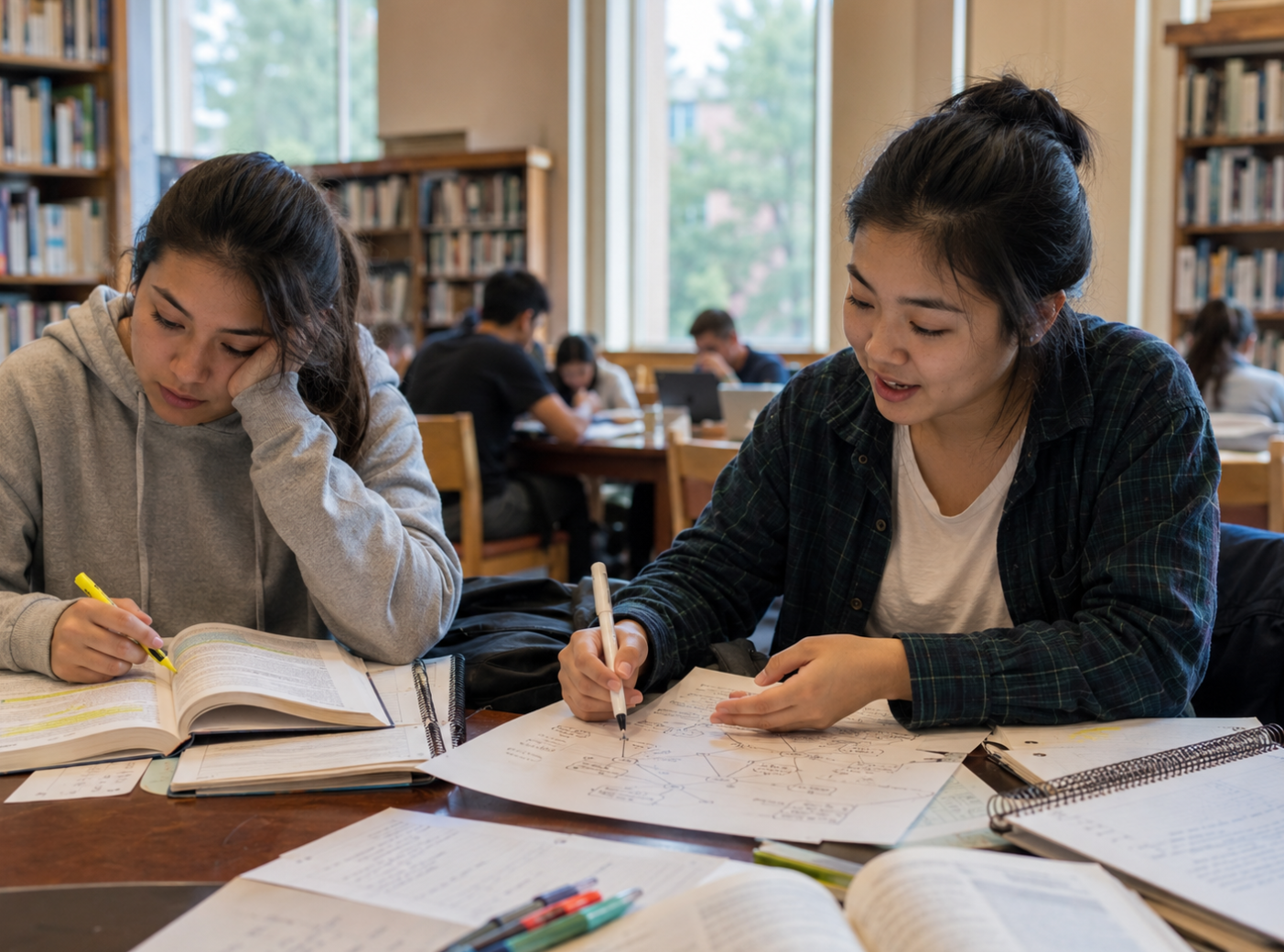
Imagine two students preparing for the same exam. One student reads the textbook several times, highlights long sections, memorizes definitions, and hopes the questions look familiar. The other student also reads the material, but then closes the book, explains the ideas in their own words, compares examples, asks why certain answers work, and tries to solve unfamiliar problems.
Both students may look busy. Both may spend hours studying. But they are not doing the same kind of learning. One is mostly staying close to the surface of the material. The other is building a deeper relationship with the ideas.
This difference matters because school is not only about remembering information for a few days. Real education should help students understand, question, apply, and transfer knowledge. A student who only memorizes may do well when the task is predictable. But when the question changes, the situation becomes unfamiliar, or the problem requires judgment, surface learning begins to show its limits.
What Is Surface Learning?
Surface learning is a study approach focused mainly on the outer layer of information. Students try to remember words, formulas, dates, definitions, or steps without fully understanding the meaning behind them. It is often driven by short-term goals: finishing homework, passing a quiz, or avoiding failure.
Surface learning is not always useless. There are moments when memorization matters. Vocabulary, formulas, historical dates, and basic facts can all be necessary. The problem begins when memorization becomes the whole strategy. A student may know the definition of a concept but still be unable to explain it, apply it, or recognize it in a new situation.
Surface learning often feels easier because it does not require much struggle at first. Rereading notes, copying answers, or highlighting paragraphs can create a sense of progress. But that progress may be fragile. The student may feel prepared while the material is in front of them, then feel lost when they need to recall or use it independently.
A Simple Warning Sign
If you can recognize an answer but cannot explain it without looking, you may be relying more on surface learning than deep learning.
What Is Deep Learning?
Deep learning, in an education context, is not the same as deep learning in artificial intelligence. Here, deep learning means learning for understanding. It happens when students look for meaning, connect new knowledge with what they already know, ask questions, test ideas, and apply concepts beyond the original example.
A student using deep learning does not only ask, “What is the answer?” They ask, “Why is this the answer?” “How does this idea connect to another topic?” “Where could this be used?” “What would happen if the situation changed?” These questions move learning from memory into understanding.
Deep learning usually feels slower at the beginning. It takes more effort to explain an idea than to copy a definition. It takes more patience to analyze a mistake than to check the correct answer. But this extra effort is what makes the learning stronger. The student is not just storing information; they are building a usable mental structure.
The Learning Depth Ladder
Recognize
“I have seen this before.” This is the shallowest level.
Recall
“I can remember it without looking.” This is stronger than recognition.
Explain
“I can explain it in my own words.” This is where deeper learning begins.
Apply and Transfer
“I can use it in a new situation.” This is the strongest sign of meaningful learning.
The Main Difference Is Not Effort, but the Type of Effort
Surface learners can work very hard. They may spend hours copying notes, rereading textbooks, or memorizing lists. The problem is not always laziness. The problem is that their effort may be aimed at short-term familiarity rather than long-term understanding.
Deep learners also work hard, but their effort is different. They try to make sense of the material. They pause when something feels unclear. They test themselves. They compare examples. They notice mistakes and ask what those mistakes reveal. They are not satisfied with simply seeing the answer; they want to know how the answer works.
Surface Learning Can Help in the Short Term, but It Has Limits
It would be unfair to say surface learning is always bad. Sometimes students do need to memorize basic information. You cannot analyze a poem if you do not understand its words. You cannot solve algebra problems if you do not know the symbols. You cannot discuss history if you have no sense of key events.
The issue is that surface learning should be a starting point, not the final goal. Memorized facts are useful when they support understanding. They become weak when students stop there.
A student may memorize a science definition and repeat it perfectly. But if they cannot give an example, recognize the concept in an experiment, or explain why it matters, the knowledge remains fragile. It may work for a short-answer question, but not for real understanding.
A Better Way to Think About Memorization
Memorize
Learn the key term, formula, date, or rule.
Understand
Explain what it means and why it works.
Use
Apply it in a problem, discussion, project, or new example.
Deep Learning Makes Knowledge More Flexible
The strongest advantage of deep learning is flexibility. When students learn deeply, they can use knowledge beyond the exact example they studied. They can explain ideas in different words, compare situations, detect patterns, and solve unfamiliar problems.
This matters because life rarely gives us problems in textbook format. A workplace task, a personal decision, a debate, or a creative project often requires connecting different pieces of knowledge. Deep learning prepares students for that kind of thinking.
For example, a student who memorizes a grammar rule may answer a worksheet correctly. A student who deeply understands the rule can use it when writing, notice it when reading, and explain why a sentence sounds natural or awkward. The second student has more than an answer. They have a usable tool.
How Deep Learning Spreads
From Facts
The student knows the basic information.
To Meaning
The student understands what the information means.
To Connection
The student links it to other ideas and examples.
To Transfer
The student can use it in new situations.
How to Tell Whether You Are Learning Deeply
One useful way to check your learning is to move beyond the question, “Did I study?” and ask, “What can I do with what I studied?” This small change reveals a lot. A student may spend two hours with a book open but still be unable to explain the chapter. Another student may study for less time but walk away with a clearer structure of the topic.
Deep learning usually leaves behind signs. You can summarize the idea without copying. You can give an example. You can compare it with a related concept. You can spot your own misunderstanding. You can answer a question that looks different from the practice example.
Deep Learning Checkpoint
Can I explain it?
Use your own words, not the textbook’s sentence.
Can I give an example?
Examples show whether the idea has meaning.
Can I compare it?
Compare it with a similar idea to see the difference.
Can I use it?
Apply it to a new question, problem, or situation.
Why Students Often Fall Back Into Surface Learning
Surface learning is common not because students are careless, but because school pressure often rewards speed. When students have too many assignments, too many exams, and too little time, they naturally look for the fastest path. Memorizing answers may feel safer than exploring ideas.
Fear also pushes students toward surface learning. If a student is afraid of failure, they may focus only on what they think will appear on the test. Curiosity becomes a luxury. The goal shifts from “I want to understand” to “I need to survive the next assessment.”
This is why teachers and parents matter. If students are only rewarded for correct answers, they may hide confusion. If they are also encouraged to ask questions, explain reasoning, revise mistakes, and make connections, deep learning becomes more likely.
Classroom Reminder
Students are more likely to learn deeply when the classroom values reasoning, questions, mistakes, and explanation—not only fast correct answers.
How Teachers Can Encourage Deep Learning
Teachers can support deep learning by designing tasks that require students to think beyond recall. Instead of asking only for definitions, teachers can ask students to explain causes, compare ideas, create examples, defend a choice, or apply a concept to a new case.
Feedback also matters. If feedback only says “right” or “wrong,” students may focus only on outcomes. If feedback points to reasoning, process, and improvement, students learn how to think more carefully. A good comment can help students see not just that they made a mistake, but why the mistake happened.
Teacher Design Shift
Ask students to repeat the definition.
→
Ask students to explain the definition with their own example.
Give only one type of practice question.
→
Mix related problem types so students must choose the method.
Mark answers as correct or incorrect.
→
Give feedback on reasoning, process, and next steps.
How Students Can Move From Surface Learning to Deep Learning
Students do not need to completely change their study habits overnight. A better approach is to add small deep-learning moves to the study habits they already have. After reading, pause and explain. After solving a problem, ask why that method worked. After making a mistake, write the cause. After memorizing a fact, connect it to an example.
These small actions change the quality of learning. They turn studying from a passive activity into an active process. Over time, the student becomes less dependent on memorized answers and more confident in their ability to think through unfamiliar material.
A Simple Deep Learning Routine
Read
Understand the basic idea first.
Explain
Say it in your own words.
Connect
Link it to another idea or example.
Apply
Use it in a new question or situation.
A Quick Comparison of Deep and Surface Learning
The difference between deep and surface learning becomes clearer when we compare their habits, goals, and results. Surface learning is often focused on getting through the task. Deep learning is focused on building understanding that can last and transfer.
Final Thoughts
Deep learning and surface learning are not just two study styles. They represent two different relationships with knowledge. Surface learning stays close to the answer. Deep learning moves toward meaning.
Surface learning may help students survive short-term tasks, especially when time is limited. But if education is meant to build lasting understanding, flexible thinking, and the ability to solve unfamiliar problems, then deep learning matters far more.
The good news is that deep learning is not a mysterious talent. It is a set of habits. Ask better questions. Explain ideas in your own words. Connect topics. Learn from mistakes. Apply knowledge in new situations. These habits slowly turn information into understanding.
Final Reminder: Surface learning asks, “Can I remember this for now?” Deep learning asks, “Do I understand this well enough to explain it, connect it, and use it?” The second question takes more effort, but it is the one that turns studying into real education.