
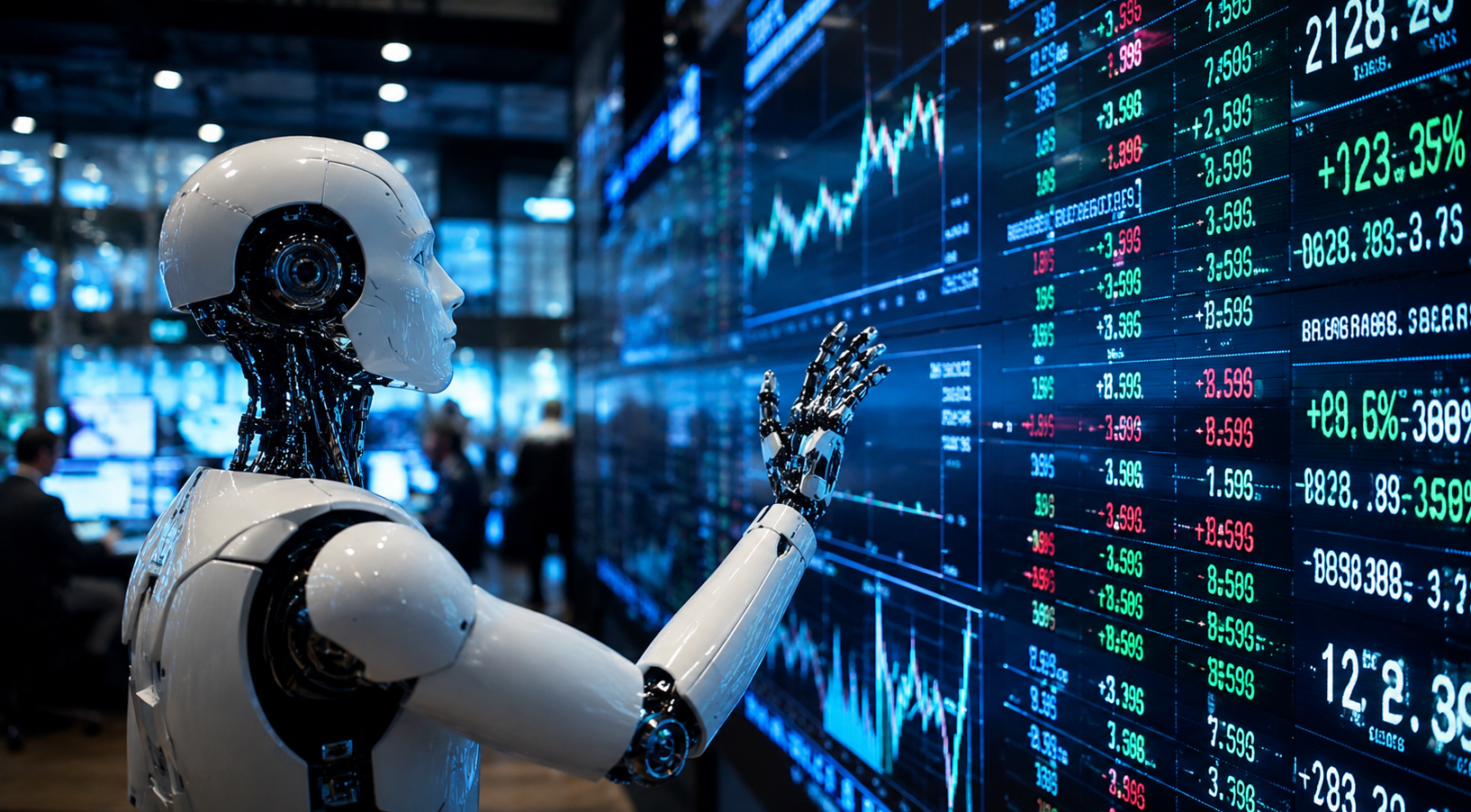
Trading Bots Explained: How Automated Trading Works, Where It Helps, and What Risks to Watch
Article Summary: Trading bots are automated software tools that can analyze market data, follow preset rules, and place trades faster than a human trader can. They are commonly used in cryptocurrency, stock, forex, and other financial markets to support strategies such as trend following, arbitrage, market making, scalping, and portfolio rebalancing. Their biggest advantages are speed, discipline, 24/7 operation, and the ability to remove some emotional decision-making. However, trading bots do not guarantee profits. They can lose money when strategies are poorly designed, market conditions change, technical errors occur, or users rely too heavily on automation. The best approach is to understand the bot, test strategies carefully, control risk, monitor performance, and treat automation as a tool rather than a shortcut to easy wealth.
Trading has always attracted people who want to move faster, read markets better, and act before opportunities disappear. In the past, that meant watching charts for hours, following price alerts, reading financial news, and making decisions manually. Today, a growing number of traders use software to do part of that work for them.
These tools are known as trading bots. A trading bot can monitor price movements, scan market data, follow trading rules, and place orders automatically. In fast-moving markets, especially cryptocurrency markets that run day and night, this kind of automation can feel extremely attractive.
But trading bots are often misunderstood. They are not magic profit machines. They do not know the future. They do not remove market risk. A bot simply follows instructions. If the instructions are strong and the market conditions are suitable, the bot may help execute a strategy more efficiently. If the strategy is weak, the settings are careless, or the market behaves unexpectedly, the bot can lose money very quickly.
That is why automated trading should begin with understanding, not excitement. Before using a trading bot, it is important to know how bots work, what strategies they can support, how to set them up safely, and what risks deserve serious attention.
What Is a Trading Bot?
A trading bot is a software program that uses rules, algorithms, and market data to place trades automatically. Instead of manually clicking buy or sell, the trader defines a strategy and allows the bot to execute based on that strategy. The bot may respond to price changes, technical indicators, volume patterns, arbitrage gaps, or other signals.
Most bots connect to an exchange or trading platform through an API, which stands for Application Programming Interface. This connection allows the bot to read account information, view market prices, and place trades according to the permissions granted by the user. API access is powerful, so it must be handled carefully.
In simple terms, a bot is like a tireless assistant. It can watch the market while you sleep, react faster than you can, and follow rules without getting nervous. But it has no common sense beyond what it has been programmed to do. If you give it poor rules, it will follow poor rules efficiently.
How Trading Bots Actually Work
A trading bot usually works through three basic steps: data collection, decision-making, and order execution. First, it collects market information such as price, volume, order book activity, historical trends, and technical indicators. Then it compares that information against the strategy rules. If the conditions match, it places a trade automatically.
For example, a simple bot might be programmed to buy when a moving average crosses above another moving average and sell when the opposite signal appears. A more advanced bot may consider volatility, liquidity, market depth, stop-loss rules, position sizing, and multiple timeframes before acting.
The appeal is speed and consistency. A human trader may hesitate, become distracted, or second-guess a trade. A bot does not hesitate. Once the signal appears, it executes. That discipline can be useful, but it can also be dangerous if the signal is unreliable.
Common Types of Trading Bots
Trading bots are not all the same. Some are designed for fast, short-term trading. Others focus on long-term rebalancing, price differences between exchanges, or market-making activity. Choosing the right type depends on your market, goals, experience level, and risk tolerance.
A trend-following bot may work well when the market is clearly moving upward or downward. But if prices keep moving sideways, the same bot may repeatedly enter and exit losing trades. An arbitrage bot may look smart in theory, but real trading fees, withdrawal delays, liquidity limits, and execution speed can make the opportunity smaller than it appears.
This is why the strategy matters more than the software alone. A polished interface does not automatically create profitable trading. The bot is only the engine. The strategy is the map.
Setting Up a Trading Bot: The Practical Steps
Setting up a trading bot usually begins with choosing a trading platform and bot provider. Some exchanges offer built-in automation tools, while others require third-party bot software. The right choice depends on the markets you trade, the assets you need, the strategies you want to use, and how comfortable you are with technical settings.
After choosing a platform, the next step is connecting the bot to your account, often through API keys. This step deserves careful attention. API permissions should be limited to only what the bot needs. In many cases, it is safer to disable withdrawal permissions so the bot can trade but cannot move funds out of the account.
Once connected, you configure the bot. This may include selecting trading pairs, position size, entry rules, exit rules, stop-loss settings, take-profit targets, maximum loss limits, and risk controls. Beginners should avoid rushing this stage. A small setting mistake can have real financial consequences.
Safety Reminder
When using API keys, grant only the permissions the bot truly needs. Avoid enabling withdrawals unless there is a specific, well-understood reason. A trading bot should not have more account access than necessary.
Why Backtesting Matters Before Using Real Money
Backtesting means testing a trading strategy on historical market data to see how it might have performed in the past. It is not a guarantee of future results, but it can reveal useful information. A strategy that fails badly in backtesting is usually not ready for real capital.
Good backtesting helps traders see win rate, drawdowns, average profit, average loss, losing streaks, and how the strategy behaves in different market conditions. It can also show whether a strategy depends too heavily on one unusual period of strong performance.
However, backtesting can be misleading if it is done carelessly. Historical results can look impressive when the strategy is overfitted, meaning it was adjusted too perfectly to past data. Markets change, and a strategy built only to look good in the past may fail in live trading.
The Main Benefits of Using Trading Bots
The first major benefit is speed. Markets can move quickly, and a bot can place trades much faster than a human can react. This is especially useful for strategies where timing matters, such as scalping, arbitrage, or fast-moving crypto markets.
The second benefit is consistency. Human traders can become emotional. Fear may cause them to exit too early. Greed may make them hold too long. Frustration may lead to revenge trading after a loss. A bot follows rules without emotion, which can help maintain discipline when the strategy is well-designed.
Another advantage is continuous operation. Cryptocurrency markets run 24/7, and even traditional markets can move quickly when news breaks. A bot can monitor conditions while the trader is working, sleeping, or away from the screen. That does not mean it should be ignored, but it can reduce the need for constant manual watching.
The Risks Traders Should Take Seriously
The biggest risk is believing that automation removes uncertainty. It does not. A trading bot can still lose money. It can follow a strategy into a bad market. It can execute too many trades during volatility. It can fail to adapt when conditions change. Automation makes trading faster, but faster is not always safer.
Technical problems are another concern. API errors, internet issues, exchange outages, software bugs, incorrect settings, and delayed data can all affect performance. A bot that works perfectly in testing may behave differently when real money and real market conditions are involved.
Security also matters. Some bot providers are legitimate and well-designed. Others may be unreliable, poorly secured, or even fraudulent. Traders should research the platform, read reviews carefully, understand the fee structure, and avoid giving unnecessary account access to unknown services.
Trading Bots and Risk Management
Risk management is the difference between using a bot as a tool and letting a bot gamble with your account. A bot should have clear limits. These may include maximum position size, maximum daily loss, stop-loss rules, take-profit targets, exposure limits, and restrictions on how many trades can be open at once.
Position sizing is especially important. Even a strategy with a high win rate can fail if one losing trade is too large. A bot should not be allowed to risk too much capital on a single trade or single market condition. Small losses are part of trading. Large uncontrolled losses can be account-changing.
It is also wise to start with paper trading or very small amounts before increasing exposure. Watching how a bot behaves in live conditions can teach more than reading a settings page. Real markets have slippage, spreads, delays, liquidity issues, and emotional pressure that backtests may not fully show.
How to Choose a Trading Bot Platform
A trading bot platform should be evaluated carefully. Do not choose one only because it promises high returns or has aggressive marketing. Look at its reputation, supported exchanges, security features, pricing, transparency, customer support, available strategies, backtesting tools, and user control over settings.
A good platform should make risks clear, not hide them. Be cautious with any service that guarantees profits, refuses to explain how strategies work, pressures users to deposit quickly, or asks for withdrawal permissions without a strong reason. In trading, guaranteed profits are a major warning sign.
Cost also matters. Some bots charge monthly subscriptions, performance fees, exchange fees, or strategy marketplace fees. A strategy that looks profitable before costs may become weak after fees are included. Always calculate trading expenses before judging performance.
When a Trading Bot May Be Useful
A trading bot may be useful if you already have a clear strategy and want to improve execution. It can help follow rules, reduce emotional decisions, monitor markets continuously, and manage repetitive tasks. For experienced traders, bots can be helpful tools for implementing disciplined systems.
Bots may also be useful for portfolio rebalancing. Instead of manually adjusting positions every time an allocation drifts, a bot can rebalance according to preset thresholds. This kind of automation is often less dramatic than high-speed trading, but it can support long-term portfolio discipline.
A bot may be less suitable for someone who does not understand the market, cannot evaluate risk, or expects instant profits. Automation should not be used to skip learning. If anything, it requires more responsibility because mistakes can happen faster.
Common Mistakes to Avoid
One common mistake is turning on a bot without understanding the strategy. If you do not know why the bot enters or exits trades, you will not know when the strategy is failing. Blind automation can be dangerous.
Another mistake is using too much capital too soon. A bot may perform well for a few days and then face a market condition it cannot handle. Starting small allows you to observe behavior without exposing too much money to early mistakes.
A third mistake is ignoring fees. Frequent trading can create significant costs. Exchange fees, spreads, slippage, and subscription fees can reduce returns. For scalping and high-frequency strategies, costs can make the difference between profit and loss.
Finally, many traders set up a bot and stop monitoring it. This is risky. Markets change, exchanges experience issues, and strategies can degrade. A bot should be reviewed regularly, especially during high volatility.
Final Thoughts
Trading bots can be powerful tools, but they are not automatic wealth machines. They can improve speed, consistency, discipline, and market coverage. They can also magnify mistakes, execute poor strategies quickly, and create losses when users rely on automation without understanding risk.
The smartest way to use a trading bot is to treat it as an assistant, not a replacement for judgment. Start with a clear strategy. Backtest carefully. Use limited permissions. Begin with small amounts. Monitor results. Adjust when market conditions change. Most importantly, never assume that past performance guarantees future profits.
Automated trading works best when paired with patience, risk control, and realistic expectations. If you understand what the bot is doing and why, automation can become a useful part of your trading toolkit. If you do not, it can become a fast way to make expensive mistakes.
Final Reminder: Trading bots can help automate execution, but they cannot remove market risk. Use them only with clear strategies, strict risk limits, secure API settings, careful testing, and regular monitoring. A bot should support your trading plan, not replace your understanding of the market.