Rosacea: Symptoms, Types, Triggers, Treatment Options, Skin Care Tips, and Long-Term Management
Article Summary: Rosacea is a chronic skin condition that commonly affects the face, causing flushing, visible blood vessels, sensitivity, burning, stinging, acne-like bumps, dry patches, enlarged pores, and sometimes eye irritation. It may look more obvious on lighter skin, but it can affect people of all skin tones and may be underdiagnosed in people with brown or Black skin because redness can be harder to see. The main types include erythematotelangiectatic rosacea, papulopustular rosacea, phymatous rosacea, and ocular rosacea. Although rosacea has no permanent cure, symptoms can often be managed with prescription creams, oral medicines, laser treatment, gentle skin care, sunscreen, trigger avoidance, and regular dermatology care.
Rosacea is often misunderstood because it can look like several other skin problems. Some people think they simply blush easily. Others mistake the bumps for acne, irritation, allergy, or a reaction to skin care products. Because symptoms come and go, it is also easy to ignore the early signs until the redness, sensitivity, or bumps become harder to control.
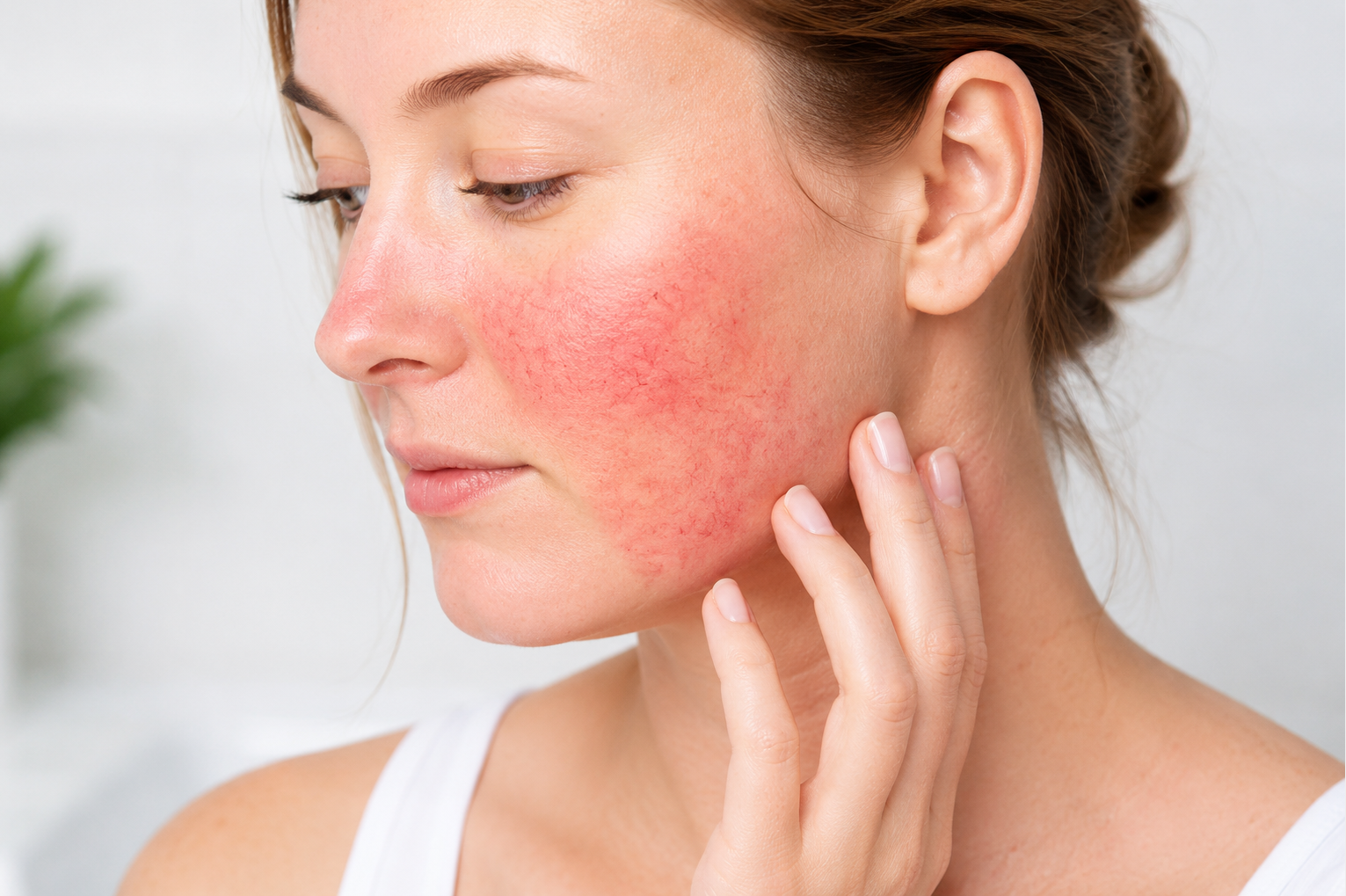
The condition most often appears on the cheeks, nose, chin, and forehead. For some people, it mainly causes flushing and visible tiny blood vessels. For others, it creates tender bumps, pus-filled spots, burning, dryness, or thickened skin. Rosacea can also affect the eyes, leading to redness, dryness, irritation, watery eyes, or eyelid bumps.
Rosacea is long-term, but it is manageable. The best results usually come from a combination of medical treatment and daily habits: identifying triggers, using gentle products, wearing sunscreen, avoiding harsh scrubs, and treating flare-ups before they become more severe.
Skin Health Reminder: This article is for general educational purposes only. If you have persistent facial redness, painful bumps, eye irritation, vision changes, swelling, or symptoms that are getting worse, speak with a dermatologist or healthcare provider for a proper diagnosis and treatment plan.
What Is Rosacea?
Rosacea is a chronic inflammatory skin condition that usually affects the central face. It can cause repeated flushing, long-lasting redness, sensitive skin, bumps that resemble acne, visible blood vessels, thickened skin, and eye symptoms. Many people experience periods when symptoms flare and periods when the skin looks calmer.
Unlike ordinary blushing, rosacea tends to return again and again. Over time, without proper care, redness may become more persistent, visible blood vessels may become more noticeable, and the skin may feel increasingly reactive to heat, sunlight, cosmetics, or certain foods.
Simple Explanation
Rosacea is a long-term facial skin condition that makes the skin easier to flush, burn, sting, or break out in acne-like bumps. It is not the same as regular acne, and it often needs a different treatment approach.
Who Is More Likely to Get Rosacea?
Rosacea can affect anyone, but it is more often diagnosed in middle-aged and older adults, women, people with lighter skin, and people with a family history of the condition. However, rosacea can also appear in people with darker skin tones, where redness may be harder to notice and diagnosis may be delayed.
Age Pattern
Rosacea is commonly noticed between the ages of 30 and 50, though it can appear earlier or later.
Skin Tone
Redness may be easier to see on lighter skin and more subtle on brown or Black skin.
Family History
Rosacea often runs in families, suggesting that genetics may play a role.
The Four Main Types of Rosacea
Rosacea is often divided into four main types. Many people do not fit neatly into only one category. It is common to have a combination of flushing, visible vessels, bumps, sensitivity, and eye irritation at the same time.
Common Rosacea Symptoms
Rosacea symptoms vary widely. Some people mainly struggle with visible redness. Others have repeated breakouts, rough skin, burning, swelling, or eye symptoms. The same person may also notice that symptoms change over time.
Symptoms may include:
✓ Facial flushing or long-lasting redness.
✓ Stinging, burning, tightness, or sensitivity.
✓ Red bumps or pus-filled bumps.
✓ Visible broken blood vessels.
✓ Rough, dry, or flaky patches.
✓ Enlarged-looking pores.
✓ Thickened skin, especially around the nose.
✓ Red, watery, irritated, or dry eyes.
Rosacea on Different Skin Tones
On lighter skin, rosacea often appears as pink or red flushing on the cheeks, nose, chin, or forehead. On darker skin tones, redness may appear more violet, brownish, dusky, or subtle. Some people may notice burning, stinging, swelling, bumps, or skin sensitivity before obvious discoloration is seen.
Because redness can be harder to identify on brown or Black skin, rosacea may be mistaken for acne, allergic irritation, eczema, seborrheic dermatitis, or hyperpigmentation. This makes it important to pay attention to the full pattern of symptoms, not only visible redness.
Diagnosis Tip
If your skin burns, stings, flushes, reacts strongly to heat or products, or develops recurring acne-like bumps in the center of the face, ask a dermatologist whether rosacea could be involved—even if redness is not obvious.
Rosacea vs. Acne: Why They Are Not the Same
Papulopustular rosacea can look similar to acne because it may cause red bumps and pus-filled spots. However, rosacea is not simply adult acne. Rosacea often comes with flushing, burning, sensitive skin, and visible blood vessels. Traditional acne may include blackheads, whiteheads, oily skin, and clogged pores.
Common Rosacea Triggers
A trigger is something that makes rosacea flare. Triggers are not exactly the same for everyone. One person may react strongly to sunlight, while another may notice flares after hot drinks, spicy food, alcohol, exercise, wind, cold air, stress, or certain cosmetics.
Common triggers include:
✓ Sun exposure.
✓ Hot or very cold weather.
✓ Alcohol, especially if it causes flushing.
✓ Hot drinks or spicy foods.
✓ Intense exercise or overheating.
✓ Emotional stress.
✓ Harsh skin care, cosmetics, or hair products.
✓ Menopause-related flushing or some medications.
A Simple Trigger Diary Can Help
A trigger diary is one of the most practical tools for rosacea management. Instead of guessing, you track when your skin flares and what happened before it. After a few weeks, patterns may become easier to see.
What Causes Rosacea?
Doctors do not know the exact cause of rosacea. It is likely related to several factors working together, including genetics, immune system activity, blood vessel sensitivity, microscopic skin mites, bacteria, skin barrier weakness, and environmental triggers.
How Rosacea Is Diagnosed
Rosacea is usually diagnosed by looking at the skin, reviewing symptoms, and asking about triggers and flare patterns. There is no single routine blood test that confirms rosacea. A dermatologist may also check for other conditions that can look similar, such as acne, lupus, eczema, contact dermatitis, seborrheic dermatitis, or medication reactions.
Your doctor may ask:
When did the redness, bumps, or sensitivity begin?
Do symptoms come and go, or are they constant?
What seems to trigger your flares?
Do your eyes feel dry, irritated, gritty, or watery?
What skin care products, cosmetics, or medications do you use?
Does anyone in your family have rosacea?
Have acne treatments made your skin better or worse?
Rosacea Treatment Options
There is no permanent cure for rosacea, but treatment can reduce redness, calm inflammation, control bumps, improve comfort, and prevent symptoms from worsening. The right treatment depends on the type of rosacea and the symptoms that bother you most.
Prescription Creams and Topical Medicines
Topical medicines are commonly used for rosacea. Some reduce inflammation, some help control bumps, some target mites or bacteria, and others temporarily reduce redness by tightening blood vessels in the skin. A dermatologist can choose the best option based on your symptoms.
Treatment Patience Matters
Rosacea treatment is not always instant. Many prescription creams need several weeks of steady use before the skin looks calmer. If a product burns badly, worsens symptoms, or causes swelling, contact your doctor.
Oral Medicines and Severe Rosacea
For more stubborn papulopustular rosacea, a doctor may prescribe oral medicine. Antibiotics such as doxycycline may be used for their anti-inflammatory effect. In certain severe cases, isotretinoin may be considered, but it requires close supervision and must not be used during pregnancy because it can cause serious birth defects.
Important Medication Warning
Isotretinoin is not appropriate for everyone and can cause serious birth defects if taken during pregnancy. It should only be used under strict medical supervision with proper safety precautions.
Laser and Procedure-Based Treatment
Laser and light-based treatments may help reduce visible blood vessels and persistent redness. They work by targeting enlarged vessels under the skin. For thickened skin, especially on the nose, dermatologists may use laser resurfacing, dermabrasion, or electrocautery to reshape or smooth affected areas.
Daily Skin Care for Rosacea
Skin care can either calm rosacea or make it worse. Many people with rosacea have a weakened skin barrier, so strong scrubs, fragrance, alcohol-based toners, harsh acids, and too many active ingredients may trigger burning, redness, and dryness.
Gentle skin care checklist
✓ Use a mild, fragrance-free cleanser.
✓ Pat skin dry instead of rubbing.
✓ Apply a gentle moisturizer daily.
✓ Wear broad-spectrum SPF 30 or higher.
✓ Avoid products with fragrance, alcohol, witch hazel, or harsh exfoliants.
✓ Introduce new products one at a time.
✓ Use oil-free, non-irritating makeup if needed.
✓ Stop products that cause strong burning or worsening redness.
Sunscreen Is a Core Part of Rosacea Care
Sun exposure is one of the most common rosacea triggers. Daily sunscreen can help reduce flares and protect sensitive facial skin. Choose a broad-spectrum sunscreen with SPF 30 or higher. Many people with rosacea tolerate mineral sunscreens with zinc oxide or titanium dioxide better than some chemical formulas, but individual reactions vary.
Sun Protection Tip
Sunscreen works best when paired with shade, sunglasses, and a wide-brimmed hat. If heat itself triggers your rosacea, staying cool may be just as important as blocking UV rays.
Eye Care for Ocular Rosacea
Ocular rosacea can make the eyes feel dry, gritty, watery, sensitive, or bloodshot. Some people develop eyelid swelling or cyst-like bumps. Eye symptoms should be taken seriously because untreated inflammation can sometimes affect comfort and vision.
Diet and Lifestyle: What May Help?
No single diet cures rosacea, but some people notice improvement when they reduce personal food triggers and follow an anti-inflammatory eating pattern. A Mediterranean-style diet, rich in vegetables, fruits, fish, legumes, whole grains, olive oil, and nuts, may help support overall skin and body health.
Eat Calmly
Choose balanced meals and track whether spicy foods, hot drinks, or alcohol trigger flares.
Cool Down
Avoid overheating when possible and cool the skin gently after exercise or sun exposure.
Lower Stress
Stress does not cause every flare, but stress management may reduce flare frequency for some people.
Emotional Impact of Rosacea
Rosacea affects more than the skin. Visible facial symptoms can make people feel self-conscious, frustrated, or anxious in social and professional situations. Some people avoid photos, meetings, dates, or activities because they worry others will notice their skin.
These feelings are valid. Skin conditions that affect the face can have a real emotional impact. If rosacea is affecting your confidence, mood, or daily life, it is worth discussing with your doctor. Support groups, counseling, and a realistic treatment plan can all help.
Gentle Reminder
Rosacea is a medical skin condition, not a personal failure. You are not “too sensitive,” and your skin is not something you caused by poor hygiene. Getting help early can make management easier.
When to See a Doctor
You should consider seeing a doctor if facial redness, flushing, bumps, burning, stinging, or eye irritation keeps returning. Early treatment can prevent symptoms from becoming more stubborn and can help rule out other skin conditions.
Seek Medical Care Promptly If You Notice:
Eye pain, vision changes, or severe light sensitivity.
Rapidly worsening swelling, redness, or tenderness.
Skin symptoms that do not improve with gentle care.
Thickening skin around the nose or face.
Burning or stinging that makes it hard to tolerate products.
Acne-like bumps that keep returning despite acne treatment.
Questions to Ask Your Dermatologist
What type of rosacea do I have?
Could another skin condition be causing my symptoms?
Which triggers should I track first?
What cleanser, moisturizer, and sunscreen do you recommend?
Should I use topical medicine, oral medicine, laser treatment, or a combination?
How long should I use a treatment before expecting results?
What should I do during a flare?
Are my eye symptoms related to ocular rosacea?
Which products or ingredients should I avoid?
How often should I come back for follow-up?
Frequently Asked Questions About Rosacea
Is rosacea the same as acne?
No. Rosacea can cause acne-like bumps, but it is a different condition. Rosacea often involves flushing, burning, sensitive skin, visible blood vessels, and triggers such as heat, sun, alcohol, or spicy foods.
Can rosacea be cured permanently?
Rosacea usually cannot be cured permanently, but it can often be controlled. Many people manage symptoms well with prescription treatment, sunscreen, gentle skin care, and trigger avoidance.
Can rosacea be itchy?
Yes, rosacea can sometimes feel itchy, tight, burning, or stinging. However, strong itching may also suggest another condition such as eczema, allergy, or irritation, so persistent symptoms should be checked.
Does rosacea affect the eyes?
Yes. Ocular rosacea can cause dry, red, watery, irritated, or gritty-feeling eyes. Eyelid bumps and light sensitivity may also occur. Eye symptoms should be discussed with a healthcare provider.
What skin care ingredients should people with rosacea avoid?
Many people with rosacea are sensitive to fragrance, alcohol-based products, witch hazel, harsh scrubs, strong acids, and irritating essential oils. A simple, fragrance-free routine is often safer.
Can diet help rosacea?
Diet may help some people, especially if certain foods or drinks trigger flushing. Spicy foods, alcohol, and very hot drinks are common triggers. A balanced anti-inflammatory eating pattern may support overall skin health.
Final Thoughts: Rosacea Is Manageable With the Right Routine
Rosacea can be frustrating because it often comes and goes. A product that seemed fine last month may suddenly sting. A warm day, stressful week, glass of wine, or new sunscreen may set off flushing. This unpredictability can make the condition feel difficult to control.
But rosacea can usually be managed. The key is not to attack the skin aggressively. Instead, the best approach is steady and gentle: protect the skin barrier, use sunscreen, avoid known triggers, follow prescription treatment when needed, and check in with a dermatologist if symptoms change.
If your skin is repeatedly red, burning, stinging, breaking out, or reacting to products, do not assume you simply have sensitive skin or adult acne. Getting the right diagnosis can save months of trial and error and help you build a routine that truly supports your skin.
Final Reminder: Rosacea is a chronic but manageable skin condition. Persistent facial redness, acne-like bumps, burning, stinging, thickened skin, or eye irritation should be evaluated by a healthcare professional, especially if symptoms keep returning or worsen over time.