
Mitral Valve Regurgitation: Symptoms, Causes, Stages, Treatment Options, Surgery, and Daily Heart Care
Article Summary: Mitral valve regurgitation is a heart valve condition in which the mitral valve does not close tightly, allowing some blood to leak backward from the left ventricle into the left atrium. Mild cases may cause no symptoms and only need regular monitoring, while more serious cases can lead to shortness of breath, fatigue, heart palpitations, fluid buildup, atrial fibrillation, pulmonary hypertension, and heart failure. Causes may include mitral valve prolapse, rheumatic heart disease, heart attack, cardiomyopathy, congenital valve problems, infective endocarditis, or damage to the cords that support the valve. Diagnosis often involves an echocardiogram, ECG, chest X-ray, cardiac MRI, stress testing, or catheter-based imaging. Treatment depends on severity and may include monitoring, medications, mitral valve repair, valve replacement, minimally invasive surgery, or catheter-based procedures such as TEER.
The heart is built to move blood in one direction. Each chamber, valve, and contraction has a job. When everything works properly, oxygen-rich blood moves from the lungs into the left side of the heart and then out to the rest of the body. But when the mitral valve does not close the way it should, some of that blood can slip backward instead of moving forward.
That backward leak is called mitral valve regurgitation. Some people live with a small leak for years without noticing anything unusual. Others may develop tiredness, shortness of breath, chest discomfort, irregular heartbeat, swelling in the legs, or trouble breathing while lying down. The difference often depends on how severe the leak is, how quickly it develops, and whether the heart has already begun to enlarge or weaken.
The good news is that mitral valve regurgitation can often be monitored and treated. Mild cases may only require follow-up exams. More advanced cases may need medications, valve repair, valve replacement, or newer catheter-based procedures. Understanding the condition early can help protect the heart before long-term damage develops.
Medical Reminder: This article is for general educational purposes only. Call emergency services if you have severe chest tightness, sudden shortness of breath, fainting, blue lips, severe weakness, or breathing that becomes difficult when lying down.
What Is Mitral Valve Regurgitation?
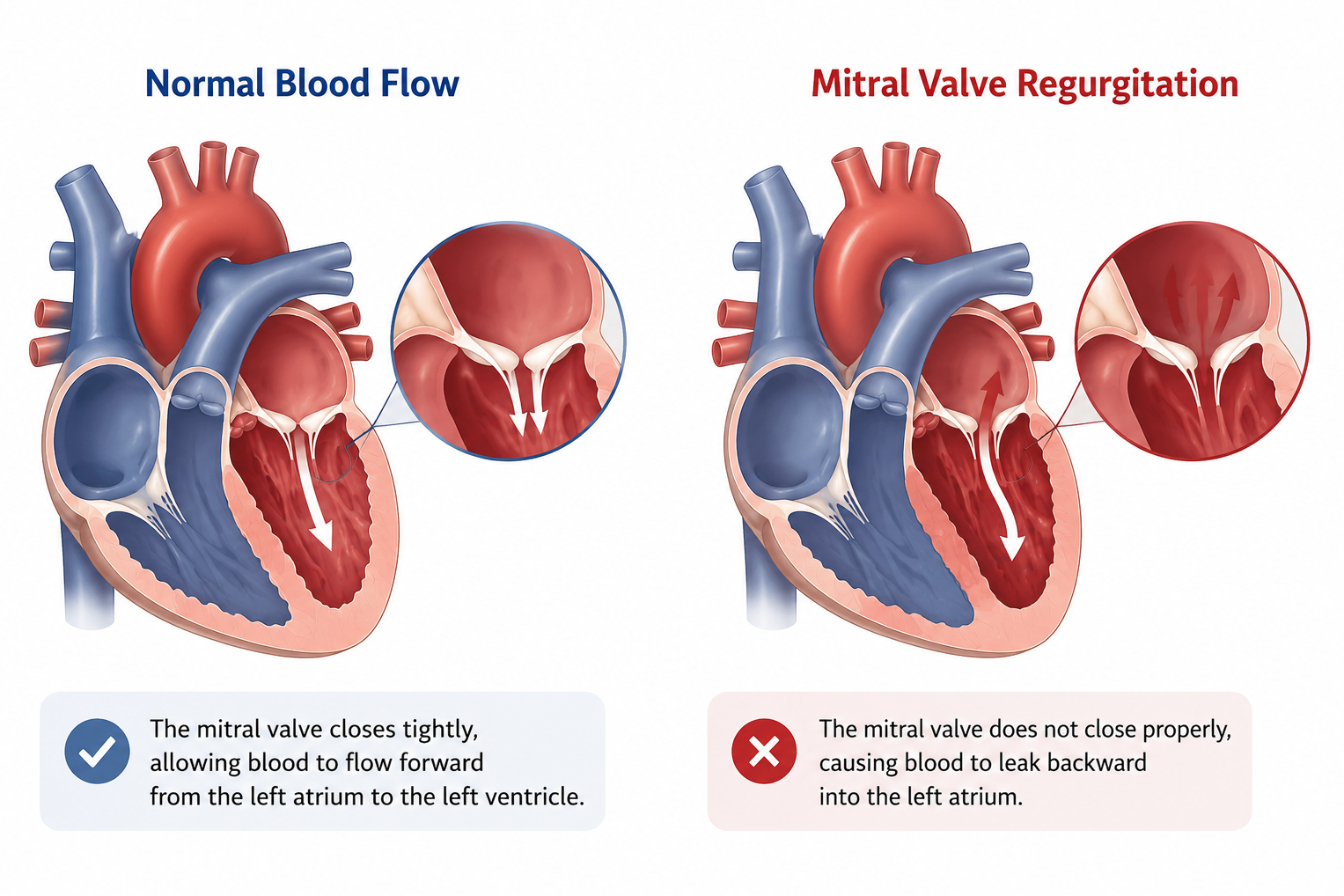
Mitral valve regurgitation happens when the mitral valve leaks. The mitral valve sits between the left atrium and the left ventricle. Its job is to open when blood needs to move from the left atrium into the left ventricle, then close tightly when the left ventricle squeezes blood out to the body.
When the valve does not seal properly, some blood flows backward into the left atrium. A small amount of leakage may not create much strain. A larger leak makes the heart work harder because the left ventricle has to pump extra blood to make up for the blood that went in the wrong direction.
Simple Explanation
Mitral valve regurgitation means the heart’s mitral valve is leaking. Instead of all the blood moving forward to the body, some blood leaks backward into the upper left chamber of the heart. Over time, this can make the heart work harder than it should.
How the Mitral Valve Normally Works
Your heart has four chambers: two upper chambers called atria and two lower chambers called ventricles. Blood returning from the body enters the right side of the heart, travels to the lungs for oxygen, then comes back to the left side of the heart. From there, the left ventricle pumps oxygen-rich blood to the rest of the body.
The mitral valve works like a one-way door between the left atrium and left ventricle. It has two thin flaps called leaflets. These leaflets open to let blood pass through and close to stop blood from going backward. If the leaflets, supporting cords, valve ring, or surrounding heart muscle are damaged or stretched, the seal can fail.
Left Atrium
Receives oxygen-rich blood returning from the lungs.
Mitral Valve
Opens and closes to keep blood moving in the correct direction.
Left Ventricle
Pumps oxygen-rich blood out to the rest of the body.
Related Searches
Other Names for Mitral Valve Regurgitation
Doctors may use several terms for the same condition. These names can sound different, but they generally describe a mitral valve that does not close properly and allows backward blood flow.
Primary vs. Secondary Mitral Valve Regurgitation
Mitral valve regurgitation is often grouped into two main types based on the cause. In primary regurgitation, the valve itself is damaged. In secondary regurgitation, the valve may be structurally normal, but another heart problem prevents it from closing properly.
Acute vs. Chronic Mitral Valve Regurgitation
Mitral regurgitation can also be described as acute or chronic. Acute regurgitation develops suddenly and can become dangerous quickly. Chronic regurgitation develops slowly, sometimes over many years, giving the heart time to adapt for a while.
Acute Regurgitation
Starts suddenly and may cause rapid breathing difficulty, low blood pressure, severe fatigue, or signs of acute heart failure. It often requires urgent care.
Chronic Regurgitation
Develops gradually. Some people feel fine for years, but the heart may slowly enlarge or weaken if the leak becomes severe.
Symptoms of Mitral Valve Regurgitation
Mild mitral valve regurgitation may cause no noticeable symptoms. Many people only discover it when a doctor hears a heart murmur or when an echocardiogram is done for another reason. As the leak worsens, symptoms may appear during activity first and later at rest.
Common symptoms may include:
✓ Shortness of breath, especially with activity.
✓ Fatigue or feeling tired more easily.
✓ Heart palpitations or fluttering.
✓ Coughing or rapid breathing.
✓ Chest discomfort or tightness.
✓ Dizziness, lightheadedness, or fainting.
✓ Swelling in the feet, ankles, or legs.
✓ Trouble breathing when lying flat.
Seek Emergency Care If You Have:
Severe chest tightness or pressure.
Sudden breathing difficulty or a feeling of suffocation.
Breathing that becomes much worse when lying down.
Fainting or near-fainting.
Very low blood pressure or severe weakness.
Low oxygen levels, blue lips, or confusion.
Related Searches
Causes of Mitral Valve Regurgitation
Many different heart conditions can cause mitral valve regurgitation. Sometimes the problem begins directly in the valve. Other times, the valve leaks because the heart muscle has enlarged, weakened, or changed shape.
Risk Factors
Some risk factors cannot be changed, such as age, family history, or congenital valve structure. Others are connected to heart health overall, including blood pressure, diabetes, smoking, diet, weight, exercise habits, and previous heart disease.
Risk factors may include:
✓ Age over 65.
✓ Family history of valve disease or early heart disease.
✓ High blood pressure or diabetes.
✓ Smoking, poor diet, inactivity, or obesity.
✓ Autoimmune disease such as lupus.
✓ Prior radiation therapy to the chest.
✓ Implanted heart devices such as pacemakers or defibrillators.
✓ Previous heart attack or heart muscle disease.
Possible Complications
Severe or untreated mitral valve regurgitation can place long-term strain on the heart. The left atrium may enlarge. The left ventricle may stretch and weaken. Pressure can rise in the lungs. Irregular heart rhythms may develop. These changes are why doctors monitor the condition even when symptoms are mild.
How Mitral Valve Regurgitation Is Diagnosed
Many cases are first suspected when a provider hears a heart murmur with a stethoscope. A murmur is a whooshing or swishing sound caused by turbulent blood flow. A murmur does not always mean a dangerous problem, but it often leads to further testing.
The most important test is usually an echocardiogram, which uses sound waves to show the valve, blood flow, chamber size, and pumping function. Depending on the case, additional testing may help define severity or plan treatment.
Related Searches
Stages of Mitral Valve Regurgitation
Staging helps doctors decide how closely to monitor the condition and when treatment may be needed. Stages are based on symptoms, valve structure, leak severity, blood flow, and whether the heart or lungs are being affected.
How Fast Does Mitral Regurgitation Progress?
Progression is different for each person. Some people stay stable for years. Others worsen more quickly, especially if the regurgitation is caused by a heart attack, damaged support cords, severe valve prolapse, infection, or advanced heart muscle disease.
Doctors estimate progression by looking at symptoms, echocardiogram measurements, how much blood is leaking backward, whether the left ventricle is enlarging, whether pulmonary pressure is rising, and whether arrhythmias are present.
Monitoring Tip
Do not rely only on how you feel. Severe mitral valve regurgitation can sometimes damage the heart before symptoms become obvious. Regular follow-up imaging is important.
Treatment Options
Treatment depends on the cause, severity, symptoms, heart size, heart pumping function, rhythm problems, age, surgical risk, and overall health. A mild leak may only need observation. A severe leak may need valve repair or replacement even before symptoms become dramatic.
Medications for Mitral Valve Regurgitation
Medications usually cannot repair a leaking mitral valve by themselves. However, they can help manage symptoms, reduce strain on the heart, control blood pressure, treat fluid buildup, or reduce stroke risk if atrial fibrillation is present.
Related Searches
Mitral Valve Repair Surgery
When surgery is needed, doctors often prefer repairing the mitral valve rather than replacing it, if repair is technically possible. A successful repair keeps the person’s own valve, may preserve heart function better, and may reduce the need for lifelong blood thinners compared with some replacement valves.
Repair techniques vary based on what part of the valve is leaking. Surgeons may remove extra leaflet tissue, reconnect leaflets, replace damaged support cords, patch holes, separate fused leaflets, or reinforce the valve ring with an annuloplasty ring.
Why Repair Is Often Preferred
Valve repair may preserve natural heart mechanics and avoid some long-term issues linked with artificial valves. However, not every valve can be repaired, and the best choice depends on anatomy, severity, surgeon experience, and overall health.
Mitral Valve Replacement
If the mitral valve is too damaged to repair, replacement may be needed. The damaged valve is removed and replaced with either a mechanical valve or a biological tissue valve. Each option has trade-offs.
Open-Heart, Minimally Invasive, and Catheter-Based Procedures
Traditional open-heart surgery remains a common approach for mitral valve repair or replacement. However, some patients may be candidates for minimally invasive surgery through smaller incisions. Others may qualify for catheter-based procedures if open surgery is too risky or not ideal.
Preparing for Valve Surgery
If you need surgery, preparation can make recovery easier. Before going to the hospital, many people arrange transportation, organize medications, prepare simple meals, and ask a family member or friend to help listen to discharge instructions.
Surgery preparation checklist
✓ Ask which procedure is planned and why.
✓ Review all medications and supplements.
✓ Arrange transportation to and from the hospital.
✓ Prepare simple meals before admission.
✓ Ask someone to help during early recovery.
✓ Use a medication chart after discharge.
✓ Ask about activity limits and wound care.
✓ Confirm follow-up appointments before leaving the hospital.
Living With Mitral Valve Regurgitation
Living with mitral valve regurgitation often means staying consistent with follow-up care. Even if symptoms are mild, regular appointments and imaging help doctors notice changes before they become serious. Lifestyle habits also matter because overall heart health can affect how well your heart handles the valve leak.
Keep Appointments
Echocardiograms and cardiology visits help track progression and timing of treatment.
Eat for Heart Health
Focus on fruits, vegetables, whole grains, lean proteins, less salt, and fewer processed foods.
Move Safely
Exercise can be helpful, but ask your doctor what level of activity is safe for your stage.
Daily Heart-Care Checklist
✓ Take medications exactly as prescribed.
✓ Track new shortness of breath or fatigue.
✓ Report new palpitations or irregular heartbeat.
✓ Watch for ankle, foot, or leg swelling.
✓ Avoid smoking and ask for help quitting if needed.
✓ Limit excess salt and alcohol if advised.
✓ Manage blood pressure, diabetes, and cholesterol.
✓ Keep all cardiology follow-up visits.
Related Searches
Questions to Ask Your Cardiologist
How severe is my mitral valve regurgitation?
Is it primary or secondary regurgitation?
Is my left ventricle enlarged or weakened?
Do I have pulmonary hypertension or atrial fibrillation?
How often do I need an echocardiogram?
What symptoms should make me call you immediately?
Am I a candidate for valve repair instead of replacement?
Would minimally invasive surgery or TEER be an option for me?
Do I need medication for blood pressure, fluid buildup, or clot prevention?
What activity level is safe for my heart right now?
Frequently Asked Questions About Mitral Valve Regurgitation
Is mitral valve regurgitation serious?
It can be. Mild cases may only need monitoring, while severe cases can lead to heart failure, atrial fibrillation, pulmonary hypertension, or the need for valve surgery. Severity and symptoms matter most.
Can mitral valve regurgitation go away on its own?
Usually, structural valve leakage does not simply disappear. Some functional leakage may improve if the underlying heart condition improves, but this depends on the cause and should be monitored by a cardiologist.
What does a leaky mitral valve feel like?
Some people feel nothing. Others may notice shortness of breath, fatigue, heart fluttering, chest discomfort, dizziness, cough, or swelling in the feet and legs, especially as the leak becomes more significant.
Can exercise help mitral valve regurgitation?
Exercise can support overall heart health, but the right level depends on severity, symptoms, heart function, and rhythm status. People with moderate or severe regurgitation should ask their doctor what activity is safe.
Is valve repair better than replacement?
Repair is often preferred when it can be done successfully because it preserves the native valve. However, replacement may be necessary if the valve is too damaged or repair would not be durable.
How often should mitral regurgitation be checked?
Follow-up depends on severity. Mild cases may need an echocardiogram every few years, moderate cases may need testing every year or two, and severe cases usually need close cardiology follow-up every 6-12 months or sooner.
Final Thoughts: A Leaky Mitral Valve Should Be Watched Carefully
Mitral valve regurgitation can be mild and quiet, or it can become a serious heart condition. The challenge is that symptoms do not always appear early. That is why regular follow-up, echocardiograms, and honest symptom tracking are so important.
If the leak is mild, your doctor may recommend monitoring and heart-healthy habits. If the leak is severe, especially if the heart is enlarging or symptoms are developing, valve repair or replacement may protect the heart from long-term damage.
The best approach is personal. Your treatment plan should reflect the cause of the regurgitation, your heart function, your symptoms, your age, your surgical risk, and your goals. With careful monitoring and timely treatment, many people with mitral valve regurgitation continue to live active and meaningful lives.
Final Reminder: Mitral valve regurgitation means blood is leaking backward through the mitral valve. Mild cases may only need monitoring, but severe leakage can strain the heart and lead to serious complications. Shortness of breath, fatigue, palpitations, swelling, chest tightness, or trouble breathing while lying down should be discussed with a healthcare provider promptly.