Molluscum Contagiosum: Symptoms, Causes, Treatment Options, Prevention, and Skin Care Tips
Article Summary: Molluscum contagiosum is a common viral skin infection that causes small, raised, smooth, pearl-like bumps on the skin. These bumps often have a tiny central dimple and may appear alone or in clusters. The condition is most common in children, but adults can get it too, especially through close skin contact or sexual contact. In people with healthy immune systems, molluscum often clears on its own over time, although the bumps may last for months and sometimes longer. Treatment is not always necessary, but it may be recommended when lesions are irritated, spreading, cosmetically bothersome, located near the genitals, or occurring in people with weakened immune systems. This guide explains what molluscum looks like, how it spreads, when to treat it, how to prevent it from spreading, and when to see a healthcare provider.
Molluscum contagiosum is one of those skin conditions that can look more worrying than it usually is. A parent may notice a few tiny bumps on a child’s arm, belly, face, or leg. An adult may discover smooth bumps near the inner thighs, lower abdomen, or genital area and wonder if it is acne, warts, an allergic reaction, or something more serious.
The name sounds complicated, but the condition itself is fairly common. Molluscum contagiosum is caused by a virus that affects the top layer of the skin. It does not usually make people feel sick. Most people do not have fever, fatigue, or whole-body symptoms. Instead, the infection mainly shows up as small, dome-shaped bumps that can spread from one area of skin to another.
For many people, the hardest part is patience. Molluscum can go away without treatment, but it often takes time. Some bumps disappear while new ones appear nearby. Scratching can make it spread, and irritated bumps can look red or pimple-like just before they start healing. Understanding this pattern can make the condition less stressful and easier to manage.
Skin Health Reminder: This article is for general educational purposes only. If bumps appear near the genitals, spread quickly, become painful, look infected, occur in someone with a weakened immune system, or are difficult to identify, speak with a healthcare provider or dermatologist.
What Is Molluscum Contagiosum?
Molluscum contagiosum is a viral skin infection caused by the molluscum contagiosum virus, a member of the poxvirus family. The virus infects the outer layer of the skin and creates small growths called papules. These papules are usually smooth, firm, round, and slightly shiny.
The infection is contagious, meaning it can spread through direct skin-to-skin contact, contact with contaminated objects, scratching, rubbing, shaving over bumps, or sexual contact when lesions are located in intimate areas. It is common in children because children often have close contact during play, share towels or clothing, scratch itchy skin, and may have eczema or sensitive skin.
Simple explanation
Molluscum contagiosum is a common skin virus that causes small, smooth bumps. It usually is not dangerous, but it can spread on the skin or to other people through close contact.
What Does Molluscum Contagiosum Look Like?
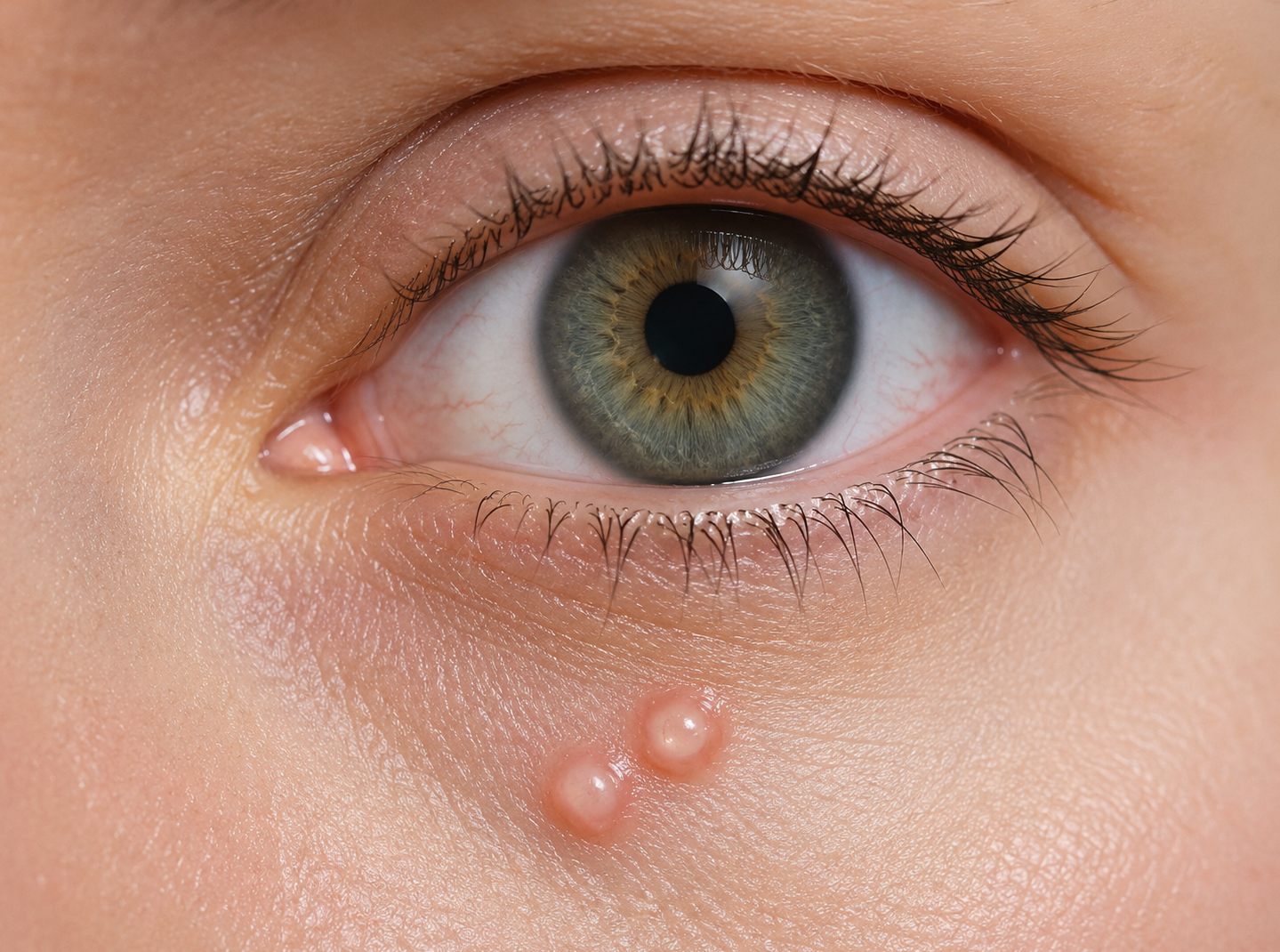
Molluscum bumps are often described as pearl-like because they can look smooth, shiny, and rounded. They are usually small, often about 2 to 5 millimeters across, though some can become larger. Many have a small dip or dimple in the center. This central dimple is one of the most recognizable features.
On lighter skin, bumps may appear flesh-colored, pink, pearly, or slightly red when irritated. On darker skin tones, the bumps may look skin-colored, lighter, darker, grayish, brownish, or less obviously red. Because redness may be harder to see on darker skin, texture, shape, and the central dimple can be more useful clues.
Typical features of molluscum bumps
✓ Small, raised, smooth bumps.
✓ Often dome-shaped or pearl-like.
✓ Usually painless, but may itch.
✓ Often have a tiny central dimple.
✓ May appear alone or in clusters.
✓ Can become red or inflamed before healing.
✓ May contain a white, waxy core.
✓ Can spread if scratched, shaved, or picked.
Where Molluscum Usually Appears
In children, molluscum commonly appears on the face, arms, legs, trunk, armpits, and areas where skin rubs together. Children with eczema may develop more bumps because their skin barrier is already irritated and scratching can help the virus spread.
In adults, bumps may appear on the lower abdomen, inner thighs, pubic area, genitals, or nearby skin if the infection is spread through sexual contact. When bumps appear in these areas, it is important to see a healthcare provider because other sexually transmitted infections can sometimes look similar.
Stages of Molluscum Contagiosum
Molluscum does not usually appear immediately after exposure. Bumps often show up weeks later. Once they appear, they may slowly grow, become more dome-shaped, develop a central dimple, and eventually turn red or inflamed as the immune system starts clearing them.
That red, pimple-like stage can worry people, but it does not always mean the infection is getting worse. Sometimes it is a sign that the body is finally reacting to the virus. However, increasing pain, warmth, swelling, pus, or spreading redness may suggest a secondary bacterial infection and should be checked.
How Molluscum Contagiosum Spreads
Molluscum spreads through contact with the virus. This can happen through direct skin-to-skin contact, touching the bumps, sharing towels or clothing, using contaminated sports equipment, scratching bumps and touching another area, or shaving over infected skin.
The virus can also spread through sexual contact when bumps are in the genital, pubic, lower abdominal, or inner thigh area. Condoms may lower risk but do not fully protect against molluscum because the virus can live on skin not covered by a condom.
Is Molluscum Contagiosum Dangerous?
For most healthy children and adults, molluscum contagiosum is not dangerous. It is usually a mild skin infection that eventually clears as the immune system recognizes and fights the virus. The bumps can be annoying, itchy, or embarrassing, but they rarely cause serious illness in people with healthy immune systems.
The situation can be different for people with weakened immune systems. In people with HIV/AIDS, organ transplant history, immune-suppressing medication use, or certain medical conditions, molluscum can be widespread, large, persistent, or difficult to clear. In these cases, professional medical care is important.
When molluscum needs medical attention
See a healthcare provider if bumps are near the eyes or genitals, become painful or infected, spread rapidly, appear in large numbers, last a long time, or occur in someone with a weakened immune system.
Molluscum Contagiosum and Eczema
Molluscum and eczema often interact in an inconvenient way. Children with eczema may be more likely to get molluscum because their skin barrier is already irritated. Once molluscum bumps appear, the surrounding skin may become itchy, dry, red, or inflamed. This is sometimes called molluscum dermatitis.
When eczema around molluscum is itchy, scratching can spread the virus. That is why controlling itch is not just about comfort; it is also part of prevention. Gentle skin care, fragrance-free moisturizers, and doctor-recommended eczema treatment may help reduce scratching.
Skin barrier tip
If molluscum is surrounded by dry, itchy, eczema-like skin, ask a clinician how to treat the irritation safely. Calming the itch can reduce scratching and lower the chance of spreading bumps.
How Molluscum Is Diagnosed
Doctors can often diagnose molluscum contagiosum by looking at the bumps. The smooth, dome-shaped appearance and central dimple are often enough for diagnosis. A skin biopsy is rarely needed, but it may be used when the diagnosis is uncertain or when the bumps look unusual.
Diagnosis is especially important when lesions appear on the genitals, because other conditions can look similar. Genital bumps may be molluscum, but they can also be genital warts, herpes, folliculitis, irritation, or another skin or sexually transmitted condition. A clinician can examine the area and recommend the right next step.
What the doctor may check
| Bump appearance | Smooth surface, dome shape, central dimple, color, and number of bumps. |
| Location | Face, trunk, limbs, skin folds, genital area, or around the eyes. |
| Skin irritation | Whether eczema, scratching, crusting, or infection is present. |
| Immune status | Whether the person has a weakened immune system or widespread lesions. |
| Need for testing | Biopsy or additional tests may be considered if the diagnosis is unclear. |
Does Molluscum Need Treatment?
Not always. In healthy people, molluscum often clears without treatment. This is why some doctors recommend watchful waiting, especially when the bumps are few, not bothersome, not infected, and not in sensitive areas. Waiting can avoid pain, irritation, scarring, and stress from unnecessary procedures.
Treatment may be recommended when bumps are spreading, itchy, inflamed, cosmetically upsetting, near the eyes, located around the genitals, causing eczema flares, or affecting daily life. Treatment may also be considered for children who keep scratching or for people who need faster clearing.
Medical Treatment Options
Treatment choices depend on age, number of bumps, location, pain tolerance, immune status, and whether the bumps are inflamed. Some treatments are done in the clinic. Others are prescribed for home use. The goal is to remove or irritate the bump enough that the immune system clears it, while avoiding unnecessary scarring or skin damage.
No treatment is perfect. Bumps can return, new bumps can appear, and skin may become irritated. This is why treatment should be guided by a clinician, especially for young children, sensitive skin, genital lesions, and people with darker skin tones who may be more prone to visible marks after inflammation.
Be careful with home treatments
Avoid burning, cutting, squeezing, or aggressively treating molluscum at home. Harsh products can irritate the skin, spread the virus, cause infection, or leave scars. Always ask a dermatologist before using acids, wart medicines, essential oils, or prescription-strength creams on children or sensitive areas.
Home Care: What Helps and What to Avoid
Home care is mostly about preventing spread and reducing irritation. The bumps should be left alone as much as possible. Picking or squeezing may release the waxy core, but it can also push virus onto nearby skin, create open wounds, and increase scarring risk.
If the skin is itchy, moisturizers and clinician-approved anti-itch or eczema treatment may help. If bumps are in an area where clothing rubs, covering them with breathable clothing or a bandage may reduce irritation and contact spread.
Daily molluscum care checklist
Do not pick, squeeze, scratch, or shave over bumps.
Keep bumps clean and dry when possible.
Cover bumps with clothing or a bandage during close-contact activities.
Use separate towels, washcloths, and clothing.
Wash hands after touching the affected skin.
Keep children’s nails short to reduce scratching damage.
Treat eczema or itchy skin with clinician-approved care.
Avoid harsh home remedies that burn or irritate the skin.
Children, School, Daycare, and Swimming
Parents often worry that a child with molluscum must stay home from school, daycare, sports, or swimming. In most cases, children do not need to be excluded from normal activities simply because they have molluscum. The key is covering visible bumps when practical and teaching basic hygiene.
For swimming, the concern is usually not the pool water itself but close contact, shared towels, kickboards, toys, and uncovered lesions. Covering bumps with waterproof bandages before swimming and using separate towels can help reduce spread.
Molluscum in Adults and Sexual Transmission
In adults, molluscum can spread through nonsexual skin contact, but bumps in the genital, pubic, lower abdominal, or inner thigh area may be sexually transmitted. In that situation, doctors often treat it as a sexually transmitted infection because it was spread through intimate skin contact.
This does not mean molluscum is the same as herpes or HPV. Molluscum does not usually remain dormant in the body once cleared. However, a person can get it again if exposed again. Because genital bumps can have multiple causes, adults should not self-diagnose. A healthcare provider can confirm the diagnosis and discuss treatment and partner precautions.
Genital-area bumps should be checked
If you notice molluscum-like bumps on or near the genitals, anus, pubic area, or inner thighs, avoid sexual contact until you have been evaluated. Condoms do not fully prevent spread because uncovered skin can still transmit the virus.
Molluscum and Weakened Immune Systems
Molluscum usually clears more easily when the immune system is healthy. In people with weakened immune systems, the infection can behave differently. Bumps may be larger, more numerous, more widespread, or more persistent. They may also appear on the face or other visible areas and be harder to treat.
People with HIV/AIDS, organ transplant history, cancer treatment, immune-suppressing medications, or other immune conditions should seek medical care if molluscum appears or spreads. In some cases, treating the underlying immune problem is part of controlling the skin infection.
Medical note: Widespread, stubborn, or unusual molluscum can sometimes be a clue that the immune system needs evaluation. This is especially important in adults with many persistent lesions.
How to Prevent Molluscum From Spreading
Prevention is mostly about reducing contact with the bumps and avoiding behaviors that move the virus to new areas of skin. You do not need to disinfect your whole home or isolate a child. Small, consistent habits usually matter more.
What Not to Do
Because molluscum bumps can look simple, some people try to remove them at home. This is understandable but risky. Scraping, burning, cutting, or squeezing the bumps can cause pain, infection, scarring, and more spread.
Do not pop the bumps
The waxy core may contain virus. Squeezing can spread it and damage the skin.
Do not shave over them
Shaving can drag the virus across the skin and create new bumps.
Do not use harsh chemicals
Acids, essential oils, or wart removers can burn sensitive skin if used incorrectly.
When to See a Doctor
Many mild cases can be watched at home, but some situations deserve medical advice. This is especially true when the diagnosis is uncertain, the bumps are near sensitive areas, or the person has a higher risk of complications.
Questions to Ask Your Doctor or Dermatologist
Are these bumps definitely molluscum contagiosum?
Could this be warts, folliculitis, herpes, eczema, or another condition?
Should we treat it now or wait for it to clear naturally?
Which treatment is safest for my child’s age and skin type?
What should we do if the bumps become red or itchy?
How can we prevent spreading it to siblings or classmates?
Should bumps near the genitals be tested or treated differently?
What signs would suggest infection or another problem?
Can my child continue school, daycare, swimming, or sports?
How long should we expect the bumps to last?
Frequently Asked Questions About Molluscum Contagiosum
Is molluscum contagiosum an STD?
It can be. If molluscum spreads through sexual contact and appears on or near the genitals, it is considered sexually transmitted. In children, it is usually spread through nonsexual skin contact.
How long does molluscum last?
Many cases clear within months, but some last longer. It is common for bumps to appear in waves before the skin fully clears.
Should children stay home from school?
Usually, no. Children with molluscum typically do not need to stay home from school or daycare. Covering bumps and avoiding shared towels can help reduce spread.
Can I pop molluscum bumps?
No. Popping, squeezing, or scraping bumps at home can spread the virus, irritate the skin, cause infection, and leave scars.
Can molluscum come back?
Yes. Once the bumps are gone, that infection is cleared, but a person can be infected again after new exposure.
Does molluscum leave scars?
It usually does not scar if left alone. Scarring is more likely if bumps are picked, infected, aggressively treated, or scratched repeatedly.
Final Thoughts: Molluscum Is Usually Manageable, but Patience Matters
Molluscum contagiosum is common, contagious, and sometimes frustrating, but it is usually not dangerous in healthy people. The bumps can take time to go away, and new ones may appear before the infection finally clears. That slow timeline can be annoying, especially for parents and children, but it is part of the normal course for many cases.
The best home strategy is simple: avoid scratching, avoid sharing towels, cover bumps during close-contact activities, treat itchy skin, and resist the urge to pop the bumps. If treatment is needed, a dermatologist can help choose the safest option for the person’s age, skin type, lesion location, and comfort level.
When bumps appear near the genitals, around the eyes, in large numbers, or in someone with a weakened immune system, professional evaluation is the safer choice. With the right care and prevention habits, molluscum can usually be managed without major complications.
Final Reminder: Molluscum contagiosum often clears on its own, but it spreads easily through skin contact, scratching, and shared items. Protect the skin, avoid picking, cover bumps when needed, and see a healthcare provider for genital lesions, eye-area bumps, infection signs, widespread disease, or immune system concerns.