
Torticollis: Causes, Symptoms, Treatment, Baby Neck Stretches, and When to Worry
Article Summary: Torticollis, sometimes called wryneck, is a condition in which the neck muscles cause the head to tilt, twist, or turn to one side. In babies, the most common form is congenital muscular torticollis, often linked to tightness in the sternocleidomastoid muscle. It may cause a baby to prefer looking one way, have difficulty feeding on one side, develop a flat spot on the head, or show limited neck movement. In older children and adults, torticollis may be caused by injury, infection, medication reactions, muscle spasms, cervical dystonia, or other medical problems. Many infant cases improve with early stretching, positioning, tummy time, and physical therapy. Adults may need treatment based on the cause, including rest, physical therapy, medications, botulinum toxin injections, or specialist care. Severe pain, fever, headache, confusion, rash, injury, or sudden neurological symptoms should be evaluated urgently.
Torticollis can look alarming at first. A baby may always turn toward the same side, resist turning their head, or seem uncomfortable during feeding. An adult may wake up with a painful stiff neck or notice that the head pulls to one side without control. The word itself sounds complicated, but the basic idea is simple: the neck muscles are not allowing the head to move or rest in a normal, balanced position.
In babies, torticollis is often treatable and usually improves when it is recognized early. Parents are often taught gentle stretches, feeding positions, toy placement, and tummy-time routines that help the tight side lengthen and the weaker side strengthen. In adults, the story can be different. Some cases are temporary and related to muscle strain, while others are neurological or medication-related and require a more specialized treatment plan.
The important point is not to panic, but also not to ignore it. A tilted head can be a simple muscle issue, but it can occasionally point to something more serious, especially when it comes with fever, severe pain, headache, confusion, injury, swelling, or neurological symptoms.
Medical Reminder: This article is for general educational purposes only. If a baby, child, or adult has sudden neck stiffness with fever, severe headache, confusion, rash, injury, weakness, vomiting, or extreme pain, seek medical care promptly.
What Is Torticollis?
Torticollis is a condition that affects the position and movement of the head and neck. The head may tilt toward one shoulder while the chin turns toward the opposite side. In some people, the head may rotate, bend forward, bend backward, or pull into an uncomfortable posture.
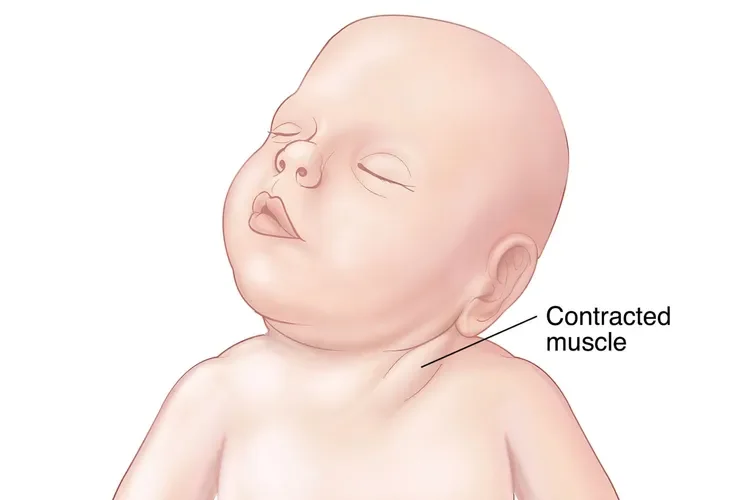
The term comes from Latin words meaning “twisted neck.” Many people also call it wryneck. In infants, the most common pattern involves tightness in the sternocleidomastoid muscle, often shortened as SCM. This muscle runs along each side of the neck, from behind the ear down toward the collarbone.
In plain language
Torticollis means the neck is pulling the head into an abnormal position. In babies, it is often caused by one tight neck muscle. In adults, it may be caused by muscle strain, spasms, injury, medication reaction, or a neurological movement disorder.
Main Types of Torticollis
Torticollis is not one single condition. Doctors usually describe it based on when it appears and what may be causing it. A baby may be born with congenital muscular torticollis. A child may develop acquired torticollis after infection, injury, inflammation, or another medical issue. Adults may develop a painful temporary wryneck, or they may have cervical dystonia, a condition involving involuntary muscle contractions.
Congenital Torticollis
Present at or soon after birth. It is commonly related to tightness or shortening of one SCM muscle and is often painless in babies.
Acquired Torticollis
Develops after birth. It may be related to infection, inflammation, trauma, vision problems, reflux, medication reactions, or other underlying causes.
Cervical Dystonia
More often seen in adults. Neck muscles contract involuntarily, causing twisting, pulling, tremor, pain, or abnormal head posture.
What Causes Torticollis in Babies?
In many babies, torticollis begins before birth. The baby may have been positioned in a way that placed pressure on one side of the neck. Breech position, limited space in the womb, or pressure during delivery may contribute. Sometimes the SCM muscle becomes tight, shortened, or slightly injured, making it harder for the baby to turn the head equally in both directions.
Delivery tools such as forceps or vacuum assistance may also place stress on the neck muscles in some cases. However, parents should not assume blame. Congenital torticollis is relatively common and often improves with the right care.
Signs of Torticollis in Infants
Torticollis in babies may not be obvious immediately after birth. Many parents begin to notice it after the first several weeks, when the baby starts gaining more head control. The baby may always look in one direction, dislike turning the head, or become upset when asked to turn toward the tighter side.
Feeding can also reveal the problem. A baby may breastfeed more easily on one side, resist one bottle-feeding position, or struggle to turn toward the parent’s face. Over time, lying in one preferred position can lead to positional plagiocephaly, commonly called flat head syndrome.
Common baby signs parents may notice
✓ Head tilts toward one shoulder.
✓ Chin points toward the opposite shoulder.
✓ Baby prefers looking one way.
✓ Neck does not turn easily side to side.
✓ Feeding is easier on one side.
✓ One shoulder may look higher.
✓ A small soft lump may be felt in the neck muscle.
✓ A flat spot may develop on the head.
Acquired Torticollis in Children
Acquired torticollis appears after birth and can be more uncomfortable than the congenital type. A child may suddenly hold the neck in a strange position, complain of pain, resist movement, or develop stiffness after an infection, injury, sleep position, or medication exposure.
Sometimes acquired torticollis is caused by something simple, such as a strained muscle. But it can also be associated with swollen throat tissues, vision problems, gastroesophageal reflux, inflammation, neck injury, or rare conditions involving the bones and joints of the neck. Because the causes vary, new or painful torticollis in a child should be assessed by a healthcare provider.
Red flags in children
Seek urgent care if a child has torticollis with high fever, severe headache, confusion, rash, vomiting, trouble walking, weakness, recent injury, severe pain, or a very stiff neck. These symptoms may suggest something more serious than a tight muscle.
Torticollis in Adults: Wryneck and Cervical Dystonia
Adults can develop torticollis for several reasons. Some people wake up with a stiff, painful neck after sleeping awkwardly. Others develop symptoms after a head or neck injury. Certain medicines, especially some drugs that affect the nervous system, can also trigger abnormal muscle contractions in the neck.
Another adult form is cervical dystonia, also called spasmodic torticollis. This is a neurological movement disorder in which neck muscles contract involuntarily. The head may twist, pull, tilt, tremble, or lock into an uncomfortable position. It can cause neck pain, shoulder pain, headaches, and difficulty with daily activities.
How Torticollis Is Diagnosed
Diagnosis usually starts with a physical exam. For babies, the doctor checks head position, neck range of motion, muscle tightness, head shape, feeding concerns, shoulder position, and overall development. The doctor may gently see how far the baby can turn the head in each direction.
In many infants with typical congenital muscular torticollis, diagnosis can be made from the exam. If the doctor suspects another cause, imaging such as ultrasound, X-ray, MRI, or CT may be used. Some babies may also be checked for hip problems because torticollis can sometimes be associated with developmental hip concerns.
In adults, diagnosis depends on the pattern. A simple muscle spasm may not need advanced testing. But imaging or neurological evaluation may be needed if there is trauma, nerve symptoms, progressive worsening, suspected spinal cord compression, infection, tumor, or a movement disorder such as cervical dystonia.
What the doctor may check
| Neck movement | How far the head turns, tilts, bends, and rotates. |
| Muscle tightness | Whether one SCM muscle is shortened, swollen, or firmer. |
| Head shape | Whether positional plagiocephaly is developing. |
| Development | Feeding, tummy time, motor milestones, and visual tracking. |
| Warning signs | Fever, severe pain, injury, neurological symptoms, swelling, or signs of infection. |
Treatment for Torticollis in Babies
Most babies with congenital muscular torticollis improve with conservative treatment. This usually means gentle stretching, strengthening, tummy time, repositioning, and sometimes physical therapy. Treatment works best when started early and done consistently.
A healthcare provider or pediatric physical therapist should teach parents the correct stretches. This matters because stretching should be gentle, controlled, and safe. The goal is not to force the baby’s neck, but to gradually help the tight muscle lengthen and encourage the baby to use both sides of the body.
Parent-friendly treatment goals
Stretch the tight side
Gentle stretches help lengthen the shortened neck muscle over time.
Strengthen the opposite side
Positioning and play encourage balanced muscle development.
Improve head shape
Changing positions reduces constant pressure on one part of the skull.
Support milestones
Better neck motion supports rolling, sitting, crawling, and visual tracking.
Home Care Strategies That Often Help
Home care is a major part of infant torticollis treatment. The most useful routines are usually simple but consistent. Parents can use feeding, toys, lights, sounds, and floor play to encourage the baby to turn toward the non-preferred side.
A practical note about tummy time
Some babies dislike tummy time at first. Start with very short sessions on your chest, across your lap, or on a firm surface while you stay close. Several short sessions throughout the day are often easier than one long session.
Can Torticollis Cause Flat Head Syndrome?
Yes, torticollis can contribute to positional plagiocephaly, often called flat head syndrome. When a baby always turns the head to one side, the same part of the skull rests against the mattress, car seat, or floor more often. Since a baby’s skull is still soft, this repeated pressure can create a flat spot.
Early treatment helps because it improves neck motion and encourages the baby to rest and play in more varied positions. Some babies need only repositioning and physical therapy. Others may be evaluated for helmet therapy if head shape changes are significant.
When Is Physical Therapy Needed?
Physical therapy is often recommended when a baby has clear neck tightness, limited movement, head shape changes, feeding difficulty, or slow improvement with basic home positioning. A pediatric physical therapist can measure range of motion, teach safe stretches, monitor progress, and adjust exercises as the baby grows.
Many babies improve within months when therapy starts early and the family follows the plan. Delayed treatment may make the tightness harder to correct and may increase the chance of motor delays, facial asymmetry, or persistent head shape issues.
Signs a baby may benefit from physical therapy
Neck movement remains limited after home strategies.
The baby strongly prefers one side.
Feeding is consistently harder on one side.
A flat spot on the head is becoming noticeable.
The baby dislikes turning toward one side.
Parents feel unsure about how to stretch safely.
Developmental milestones seem affected by head or neck positioning.
Treatment for Torticollis in Adults
Adult treatment depends on the cause. A mild muscle strain may improve with rest, heat, gentle stretching, posture changes, and time. A severe spasm may need medication or physical therapy. If symptoms are caused by cervical dystonia, treatment may involve botulinum toxin injections, oral medicines, therapy, or specialist movement-disorder care.
Adults should avoid forcing the neck into painful positions. Gentle movement is often useful, but aggressive manipulation can worsen pain or irritate an underlying injury. If torticollis follows trauma or comes with numbness, weakness, fever, severe headache, or neurological symptoms, medical evaluation is important.
Possible Complications if Torticollis Is Not Treated
Untreated infant torticollis may affect more than neck position. A baby who cannot turn easily may have difficulty tracking objects, feeding evenly, rolling both ways, crawling symmetrically, or developing balanced strength. Flat head syndrome and facial asymmetry may also become more noticeable over time.
In adults, persistent torticollis can interfere with driving, computer work, sleep, exercise, social confidence, and daily comfort. Chronic cervical dystonia may also cause pain, headaches, fatigue, and emotional stress.
In babies
Flat head syndrome, feeding problems, delayed rolling or crawling, limited visual tracking, uneven shoulder posture, facial asymmetry, or motor delays.
In adults
Ongoing pain, headaches, restricted motion, work limitations, driving difficulty, sleep disruption, emotional stress, or disability in severe cases.
Can Torticollis Be Prevented?
Congenital torticollis cannot always be prevented because it may be related to how a baby was positioned before birth. However, complications can often be reduced by noticing the signs early, starting treatment promptly, and following the home program recommended by the doctor or physical therapist.
For adults, prevention depends on the cause. Good posture, regular movement, ergonomic work setups, avoiding sudden neck strain, taking breaks from screens, and using safe exercise habits may reduce some neck problems. Medication-related or neurological torticollis may not be preventable, but early care can help control symptoms.
Quick prevention-minded checklist
Vary your baby’s head position during supervised awake time.
Use tummy time daily while the baby is awake and supervised.
Encourage looking both left and right with toys, sounds, and feeding positions.
Ask your pediatrician early if your baby strongly favors one side.
For adults, avoid prolonged fixed neck posture and take screen breaks.
Seek care promptly if neck twisting is painful, sudden, recurrent, or linked to injury or medication.
When to Call a Doctor
Parents should call a pediatrician if a baby consistently tilts the head, cannot turn both ways, develops a flat spot, struggles with feeding on one side, or seems delayed in motor skills. Early evaluation can make treatment easier.
Adults should seek care if torticollis is severe, recurrent, follows an injury, affects daily life, or comes with neurological symptoms. New or sudden neck stiffness with fever or severe headache should not be treated as ordinary muscle tightness.
Questions to Ask Your Doctor or Physical Therapist
What type of torticollis does my baby or I have?
Is this likely muscular, acquired, neurological, medication-related, or caused by another condition?
Are any imaging tests needed?
Should my baby be checked for hip issues or flat head syndrome?
Which stretches are safe, and how often should we do them?
How long should improvement take?
When should we start physical therapy?
What symptoms would mean we should come back sooner?
For adults, could this be cervical dystonia?
Are medications, botulinum toxin injections, or specialist referral appropriate?
Frequently Asked Questions About Torticollis
Is torticollis serious?
Most infant cases are not dangerous and respond well to stretching, positioning, and physical therapy. However, torticollis with fever, severe pain, injury, headache, confusion, rash, or neurological symptoms should be checked urgently.
Will baby torticollis go away on its own?
Some mild cases may improve, but many babies need guided stretching and positioning to recover well. Waiting too long may increase the risk of flat head syndrome or delayed motor progress.
Does torticollis hurt babies?
Congenital muscular torticollis is usually painless in babies, though they may become upset when asked to turn in a difficult direction. Acquired torticollis may be painful and should be evaluated.
What is the fastest way to help infant torticollis?
The fastest safe approach is early diagnosis, correct stretching taught by a professional, daily positioning practice, tummy time, and consistent follow-up. Forced stretching is not recommended.
Can adults get torticollis from stress?
Stress may worsen muscle tension or spasms, but adult torticollis can also come from strain, injury, medication reactions, or cervical dystonia. Recurrent or involuntary symptoms should be medically reviewed.
Final Thoughts: Early Attention Makes a Big Difference
Torticollis can be unsettling, especially when it affects a baby. But in many infant cases, it is manageable and improves with early stretching, thoughtful positioning, tummy time, and professional guidance. The most helpful thing parents can do is notice the pattern early and follow through consistently with the treatment plan.
For adults, torticollis should be understood in context. A temporary stiff neck after sleep is different from recurring involuntary twisting, tremor, or severe pain. If symptoms persist, worsen, or interfere with normal life, medical evaluation can identify whether the cause is muscular, neurological, medication-related, or structural.
Whether the patient is a newborn, a child, or an adult, the goal is the same: restore comfortable movement, prevent complications, and address any underlying cause that needs attention.
Final Reminder: Torticollis is often treatable, especially when recognized early. Babies usually improve with guided stretching and positioning, while adults may need treatment based on the cause. Do not ignore torticollis that comes with fever, severe pain, injury, headache, confusion, rash, weakness, or neurological symptoms.