Radon and Your Health: What Every Homeowner Should Know About This Invisible Risk
Article Summary: Radon is a naturally occurring radioactive gas that cannot be seen, smelled, tasted, or felt. It forms when uranium in soil, rock, and water breaks down, then can enter homes through cracks, gaps, crawl spaces, basements, and foundation openings. Long-term exposure to high indoor radon levels can increase the risk of lung cancer, especially for smokers. Because radon gives no immediate warning signs, the only reliable way to know your home’s level is to test it. The good news is that radon can usually be reduced with proven mitigation systems, making testing and prevention practical steps for protecting household health.
Radon is one of those home health risks that many people do not think about until they are buying a house, selling a property, or hearing about it from a neighbor. It does not smell like gas, it does not leave visible stains, and it does not cause immediate symptoms when you breathe it in. That is exactly what makes it easy to ignore.
But radon deserves attention because it can build up indoors over time. Outdoors, radon is usually diluted in the open air and is less concerning. Inside a home, especially in lower levels like basements and crawl spaces, radon can become trapped. When people breathe that air day after day for years, the risk becomes more serious.
This guide explains what radon is, why it matters, how it affects health, where it may be found, how to test your home, what test results mean, and how radon levels can be reduced. The goal is not to create fear, but to make a hidden risk easier to understand and manage.
Important Health Note: This article is for general educational purposes only. If you have symptoms such as a persistent cough, chest pain, coughing up blood, unexplained weight loss, shortness of breath, or wheezing, speak with a healthcare professional. Radon testing is for the home environment; it does not diagnose illness.
What Is Radon?
Radon is a naturally occurring radioactive gas. It forms when uranium, a heavy metal found in soil and rock, breaks down over time. Uranium decays into radium, and radium then breaks down into radon gas. Because this process happens underground, radon can move through soil and enter the air above it.
The difficult thing about radon is that human senses cannot detect it. You cannot see it, smell it, taste it, or feel it in the air. A home with high radon levels may look perfectly normal. The air may seem clean. The basement may smell fine. That is why testing matters so much.
Small amounts of radon exist in outdoor air almost everywhere. The concern is indoor buildup. When radon enters a building and becomes concentrated in enclosed spaces, long-term exposure may increase the risk of lung cancer. EPA describes radon as the leading cause of lung cancer among people who have never smoked and the second leading cause overall after smoking. :contentReference[oaicite:1]{index=1}
Simple Explanation
Radon starts in the ground, moves through soil, and can enter buildings through small openings. You cannot detect it without a test, but if levels are high, proven mitigation systems can usually reduce it.
Why Radon Can Affect Your Health
When radon is inhaled, radioactive particles can reach the lungs. As radon breaks down, it releases radiation that can damage cells in lung tissue. This damage does not usually cause immediate symptoms, but over many years it can increase the chance of lung cancer.
The risk depends on several things: the radon level in the home, how much time people spend there, how many years they are exposed, and whether they smoke. Smoking and radon exposure together create a much higher lung cancer risk than either factor alone. This is one reason radon testing is especially important for households with current or former smokers.
EPA estimates that radon is responsible for about 21,000 lung cancer deaths each year in the United States. That number can feel surprising because radon exposure is not as visible as smoking, outdoor air pollution, or workplace hazards. But the risk is real, and it is one of the reasons public health agencies encourage home testing. :contentReference[oaicite:2]{index=2}
Key Point: Radon exposure does not usually make someone feel sick right away. The concern is the increased lung cancer risk after long-term exposure, especially when combined with smoking.
Are There Symptoms of Radon Exposure?
Radon exposure itself does not cause obvious early symptoms. You will not feel dizzy, smell anything strange, or notice irritation just because radon is present. That makes radon different from many household hazards that announce themselves through odor, smoke, moisture, or visible damage.
The health problem linked most strongly to radon is lung cancer, which may develop after many years. Possible lung cancer symptoms can include a persistent cough, coughing up blood, chest pain, shortness of breath, wheezing, hoarseness, fatigue, or unexplained weight loss. These symptoms can have many causes, but they should be evaluated by a healthcare professional.
There is no routine medical test that can simply tell you how much radon you have breathed in over the years. If you are concerned about possible exposure, the most useful first step is to test your home and discuss your health history with your doctor, especially if you smoke or have lung symptoms.
Medical Reminder: Do not wait for symptoms to test your home. If symptoms such as a persistent cough, chest pain, coughing up blood, or unexplained weight loss appear, contact a healthcare professional promptly.
Where Is Radon Found?
Radon can be found almost anywhere because uranium exists naturally in many soils and rocks. However, radon levels vary by region, neighborhood, and even from one house to the next. A home with low radon can sit next to a home with elevated radon because soil conditions, foundation design, cracks, and ventilation patterns differ.
Certain geological conditions may increase the chance of higher radon. Areas with uranium-rich bedrock, fractured rock, granite, shale, limestone, or highly permeable soil may allow more radon to move upward. Homes built on slopes, thin soil, or cracked soil may also have pathways for radon to enter.
Even if your state or county is considered low-risk on average, that does not guarantee your house is safe. EPA recommends testing because elevated radon has been found in all types of homes and in areas where average radon levels may be lower. :contentReference[oaicite:3]{index=3}
Soil and Rock
Radon forms underground and can move through soil, cracks, and porous ground layers.
Homes and Buildings
Radon can enter through foundations, basements, crawl spaces, gaps, and utility openings.
Groundwater
Private wells and groundwater sources can sometimes contain radon that is released into indoor air.
How Radon Enters a Home
A home sits on or above soil, and the air pressure inside the house can sometimes pull soil gases inward. Radon moves from the ground into the building through small openings. These openings may be obvious cracks, or they may be gaps around pipes, sump pits, construction joints, crawl spaces, floor drains, or porous foundation materials.
Basements and crawl spaces often have higher radon levels because they are closest to the soil. However, radon can also move into upper floors as air circulates. This means a home without a basement can still have a radon problem, and a newer home is not automatically protected unless it was built with radon-resistant features and tested afterward.
Some building materials, such as concrete or stone, may release small amounts of radon, but in most homes, soil gas beneath the foundation is the main concern. Granite countertops have been discussed as a possible source, but major health organizations generally consider soil beneath the home a more important source of indoor radon. :contentReference[oaicite:4]{index=4}
How to Test Your Home for Radon
Testing is the only way to know whether your home has elevated radon. You cannot judge radon levels by how old the home is, how clean the air feels, or whether nearby houses have tested low. A simple radon test can give you the information you need to decide whether action is necessary.
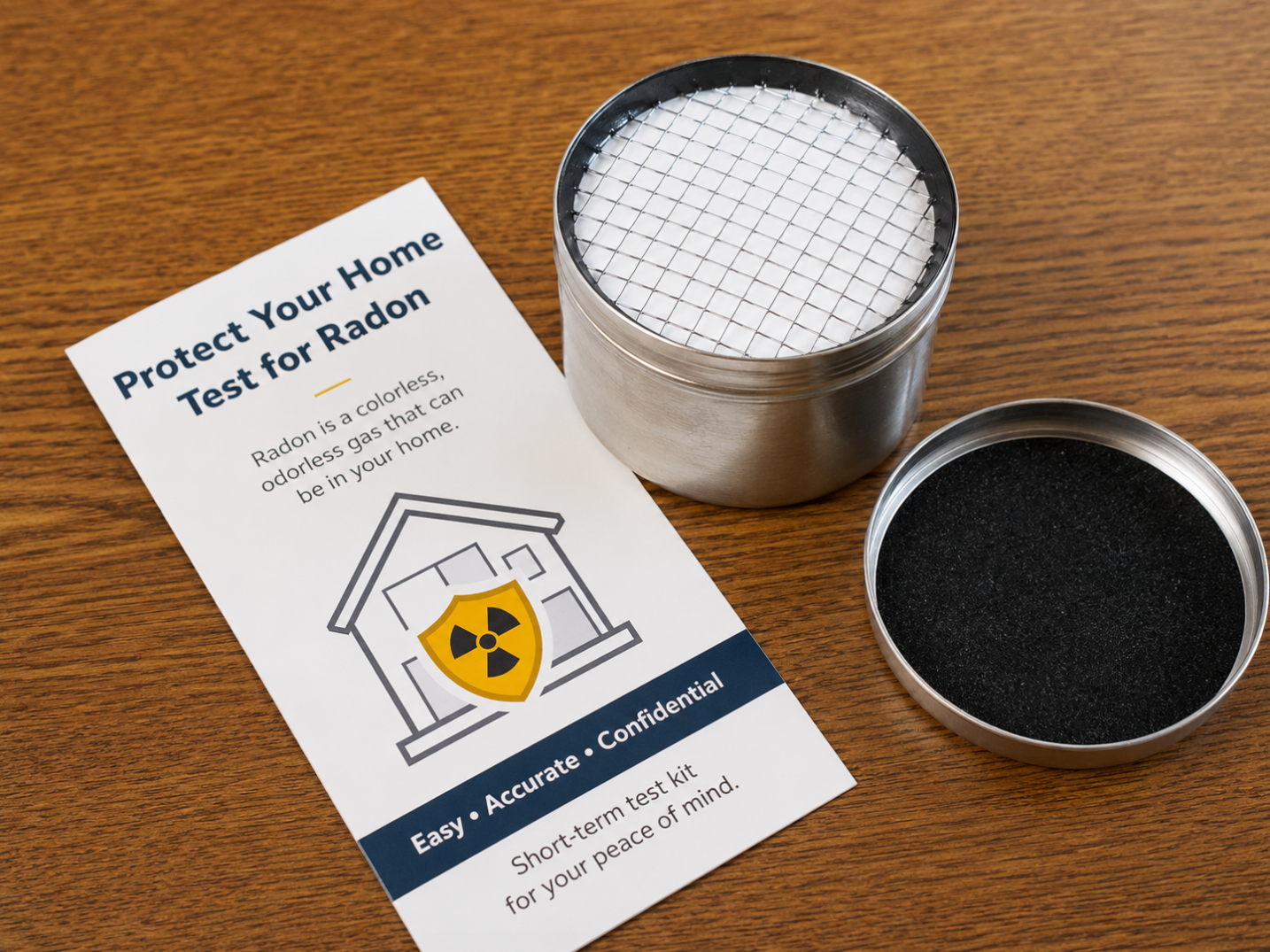
Radon test kits are often available online, at home improvement stores, through state radon offices, or from radon programs. You can also hire a qualified radon measurement professional. Short-term tests usually remain in place for a few days to several weeks, while long-term tests measure radon for more than 90 days and can better reflect year-round exposure.
Most home test kits should be placed in the lowest level of the home that is regularly used or could be used. The test should usually be kept away from drafts, high heat, humidity, exterior walls, kitchens, bathrooms, and laundry rooms. Always follow the kit instructions carefully because placement affects accuracy.
Basic Home Testing Steps
1. Buy or request a radon test kit.
2. Read the instructions before opening the kit.
3. Place the test in the recommended location, usually the lowest livable level.
4. Keep windows and exterior doors closed except for normal entry and exit during short-term testing.
5. Send the kit to the lab promptly after the test period ends.
6. Review the result and decide whether retesting or mitigation is needed.
Understanding Radon Test Results
Radon levels in the United States are usually measured in picocuries per liter of air, written as pCi/L. EPA recommends taking action to fix a home if the radon level is 4 pCi/L or higher. EPA also recommends considering radon reduction when levels are between 2 and 4 pCi/L because there is no known completely risk-free level of radon exposure. :contentReference[oaicite:5]{index=5}
If your first short-term test result is high, it is common to confirm with another test or follow your state radon office’s guidance. If a long-term test shows elevated radon, that result may provide a stronger picture of average exposure. The next step is usually to contact a qualified radon mitigation professional.
Testing Reminder: Radon levels can change over time. Test again after finishing a basement, remodeling, sealing work, foundation changes, HVAC changes, or moving into a lower level of the home.
How Radon Levels Can Be Reduced
High radon levels can usually be reduced. The most common method for many homes is active soil depressurization, sometimes called ASD. This system uses a pipe and fan to pull radon from beneath the home and vent it safely outdoors before it enters the living space.
The exact design depends on the home’s foundation. A slab foundation may require a pipe inserted through the slab into the soil or gravel beneath. A crawl space may need a sealed plastic membrane over the exposed soil, with a pipe and fan system pulling radon from beneath the membrane. Basements may require sealing plus sub-slab suction.
Sealing cracks and gaps can help, but sealing alone is usually not enough for long-term radon control. It is often used together with an active mitigation system to make the system more effective. Opening windows may temporarily lower radon, but levels usually rise again after windows and doors are closed.
What Radon Mitigation May Cost
The cost of radon mitigation depends on the home’s size, foundation type, design, local labor costs, and the mitigation method needed. Many basic residential mitigation systems cost in the range of several hundred to a few thousand dollars, with many commonly quoted estimates around the low thousands. The original article’s national average estimate of about $1,200 is consistent with many consumer-facing references, but actual local pricing can vary.
Fan-powered mitigation systems also use electricity. The operating cost is usually modest, but the fan should not be turned off unless a qualified professional instructs you to do so. Fans may last for years, but they can eventually require repair or replacement.
Money Tip: When comparing mitigation quotes, ask whether the price includes diagnostic testing, permits if needed, sealing work, post-installation testing, fan warranty, and follow-up support.
Radon in Schools, Workplaces, and Rental Homes
Radon is not only a homeowner issue. Schools, office buildings, apartments, and workplaces can also have elevated radon levels. Any building that sits on soil can potentially have radon entry points. Ground-level and lower-level rooms are often the first areas to consider.
If you rent, you may not be able to install a mitigation system yourself, but you can still ask whether the property has been tested. Some states and local areas have disclosure rules for radon during real estate transactions or rental agreements. If you are unsure, contact your state radon office or local health department for guidance.
Certain jobs may also involve higher potential radon exposure, especially underground work such as mining or work in poorly ventilated spaces. Occupational radon concerns should be handled through workplace safety programs and appropriate monitoring.
Radon Prevention in New Homes
If you are building a new home, ask about radon-resistant construction. These building techniques can make it easier and less expensive to reduce radon if a problem appears later. Common features include a gas-permeable layer beneath the slab, plastic sheeting, sealed openings, vent piping, and a junction box for a fan if an active system is needed.
Even a newly built radon-resistant home should be tested after construction. Building features reduce risk, but testing confirms whether indoor radon levels are actually low. If the level is still high, the passive system may often be upgraded by adding a fan.
Smart Questions for Buyers and Homeowners
Has this home ever been tested for radon?
What was the result, and when was the test performed?
Was it a short-term or long-term test?
Has a mitigation system been installed?
Was the home retested after mitigation?
Is the fan still working properly?
Have major renovations happened since the last test?
Common Myths About Radon
Radon is often misunderstood because it is invisible and technical. Some homeowners assume they do not need to test because their neighbor’s home tested low. Others think only old homes or homes with basements have radon problems. These assumptions can lead people to skip a simple test that could reveal an important risk.
Frequently Asked Questions About Radon
What does radon in a house cause?
Long-term exposure to elevated radon increases the risk of lung cancer. The risk is especially high for people who smoke.
Is it okay to live in a house with radon?
Many homes have some radon. The important question is the level. If the level is elevated, mitigation can usually reduce it.
What is considered a high radon level?
EPA recommends fixing homes at 4 pCi/L or higher and considering reduction at levels between 2 and 4 pCi/L.
Can radon be removed completely?
Radon can usually be greatly reduced, but the practical goal is lowering it to a safer level. Post-mitigation testing confirms whether the system is working.
Final Thoughts: Radon Is Hidden, But It Is Manageable
Radon can feel unsettling because it is invisible and cannot be detected by smell or taste. But the most important message is also reassuring: radon can be tested, measured, and reduced. You do not have to guess whether your home is safe.
If you have never tested your home, start there. A simple test can tell you whether you need to take action. If your level is high, a qualified mitigation professional can usually install a system that reduces radon and helps protect your household over the long term.
The biggest mistake is assuming radon is someone else’s problem. Any home can have elevated radon, even in areas where average levels are low. Testing is a small step, but it can make a meaningful difference for your family’s health.
Final Reminder: You cannot see or smell radon, but you can test for it. If levels are high, you can reduce them. For homeowners, renters, buyers, and families, radon awareness is a practical part of creating a safer indoor environment.